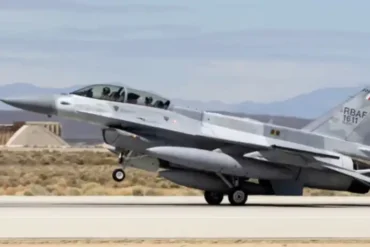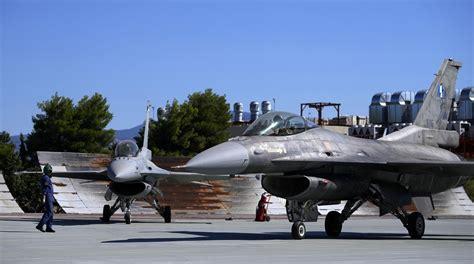
Greece has moved decisively to reshape the future of its airpower by approving the full upgrade of 38 F-16 Block 50 fighters to the advanced F-16 Viper configuration. This landmark decision ensures a unified fleet of 121 F-16 Vipers, positioning the Hellenic Air Force (HAF) among the most modern air arms in Europe and securing long-term parity—and in many areas, superiority—across key regional airpower metrics.
The authorization follows recommendations from the Air Staff and reflects years of negotiation with U.S. authorities and defense industry partners. Greece had previously committed to upgrading 83 F-16 Block 52+/52M jets to the Viper standard, and the new package allows all Block 50s to enter the same modernization track. This approach maintains aircraft uniformity, accelerates training efficiencies, and simplifies long-term sustainment.
Final parliamentary review is expected in early 2026, after which the formal Letter of Request (LOR) will be transmitted to the United States. The LOR will enumerate all required systems, weapons, spares, and follow-on support provisions. Once the U.S. responds with a Letter of Offer and Acceptance (LOA), the upgrade sequence will be slotted directly into the existing Viper production flow.
Cost Breakthroughs Allow Full-Fleet Modernization
Initial U.S. cost estimates of more than €1.8 billion threatened to derail the plan, while later proposals priced around €1.5 billion covered only 30 aircraft. Greece insisted on upgrading all 38 fighters and secured significant adjustments by leveraging currency conditions, component reuse opportunities, and integration synergies with the ongoing Block 52+ upgrade line.
These efforts pushed the projected cost closer to €1 billion, a level aligned with long-range defense planning and well within multiyear budget priorities. The cost structure makes the upgrade one of the most economically efficient modernization programs undertaken by Greece in two decades.
Major Capability Boost: From 1990s Block 50 to Modern 4.5-Generation Fighter
The Block 50 airframes first entered service in the late 1990s under Peace Xenia II, and while structurally robust, they now face limitations in radar performance, connectivity, and mission computing. The Viper upgrade eliminates these gaps and transforms the jets into 4.5-generation multirole assets.
Core enhancements include:
- AN/APG-83 SABR AESA radar, with longer detection range, multi-target tracking, and precision mapping.
- MMC-7000A mission computer, enabling seamless sensor fusion.
- Link 16 tactical data link, supporting real-time joint force connectivity.
- JHMCS helmet, allowing high-off-boresight cueing for close-range fights.
- Upgraded avionics, encrypted communications, and future-proof architecture for next-generation weapons integration.
These improvements dramatically upgrade the operational capability of the 341 “Velos” and 347 “Perseus” squadrons at the 111th Combat Wing, organizations that historically operated with older avionics and limited data-link capabilities.
A Heavily Armed Future: Long-Range Weapons and Multi-Theater Versatility
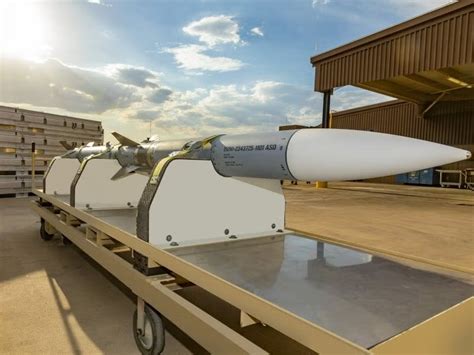
The weapons package planned for the upgraded Block 50 fleet is designed to mirror the armament of Greece’s future F-35A fleet, ensuring consistent reach and lethality across platforms. Key munitions expected include AIM-120D for long-range interceptions, JDAM and JSOW for all-weather precision strikes, Harpoon for maritime operations, and JASSM for deep-strike missions.
This arsenal is tailored to Greece’s operational environment in the Aegean and Eastern Mediterranean, where speed, detection range, and networked targeting can determine strategic outcomes.
HAI’s Expanding Industrial Role Strengthens Domestic Capability
The upgrade work will primarily be performed by the Hellenic Aerospace Industry (HAI) at Tanagra, using expertise built through years of collaborating with Lockheed Martin on Peace Xenia programs and ongoing Viper upgrades. HAI recently delivered the 42nd upgraded Block 52+ Viper in September 2025, demonstrating steady production capability.
Domestic execution of the program boosts national self-sufficiency, accelerates turnaround times, and reinvests funds directly into the Greek economy. The technical workforce gains long-lasting expertise applicable to future aerospace and defense programs.
A Regional Power Shift: Greece Solidifies High-End Air Superiority
The upgrade of the 38 Block 50 jets plays directly into the evolving airpower balance between Greece and Türkiye. While Türkiye fields a larger F-16 fleet, its exclusion from the F-35 program, uncertain access to Western weapons, and challenges integrating AESA radars have slowed its modernization.
Greece, by contrast, is cultivating a force centered on:
- 121 F-16 Vipers
- 24 Rafale F3R
- 20+ F-35A (on order)
- Mirage 2000-5 and Block 30 F-16s in transitional roles
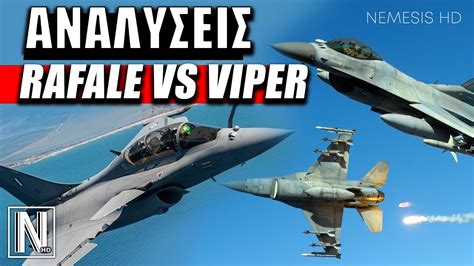
This structure enables multi-layered mission assignments where F-35As handle stealthy early-warning and targeting roles, Rafales provide deep strikes with Meteor and SCALP, and upgraded Vipers execute air superiority, SEAD, and precision strike missions.
Timeline and Next Steps
Work on the Block 50 modernization is expected to begin around 2028, once the LOA is finalized. Aircraft will be upgraded in rotating batches to preserve squadron readiness. The Vipers will re-enter service in phases, gradually expanding the fully modernized fleet through the early 2030s.
The planned upgrades ensure that Greece’s Block 50s remain operationally relevant well into the next decade, with adaptability built in for future systems, weapons, and mission demands.
A Defining Step in Greece’s 21st Century Airpower Strategy
The decision to align all F-16 variants under the Viper standard marks one of the most consequential modernization moves in the history of the Hellenic Air Force. It consolidates capabilities, reduces long-term costs, supports domestic industry, and delivers a technologically advanced fighter fleet that meets the requirements of future warfare environments across the Aegean, Eastern Mediterranean, and beyond.
By 2030, Greece is set to field one of Europe’s most formidable multirole fighter forces—highly connected, heavily armed, and fully interoperable with NATO’s most advanced platforms.