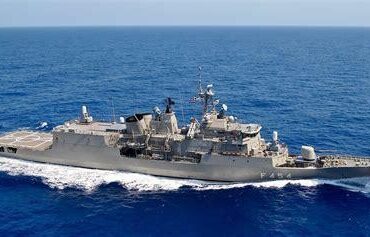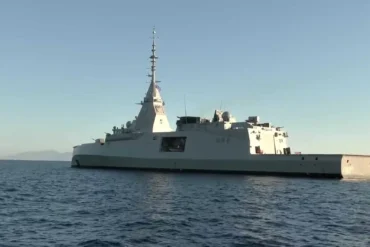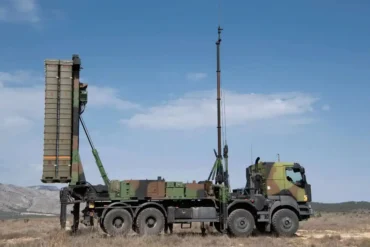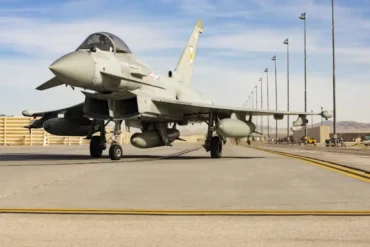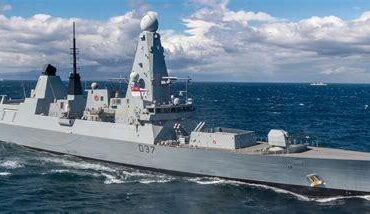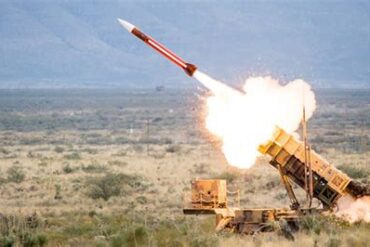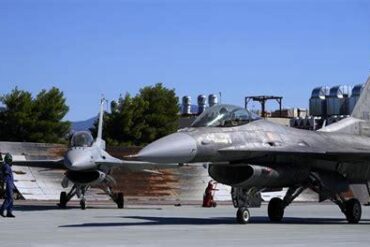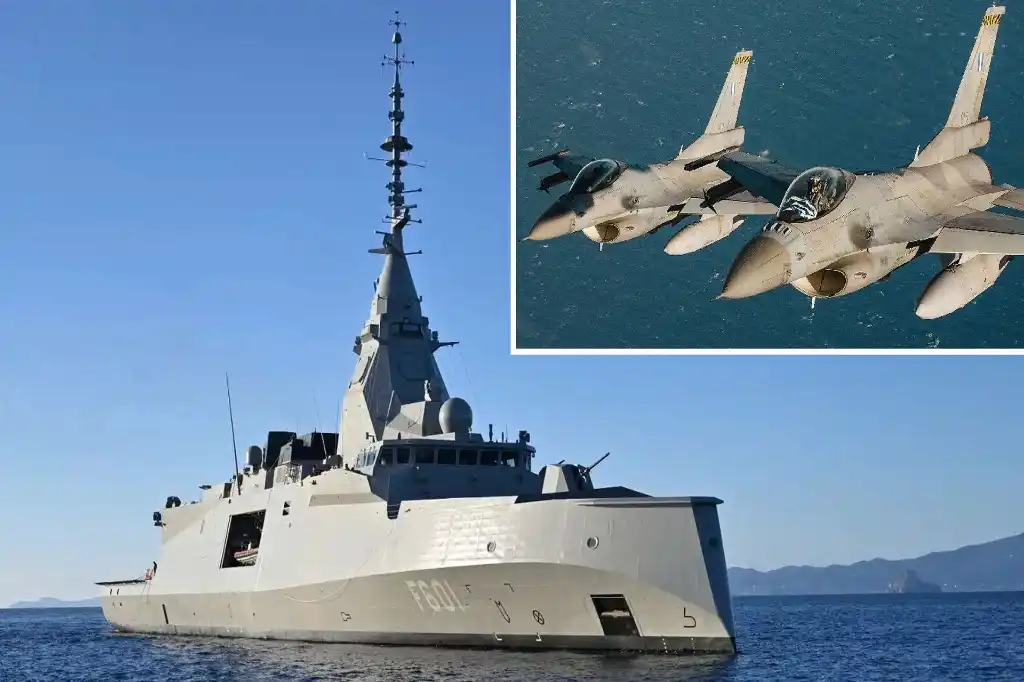
The Eastern Mediterranean has entered a volatile new phase, and Athens has responded with unmistakable clarity. Greece has deployed the FDI HN frigate Kimon, the Hydra-class frigate Psara, and two F-16 Block 52+ fighters to Cyprus, establishing a layered air and maritime defense shield against expanding drone and missile risks linked to regional escalation involving Iran. This is not a symbolic maneuver. It is an operationally calibrated move that places advanced sensors, interceptors, and electronic warfare capabilities within immediate reach of Cypriot airspace and surrounding sea lanes.
Cyprus occupies a strategically exposed position. Within range of long-distance one-way attack UAVs and potential cruise missile flight paths, the island sits at a crossroads of Levantine instability and Mediterranean security architecture. The warning time for low-flying drones and terrain-hugging cruise missiles can shrink to minutes. Against that backdrop, Greece has chosen to treat Cyprus not as a distant political cause, but as a forward defense perimeter requiring integrated command, rapid response, and high-end combat systems.
The deployment unfolds amid intensifying confrontation dynamics across the Middle East, where drone warfare has become normalized and missile arsenals are no longer theoretical deterrents but operational tools. The risk to infrastructure, military installations, and civilian air corridors in Cyprus is no longer abstract. Athens has acted accordingly.
FDI HN Kimon: A High-End Air Defense Node in the Eastern Mediterranean
At the core of the deployment is FDI HN Kimon, the most advanced surface combatant entering service with the Hellenic Navy. Designed under the French FDI (Frégate de Défense et d’Intervention) program and adapted for Greek requirements, Kimon represents a generational leap in sensor integration, missile capacity, and network-centric warfare.
The frigate’s active electronically scanned array radar enables simultaneous tracking of multiple aerial and surface targets at extended ranges. Unlike legacy rotating radars, AESA systems electronically steer beams in microseconds, allowing faster detection and improved resistance to jamming. In a theater saturated with small UAVs and potential cruise missile profiles, that responsiveness matters.
Kimon’s vertical launch system supports Aster-family surface-to-air missiles, capable of intercepting aircraft, drones, and high-speed missile threats. The missile architecture provides engagement flexibility across varying ranges and altitudes, forming the outer layer of a defensive envelope west of Cyprus. Positioned forward, the frigate effectively extends radar coverage beyond land-based limitations, detecting low-altitude threats earlier than ground systems alone could manage.
Equally critical is Kimon’s combat management system, designed for sensor fusion and real-time data exchange. This allows cooperative engagement with fighter aircraft and allied assets. The frigate is not operating as a solitary sentinel; it is functioning as a distributed node in a broader air defense network. Electronic warfare systems aboard the vessel add resilience against spoofing, jamming, and deceptive emissions, while also contributing to UAV signal detection.
In practical terms, Kimon transforms maritime space west of Cyprus into an active surveillance and interception zone. That shift alone recalibrates the risk calculus for any actor contemplating drone or missile launches toward the island.
Hydra-Class Psara: Combat-Proven Escort with Counter-Drone Edge
Complementing Kimon is the Hydra-class frigate Psara, a platform refined through years of operational deployments. While not as technologically new as the FDI class, Psara remains a capable and flexible multi-mission warship.
Displacing approximately 3,350 tons and capable of speeds approaching 30 knots, Psara carries a layered weapons suite that includes a 127 mm Mk 45 naval gun, Phalanx close-in weapon systems, Harpoon anti-ship missiles, and a 16-cell vertical launch system for Sea Sparrow interceptors. This configuration provides credible point and local area air defense while preserving anti-surface and anti-submarine capabilities.
Its particular relevance in the Cyprus mission lies in its integration of CENTAUR electronic counter-drone technology. Developed in Greece, CENTAUR combines passive detection sensors with active jamming mechanisms designed to disrupt UAV command links and satellite navigation signals. In an era where low-cost drones can be launched in swarms, electronic neutralization becomes strategically decisive. Every drone jammed is a missile not expended. Every signal disrupted preserves interceptor inventory for higher-end threats.
Psara’s electronic warfare capability enhances the overall defensive architecture by providing a middle layer between long-range missile engagement and last-ditch close-in defense. It also reinforces escort resilience, ensuring that maritime approaches to Cyprus remain under constant, adaptive monitoring.
F-16 Block 52+ Fighters: Speed, Reach, and Tactical Flexibility
Naval air defense is powerful, but ships cannot be everywhere at once. That is where the Hellenic Air Force’s F-16 Block 52+ fighters enter the equation.
Powered by the F100-PW-229 engine and equipped with advanced radar and targeting systems, the Block 52+ configuration offers both endurance and agility. Conformal fuel tanks extend mission duration without sacrificing weapons carriage, allowing sustained combat air patrols over and around Cyprus. These fighters can rapidly intercept unidentified tracks, conduct visual identification, or engage hostile drones and aircraft before weapons release.
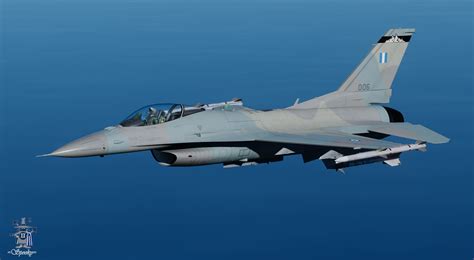
From a tactical perspective, the fighters extend the defended footprint well beyond the radar horizon of surface ships. While frigates detect and track, airborne interceptors provide kinetic flexibility. They can reposition within minutes, respond to dynamic threats, and operate across multiple axes of approach. Integrated with naval sensors and ground-based systems, the F-16s form the agile outer ring of a distributed defense network.
In scenarios involving cruise missile trajectories or ambiguous aerial tracks in congested airspace, fighter aircraft add discrimination capability. They reduce the risk of misidentification while preserving the option for decisive engagement.
Layered Defense Architecture: From Detection to Intercept
The strength of Greece’s deployment lies not in any single platform, but in the integration of naval and air assets into a layered defense structure.
Kimon provides high-end area air defense and extended radar reach. Psara adds electronic counter-UAS and point-defense resilience. The F-16s deliver speed, flexibility, and forward intercept capacity. Together, they compress reaction time and expand engagement depth.
Such architecture is tailored precisely to the evolving threat environment of the Eastern Mediterranean, where inexpensive drones coexist with more sophisticated missile systems. Low-signature UAVs flying at low altitude demand persistent surveillance and electronic countermeasures. Cruise missiles require rapid detection and capable interceptors. The combination deployed by Greece addresses both.
Strategic Signaling and Regional Deterrence
Beyond immediate defensive considerations, the deployment carries strategic weight. It signals that Cyprus is operationally integrated into Greece’s defensive perimeter, not merely politically aligned. It also strengthens the southeastern flank of NATO during a period of Middle Eastern instability that risks spilling westward.
Athens’ choice of assets underscores the seriousness of intent. These are frontline systems, not token patrol units. Their presence communicates deterrence through capability rather than rhetoric. In the language of strategy, that distinction matters.
Eastern Mediterranean Security in the Age of Drone Warfare
Drone warfare has altered the geometry of conflict. Distance no longer guarantees insulation. Low-cost platforms can traverse hundreds of kilometers, challenge traditional air defenses, and exploit reaction-time vulnerabilities. In this environment, layered and networked defense becomes indispensable.
Greece’s deployment to Cyprus reflects recognition of that reality. It is a forward defense measure grounded in modern sensor fusion, electronic warfare integration, and rapid airpower projection. If tensions escalate, the architecture now in place provides credible capacity to absorb and mitigate sustained drone or missile pressure. If tensions stabilize, the mission will have validated Greece’s evolving integrated air and maritime defense doctrine under real-world conditions.
In a region where escalation can unfold with unsettling speed, Athens has chosen preparedness over complacency. The Eastern Mediterranean is no longer a peripheral theater. It is an active security frontier—and Greece has positioned its most advanced tools accordingly.