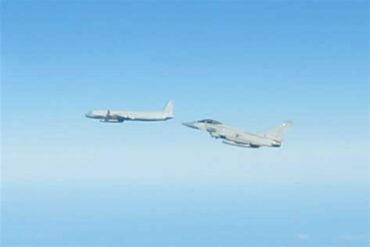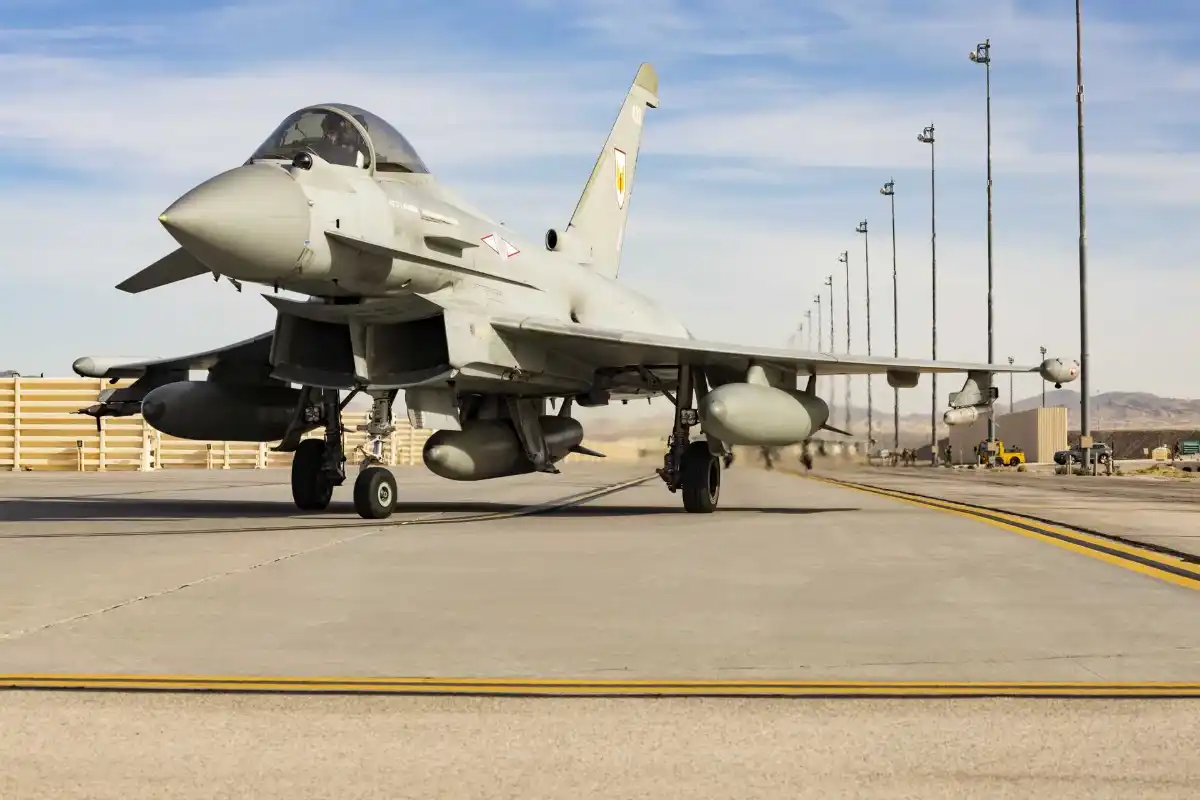
The United Kingdom has intensified its military posture in the Middle East following a series of escalating aerial threats, including a drone strike targeting British facilities in Cyprus. In response, London has ordered the rapid deployment of four additional Royal Air Force (RAF) Eurofighter Typhoon FGR4 fighters to Qatar, reinforcing defensive patrols across a region increasingly challenged by unmanned aerial attacks and missile threats.
The decision reflects growing concern within the British government about the expanding use of long-range drones and loitering munitions in the Eastern Mediterranean and Gulf regions. These systems—relatively inexpensive compared to traditional aircraft—have reshaped modern conflict dynamics. Military planners increasingly view them as tools capable of threatening bases, infrastructure, and coalition personnel even hundreds of kilometers from the launch point.
The immediate trigger for the deployment was a drone attack on March 2, 2026, directed at British facilities in Cyprus, an island that hosts critical UK military infrastructure. The incident occurred amid heightened tensions following joint U.S.–Israeli strikes against Iranian targets, which triggered retaliatory activity and increased drone operations across the broader region.
While the attack did not result in major damage, it represented a clear signal that British installations in the Mediterranean were within the operational reach of hostile drone networks. For defense planners, that signal carries strategic implications. Cyprus sits at a geographic crossroads—close enough to the Middle East to support regional operations yet distant enough to serve as a logistics and command hub for coalition forces.
Rising Drone Threats Across the Middle East
Drone activity in the region has intensified in the days surrounding the Cyprus incident. Several engagements involving British aircraft highlight the pace at which aerial threats are evolving.
On March 3, 2026, an RAF Typhoon operating with the joint UK-Qatar No. 12 Squadron intercepted and destroyed an Iranian one-way attack drone approaching Qatari airspace. The aircraft used an air-to-air missile to neutralize the unmanned vehicle before it could reach its intended target.
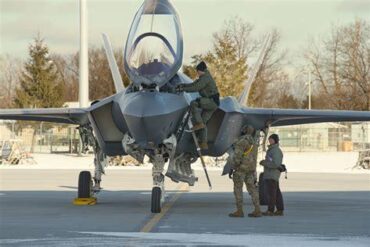
Just one day later, another milestone occurred. A British F-35B Lightning II intercepted hostile drones over Jordan, marking the first confirmed combat kill for the RAF’s F-35 fleet during operational deployment. The mission involved coordinated support from Typhoon fighters and an A330 MRTT Voyager aerial refueling tanker, demonstrating the layered structure of coalition air defense.
Simultaneously, a British Counter-Uncrewed Aerial Systems (C-UAS) unit operating in Iraqi airspace intercepted additional drones believed to be targeting coalition forces. These engagements illustrate a broader operational picture: drones are being launched across multiple theaters in the Middle East, forcing coalition militaries to maintain persistent surveillance and rapid interception capability.
This environment explains why the United Kingdom has chosen to reinforce its fighter presence in Qatar, a strategic hub for air operations in the Gulf.
Why Qatar Matters in Britain’s Air Strategy
Qatar hosts key coalition air infrastructure and already supports joint RAF operations. The presence of No. 12 Squadron, a combined UK-Qatar Typhoon unit, has made the country a central node in Britain’s regional air defense network.
The arrival of four additional fighters significantly strengthens that posture. Fighter aircraft play a unique role in counter-drone defense because they combine speed, radar coverage, and flexible weapon options. Unlike ground-based systems that protect fixed areas, combat aircraft can intercept threats hundreds of kilometers away, effectively extending a defensive perimeter.
The reinforcement also allows the RAF to sustain continuous combat air patrols across multiple zones. In practical terms, this means that aircraft can rotate through missions without leaving gaps in aerial coverage—an essential requirement when drones can appear with little warning.
Aerial refueling support from Voyager tankers plays a crucial role in this equation. Tankers extend the endurance of fighters dramatically, allowing Typhoons to remain on patrol for hours at a time while maintaining readiness to intercept incoming threats.
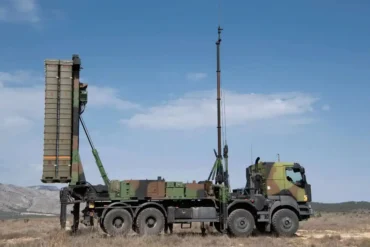
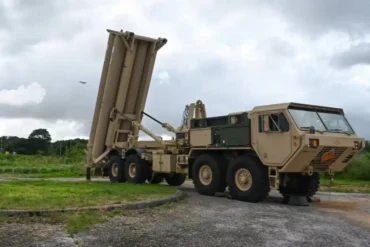
The operational concept resembles a layered shield in the sky, combining fighters, tankers, radar systems, and ground-based defenses. Each layer buys time and increases the probability of detecting and destroying hostile drones before they reach sensitive locations.
Reinforcement of Cyprus Bases and Regional Coordination
The British response has not been limited to fighter aircraft. The government has also deployed approximately 400 additional personnel to Cyprus, strengthening surveillance, command, and air defense coordination at British bases on the island.
These personnel include counter-drone specialists, some of whom previously worked with Ukrainian forces during the war in Eastern Europe. Ukraine’s battlefield experience—where drones became central to both offense and defense—has produced a generation of specialists skilled at identifying and neutralizing unmanned threats.
Their expertise is increasingly valuable in the Middle East, where drone technology is evolving rapidly. Small platforms can evade radar, swarm defenses, or strike targets with surprising precision. Countering them requires a mixture of electronic warfare, sensors, kinetic interceptors, and rapid response tactics.
Diplomatic engagement has accompanied these deployments. The UK Defence Secretary met with Cyprus’ Defence Minister to discuss strengthening air defense arrangements in the Eastern Mediterranean. At the same time, British officials held consultations with Gulf Cooperation Council ambassadors, emphasizing regional cooperation against emerging aerial threats.
The United Kingdom’s Defence Senior Advisor for the Middle East also conducted discussions with partner governments, seeking to coordinate intelligence sharing and defensive measures across coalition networks.
Naval Power Adds Another Layer of Defense
Air power is only one component of Britain’s expanding regional response. The Royal Navy has simultaneously strengthened its presence in the Eastern Mediterranean.
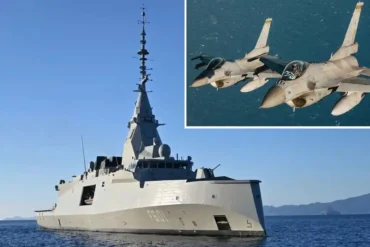
A key element of this maritime reinforcement is the Type 45 destroyer HMS Dragon, one of the most advanced air-defense warships in the world. Designed primarily to protect fleets from aerial threats, the vessel carries the formidable Sea Viper missile defense system.
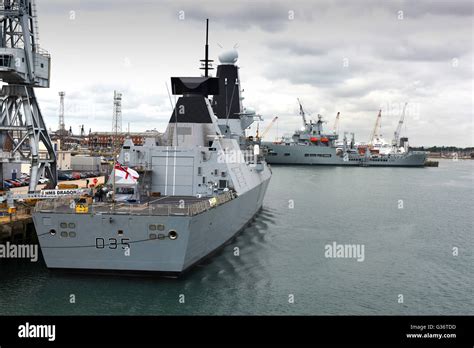
Sea Viper is capable of launching eight interceptor missiles in under ten seconds while guiding as many as sixteen missiles simultaneously toward incoming targets. The system integrates high-precision radar tracking with sophisticated guidance technology, enabling it to destroy aircraft, drones, and even certain missile threats at long range.
Type 45 destroyers have already demonstrated their effectiveness in combat. In 2024, a vessel of the same class successfully intercepted a Houthi missile in the Red Sea, proving the system’s ability to respond to real-world threats.
Supporting HMS Dragon are Wildcat helicopters armed with Martlet missiles, compact weapons specifically designed to destroy small aerial targets such as drones. These helicopters can rapidly engage low-altitude threats that might evade traditional radar coverage.
The combination of warship radar, ship-launched missiles, and airborne interceptors effectively extends defensive coverage across large sections of the Mediterranean.
The Eurofighter Typhoon FGR4: Britain’s Multirole Backbone
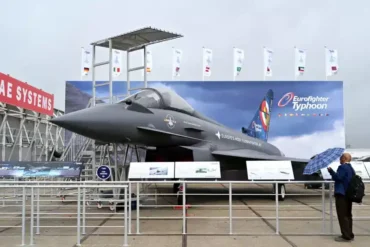
At the heart of the deployment lies the Eurofighter Typhoon FGR4, the RAF’s primary multirole combat aircraft. The designation “FGR” stands for Fighter, Ground Attack, and Reconnaissance, reflecting the aircraft’s broad operational capabilities.
Powered by two Eurojet EJ200 turbofan engines, the Typhoon generates roughly 20,000 pounds of thrust per engine, enabling speeds up to Mach 1.6 and operational altitudes approaching 55,000 feet. Such performance allows the aircraft to intercept fast-moving aerial targets rapidly, a critical advantage when confronting drones or cruise missiles.
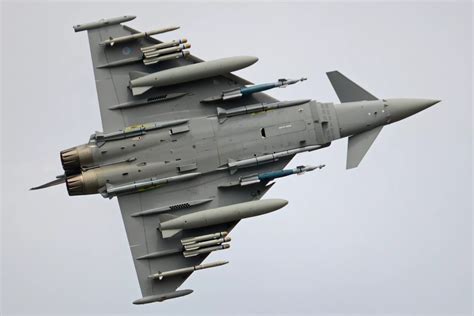
The aircraft’s sensor suite includes the ECR-90 radar and the PIRATE infrared search-and-track system, which detects aircraft by their heat signatures. These technologies allow Typhoon pilots to locate targets even in electronic warfare environments where radar signals may be disrupted.
Defensive systems add another layer of survivability. The Typhoon carries electronic countermeasures, missile approach warning sensors, expendable decoys, and a towed radar decoy, all designed to confuse or evade incoming missiles.
Its weapons arsenal is equally diverse. Air-to-air missions typically rely on:
- Meteor long-range air-to-air missiles
- AMRAAM medium-range missiles
- ASRAAM short-range infrared missiles
- 27-mm Mauser cannon
For strike missions, the aircraft can carry Paveway IV precision bombs, Brimstone 2 missiles, and Storm Shadow cruise missiles, allowing it to transition seamlessly from air defense to ground attack operations.
From Cold War Concept to Modern Combat Aircraft
The Typhoon’s origins trace back to a late-Cold War effort to develop a next-generation European fighter aircraft. In 1979, the United Kingdom, France, and West Germany began exploring concepts for a new combat jet capable of replacing aging aircraft such as the Jaguar, Harrier, and Phantom.
Diverging national priorities eventually led France to pursue its own design, which became the Dassault Rafale, while Britain, Germany, Italy, and Spain continued with the European Fighter Aircraft program.
The first demonstrator flew in 1994, and the aircraft officially received the name Typhoon in the United Kingdom in 1998. Operational service began in the early 2000s, followed by the jet’s first combat deployment during the 2011 NATO intervention in Libya.
Since then, Typhoons have become a mainstay of British expeditionary air operations. They have flown missions over Iraq and Syria during Operation Shader, conducted NATO Baltic Air Policing, and protected European airspace under Southern Air Policing missions in Romania.
The aircraft also maintains Quick Reaction Alert (QRA) duties in the United Kingdom and the Falkland Islands, ready to intercept unidentified aircraft approaching national airspace.
Strategic Implications of the Deployment
The deployment of additional Typhoon fighters to Qatar reflects a broader strategic shift in how Western militaries approach regional security. Traditional air superiority missions—once focused on fighter-versus-fighter combat—now frequently involve intercepting unmanned aerial vehicles, cruise missiles, and loitering munitions.
These systems present a peculiar challenge. They are often cheap, small, and difficult to detect, yet capable of causing disproportionate disruption. A single successful drone strike can damage infrastructure, halt operations, or trigger geopolitical escalation.
The British response demonstrates a recognition that persistent air presence and rapid interception capability are essential to countering this evolving threat landscape.
By reinforcing fighter deployments, expanding naval air-defense assets, and strengthening counter-drone expertise on the ground, the United Kingdom is effectively constructing a multi-layered defensive architecture stretching from the Eastern Mediterranean to the Gulf.
In the strange geometry of modern warfare, the sky has become crowded not only with aircraft but with swarms of robotic adversaries. Against that backdrop, the arrival of four additional Typhoons in Qatar represents more than a routine military movement—it is part of a broader effort to maintain stability in a region where the balance between deterrence and escalation remains fragile.