Canada’s regional challenger carrier Porter Airlines has received a significant regulatory boost after being granted approval to operate flights to the United Kingdom, marking a notable expansion in its international ambitions. The decision from the Canadian Transportation Agency opens the door for long-haul scheduled services, even as the airline continues to grapple with a critical limitation: its current fleet is not configured for true transatlantic range. The approval signals strategic intent rather than immediate operational readiness, highlighting Porter’s evolving role in the North American aviation landscape as it transitions from a domestic-focused carrier into a broader international competitor.
Regulatory Approval and Expansion Scope
The Canadian Transportation Agency’s approval, issued on 6 June, amends Porter’s operating licence to include direct services between Canada and the UK, alongside newly authorised routes to Costa Rica and Jamaica. The ruling builds on a 2023 decision that allowed the airline to pursue code-share operations across the Atlantic, but the latest amendment marks a shift toward potential self-operated services. While the regulatory clearance is comprehensive on paper, practical implementation remains uncertain given current fleet constraints and route economics.
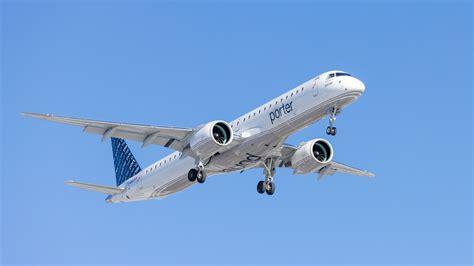
At present, Porter Airlines operates a fleet composed primarily of Embraer E195-E2 jets and De Havilland Dash 8-400 turboprops, neither of which can realistically sustain nonstop flights between Toronto and London or other core UK destinations. This mismatch between regulatory approval and operational capability underscores the airline’s long-term planning approach, where route rights are secured ahead of future fleet development. The situation also highlights a broader trend in aviation strategy, where carriers secure bilateral permissions in advance of aircraft deliveries or network restructuring.

Fleet Limitations and Transatlantic Ambitions
Despite the regulatory green light, analysts continue to question how Porter Airlines will translate approval into actual transatlantic operations. The Embraer E195-E2, while efficient and well-suited for medium-haul missions, falls short of the range required for nonstop flights to the United Kingdom from most Canadian hubs. This gap suggests that any UK-branded services may initially focus on indirect strategies, partnerships, or potential future fleet acquisitions designed specifically for long-range capability.
Strategic Growth Beyond North America
Porter Airlines’ expansion strategy extends beyond the UK route approval, reflecting a broader ambition to establish itself as a challenger brand within North American aviation. The airline has been steadily increasing its footprint across Canada and the United States, leveraging its E195-E2 fleet to offer a more premium regional product. Partnerships and codeshare agreements have further strengthened its connectivity, positioning Porter as a hybrid carrier bridging regional comfort with international aspirations.
Outlook for UK-Canada Air Connectivity
Looking ahead, the approval for UK services represents a pivotal moment for Porter Airlines as it positions itself for a more global role in aviation markets. While immediate launch timelines remain unclear, the regulatory foundation provides flexibility for future network expansion once appropriate long-range aircraft become available or strategic partnerships are secured. Industry observers suggest that the airline’s most realistic near-term international growth will continue to focus on leisure destinations in the Caribbean and Central America, where its current fleet can operate efficiently. The UK designation may therefore function as a forward-looking framework rather than an immediate operational blueprint, enabling Porter to respond quickly to future opportunities in the transatlantic market.
As competition intensifies among mid-sized carriers in North America, regulatory approvals of this nature are increasingly viewed as strategic assets, offering airlines the ability to scale rapidly when market conditions and fleet capabilities align. Ultimately, Porter’s UK authorization underscores the importance of regulatory positioning in modern airline strategy, where access rights often precede physical operational readiness by several years. With fleet development plans expected to evolve over the coming decade, the carrier’s current approvals may prove to be a foundational asset in shaping its long-term international identity. Together, these developments highlight a gradual but deliberate transformation in Porter’s business model as it balances ambition with operational realities in an increasingly competitive aviation environment. Market analysts will closely watch how quickly these plans translate into tangible long-haul service offerings in practice globally.