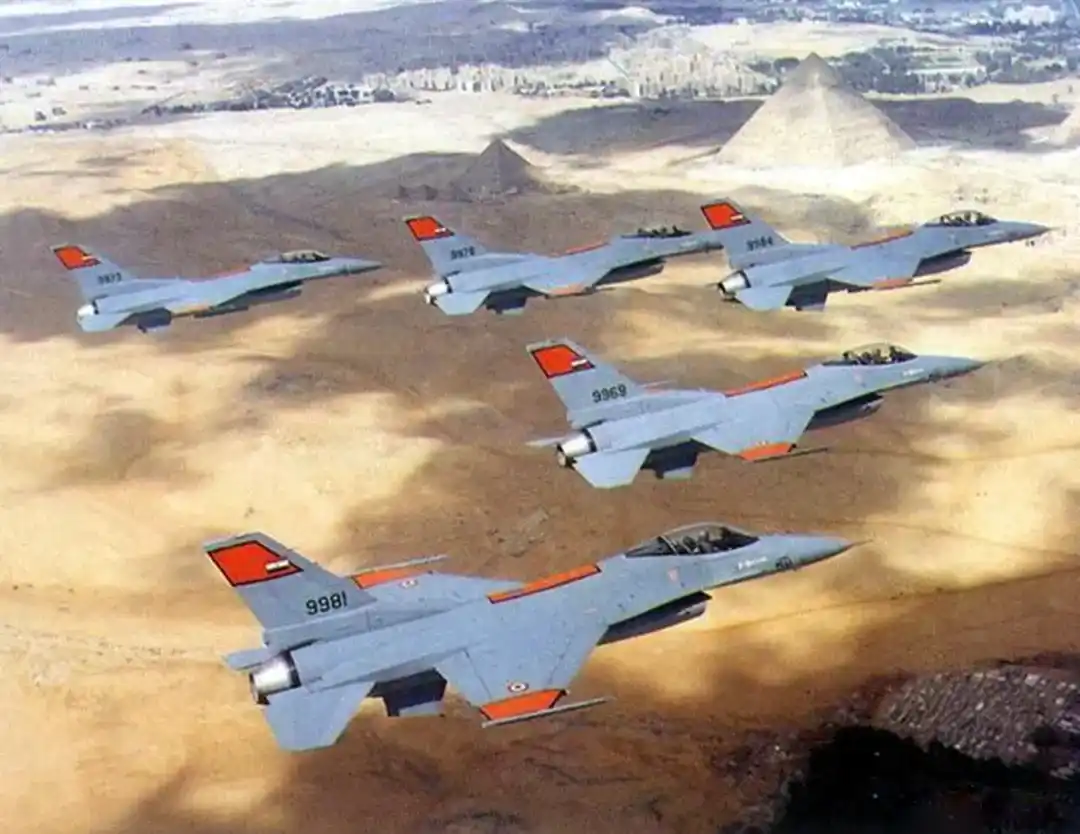
The Egyptian Air Force (EAF) plays a vital role in the country’s defense strategy and regional security dynamics, particularly in the Middle East. A significant element of Egypt’s aerial power is its fleet of F-16 fighter jets. These multirole combat aircraft are among the most widely used in the world, having proven their capabilities in numerous conflicts and military operations. However, despite possessing one of the largest fleets of F-16s in the region, Egypt faces challenges related to performance limitations and geopolitical constraints, particularly stemming from its dependence on U.S. military aid and arms sales policies. This article explores the capabilities, limitations, and broader implications of Egypt’s F-16 fleet, as well as the country’s shift towards diversifying its military procurements.
The Scale and Performance Constraints of Egypt’s F-16 Fleet
Fleet Size and Strategic Importance
Egypt is home to one of the largest fleets of F-16s in the Middle East, with more than 200 aircraft in service. This positions Egypt as a significant military power in the region, alongside countries like Israel, Turkey, and Saudi Arabia. The F-16’s agility, versatility, and proven combat record make it a cornerstone of Egypt’s air superiority strategy.
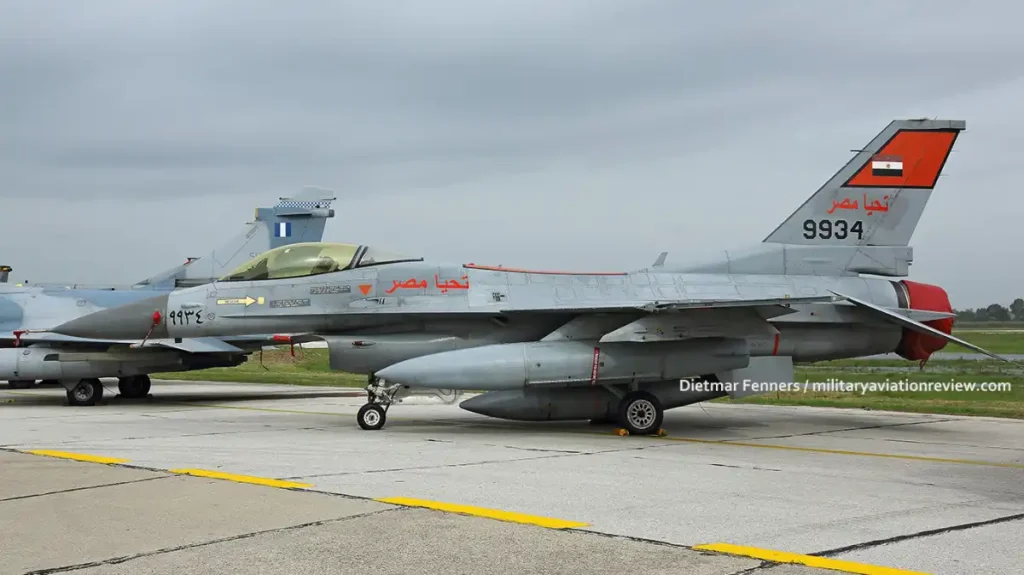
Weapon System Limitations
Despite the large scale of the fleet, Egypt’s F-16s suffer from several performance restrictions. One of the most significant limitations is the restriction on weapons systems imposed by the United States. Under U.S. law, Egypt is prohibited from equipping its F-16s with advanced air-to-air missiles such as the AIM-120 AMRAAM, a medium-range missile with a range of over 100 kilometers. Instead, Egypt is limited to using the AIM-7 Sparrow, a relatively shorter-range missile (up to 45 kilometers).
This limitation severely compromises Egypt’s beyond-visual-range (BVR) combat capabilities, leaving its air force less effective in intercepting and countering enemy aircraft at longer ranges. In regional conflicts, particularly in scenarios where enemy air forces possess advanced aircraft with longer-range missile capabilities, such as Israel’s F-35 stealth fighters, Egypt’s F-16s are at a distinct disadvantage.
Technological Age and Gaps in Modernization
Another critical limitation of Egypt’s F-16 fleet is the age and lack of modernization of its aircraft. While the F-16 is a highly adaptable and capable fighter, Egypt’s fleet does not benefit from the most cutting-edge technologies available. For example, Egyptian F-16s lack the AN/APG-83 AESA radar system, which provides superior targeting, tracking, and jamming resistance. The absence of such modern technologies prevents Egypt from matching the capabilities of adversaries like Israel, which has upgraded its fleet with F-35 stealth fighters and advanced radar systems.
This technological gap was particularly evident during the 2024 Gaza conflict, where Egyptian F-16s were unable to effectively counter Israel’s F-35s, which possess stealth capabilities and are equipped with superior electronic warfare systems. The inability of Egyptian F-16s to engage Israeli aircraft at long ranges or evade advanced radar systems exposed the limitations of Egypt’s air force in modern combat scenarios.
Geopolitical and Strategic Challenges
The Gaza Conflict and Operational Shortcomings
The 2024 Gaza conflict highlighted the performance deficiencies of Egypt’s F-16 fleet. The conflict revealed how the limitations in Egypt’s air-to-air missile systems and electronic warfare capabilities restricted its ability to engage adversaries possessing cutting-edge technologies like the F-35. The lack of mid-range missile options and the inability to perform advanced electronic jamming placed Egyptian aircraft at a severe disadvantage against technologically superior Israeli fighters.
Egypt’s reliance on U.S. military aid has tied its hands in terms of weapons system upgrades, and the lack of independent technological development has made it challenging for the Egyptian military to maintain a competitive edge in regional air combat. This situation underscores the broader geopolitical realities of the Middle East, where military aid and arms sales restrictions play a key role in shaping military capabilities.
U.S. Military Aid and Its Strategic Intentions
The United States has long been a key supplier of military equipment to Egypt, particularly through the Foreign Military Financing (FMF) program. However, the terms of these arms sales often come with strategic constraints designed to maintain a balance of power in the region. By limiting the performance capabilities of Egypt’s F-16 fleet, the U.S. seeks to ensure that Egypt cannot challenge Israel’s military superiority.
The restrictions on Egypt’s F-16s—ranging from missile limitations to technological shortcomings—serve as part of a broader strategy to prevent Egypt from developing a military force that could potentially rival Israel. As a result, Egypt’s air force is effectively constrained to playing a role as a regional stabilizer rather than an active contender in regional power dynamics.
Diversification of Military Procurement: The Shift to Chinese Fighters
Exploring Alternative Suppliers: The Case of the J-10CE
Frustrated by the constraints placed on its military capabilities by U.S. arms sales policies, Egypt has increasingly sought to diversify its sources of military equipment. This is particularly evident in the country’s decision to procure Chinese-made weapons systems, including the J-10CE fighter jet.
The J-10CE, a highly capable multirole fighter, offers performance capabilities that surpass those of Egypt’s U.S.-supplied F-16s. Equipped with PL-15E long-range air-to-air missiles, the J-10CE boasts a missile range of up to 145 kilometers, significantly outperforming the AIM-7 Sparrow and even the AIM-120D used by Israel. This advancement in missile technology gives Egypt’s air force a much-needed boost in BVR combat and enhances its deterrence capabilities.
The Benefits of Chinese Weapons Systems
Unlike U.S. military equipment, which is often sold with performance limitations, Chinese weapons systems do not come with such restrictions. This grants Egypt greater autonomy in its defense procurement strategy. By acquiring Chinese-made J-10CE fighter jets, Egypt is not only upgrading its air combat capabilities but also reducing its dependence on the United States for military technology.
Furthermore, the J-10CE and associated PL-15E missiles provide Egypt with greater strategic autonomy by offering advanced technologies that are not restricted by Western powers. This shift marks a broader trend in the Middle East, as countries in the region increasingly seek to diversify their military suppliers to reduce their dependency on Western arms markets.
The Complexities of Military Integration and Maintenance
Balancing Multiple Weapon Systems
As Egypt continues to expand and modernize its military with a mix of U.S., Russian, French, and Chinese equipment, the logistical and operational complexities of maintaining and integrating these diverse systems become more pronounced. Egypt must ensure that its air force’s avionics, radar systems, and weapons platforms are compatible across different countries’ systems. This includes ensuring that the navigation systems are compatible with GPS, GLONASS, and BeiDou, requiring a high level of technical integration.
The integration of weapons systems from various sources also presents challenges in terms of training personnel, maintaining equipment, and ensuring interoperability between platforms. With Egypt’s increasing reliance on multiple foreign suppliers, the Egyptian military faces the difficult task of coordinating complex supply chains, maintenance schedules, and upgrades for a wide array of technologies.
The Role of Strategic Autonomy
Egypt’s push for greater strategic autonomy in its military procurement is a clear response to the U.S. restrictions and the need to ensure that its military is equipped to confront future challenges. The acquisition of Chinese systems, particularly the J-35 fighter jet and Y-20 transport aircraft, further reflects Egypt’s desire to reduce dependency on Western defense systems and expand its military sovereignty.
Future Prospects: Potential Shifts in Regional Power Dynamics
Impact on the Middle East’s Air Power Landscape
Egypt’s efforts to diversify its military procurement could have significant repercussions for the balance of air power in the Middle East. As countries like Egypt, Turkey, and Saudi Arabia move towards non-Western weapons systems, the traditional dominance of U.S. and European fighter jets may begin to erode. This trend could shift the regional power dynamics, potentially leading to a more multipolar aerial competition, with Chinese and Russian systems playing a more prominent role.
U.S. Response to Egypt’s Strategic Shifts
In response to Egypt’s increasing military autonomy, the United States may attempt to exert pressure by cutting military aid or imposing technology blocks. However, Egypt has shown a clear intent to pursue alternative suppliers and reduce its reliance on U.S. systems, signaling a shift towards a more self-reliant defense strategy.
Conclusion
The Egyptian F-16 fleet illustrates the broader complexities of modern military procurement and regional power dynamics in the Middle East. While the F-16s remain a significant asset in Egypt’s air force, the limitations imposed by U.S. arms sales policies and the technological gap between Egypt and its regional rivals highlight the challenges facing the country’s air defense capabilities. Egypt’s decision to diversify its military procurements by turning to Chinese fighter jets and advanced missile systems represents a strategic shift towards greater military independence. This evolving trend may have profound implications for the future of Middle Eastern defense and the global arms trade.