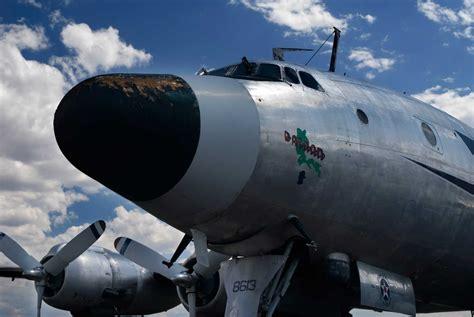
The Lockheed C-121 Constellation occupies a unique place in aviation history. Few aircraft have ever combined technical innovation, unmistakable styling, and historical importance as successfully as the legendary “Connie.” Distinguished by its graceful dolphin-shaped fuselage, signature triple-tail assembly, and the unmistakable roar of four Wright radial engines, the Constellation became the aircraft that ushered commercial aviation into the modern age of long-distance, pressurized flight.
Today, more than seventy years after its golden era began, virtually every Constellation has disappeared from active skies. Museums preserve many examples, while others were lost to scrapyards decades ago. Yet remarkably, only two Lockheed C-121 Constellations remain airworthy in 2026, continuing to fly as living ambassadors of one of aviation’s greatest engineering achievements. Their continued operation represents thousands of volunteer hours, extraordinary mechanical expertise, and an unwavering commitment to preserving aviation heritage.
By continuing to fly instead of remaining static museum exhibits, these historic aircraft allow modern audiences to experience an era when piston-powered airliners ruled international skies and crossing oceans represented the cutting edge of human achievement.
After all, history becomes far more meaningful when it is still capable of taking off.
The story of these surviving Constellations is therefore not simply about vintage aircraft—it is about preserving one of aviation’s greatest masterpieces for future generations.
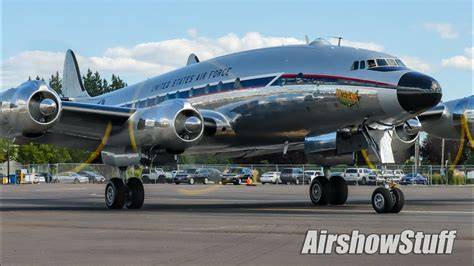
How Many Lockheed C-121 Constellations Are Still Airworthy?
Despite more than 850 Lockheed Constellations being built across numerous variants, only two examples remain capable of flying under their own power.
These extraordinary survivors include:
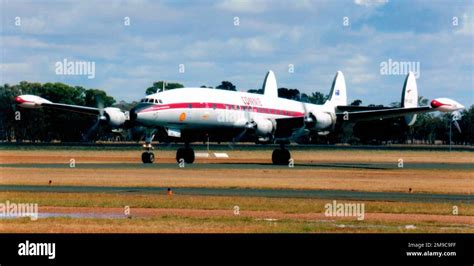
- VH-EAG “Southern Preservation”, operated by the Historical Aircraft Restoration Society (HARS) in Australia.
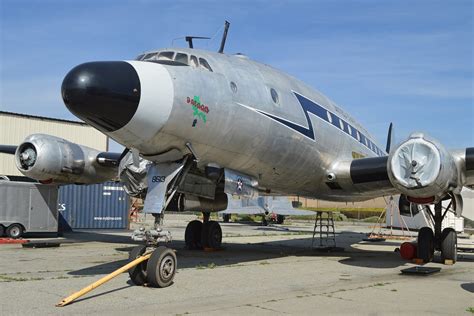
- N422NA “Bataan”, maintained by the Planes of Fame Air Museum in Chino, California.
Unlike museum aircraft that remain permanently grounded, these Constellations continue to perform demonstration flights, attend major airshows, conduct educational programs, and occasionally carry passengers during special heritage flights. Their continued operation provides an authentic glimpse into mid-century aviation that no simulator or static display can fully replicate.
Watching a Connie start its four Wright R-3350 engines, listening to the rhythmic growl of eighteen cylinders per engine, and witnessing its elegant climb into the sky creates an experience unlike any modern jetliner can offer.
The Birth of an Aviation Legend
The Lockheed Constellation began not as an ordinary commercial project but as an ambitious vision to redefine long-distance air travel.
In June 1939, aviation entrepreneur Howard Hughes met with Jack Frye, president of Trans World Airlines (TWA), alongside Lockheed executives including company president Robert Gross and chief engineer Clarence “Kelly” Johnson. Their objective was revolutionary.
They envisioned an aircraft capable of:
- Flying nonstop across the continental United States.
- Cruising significantly higher than existing airliners.
- Traveling approximately 100 mph faster than the Douglas DC-3.
- Providing unprecedented passenger comfort through cabin pressurization.
At the time, such ambitions bordered on impossible.
Cabin pressurization had only recently been demonstrated experimentally, while most airliners remained relatively slow, noisy, and vulnerable to weather.
Lockheed’s engineers responded with an aircraft unlike anything the world had previously seen.
Its sleek aerodynamic profile reduced drag dramatically. The long, graceful fuselage maximized efficiency while improving passenger comfort. Most notably, the triple-tail configuration solved an unusual engineering challenge by allowing the aircraft to fit existing hangar doors without sacrificing vertical stabilizer area.
The result was the Lockheed L-049 Constellation.
Although commercial airlines immediately recognized its potential, World War II intervened before widespread airline service could begin.
World War II Transformed the Connie into the C-69
As America entered World War II, the U.S. government requisitioned every early Constellation before civilian delivery.
Instead of serving airline passengers, the aircraft became the C-69 military transport, transporting troops, cargo, and essential supplies across continents.
The aircraft’s speed, range, and high-altitude capability proved invaluable during wartime logistics.
Howard Hughes skillfully maintained the aircraft’s commercial future by conducting publicity flights and record-breaking demonstrations whenever military authorities permitted. These highly publicized operations ensured that airlines eagerly anticipated the Constellation once peace returned.
When the war ended, the Connie transitioned almost seamlessly into civilian service, helping launch the global aviation boom that reshaped international travel.
The Aircraft That Made Pressurized Air Travel Mainstream
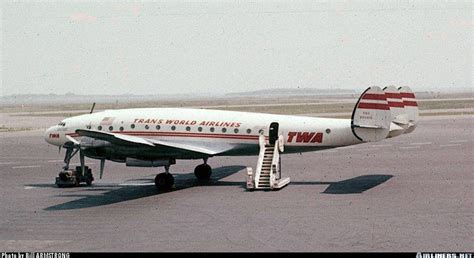
While Boeing’s 307 Stratoliner introduced pressurized cabins first, the Lockheed Constellation became the first pressurized airliner to achieve widespread commercial success.
Passengers immediately noticed the difference.
Instead of enduring turbulent low-altitude routes, Constellations routinely cruised between 20,000 and 25,000 feet, flying above much of the weather while providing smoother, quieter journeys.
Cabin pressurization also dramatically reduced passenger fatigue during long-distance travel.
For airlines, these improvements translated into faster schedules, greater reliability, and improved customer satisfaction.
The Constellation effectively redefined expectations for international air travel.
Engineering That Was Decades Ahead of Its Time
Much of the Constellation’s enduring fascination comes from its remarkable engineering sophistication.
Power came from four Wright R-3350 Turbo-Compound radial engines capable of producing approximately 2,500 horsepower each during normal operation, with emergency outputs reaching roughly 3,400 horsepower.
Combined, these engines enabled cruise speeds approaching 375 mph (603 km/h).
Additional technical highlights included:
- Wingspan of 123 feet (37.5 meters)
- Length of 95 feet 2 inches (29 meters)
- Service ceiling of 25,000 feet
- Maximum ferry range exceeding 7,500 nautical miles
- Fuel capacity exceeding 6,200 gallons
- Passenger capacity between 80 and 109 travelers on Super Constellation variants
Perhaps even more impressive than these specifications was the workload demanded of flight crews.
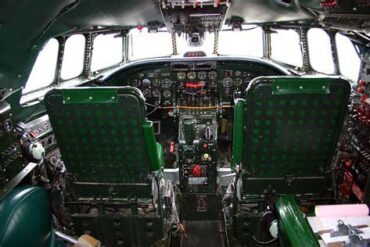
Unlike modern automated aircraft, Constellation crews continuously managed engine mixtures, propeller pitch, intercooler temperatures, turbo-compound systems, and fuel balancing throughout each flight.
The aircraft required genuine teamwork between pilots and flight engineers.
Flying a Connie was as much mechanical artistry as aviation.
Military Variants Expanded the Aircraft’s Legacy
After 1962, virtually all military Constellations received the C-121 designation, though numerous specialized versions had already entered service.
Military operators adapted the aircraft into multiple roles including:
- Long-range transport aircraft
- Executive VIP transports
- Airborne early warning platforms
- Electronic surveillance aircraft
- Anti-submarine warfare aircraft
- Command-and-control centers
More than 600 military-configured Constellations served American and allied forces from World War II through the early 1970s.
Their versatility allowed them to remain operational even as early jet transports began entering military inventories.
VH-EAG Southern Preservation: Australia’s Flying Super Connie
Among the two remaining airworthy Connies, VH-EAG “Southern Preservation” stands as one of aviation preservation’s greatest achievements.
Originally manufactured as a C-121C Super Constellation, serial number 54-0157, the aircraft entered U.S. Air Force service in October 1955.
Throughout its military career, it served multiple organizations including:
- 1608th Military Air Transport Wing
- Mississippi Air National Guard
- West Virginia Air National Guard
- Pennsylvania Air National Guard
Following retirement in 1977, the aircraft entered long-term storage at Davis-Monthan Air Force Base in Arizona.
Like countless military aircraft, it appeared destined to deteriorate indefinitely beneath the desert sun.
Fortunately, members of Australia’s Historical Aircraft Restoration Society discovered the neglected airframe while searching for spare parts for another historic aircraft.
Rather than stripping it for components, they decided to save it.
That decision ultimately preserved one of the world’s last flying Constellations.
An Extraordinary Restoration That Spanned Continents
Restoring VH-EAG required determination on an astonishing scale.
Volunteers completed 47 separate expeditions from Australia to Arizona.
Collectively, restoration teams invested approximately 16,000 hours rebuilding the aircraft.
Nearly every major system required attention.
Engines underwent complete overhauls.
Flight controls required rebuilding.
Electrical systems demanded modernization while preserving historical authenticity.
Corrosion repairs consumed thousands of labor hours.
In 1994, the aircraft officially became VH-EAG, receiving its now-iconic Qantas heritage livery shortly afterward.
On February 3, 1996, the Super Constellation returned to flight after spending eighteen years grounded.
Its remarkable delivery flight back to Australia lasted approximately 39.5 hours, routing through Oakland, Honolulu, Pago Pago, and Nadi before finally arriving in Sydney.
Today, the aircraft operates from the HARS Aviation Museum at Illawarra Regional Airport, regularly appearing at Australian aviation events.
The Incredible Story of N422NA “Bataan”
The second surviving airworthy Constellation possesses perhaps an even richer historical pedigree.
Constructed in 1948 as C-121A serial 48-0613, the aircraft initially served the Military Air Transport Service during the Berlin Airlift.
Soon afterward, Lockheed converted it into a luxurious VC-121A VIP transport.
The transformation included:
- Executive seating
- Advanced weather radar
- Panoramic observation windows
- Enhanced communications equipment
General Douglas MacArthur personally named the aircraft “Bataan.”
It subsequently transported him throughout the Korean War, including his famous journey to Wake Island for meetings with President Harry Truman.
Following MacArthur’s removal from command, Bataan continued carrying senior American military leaders throughout the Pacific.
Its passenger list eventually included Generals Ridgway, Clark, Taylor, and Curtis LeMay.
Few surviving aircraft can claim such an extraordinary historical résumé.
From Military Service to the Apollo Program
The Constellation’s remarkable career did not end with military VIP transport.
Beginning in 1966, Bataan entered an entirely different chapter under NASA.
Registered as N422NA, the aircraft became part of the Apollo Calibration Aircraft fleet.
Rather than carrying astronauts, it transported sophisticated telemetry systems and communications equipment used to validate worldwide tracking stations supporting lunar missions.
These calibration flights helped ensure reliable communications during the Apollo program’s historic missions to the Moon.
When Apollo funding declined, the aircraft eventually retired once more.
It spent decades displayed outdoors before the Planes of Fame Air Museum rescued and restored it.
Following an extensive eight-year restoration, Bataan returned to flight, preserving an irreplaceable piece of American aerospace history.
Why Keeping a Connie Flying Is So Difficult
Operating any vintage aircraft presents enormous challenges.
Operating a Lockheed Constellation elevates those challenges to an entirely different level.
Replacement components are no longer manufactured.
Original engineering drawings often require interpretation rather than direct implementation.
Experienced mechanics familiar with turbo-compound radial engines have become increasingly rare.
Every inspection requires painstaking attention to aging airframes, complex engine systems, hydraulic components, electrical wiring, and vintage instrumentation.
Maintaining historical authenticity while satisfying modern aviation regulations further complicates every restoration decision.
Each flight therefore represents the successful culmination of thousands of maintenance hours invisible to spectators watching from the flight line.
Why the Lockheed Constellation Continues to Inspire Aviation Enthusiasts
The Constellation remains one of aviation’s most emotionally compelling aircraft because it perfectly represents an era when engineering elegance and mechanical craftsmanship worked together in harmony.
Its flowing fuselage remains instantly recognizable.
Its triple-tail silhouette remains unmatched.
Its engines produce one of aviation’s most distinctive sounds.
Unlike many historic aircraft remembered only through photographs, the surviving C-121s continue demonstrating exactly how aviation evolved during the twentieth century.
They educate new generations while allowing older enthusiasts to reconnect with memories of aviation’s golden age.
Few flying museums provide such an immersive connection between history and technology.
The Future of the Last Flying Lockheed C-121 Constellations
The continued survival of VH-EAG and Bataan depends upon sustained public support, skilled volunteers, museum partnerships, and careful financial planning.
Operating costs continue rising as specialized maintenance becomes increasingly complex.
Meanwhile, fewer engineers possess firsthand experience maintaining large piston-powered transports.
Nevertheless, organizations dedicated to these aircraft remain committed to preserving their authenticity while ensuring safe operation under modern regulations.
Airshows, educational events, cockpit tours, and heritage flights generate public interest that helps fund ongoing restoration work.
Every successful takeoff demonstrates that historical preservation is far more meaningful when history remains alive.
As long as these magnificent aircraft continue climbing into the sky beneath the thunder of four radial engines, the Lockheed Constellation will remain more than an artifact—it will remain a living symbol of innovation, ambition, and the remarkable age that transformed global air travel forever.