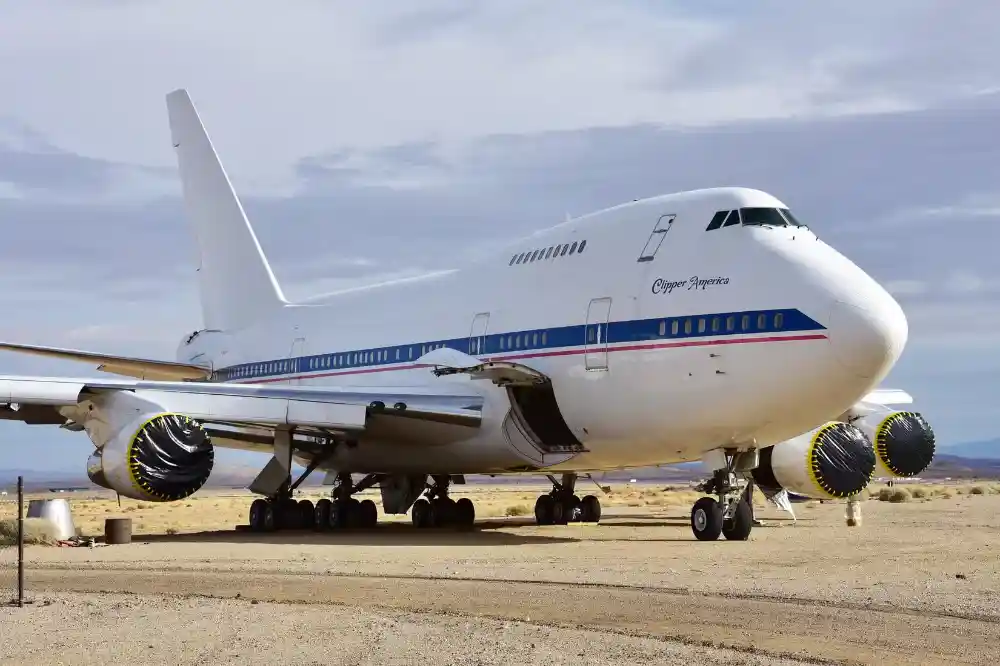
Few aircraft have lived as many different lives as Boeing 747SP N747A. During nearly four decades of service, the rare jumbo jet carried airline passengers across oceans, transported royalty and government officials, served as a luxurious corporate aircraft for one of America’s most recognizable electronics retailers, and ultimately helped keep one of NASA’s most remarkable flying observatories in the sky. It is a story that perfectly captures both the brilliance and commercial struggles of one of Boeing’s most unusual aircraft designs.
Unlike most retired airliners that quietly disappear into aircraft storage yards, N747A continued to find new purposes long after its passenger-carrying days had ended. Every owner discovered a different strength in the aircraft, demonstrating why the Boeing 747SP earned a reputation for versatility despite its limited commercial success. Its final mission may have lacked the glamour of its earlier years, but donating vital components to support scientific research arguably became one of its most important contributions.
The aircraft’s remarkable journey also mirrors the broader history of the 747SP itself—a revolutionary airplane that arrived ahead of its time, solved unique operational challenges, but ultimately struggled against changing airline economics and rapidly advancing aircraft technology.
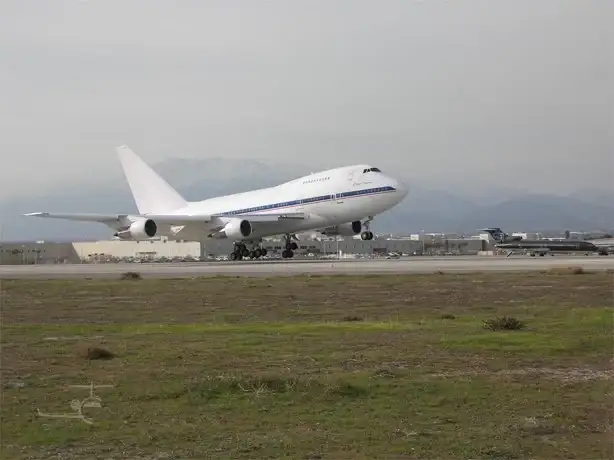
The Boeing 747SP Was Unlike Any Other Jumbo Jet
When Boeing introduced the 747SP, short for Special Performance, it was attempting to solve a very specific airline problem. The original Boeing 747-100 had transformed long-haul aviation with enormous passenger capacity, but not every international route could consistently fill more than 350 seats.
Many airlines needed an aircraft capable of flying exceptionally long distances while carrying fewer passengers. Instead of designing an entirely new airplane, Boeing shortened the fuselage of the 747-200, reduced its weight, strengthened its structure, and optimized the aircraft for maximum range.
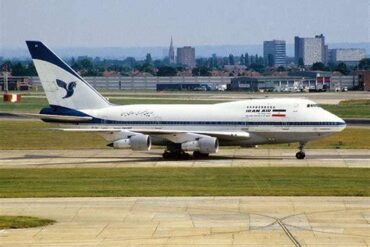
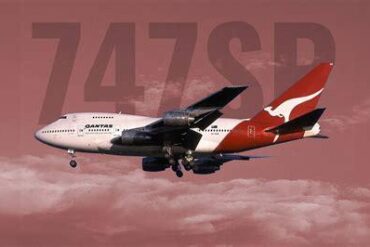
The result looked unusual. With its noticeably shorter fuselage mounted on the enormous wings of the standard 747, the aircraft appeared almost compressed. Aviation enthusiasts often described it as a “stubby” jumbo, yet beneath that distinctive appearance lay impressive engineering.
The shorter fuselage significantly reduced structural weight while maintaining the enormous fuel capacity housed inside the wings. This combination enabled the aircraft to fly farther than any other commercial widebody of its era, opening routes that previously required technical fuel stops.
Its performance quickly attracted airlines operating long, thin international markets where passenger demand could not justify a standard 747 but where range remained essential.
Technical Specifications That Made The 747SP Special
The aircraft delivered capabilities that were unmatched during much of the late 1970s and early 1980s.
Key specifications included:
- Overall length: 184 feet 9 inches (56.3 meters)
- Wingspan: 195 feet 8 inches (59.6 meters)
- Maximum takeoff weight: 659,890 pounds (299,320 kilograms)
- Maximum cruising speed: Mach 0.88
- Typical cruise speed: Mach 0.86
- Maximum operating altitude: Approximately 45,000 feet
- Maximum range: 6,650 nautical miles (12,320 kilometers)
- Engines: Pratt & Whitney JT9D or Rolls-Royce RB211 turbofans
Although significantly shorter than the standard 747-100, the aircraft sacrificed surprisingly little in capability. Instead, it gained exceptional range that remained unmatched until later generations of long-haul aircraft appeared.
Beginning Life With Braniff International Airways
Fresh from Boeing’s production line in Everett, Washington, N747A entered service in May 1980 with Braniff International Airways.
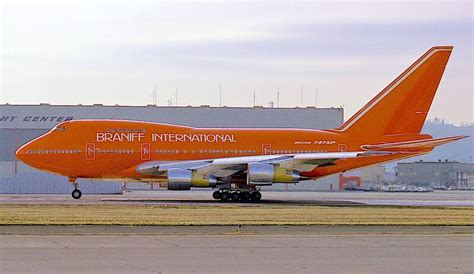
At the time, Braniff was expanding aggressively into international markets. The airline’s colorful liveries and ambitious route network had made it one of America’s most recognizable carriers, and the 747SP seemed perfectly suited for connecting distant destinations.
Passengers boarding the aircraft experienced all the luxury associated with international travel during the golden age of aviation. Spacious cabins, premium meal service, generous seating, and the prestige of flying aboard Boeing’s newest long-range flagship made the aircraft a centerpiece of Braniff’s international ambitions.
Unfortunately, circumstances beyond the aircraft’s control changed everything.
Braniff collapsed into bankruptcy in 1982 after financial pressures, rising fuel costs, and industry challenges overwhelmed the airline. Although the carrier disappeared, its nearly new 747SPs still had decades of useful life remaining.
Flying Under Pan Am And United Airlines
Following Braniff’s collapse, the aircraft found a new home with Pan American World Airways, better known as Pan Am.
For Pan Am, the 747SP fit naturally into an airline that specialized in ultra-long-haul international operations. The carrier had been one of Boeing’s earliest supporters of the program and understood precisely where the aircraft excelled.
Under Pan Am, the aircraft operated prestigious intercontinental routes where passenger numbers were insufficient for larger 747 variants but where nonstop capability remained highly valuable.
The cabin configuration changed once again as the airline optimized seating for its own network. Over the years, N747A would receive several interior layouts, reflecting changing operational priorities rather than any limitation of the aircraft itself.
After approximately two and a half years with Pan Am, ownership transferred again, this time to United Airlines.
United continued operating the aircraft on long-distance passenger services until the early 1990s. By then, the aviation industry was changing rapidly. More efficient twin-engine aircraft were beginning to challenge the economics of four-engine widebodies, while newer Boeing models gradually reduced the 747SP’s unique advantages.
Its commercial airline career eventually came to an end in 1993.
A Second Career As A Royal VIP Aircraft
Rather than heading directly into retirement, N747A embarked upon perhaps its most exclusive role.
The aircraft joined the Royal Flight of Oman, where it was transformed from a commercial airliner into a luxury government transport.
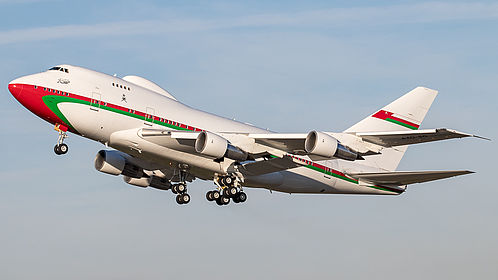
The conversion involved removing conventional airline seating and replacing much of the cabin with luxurious VIP accommodations. Instead of transporting hundreds of passengers, the aircraft now carried members of Oman’s royal family, senior government officials, diplomats, and state delegations.
Private meeting rooms, executive offices, elegant lounges, premium seating, and highly customized interiors replaced the densely packed passenger cabins of its airline years.
For more than eleven years, the aircraft quietly served in this prestigious capacity, flying official missions around the world while remaining largely out of public view.
Its reliability, enormous range, and spacious cabin made it an ideal government transport, demonstrating yet another role perfectly suited to the adaptable 747SP platform.
Fry’s Electronics Gave The Jumbo Jet Another Life
Following retirement from royal service, the aircraft spent time in storage before attracting an unexpected new owner.
In late 2006, Fry’s Electronics, one of America’s most recognizable electronics retail chains, purchased the aircraft.
After refurbishment, the aircraft re-entered service under the U.S. registration N747A and received the name Clipper America.
The choice of name carried historical significance. During its Pan Am years, the aircraft had previously operated under the same famous title, preserving a small connection to its earlier airline heritage.
As a corporate aircraft, the 747SP became one of the largest privately operated executive jets in existence.
Rather than carrying hundreds of paying passengers, it transported company executives, invited guests, and special corporate travelers inside a uniquely configured luxury interior that emphasized comfort rather than capacity.
The aircraft stood as an extraordinary example of how adaptable the 747SP had become throughout its lifetime.
The Final Flight Was Into Storage
Despite its versatility, time eventually caught up with the aircraft.
By 2016, operating a four-engine jumbo jet had become increasingly expensive. Modern long-range twin-engine aircraft such as the Boeing 777 and Boeing 787 Dreamliner offered dramatically lower fuel consumption, reduced maintenance requirements, and superior operating economics.
Consequently, N747A entered storage in the Mojave Desert, joining countless retired aircraft awaiting uncertain futures.
Unlike many stored aircraft that eventually returned to service, N747A’s next owner had no intention of flying it again.
NASA Purchased N747A For A Very Different Mission
The aircraft’s final owner was NASA.
Interestingly, NASA never intended to operate N747A as a flying aircraft.
Instead, the space agency purchased it primarily as a source of spare parts for another highly specialized Boeing 747SP known as SOFIA—the Stratospheric Observatory for Infrared Astronomy.
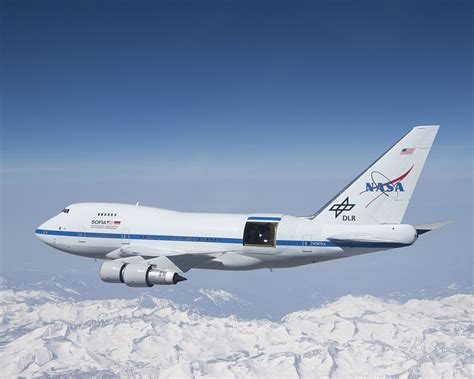
SOFIA represented one of the most ambitious airborne astronomy projects ever undertaken. Engineers had modified a Boeing 747SP by installing a massive infrared telescope inside the rear fuselage.
Flying above most of Earth’s water vapor at altitudes approaching 45,000 feet, SOFIA allowed astronomers to observe celestial objects that ground-based infrared telescopes could not study effectively.
Because only 45 Boeing 747SPs had ever been built, sourcing replacement components had become increasingly difficult.
N747A provided exactly what NASA required.
Its engines and numerous structural, mechanical, and systems components became invaluable resources for maintaining SOFIA’s continued operations.
Reports indicate that its engines were removed during 2018 and reconditioned for use supporting NASA’s flying observatory.
Although N747A never carried NASA markings into the sky, it nevertheless played a direct role in enabling years of important astronomical research.
Why The Boeing 747SP Was Both Brilliant And Commercially Challenging
The history of N747A also reflects the broader commercial story of the entire 747SP program.
From an engineering standpoint, the aircraft was remarkably successful. It delivered unprecedented range while maintaining the comfort, reliability, and operational flexibility expected from the 747 family.
However, airlines evaluate aircraft using financial metrics as much as engineering achievements.
The biggest challenge facing the 747SP was its four engines.
Compared with competing tri-jets like the McDonnell Douglas DC-10 and Lockheed L-1011 TriStar, the aircraft consumed more fuel while simultaneously carrying fewer passengers than standard 747 variants.
As fuel prices increased throughout the 1980s, those disadvantages became increasingly difficult to ignore.
Boeing originally anticipated selling more than 200 aircraft, yet production concluded after only 45 examples.
The arrival of the Boeing 747-400 further complicated matters. The newer variant exceeded the SP’s range while carrying substantially more passengers, effectively eliminating the primary reason many airlines had considered the Special Performance model in the first place.
Why Governments Loved The 747SP
Although airlines gradually retired the aircraft, governments and private operators continued recognizing its unique advantages.
Its extraordinary range allowed nonstop intercontinental flights without refueling.
The spacious widebody cabin could be transformed into luxurious executive accommodations.
Its proven 747 airframe delivered exceptional reliability.
These characteristics made it particularly attractive for heads of state, royal families, and military transport organizations.
Several governments ultimately became the final operators of the aircraft long after commercial airlines had moved on to newer designs.
The Legacy Of N747A Lives On
Today, only a handful of Boeing 747SP aircraft remain operational worldwide. Several survive in preservation, while others continue serving specialized roles such as engine testing and government transport.
N747A itself no longer exists as a complete aircraft. After years of storage, it was gradually dismantled so its valuable components could support NASA’s SOFIA program and extend the operational life of one of aviation’s most unique flying laboratories.
Its disappearance from the skies does not diminish its remarkable career. Few aircraft can claim to have served major commercial airlines, flown royalty across continents, operated as an executive corporate flagship, and finally contributed to groundbreaking scientific discovery.
The story of N747A also highlights the enduring flexibility of the Boeing 747SP. Although commercial sales never matched Boeing’s expectations, the aircraft repeatedly demonstrated capabilities that few other airliners could equal. From Braniff’s international ambitions and Pan Am’s long-haul network to Oman’s royal transport fleet, Fry’s Electronics’ executive operations, and NASA’s astronomical research, the aircraft consistently found new missions whenever its previous role ended.
In many respects, N747A represents everything that made the Boeing 747SP extraordinary. It was never the most numerous member of the 747 family, nor the most commercially successful, yet it proved capable of adapting to an astonishing variety of roles across nearly forty years of service. Even after its final landing, the aircraft continued contributing to aviation and science through the components that kept SOFIA flying. That enduring usefulness ensures N747A remains one of the most fascinating individual airframes ever to wear the unmistakable silhouette of the Queen of the Skies.