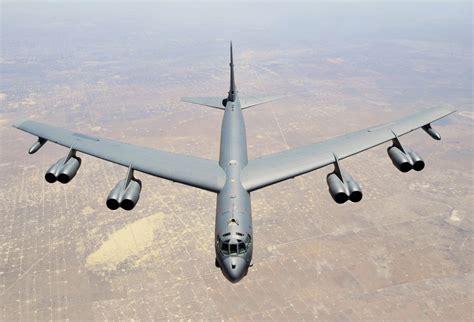
The story of the Boeing B-52 Stratofortress is one of the most extraordinary examples of military aviation endurance ever recorded. Designed in the aftermath of World War II, introduced during the height of Cold War paranoia, and originally intended to deliver nuclear devastation against the Soviet Union, the B-52 was expected to become obsolete decades ago. Instead, it evolved into the backbone of America’s long-range strike strategy and outlived nearly every aircraft designed to replace it.
What makes the B-52 remarkable is not simply its age. It is the fact that for more than 15 years, the aircraft repeatedly appeared on retirement lists, budget-cut proposals, and modernization debates, only to survive every attempt to remove it from service. In a military environment where advanced technology usually replaces older platforms quickly, the B-52 did the impossible: it proved more useful with age.
Today, the aircraft is no longer merely a Cold War relic. It is the US Air Force’s most-deployed long-range strike bomber, serving in missions ranging from Iraq and Afghanistan to strategic deterrence patrols near China, Russia, and Iran. While stealth bombers captured headlines and futuristic concepts dominated defense exhibitions, the B-52 quietly remained the aircraft commanders consistently relied upon when real combat operations demanded range, payload, reliability, and affordability.
The aircraft’s continued survival has now reached a historic turning point. Rather than retiring the fleet, the United States Air Force has committed billions of dollars to transform the bomber into the new B-52J configuration, ensuring that the Stratofortress could remain operational into the 2050s. That timeline would give the bomber nearly a century of continuous military service, something almost unimaginable in aviation history.
The Cold War Origins Of The B-52 Stratofortress
The B-52 emerged from a period when the United States believed strategic bombers were the ultimate instruments of global power. In the late 1940s, the US Air Force wanted an aircraft capable of carrying nuclear weapons across intercontinental distances without relying on forward air bases. The requirement demanded extreme range, enormous payload capacity, and the ability to fly high enough to avoid enemy interception.
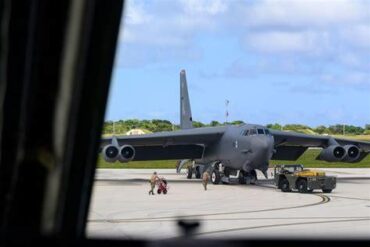
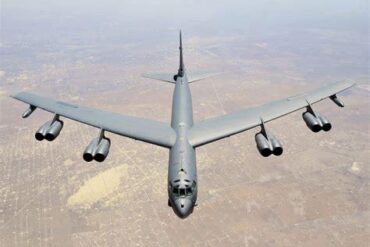
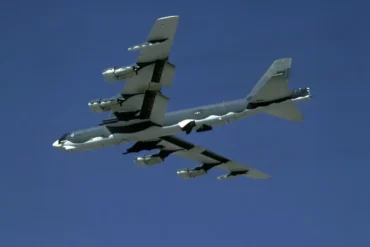
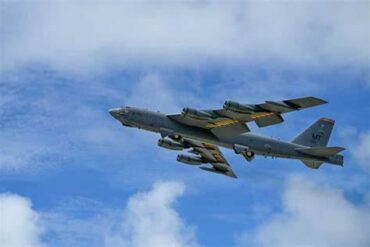
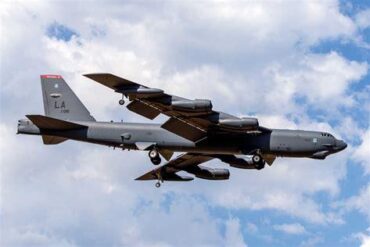
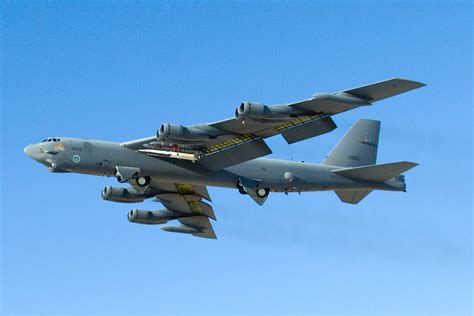
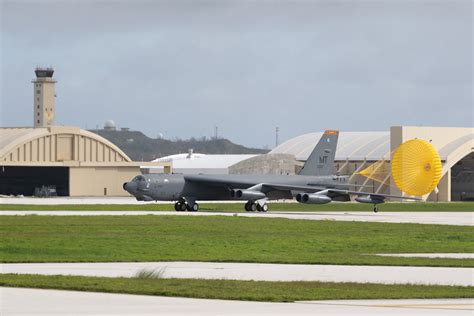
Boeing’s solution became one of the most recognizable military aircraft designs ever created. The bomber featured swept wings, a massive high-wing configuration, and eight turbojet engines mounted in four underwing pods. The aircraft’s unusual landing gear arrangement used a bicycle-style configuration supported by outrigger wheels near the wing tips, giving the bomber its unmistakable ground stance.
The first operational B-52 entered service in 1955. At the time, the aircraft represented the cutting edge of American aerospace engineering. Ironically, the bomber would eventually survive long enough to operate alongside technologies unimaginable during its creation, including stealth fighters, hypersonic weapons, and artificial intelligence-driven battlefield systems.
Unlike many aircraft of its era, the B-52 was built with enormous internal growth potential. The airframe was physically large, structurally robust, and adaptable enough to absorb decades of upgrades. That flexibility later became the key reason the aircraft repeatedly escaped retirement.
Why The USAF Tried To Retire The B-52 Repeatedly
Beginning in the late 1990s and accelerating after the Cold War, multiple Pentagon reviews questioned whether the B-52 still had a future. Defense officials argued that the aircraft lacked stealth capabilities, required aging maintenance infrastructure, and appeared increasingly vulnerable against advanced air defense systems.
The bomber’s survival became even less certain after the arrival of newer platforms like the Rockwell B-1B Lancer and the Northrop B-2 Spirit. Both aircraft appeared technologically superior on paper. The B-1 offered supersonic speed and variable-sweep wings, while the B-2 introduced revolutionary stealth technology designed to penetrate heavily defended airspace.
For years, analysts predicted the B-52 would disappear first.
Instead, the exact opposite happened.
The B-1 suffered from severe maintenance complexity and expensive operational demands. Its swing-wing design created structural stress and significantly increased sustainment costs. The B-2, although technologically groundbreaking, proved incredibly expensive to maintain and difficult to operate at scale. With only 21 examples ever produced, the stealth bomber remained strategically valuable but numerically limited.
Meanwhile, the aging B-52 quietly continued performing missions at a fraction of the cost.
Its simplicity became an advantage. The bomber could carry enormous payloads, remain airborne for extended durations, and launch standoff weapons from outside enemy air defense zones. As modern warfare increasingly relied on cruise missiles and precision-guided munitions, stealth penetration became less essential for every mission profile.
This reality fundamentally changed how military planners viewed the Stratofortress.
The Aircraft That Adapted To Every War
One reason the B-52 survived so many retirement proposals is its astonishing operational adaptability. Few aircraft in history have transitioned across as many military eras while remaining tactically relevant.
During the Cold War, the bomber’s primary mission centered on nuclear deterrence. Programs such as Operation Chrome Dome kept armed B-52s continuously airborne near Soviet territory, ensuring that the United States maintained an immediate retaliatory capability in the event of nuclear conflict.
As Soviet surface-to-air missile systems improved, the aircraft shifted from high-altitude operations to low-level penetration tactics. Crews trained extensively to fly massive bombers at low altitude across hostile terrain, reducing radar exposure while preserving strike capability.
The Vietnam War then transformed the B-52 into a conventional warfare platform. Massive bombing campaigns demonstrated the bomber’s ability to deliver extraordinary volumes of ordnance over large operational areas. Although vulnerable to enemy fighters and missile systems, the aircraft still became one of the defining symbols of American airpower during the conflict.
Remarkably, the B-52 even recorded air-to-air victories during Vietnam. Tail gunners operating rear defensive weapons successfully shot down enemy MiG fighters, a highly unusual achievement for a strategic bomber.
The aircraft later proved equally valuable during Operation Desert Storm, where its ability to launch long-range strikes against Iraqi targets highlighted the growing importance of precision-guided weapons. In the wars following September 11, B-52 crews provided persistent close-air support over Afghanistan and Iraq, loitering for extended periods and delivering rapid strikes for ground forces.
Its transformation from nuclear deterrent to precision strike platform demonstrated a level of versatility rarely seen in strategic aviation.
The Real Reason The B-52 Became America’s Most-Deployed Bomber
The B-52 survived because it consistently delivered operational value at scale.
Military planners eventually recognized that stealth alone could not replace payload capacity, endurance, and affordability. The Stratofortress could carry vast quantities of cruise missiles, smart bombs, mines, and future hypersonic weapons while remaining cheaper to operate than many newer aircraft.
The bomber’s enormous payload flexibility became one of its greatest strengths. A single B-52 can deploy a wide mix of weapons during the same mission, allowing commanders to tailor strikes against multiple target types simultaneously.
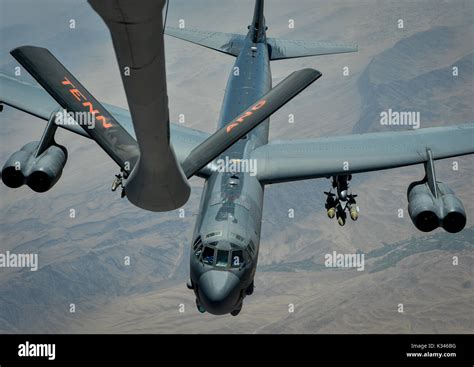
The aircraft also benefits from extraordinary combat range. With aerial refueling support, B-52 missions can span entire continents and oceans without requiring forward deployment. This capability became increasingly important as geopolitical tensions expanded across the Indo-Pacific region.
Unlike stealth bombers that rely on penetrating enemy defenses directly, the B-52 evolved into a standoff strike platform. It launches long-range cruise missiles from safe distances while remaining outside the reach of hostile air defense systems. This operational concept dramatically reduced the importance of stealth for many missions.
The bomber’s reliability also impressed commanders. Despite its age, the B-52 maintained high mission readiness rates compared to more technologically complex aircraft. Air Force leadership repeatedly concluded that replacing the fleet entirely would cost far more than upgrading it.
The Massive B-52J Modernization Program
The decision to modernize the bomber instead of retiring it resulted in the most ambitious B-52 upgrade effort in decades.
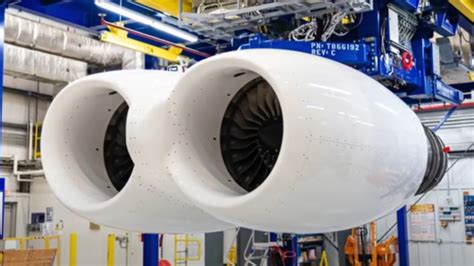
The upcoming B-52J variant will fundamentally transform the aircraft’s operational capability while preserving its iconic external appearance. The most important change involves replacing the aging Pratt & Whitney TF33 engines with new Rolls-Royce F130 turbofans derived from the BR700 commercial engine family.
These new engines are expected to improve fuel efficiency, reduce maintenance demands, and significantly extend operational range. Importantly, the Air Force chose to preserve the aircraft’s eight-engine layout because redesigning the bomber around four engines would have required major structural changes to the wings and internal systems.
Beyond propulsion upgrades, the B-52J will receive a modern AESA radar system, advanced digital avionics, upgraded communications systems, and improved cockpit displays. These changes will dramatically modernize crew operations while improving mission effectiveness in contested environments.
The modernization effort represents an investment exceeding $18 billion, demonstrating how strongly the Air Force now believes in the bomber’s future relevance.
The first upgraded aircraft are expected to enter service in the early 2030s, with the fleet projected to remain operational well into the 2050s.
Why Newer Bombers Could Not Replace The Stratofortress
The irony surrounding the B-52’s survival becomes even more striking when comparing it to the bombers originally expected to replace it.
The B-1B Lancer offered impressive speed and payload capacity, but its operational costs became increasingly unsustainable. Variable geometry wings added enormous maintenance complexity, while structural fatigue issues reduced long-term durability.
The B-2 Spirit revolutionized stealth aviation, yet its extremely high operating costs and limited fleet size prevented it from becoming the backbone of the bomber force. Maintaining stealth coatings required intensive labor and specialized facilities, restricting operational flexibility.
Meanwhile, the B-52 continued flying combat missions efficiently.
This reality reshaped strategic planning inside the Pentagon. Instead of viewing the bomber fleet as a competition between old and new aircraft, the Air Force began seeing the B-52 and stealth bombers as complementary systems.
The B-21 Raider now represents the future stealth penetration platform, while the B-52J will continue serving as the heavy payload carrier capable of launching massive standoff attacks.
Rather than replacing the Stratofortress, modern technology effectively created a new mission that perfectly suited its strengths.
The B-52’s Role In Modern Geopolitical Strategy
Today’s B-52 operations extend far beyond conventional warfare.
The aircraft has become one of America’s most visible strategic signaling tools. Bomber task force deployments regularly send B-52s near contested regions to demonstrate US military reach and alliance commitments.
Flights over Europe reassure NATO allies near Russia. Indo-Pacific patrols signal deterrence toward China. Middle Eastern operations reinforce American presence against Iranian threats.
Because the aircraft is instantly recognizable worldwide, every deployment carries symbolic weight. Few military platforms communicate strategic intent as visibly as a formation of B-52s appearing near contested airspace.
The bomber’s ability to carry nuclear and conventional weapons simultaneously also preserves its role within America’s nuclear triad. Even in an era dominated by ballistic missiles and stealth technology, the visible presence of manned strategic bombers remains politically and militarily important.
Could The B-52 Really Reach 100 Years Of Service?
What once sounded absurd now appears entirely plausible.
If current modernization timelines remain on schedule, the B-52 could remain operational until at least 2055. By that point, the aircraft would achieve approximately 100 years of active military service.
That possibility raises fascinating questions about aviation longevity. Most combat aircraft disappear within a few decades because advancing technology renders them obsolete. The B-52 instead evolved continuously alongside technological change.
Its engines changed. Its avionics changed. Its radar systems changed. Its weapons transformed completely. Yet the core airframe survived because its original design possessed enormous structural resilience and adaptability.
The aircraft’s future ultimately depends on airframe fatigue limits and operational economics. If maintenance costs remain manageable and structural integrity continues meeting operational requirements, the bomber may survive even longer than current projections.
At this point, betting against the Stratofortress has become historically unwise.
For more than 15 years, analysts repeatedly predicted its retirement. Instead, the bomber became America’s most consistently deployed long-range strike aircraft and secured a modernization path extending deeper into the 21st century.
The B-52 was built to fight a Cold War that ended decades ago. Somehow, it also became one of the defining military aircraft of the modern era.