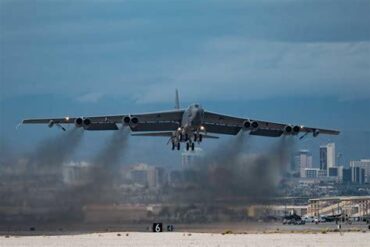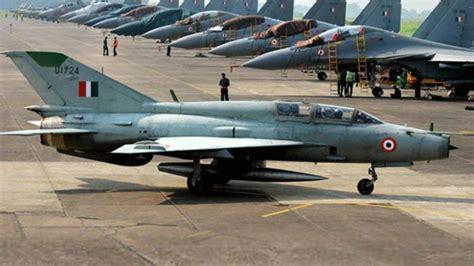
The story of the Mikoyan-Gurevich MiG-21 is not ending with a dramatic final sortie or a ceremonial farewell. Instead, it is dissolving quietly—almost invisibly—into history. For a machine that once defined air combat across continents, its disappearance feels less like a conclusion and more like a slow erasure. By 2026, the most-produced fighter jet in history is no longer a dominant force, but a fading memory scattered across abandoned runways, museum hangars, and classified inventories.
From Cold War Icon to Global Workhorse
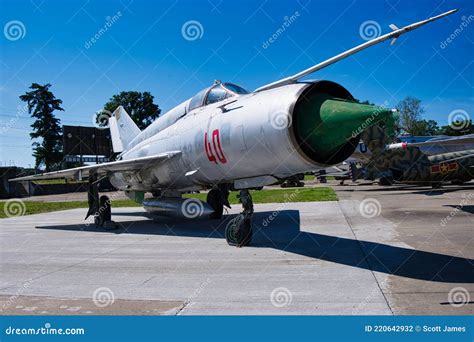
The MiG-21’s rise was nothing short of extraordinary. First flown in 1955 and entering service in 1959, it quickly became the backbone of Soviet and allied air forces. Designed by Mikoyan-Gurevich Design Bureau, the aircraft embodied simplicity, speed, and mass production efficiency.
With over 11,000 units built, the MiG-21 was not just an aircraft—it was a geopolitical instrument. It spread across Asia, Africa, the Middle East, and Eastern Europe, becoming synonymous with Cold War air power. Its affordability allowed developing nations to field supersonic fighters without the massive budgets required for Western alternatives like the Northrop F-5.
Unlike more complex Western jets, the MiG-21 thrived in austere environments. It could operate from rough airstrips, required relatively basic maintenance, and delivered respectable performance in dogfights. For decades, it was the aircraft that defined “good enough” in military aviation—and in many conflicts, “good enough” was more than sufficient.
Why Legends Rarely Go Out With a Bang
Contrary to popular imagination, fighter jets rarely exit the stage in dramatic fashion. There is no universal retirement date, no synchronized grounding ceremony. Instead, aircraft like the MiG-21 fade through a process of gradual irrelevance.
As newer platforms emerge, older jets are reassigned. Frontline combat roles give way to patrol duties, then to training missions, and eventually to storage. This pattern is visible across multiple fleets, including those of Russia, where aging aircraft such as the MiG-29 and Su-27 now operate far from the front lines.
The MiG-21 followed this exact trajectory. Once the spearhead of air defense, it gradually became a relic—still counted on paper, but increasingly absent from real operations. By the time observers began asking whether it was still active, the answer had already shifted from “yes” to “technically.”
The Collapse That Started the Decline
The dissolution of the Soviet Union in 1991 marked the beginning of the MiG-21’s long retreat. Suddenly, Russia inherited an overwhelming inventory of aging aircraft, forcing rapid downsizing. The MiG-21 was among the first to go, retired in the mid-1990s as Moscow prioritized more advanced platforms.
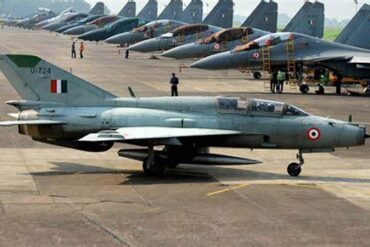
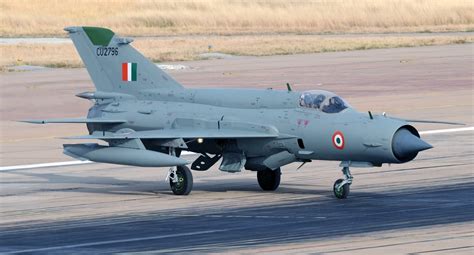
However, the aircraft’s global footprint ensured its survival elsewhere. Export customers—many lacking the resources for immediate modernization—continued flying the MiG-21 for decades. In countries like India, the aircraft underwent upgrades, extending its operational life well into the 21st century.
Yet even modernization has limits. Avionics upgrades and structural reinforcements cannot fully compensate for an airframe designed in the 1950s. Eventually, economics, safety, and combat relevance converge—and retirement becomes inevitable.
A Global Wave of Final Retirements
The final chapter accelerated dramatically in the 2020s. Across the world, one operator after another retired the MiG-21, replacing it with more capable platforms.
In Europe, Croatia became the last nation to operate the type, retiring it in 2024 in favor of the Dassault Rafale. Meanwhile, Romania phased out its upgraded MiG-21 LanceR fleet in 2023, transitioning to F-16 Fighting Falcon and preparing for the F-35 Lightning II.
The most significant milestone came in September 2025, when India officially retired its MiG-21 Bison fleet. As the largest and most committed operator in recent years, India’s decision effectively marked the end of the aircraft’s mainstream service life.
At that moment, the MiG-21 ceased to be a global fighter—and became a historical artifact.
The Illusion of Remaining Fleets
On paper, the MiG-21 still exists. Data suggests around 100 aircraft remain “in service” across several countries, including North Korea, Angola, Yemen, Libya, Mali, Mozambique, and Sudan.
But numbers can be misleading.
In reality, many of these aircraft are unlikely to be airworthy. Satellite imagery often reveals them parked in the same positions for years, suggesting they are either stored, cannibalized for parts, or simply abandoned. In some cases, they persist in official inventories for bureaucratic or propaganda purposes rather than operational necessity.
This discrepancy highlights a critical issue in modern military analysis: presence does not equal capability. An aircraft listed on paper is not the same as one capable of flying combat missions.
Conflict Zones and Silent Skies
Several of the countries still associated with MiG-21 operations are active conflict zones. Yet paradoxically, the aircraft has been largely absent from these wars.
In Yemen and Libya, conflicts have raged for years without consistent evidence of MiG-21 deployment. Instead, these wars have increasingly relied on drones, modernized aircraft, and foreign-supplied systems. In Mali, for example, attention has shifted toward platforms like the Sukhoi Su-25 and emerging drone capabilities.
Even in these high-intensity environments—where older equipment might be expected to persist—the MiG-21 has quietly disappeared. Its absence speaks volumes about its obsolescence.
The Last Confirmed Combat Flights
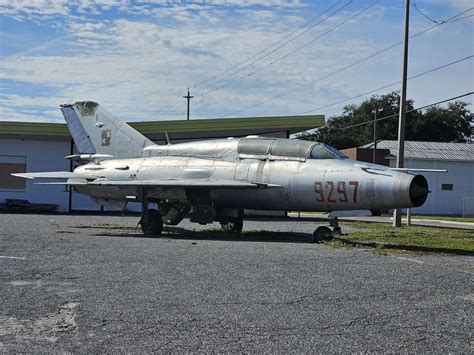
Pinpointing the MiG-21’s final combat missions is challenging, but evidence suggests its operational end came recently. Aircraft in Syria were reportedly used in combat as late as 2024, before being destroyed during the collapse of the Assad regime.
Similarly, Libya appears to have been among the last confirmed operators, with MiG-21s flying until around 2022. A fatal दुर्घ事故 during a parade in Benghazi in 2021 underscored the risks of operating such aging platforms.
Since then, there have been no widely confirmed combat deployments. The silence is telling: the MiG-21 did not go out in a blaze of glory—it simply stopped appearing.
China’s Shadow Legacy: The J-7 and Beyond
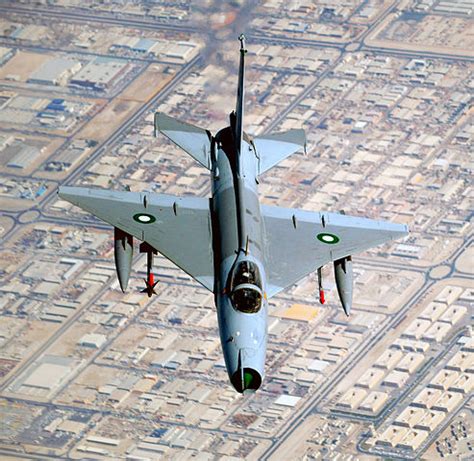
While the Soviet-built MiG-21 is effectively gone, its legacy continues through Chinese derivatives like the Chengdu J-7. Known by NATO as “Fishcan,” the J-7 remains in limited service across several countries.
Nations such as Bangladesh and Myanmar still operate these aircraft, often in secondary roles. Unlike the original MiG-21, these variants benefited from extended production runs, with the final units built as recently as 2013.
However, even these aircraft are nearing the end of their operational lives. Maintenance challenges, pilot safety concerns, and the availability of more modern alternatives are accelerating their retirement.
More intriguingly, China is reportedly repurposing older jets—including J-7s and related models—into unmanned systems or one-way attack drones. This transformation raises a provocative question: when a fighter jet becomes a cruise missile, does it still count as a fighter?
The Economics of Obsolescence
The MiG-21’s disappearance is not just about age—it is about economics. Operating a legacy fighter becomes increasingly expensive over time, especially as spare parts become scarce and maintenance complexity rises.
At the same time, the cost of entry-level modern fighters has decreased. Aircraft like the JF-17 Thunder offer significantly improved capabilities at relatively low cost, making them attractive replacements for aging fleets.
Air forces must make a simple calculation: continue investing in outdated platforms with limited survivability, or transition to newer systems that offer better performance, safety, and interoperability. In nearly every case, the answer is clear.
Safety, Survivability, and the End of an Era
Safety has also played a decisive role in the MiG-21’s retirement. In its later years, the aircraft became associated with a high accident rate, particularly in India, where crashes drew significant public attention.
The final known MiG-21 crash occurred in 2023, marking a symbolic endpoint. Since then, the absence of further incidents suggests that the aircraft is no longer flying in meaningful numbers.
Beyond safety, survivability in modern combat is virtually nonexistent. Against advanced air defense systems and fifth-generation fighters, the MiG-21 would struggle to survive, let alone succeed.
Why 2026 Marks the True End
Technically, a handful of MiG-21s may still exist in inventories. But by every meaningful metric—operational use, combat relevance, and global presence—the aircraft has already reached the end of its life.
The year 2026 represents a tipping point: the moment when the MiG-21 transitions from “aging platform” to “extinct capability.” It is no longer a tool of war, but a subject of study.
This quiet conclusion is fitting. The MiG-21 was never about spectacle—it was about utility. It served where it was needed, in the numbers required, for as long as it could. And when its time passed, it did not demand attention.
A Legacy That Will Outlast Its Wings
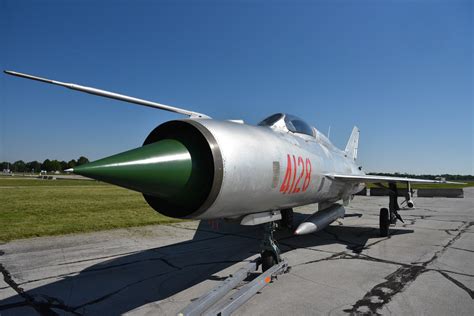
The disappearance of the MiG-21 does not diminish its legacy—it amplifies it. Few aircraft have shaped global air power so profoundly or for so long. Its influence can still be seen in modern lightweight fighters, in doctrines emphasizing affordability and scalability, and in the strategic thinking of nations that once relied on it.
From the Cold War to the 21st century, the MiG-21 proved that quantity, simplicity, and adaptability could rival technological superiority. It democratized supersonic flight and redefined what a fighter jet could be.
Its final chapter may be quiet, but its impact is anything but. In the annals of aviation history, the MiG-21 does not vanish—it endures as a benchmark, a lesson, and a symbol of an era when speed, numbers, and resilience ruled the skies.