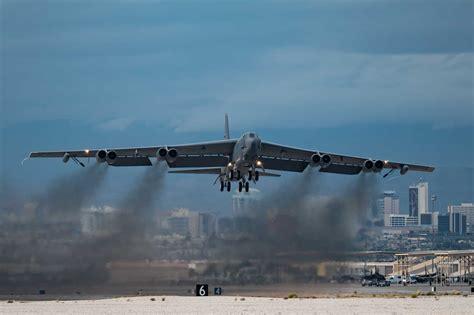
The enduring presence of the B-52 Stratofortress in modern military aviation is not an accident of nostalgia or bureaucratic inertia. It is the result of a deliberate convergence of engineering foresight, operational flexibility, and strategic evolution. While aircraft like the B-1B Lancer and B-2 Spirit once symbolized the cutting edge of American airpower, they are now approaching retirement—ironically уступed by a bomber whose origins trace back to the early Cold War. The story of why the B-52 will outlive its intended successors is not just about longevity; it is about adaptability in a world where warfare itself is being rewritten.
The U.S. Air Force’s decision to invest over $2 billion into modernizing the B-52 fleet underscores a powerful reality: sometimes the best platform is not the newest, but the one that can evolve the most effectively. With the transition to the B-52J standard, this aircraft is being transformed from a legacy bomber into a networked, data-driven strike platform capable of integrating seamlessly into 21st-century warfare.
At the heart of this transformation lies a simple but profound truth—the B-52 was built to last, and more importantly, built to change.
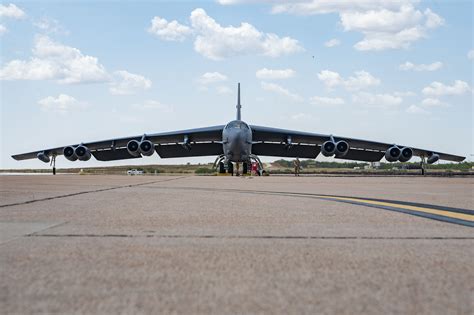
Overbuilt for the Ages: Why the B-52’s Design Still Wins
The B-52’s survival begins with its over-engineered airframe, a design philosophy that prioritized durability over specialization. Unlike the sleek, mission-optimized designs of later bombers, the Stratofortress embraced redundancy and structural strength. Its large wings, spacious fuselage, and straightforward systems architecture allow it to endure stresses that would degrade more complex aircraft.
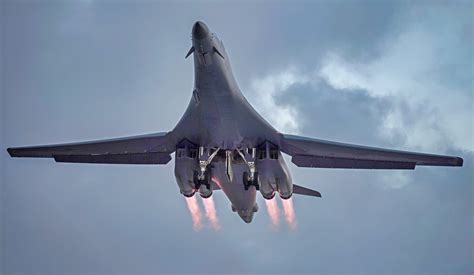
In contrast, the B-1B Lancer—with its variable-sweep wings—introduced mechanical complexity that proved costly over time. Designed for high-speed, low-altitude penetration, it was later repurposed for missions it was never optimized to perform. Decades of intensive use, especially in the Middle East, have pushed the B-1B to its structural limits. The result is an aircraft that demands extraordinary maintenance effort, sometimes exceeding 100 hours of maintenance per flight hour.
The B-2 Spirit, while revolutionary in its stealth capabilities, suffers from a different kind of fragility. Its radar-absorbent coating, essential for stealth, is notoriously sensitive to environmental conditions. Maintaining this coating requires climate-controlled hangars and meticulous upkeep, making each aircraft extraordinarily expensive to sustain.
By comparison, the B-52’s simplicity becomes its greatest strength. It lacks the delicate stealth coatings and intricate moving parts of its successors, allowing it to remain operationally reliable and economically viable even decades after its introduction.
Re-Engining the BUFF: A Power Upgrade for the Next Century
One of the most significant upgrades transforming the B-52 into the B-52J is the replacement of its aging engines. The original TF33 engines, relics of the 1960s, are being replaced with Rolls-Royce F130 turbofans, marking a generational leap in performance and efficiency.

These new engines are expected to deliver 30–40% greater fuel efficiency, dramatically extending the aircraft’s range and reducing its logistical footprint. More importantly, the F130 engines are derived from the BR725 commercial engine family, which has accumulated tens of millions of flight hours. This pedigree translates into exceptional reliability—so much so that the Air Force anticipates the engines will remain on-wing for their entire service life without major overhauls.
This upgrade is not merely about performance; it is about sustainability. Reduced fuel consumption lowers operational costs, while improved reliability minimizes maintenance downtime. The result is a bomber that can fly farther, stay airborne longer, and require fewer resources to keep mission-ready.
From Analog Relic to Digital Powerhouse
The transformation of the B-52 extends far beyond its engines. Inside the cockpit, the shift from analog instruments to a modern glass cockpit represents a fundamental leap in capability. Pilots will no longer rely on outdated “steam gauges” but instead interact with digital displays, integrated avionics, and real-time data feeds.
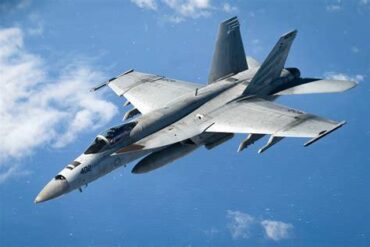
A critical component of this modernization is the integration of the Raytheon APG-79 Active Electronically Scanned Array (AESA) radar. This radar system, already proven in platforms like the F/A-18 Super Hornet, provides superior target detection, tracking, and resistance to electronic jamming.
But the real revolution lies in connectivity. The B-52J is being equipped with advanced communication systems that allow it to function as a flying command node. Through systems like Link 16, it can share and receive data with a wide range of assets, including F-35 fighters, naval vessels, and ground forces.
This level of integration transforms the B-52 from a standalone bomber into a central player in the networked battlespace, capable of coordinating strikes and adapting to changing conditions in real time.
Why the B-1B and B-2 Couldn’t Keep Up
The retirement of the B-1B and the gradual phase-out of the B-2 are not failures of design—they are consequences of changing strategic priorities and economic realities.
The B-1B’s intensive operational tempo has led to significant structural fatigue, while its maintenance demands have made it increasingly impractical to sustain. Its mission-capable rate, often hovering around 40%, reflects these challenges. In a world where readiness and availability are paramount, such limitations are difficult to justify.
The B-2 faces a different challenge: scale. With only 19 aircraft ever produced, maintaining a dedicated supply chain has become prohibitively expensive. Many components are no longer manufactured, forcing maintainers to resort to cannibalization—a practice that is neither efficient nor sustainable.
Moreover, the emergence of the B-21 Raider, a next-generation stealth bomber, has rendered the B-2’s unique capabilities less critical. The B-21 promises similar stealth performance with improved maintainability and lower costs, making it a more viable long-term solution.
In this context, the B-52’s large fleet size, proven reliability, and adaptability make it the logical choice to continue serving alongside newer platforms.
Agile Combat Employment: The B-52’s Perfect Match
Modern warfare demands flexibility, and the U.S. Air Force’s Agile Combat Employment (ACE) doctrine embodies this shift. Instead of relying on large, centralized bases, ACE emphasizes dispersed operations from austere locations, complicating enemy targeting and enhancing survivability.
The B-52 is uniquely suited to this approach. Its rugged design allows it to operate from a wide range of airfields, including those with limited infrastructure. Its ability to perform a cartridge start, igniting all eight engines simultaneously, enables rapid launches—sometimes within 10 minutes.
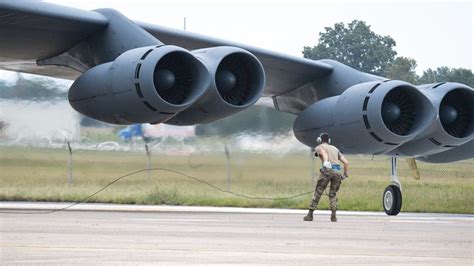
Combined with its 8,800-mile unrefueled range, the B-52 can reposition quickly across vast distances, making it an ideal platform for dynamic, distributed operations. In exercises, it has demonstrated the ability to land, rearm, and take off again within hours—a capability that aligns perfectly with the demands of ACE.
The Missile Truck of the Future
In the evolving landscape of aerial warfare, the role of bombers is shifting from direct penetration to standoff strike capability. The B-52 excels in this role, functioning as a “missile truck” capable of carrying massive payloads of long-range weapons.
With a payload capacity of up to 70,000 pounds, the B-52J can deploy a wide array of munitions, including the JASSM-ER and the upcoming AGM-181 Long Range Standoff (LRSO) missile. These weapons allow it to strike targets from hundreds or even thousands of miles away, well beyond the reach of enemy air defenses.
This approach complements the capabilities of stealth aircraft like the B-21 Raider, which can penetrate heavily defended airspace to identify and designate targets. The B-52, operating at a safe distance, delivers the overwhelming firepower needed to complete the mission.
Hypersonic Weapons and the Next Leap Forward
The integration of hypersonic weapons represents the next frontier for the B-52. Systems like the Hypersonic Attack Cruise Missile (HACM) and the Mako missile are designed to travel at speeds exceeding Mach 5, making them extremely difficult to intercept.
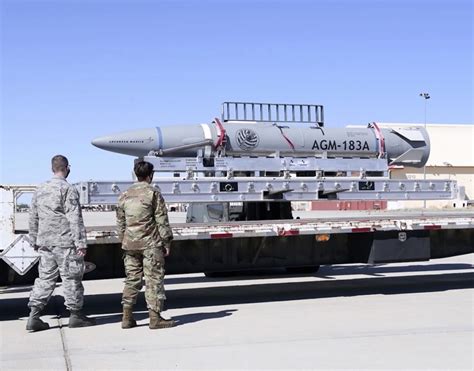
These weapons are not just fast—they are adaptable. With advanced guidance systems, they can receive in-flight updates, allowing crews to retarget them as mission conditions evolve. This capability enhances the B-52’s role as a flexible and responsive strike platform, capable of adapting to real-time intelligence.
The aircraft’s upgraded internal weapons bay further increases its capacity to carry advanced munitions, ensuring that it remains relevant in high-intensity conflicts.
A Networked Force Multiplier
Perhaps the most significant evolution of the B-52 is its role as a force multiplier within the broader military ecosystem. Through its advanced digital backbone, it can integrate into the joint kill chain, receiving and disseminating information across multiple domains.
This capability transforms the B-52 into more than just a bomber—it becomes a data hub, capable of coordinating complex operations involving air, land, sea, and space assets. Its ability to process and act on real-time intelligence enhances the effectiveness of the entire force.
In practical terms, this means the B-52 can receive targeting data from a forward-deployed stealth aircraft, process it onboard, and launch precision strikes within moments. This level of integration reduces response times and increases mission effectiveness, giving commanders a decisive advantage.
The Strategic Logic of Longevity
The continued relevance of the B-52 is not an anomaly—it is a case study in strategic adaptability. While newer aircraft were designed for specific missions, the B-52’s versatility has allowed it to evolve alongside changing doctrines and technologies.
Its large fleet size ensures economies of scale, while its straightforward design simplifies maintenance and upgrades. These factors, combined with ongoing modernization efforts, make it a cost-effective and highly capable platform for the foreseeable future.
As the B-1B and B-2 fade into history, the B-52 stands as a reminder that in military aviation, longevity is not just about age—it is about relevance.
Conclusion: The Bomber That Refuses to Retire
The B-52 Stratofortress is not merely surviving—it is thriving. Through continuous upgrades and a willingness to adapt, it has transformed from a Cold War relic into a cornerstone of modern airpower.
Its ability to integrate new technologies, support emerging doctrines, and deliver unmatched payload capacity ensures that it will remain in service for decades to come. In an era defined by rapid change, the B-52 proves that the most enduring platforms are those that can evolve without losing their core strengths.
And so, while newer bombers come and go, the BUFF—the “Big Ugly Fat Fellow”—continues to fly, not as a relic of the past, but as a pillar of the future battlefield.