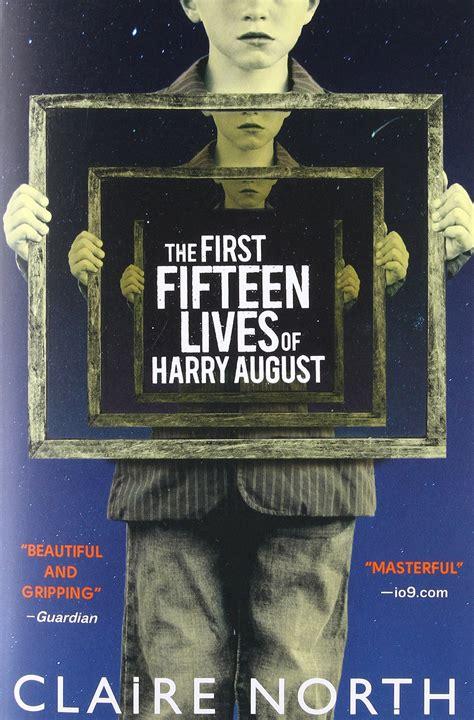
Claire North’s “The First Fifteen Lives of Harry August” is not merely a time-travel novel — it is a labyrinthine meditation on identity, memory, and the burden of knowledge. As readers delve into Harry August’s repetitive existence, they are invited into a realm where death is not an escape and time is not linear. The book has ignited passionate discussions among readers, some praising its intricate plotting and others critiquing its climax. This article offers a thorough literary examination of the novel’s key themes, character dynamics, critical reception, and cultural legacy.
The Ouroboran Concept: Death Is Just a Reset
The central conceit of “The First Fifteen Lives of Harry August” revolves around Ouroborans — individuals who are reborn after death into the same life, retaining full memory of each previous iteration. Harry August is one such person, and through fifteen lives, we follow his journey from confusion to agency, from passive acceptance to purposeful rebellion.
This premise transforms death from a conclusion into an inconvenience. Unlike traditional time-loop tales which reset a day or a week, North extends the loop across entire lifetimes, giving rise to extraordinary existential implications. Each life offers Harry new opportunities — not for redemption in the moralistic sense, but for influence, manipulation, and discovery.

Prose as Precision: Claire North’s Literary Craft
One of the most applauded aspects of the novel is North’s stylistic precision. Her prose is dense yet elegant, oscillating between poetic introspection and stark pragmatism. The narrative tone is consistent with Harry’s complex, emotionally reserved persona. This voice grants the reader access to an intimate yet detached exploration of immortality’s weight.
Readers often contrast this against more mechanical or verbose science fiction — one user noted abandoning “The Three-Body Problem” in favor of North’s more fluid, character-driven storytelling. Where Liu Cixin delves deep into abstract scientific theory, North foregrounds emotion and ethical conundrums, anchoring speculative fiction in relatable moral terrain.
The Long Con: A War Across Lifetimes
Much of the novel’s tension stems from Harry’s conflict with Vincent, another Ouroboran whose ambitions threaten not only their society but the very structure of time. This is not a cat-and-mouse chase across timelines — it is a chess match spanning lifetimes, with moves made decades apart and strategies unfolding over centuries.
The ending, divisive among readers, culminates in a reversal of power. Vincent, once the confident manipulator, is brought low by Harry’s calculated subterfuge — a plan meticulously enacted over three lives. For some, this was an epic poetic justice, for others, a deflating resolution after intense buildup. This dichotomy in reception speaks to how expectations for genre fiction continue to evolve.
Shades of Sociopathy: A Character Study
Harry August is not a traditional hero. Several readers noted that he is, at times, emotionally detached to the point of sociopathy. He manipulates others without remorse, pursues goals with singular focus, and expresses little overt empathy. Yet this coldness feels authentic; it is the logical endpoint of a person who has lived hundreds of years and seen the same mistakes, betrayals, and deaths over and over.
This detachment raises powerful questions: Does morality decay when consequence becomes mutable? If time cannot punish you, do you become ethically immune? North doesn’t provide easy answers, which is perhaps why the book continues to provoke so much discussion.
Reactions to the Ending: Underwhelmed or Unmatched?
The novel’s conclusion has divided readers in notable ways. A significant number found it emotionally underwhelming. They expected a twist or a transcendent revelation that never came. Others, however, saw beauty in its subdued finality: a final stroke in a decades-long game, quiet and devastating.
Some critiques center around Vincent’s sudden vulnerability. The antagonist, who had been a master manipulator, falters in the end, spilling secrets in a moment of emotional weakness. A few readers felt this twist lacked grounding; others interpreted it as tragic, proof that even the godlike are subject to grief and illusion.
Literary Kinship: Books in the Same Vein
For readers entranced by Harry August’s looping narrative and cerebral tone, a number of titles have been widely recommended:
- “Replay” by Ken Grimwood: The most commonly cited parallel, this novel also explores the same-life-reboot motif. Many fans call it a spiritual predecessor to Harry August.
- “11/22/63” by Stephen King: While stylistically different, King’s novel shares a fascination with time, causality, and the ripple effects of intervention.
- “Life After Life” and “A God in Ruins” by Kate Atkinson: These novels similarly play with cyclical time and the emotional toll of reliving trauma.
- “Recursion” and “Dark Matter” by Blake Crouch: High-concept thrillers that focus on memory, alternate realities, and the psychological price of second chances.
- “The Seven Deaths of Evelyn Hardcastle” by Stuart Turton: A genre-bending mystery with a complex time structure and shifting identities.
- “Kindred” by Octavia Butler and “Piranesi” by Susanna Clarke: Though more metaphorical or allegorical, both probe the boundaries of time, identity, and autonomy.

Claire North’s Expanding Universe: What to Read Next
Claire North has cemented herself as a leading voice in speculative fiction. For those captivated by Harry August, her other works offer unique perspectives on similar themes:
- “The Games House”: A three-part novella about global power games played by near-immortals, driven by cunning rather than force.
- “Touch”: A fascinating exploration of body-hopping entities and the essence of self.
- “The Sudden Appearance of Hope”: A story about a woman who is literally forgotten by everyone she meets, a metaphor-rich exploration of visibility and identity.
- “The End of the Day”: Centers on a harbinger of death, blending poetic narrative with philosophical weight.
Each book carries North’s signature style: introspective, poetic, and deeply human, even when dealing with the supernatural.
Adaptation and Expectations: Can Harry August Make It to the Screen?
The conversation inevitably drifts to adaptations. Given the popularity of shows like Dark or Russian Doll, one might imagine “The First Fifteen Lives of Harry August” as ripe for screen development. However, translating its introspective, non-linear narrative into visual media would pose significant challenges.
Some readers pointed to the failure of other adaptations (notably the rushed and bleak portrayal of Stephen King’s “11/22/63” in TV form) as a cautionary tale. The rich internal monologue, slow-burn revelations, and philosophical tone of North’s work demand a careful hand. Done right, it could become a landmark in prestige television; done poorly, a muddled mess.
Legacy and Lasting Impact: Why It Sticks
Many readers describe the book as haunting — not for its plot, but for its implications. What does it mean to live ethically when time is malleable? What responsibility do we bear when memory is a superpower? These questions linger long after the final page.
Some even report returning to the book years later with shifting perspectives. What once felt cold now reads as honest. What once seemed underwhelming now feels inevitable. The novel grows with the reader, mirroring its protagonist’s recursive existence.
Final Reflections: A Novel Worth Reliving
“The First Fifteen Lives of Harry August” occupies a unique niche in contemporary science fiction. It melds high-concept narrative with literary depth, offering readers an immersive experience into one man’s timeless war against entropy, betrayal, and the slow erosion of self. It is not a tale of action, but of introspection; not about traveling through time, but about what time does to us.
For those willing to engage with its layered storytelling, moral ambiguity, and philosophical heft, Harry August’s journey is not just readable — it’s unforgettable.