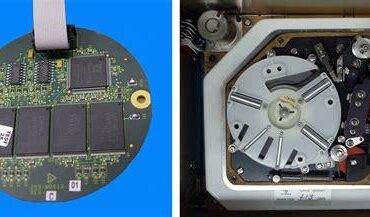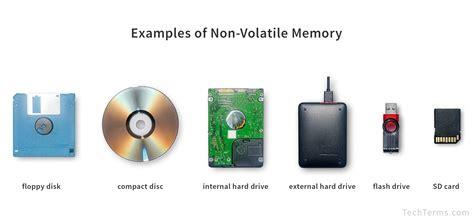
Non-Volatile Memory (NVM) refers to the flash RAM found in various solid-state avionic equipment used in modern aircraft. The term ‘Non-Volatile’ indicates that, depending on memory capacity, data remains stored even when electrical power is cut. NVM is primarily included in designs to assist with identifying and fixing faults by keeping a history of recorded fault signals. In some cases, this history can also serve operational purposes by tracking alert activations, as seen in systems like the Airborne Collision Avoidance System (ACAS) and Ground Proximity Warning System (GPWS)/Terrain Awareness Warning System (TAWS). These systems are likely to be valuable data sources for aircraft operators, rather than just for investigation agencies.
Many avionic devices today utilize solid-state designs and incorporate NVM. Examples include:
-
Digital Flight Data Acquisition Units (DFDMUs)
-
Full Authority Digital Engine Control (FADEC) units
-
Generator Control Units (GCUs)
-
Fuel management units
-
Brake control units (BCUs)
-
GPS navigational equipment
-
Flight management computers (FMCs)
-
Cabin pressure controllers
-
Central maintenance computers (CMCs)
-
Air Data Computers (ADCs)
The use of NVM data can be crucial for investigating incidents and serious accidents. If the data survives damage and can be retrieved, it may provide vital insights. However, NVM is particularly vulnerable to fire and heat damage, making recovery from wreckage challenging. Instances where NVM data proves useful include:
-
Smaller aircraft lacking Flight Data Recorders (FDRs) or Cockpit Voice Recorders (CVRs), where evidence is limited.
-
Cases where FDRs do not record essential parameters or fail due to damage.
-
Situations where recordings have been overwritten, especially in older CVRs.
NVM data can clarify both aircraft system faults and pilot actions. The National Transportation Safety Board (NTSB) has highlighted the usefulness of NVM data, especially from Primary Flight Displays (PFDs), in understanding serious incidents involving light aircraft.
Regulatory requirements dictate that only mandatory FDRs and CVRs must be crash-protected under EASA CS 25 and FAA Part 25. Other NVM in equipment lacks similar protection. Recognizing the critical role of NVM in investigations, various stakeholders have proposed extending protection to selected NVM components. The international standard for lightweight flight data recorders, EUROCAE ED-155, provides an opportunity for manufacturers to enhance crash hardening and data recording capabilities.
ICAO has acknowledged the potential of NVM data for accident investigations by including anti-static containers for electronic components with NVM in its recommended ‘Investigation Field Kit.’ Furthermore, the Canadian Transport Safety Board raised concerns that manufacturers might not consider the importance of memory devices for accident investigations, advocating for design improvements that enhance data quality and retrieval ease.
In 2011, the UK Air Accidents Investigation Branch (AAIB) recommended introducing standards for crash-protected recordings of operational status from ACAS and TAWS equipment on helicopters required to carry FDRs. They also suggested that EASA explore the feasibility of recording avionic system status in crash-protected memory across all aircraft.
Accessing NVM data for investigations typically requires OEM assistance and is pursued mainly for State Serious Incident or Accident Investigations. For example, NVM data has been used in various high-profile investigations:
-
The 1991 Boeing 767-300 accident in Thailand leveraged Engine EEC NVM data for crucial evidence.
-
The 1995 CFIT incident involving a Boeing 757 near Cali utilized FMC NVM data.
-
The 2002 Boeing 767 CFIT in Busan relied on NVM from EECs and IRUs to confirm their status before the accident.
-
NVM data helped rule out malfunctions in a 2005 Boeing 717 loss of control incident.
-
A fuel system malfunction on an A340 was traced back to ARINC databus failure using NVM information.
-
The Embraer Legacy business jet mid-air collision investigation in 2006 benefited from NVM data regarding transponder and radio operations.
-
In the crash of an Airbus A310 in 2006, FADEC NVM data clarified thrust lever movements.
-
The investigation of a 2008 Boeing 777 incident at London Heathrow depended on NVM data to understand fuel starvation causes.
-
A DHC6 CFIT accident investigation in 2009 relied on GPS device NVM for position evidence.
-
The cause of an electrical fire in a Boeing 777 at Heathrow in 2007 was established using NVM fault data from GCUs.