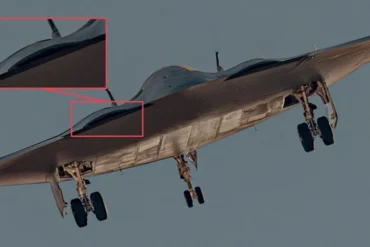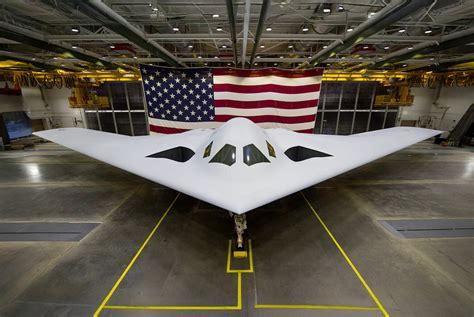
The Northrop Grumman B-21 Raider represents a fundamental shift in how modern stealth aircraft are designed, manufactured, and maintained. While earlier low-observable aircraft relied on carefully applied radar-absorbent coatings placed over traditional airframes, the Raider introduces a more advanced approach: radar-absorbent material is integrated directly into the aircraft’s composite structure. This means the aircraft’s skin is not simply covered with stealth technology; the airframe itself becomes part of the stealth system.
As the United States Air Force’s first sixth-generation aircraft program, the B-21 Raider is designed around a philosophy that treats stealth, materials science, electronic warfare, thermal management, and sustainment as interconnected elements rather than separate technologies. The result is a bomber intended not only to penetrate heavily defended airspace but also to remain operational at a much higher rate than previous stealth bombers.
The significance of this innovation becomes clearer when compared with the challenges faced by earlier stealth aircraft. The B-2 Spirit, also developed by Northrop Grumman, introduced revolutionary flying-wing stealth capabilities in the late 20th century. However, maintaining its radar-evading characteristics required extensive labor, specialized facilities, and constant attention to fragile surface treatments. The B-21 Raider attempts to preserve the advantages of flying-wing stealth while eliminating many of the maintenance burdens that limited previous designs.
From Radar-Absorbing Paint to Radar-Absorbent Structures
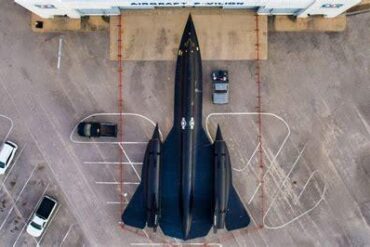
The earliest operational stealth aircraft relied heavily on external radar-absorbent materials, commonly known as RAM coatings. Aircraft such as the Lockheed F-117 Nighthawk and the B-2 Spirit achieved dramatically reduced radar signatures through carefully engineered surfaces and specialized coatings.
However, these materials came with significant drawbacks. Traditional RAM coatings were vulnerable to environmental exposure, including moisture, temperature changes, ultraviolet radiation, and mechanical damage. After missions, technicians often needed to inspect aircraft surfaces carefully and repair damaged areas to restore stealth performance.
For the B-2 Spirit, maintaining its low-observable characteristics became one of the most demanding aspects of operation. The aircraft required climate-controlled hangars and specialized maintenance procedures. Even minor surface imperfections could affect radar performance, increasing turnaround time between missions.
The B-21 Raider takes a different approach by moving away from the concept of stealth as an external layer. Instead, the aircraft incorporates radar-absorbing properties into the airframe itself. This creates what engineers describe as a radar-absorbent structure, where the material responsible for reducing radar reflections is also part of the aircraft’s load-bearing composite framework.
This represents a major philosophical change. Instead of attaching stealth technology onto an aircraft after the primary structure is built, the Raider is manufactured from the beginning with stealth properties embedded into its foundation.
How the B-21 Raider Integrates Radar-Absorbent Materials Into Its Composite Skin
The B-21 Raider’s airframe relies heavily on carbon-fiber-reinforced polymer composites, a material family widely used in advanced aerospace applications because of its combination of strength, light weight, and design flexibility.
During manufacturing, radar-absorbing elements are incorporated directly into the composite layers. Specialized materials are mixed into resins and integrated into the composite plies during fabrication. This allows the radar-absorbing characteristics to become part of the aircraft’s structure rather than a separate surface treatment.
When radar energy strikes the B-21, the electromagnetic waves do not simply bounce away from the surface. Instead, they enter the engineered composite layers, where conductive fibers, specialized fillers, and internal structures absorb and dissipate the energy.
The process involves converting electromagnetic energy into small amounts of heat through mechanisms such as ohmic loss. Rather than creating a strong radar reflection that reveals the aircraft’s location, the material reduces the energy returned to enemy radar systems.
The result is a much more durable form of stealth. Because the radar-absorbing capability is built into the structure itself, it is less vulnerable to peeling, cracking, or surface degradation compared with traditional coatings.
Advanced Manufacturing Makes Integrated Stealth Possible
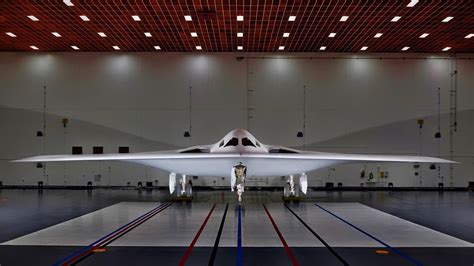
The B-21’s stealth characteristics are closely connected to advanced manufacturing methods. Traditional aircraft construction often involves numerous fasteners, joints, panels, and surface transitions that can create small radar reflections. Even tiny irregularities can become potential radar hotspots.
To overcome this challenge, Northrop Grumman uses advanced automated manufacturing techniques, including robotic automated fiber placement systems. These systems precisely position carbon fibers and composite materials with extreme accuracy, creating smoother and more consistent structures.
The automated process allows manufacturers to control fiber direction, material thickness, and radar-absorbing properties across different areas of the aircraft.
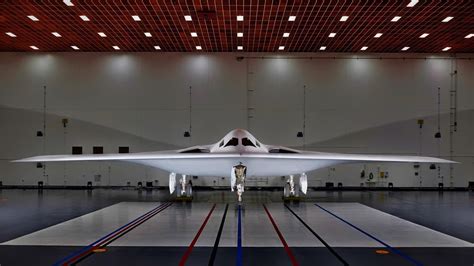
This is especially important for a flying-wing design. The B-21 does not rely on conventional fuselage-and-tail geometry. Instead, its blended wing-body shape reduces radar reflections by minimizing sharp edges and vertical surfaces.
The aircraft’s smooth contours, combined with radar-absorbing composites, create a continuous low-observable surface. There are fewer seams, fewer exposed fasteners, and fewer opportunities for radar energy to return directly to enemy sensors.
This manufacturing approach also supports long-term sustainability. Because stealth performance is built into the structure, maintenance teams can focus less on repairing delicate coatings and more on preparing aircraft for missions.
A More Durable Stealth Bomber Designed for Daily Operations
One of the most important advantages of the B-21 Raider’s integrated radar-absorbent structure is operational reliability.
Stealth aircraft must do more than avoid detection. They must also be available when commanders need them. Previous generations of stealth bombers demonstrated extraordinary capabilities but often required significant maintenance resources.
The B-21 is designed around a different requirement: producing a larger, more sustainable stealth bomber fleet capable of maintaining a higher readiness rate.
The United States Air Force plans to operate at least 100 B-21 Raiders, creating a much larger force than the small fleet of B-2 Spirits. To achieve this goal, the aircraft must be easier to maintain and less dependent on specialized procedures.
The integrated composite structure helps address this challenge. A minor scratch, surface impact, or routine operational wear does not necessarily require the same extensive restoration process associated with older stealth coatings.
The aircraft is designed to operate from normal flight lines and tolerate more realistic environmental conditions, including rain, heat, and cold. This flexibility supports the Air Force’s Agile Combat Employment concept, which emphasizes dispersing aircraft and operating from a wider range of locations.
The B-21 Raider’s Composite Skin Acts Like a Radar Sponge
The term “radar sponge” is often used to describe the B-21 because its airframe is designed to absorb and manage electromagnetic energy rather than simply deflect it.
Modern military radar systems operate across multiple frequency ranges, including VHF, UHF, and X-band frequencies. Defeating these threats requires more than reducing reflections from a single angle or frequency.
The Raider’s composite structure is engineered for broadband low observability, meaning it is designed to reduce detection across a wider range of radar systems.
The outer layers of the aircraft include specialized materials that help manage how radar waves enter the structure. Beneath these layers, conductive materials and composite structures work together to absorb and dissipate electromagnetic energy.
This creates a multilayer stealth system where each section of the aircraft contributes to reducing detectability.
Unlike older aircraft where stealth performance depended heavily on surface coatings, the B-21’s entire airframe contributes to radar reduction.
Beyond Radar: Multispectral Stealth for Future Warfare
The B-21 Raider’s stealth technology extends beyond radar avoidance. Future combat environments will involve detection systems operating across multiple parts of the electromagnetic spectrum, including infrared sensors, electronic surveillance systems, and advanced tracking networks.
The Raider is designed as a multispectral stealth aircraft, meaning it attempts to reduce signatures across several detection methods simultaneously.
The composite structure contributes to thermal management as well. Radar-absorbing materials naturally interact with electromagnetic energy, while advanced composites can help manage heat distribution across the aircraft.
Engine exhaust remains one of the most difficult challenges for any stealth aircraft because hot gases can create infrared signatures. The B-21 incorporates advanced materials around high-temperature areas to reduce both radar and thermal exposure.
Near the engine exhaust, specialized heat-resistant materials such as ceramic matrix composites help withstand extreme temperatures while maintaining low-observable characteristics.
These materials must survive conditions approaching thousands of degrees while preventing additional signatures that could reveal the aircraft.
A Sixth-Generation Approach to Aircraft Design
The B-21 Raider is considered a sixth-generation aircraft because it represents a deeper integration of technologies than previous generations.
Fifth-generation aircraft such as the Lockheed Martin F-35 Lightning II and Lockheed Martin F-22 Raptor introduced advanced stealth, sensor fusion, and electronic warfare capabilities. However, many systems were still designed as individual technologies working together.
The B-21 follows a different design philosophy. Its structure, stealth capability, electronic systems, and thermal management features are developed as a unified architecture.
The aircraft’s outer skin is not simply armor or protection. It becomes part of the aircraft’s sensing, communication, and electronic warfare ecosystem.
Future upgrades are also expected to be easier because the Raider was designed with modularity in mind. As threats evolve, the aircraft can incorporate new technologies without requiring a complete redesign.
Why Integrated Radar-Absorbent Materials Could Change Stealth Aircraft Forever
The B-21 Raider’s most important innovation may not be a visible feature. It is the transformation of stealth from a coating applied to an aircraft into a fundamental property of the aircraft itself.
By embedding radar-absorbing materials directly into the composite airframe, Northrop Grumman has created a stealth platform that is expected to be more durable, easier to maintain, and better suited for continuous operations.
The Raider demonstrates how future military aircraft will increasingly rely on smart materials and integrated structures rather than individual technologies added together.
Stealth in the 21st century is no longer only about shaping an aircraft to avoid radar. It is about creating an entire airframe that manages electromagnetic energy, heat, and structural performance at the same time.
The B-21 Raider’s radar-absorbent composite structure represents one of the largest advances in low-observable aircraft design since the introduction of the first stealth aircraft. Instead of hiding behind a fragile outer coating, the Raider carries stealth within its very skin, creating a new standard for the next generation of combat aircraft.