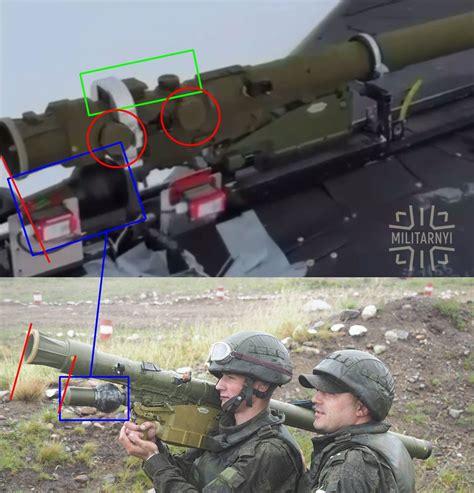
Iran’s decision to quietly finalize a €500 million arms agreement with Russia for the acquisition of hundreds of 9K333 Verba man-portable air defense systems lands at the exact fault line where diplomacy, deterrence, and regional brinkmanship meet. The contract, disclosed by the Financial Times, was reportedly signed in Moscow in December 2025 and commits Russia’s state arms exporter Rosoboronexport to deliver 500 Verba launchers, 2,500 9M336 surface-to-air missiles, and associated night-vision equipment to Tehran between 2027 and 2029, with indications that a limited number of systems may already have been transferred. The timing is surgical. The deal comes as U.S.–Iran nuclear talks intensify under renewed pressure from Washington, while the Middle East absorbs the aftershocks of recent U.S.–Israel strikes on Iranian nuclear facilities and a broader U.S. military buildup across the region.
The purchase reveals a pragmatic calculation inside Tehran’s security establishment. Iran’s integrated air defense network suffered heavy degradation during the brief but intense exchange that saw Israeli forces rapidly assert air superiority after targeting radar nodes, command centers, and fixed surface-to-air missile batteries. Fixed systems are powerful, but they are also predictable. Precision strike campaigns feast on predictability. Shoulder-fired air defense weapons flip the geometry of vulnerability. They are cheap by comparison, mobile by design, and maddeningly difficult to suppress completely. In that sense, the Verba deal is less about building an impenetrable shield and more about injecting friction into any future low-altitude air campaign over Iranian territory.
A Covert Contract in Plain Sight: What €500 Million Buys Tehran
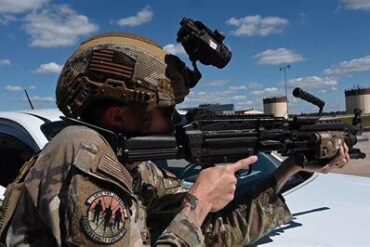
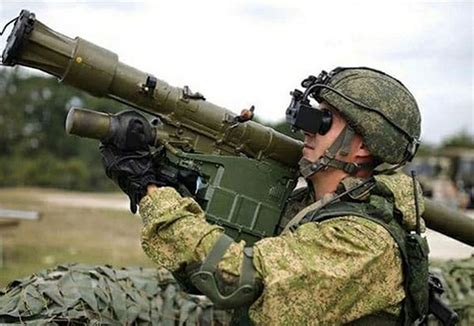
The disclosed terms of the agreement sketch out one of the most consequential arms transactions between Moscow and Tehran in recent years. The package reportedly prices individual 9M336 missiles at roughly €170,000 and each launcher at about €40,000, with the total contract value hovering between €495 million and €500 million depending on accounting. The inclusion of 500 Mowgli-2 night-vision sights matters as much as the launchers themselves. Night and poor-visibility conditions are where airpower traditionally enjoys an edge over ground-based teams. Thermal optics narrow that gap, allowing small teams to ambush helicopters, low-flying jets, cruise missiles, and drones when the sky would otherwise feel permissive to attackers.
The agreement was concluded through Iran’s Ministry of Defense and Armed Forces Logistics in Moscow, with Ruhollah Katebi reportedly playing a central role in facilitating the transaction. Katebi’s name carries geopolitical weight. He was sanctioned by the United States in 2024 for acting as a conduit between Tehran and Moscow, including for facilitating Iranian transfers of short-range ballistic missiles to Russia for use in Ukraine. This deal, then, is not an isolated transaction but part of a deeper, transactional military relationship in which each side trades what it has for what it needs. Russia supplies air defense hardware and combat aviation assets. Iran supplies munitions and political backing in a grinding European war. The Verba contract sits squarely inside that exchange economy.
Why MANPADS Matter After Air Defenses Were Cracked
Air defense is often imagined as a set of towering radar masts and long-range interceptor missiles. Those systems matter, and Iran already operates S-300PMU2 batteries and Tor short-range systems to anchor its layered defenses. The problem is that modern air campaigns are designed to pry open such networks by blinding sensors, collapsing command-and-control links, and destroying known launch sites. Once that happens, airspace becomes porous at low altitude. Helicopters slip in to support raids. Drones roam for targets. Cruise missiles hug terrain. This is the ecological niche where man-portable air defense systems thrive.
Verba teams can disperse across urban sprawl, deserts, mountains, and industrial corridors. They can hide in civilian clutter, reposition overnight, and ambush low-flying aircraft with minimal warning. No radar signature betrays their presence. Their deterrent effect is psychological as much as physical. Pilots forced to assume that any ridgeline or rooftop could conceal a launcher fly higher, faster, and less precisely. That degrades the quality of strikes and increases operational risk. The lesson has been written in blood across multiple conflicts, including Ukraine, where portable air defenses have imposed costs on helicopter operations even when air superiority existed on paper.
The Verba System: Small Weapon, Big Design Philosophy
The 9K333 Verba, known in NATO reporting as SA-29 Gizmo, entered Russian service in the mid-2010s as the successor to the Igla family of shoulder-fired missiles. Its defining feature is a three-channel passive seeker that simultaneously reads ultraviolet, near-infrared, and mid-infrared signatures. This matters because countermeasures have evolved. Flares and infrared decoys are designed to confuse single-spectrum seekers. Verba’s multi-spectral “cross-checking” improves discrimination between real aircraft signatures and artificial heat sources, raising the odds that a missile will stay locked on a genuine target rather than chase a burning distraction into empty sky.
Technically, the system is compact but serious. The 9M336 missile measures 72 millimeters in diameter, and the complete firing unit weighs just over 17 kilograms. Engagement ranges extend from roughly 500 meters out to 6–6.5 kilometers, with engagement ceilings cited up to around 4.5 kilometers depending on configuration. Reaction times are measured in seconds, not minutes, and launch readiness from power-on is rapid. The warhead is a high-explosive fragmentation charge designed to shred control surfaces and engines on impact or near-proximity detonation. Propulsion combines an ejection motor with a solid-fuel rocket stage, pushing the missile to speeds exceeding 600 meters per second in some performance figures.
Operationally, Verba does not live alone. It can plug into portable fire-control modules and broader command architectures, including radar feeds from systems such as the 1L122 Garmon, which can cue teams toward approaching targets. This kind of networked cueing is a force multiplier. It does not turn MANPADS into a magic dome, but it sharpens the odds that a human operator will be looking in the right patch of sky at the right moment.
Deliveries, Flights, and the Quiet Logistics of Alignment
Publicly, the delivery schedule stretches across three tranches from 2027 to 2029. Quietly, aviation watchers have noted cargo flights between Russia’s Mineralnye Vody and Iran’s Karaj, including rotations by Ilyushin Il-76TD transports. These movements coincide with reports that Iran has received Russian Mi-28 attack helicopters and continues to await delayed deliveries of Su-35 fighter jets. The pattern is familiar to anyone who studies sanctions-era logistics. Big-ticket items move slowly and noisily through official channels. Smaller quantities can slip through earlier, testing integration and training pipelines while the world’s attention is elsewhere.
From Moscow’s perspective, exporting Verba systems to Iran does not significantly hollow out Russian inventories. MANPADS are produced in volume and designed for distributed use. Supplying them to Tehran strengthens a partner without depriving Russian forces of strategic assets. Politically, the sale also signals indifference to the threat of renewed United Nations “snapback” sanctions tied to Iran’s nuclear file. In the language of power politics, it is a shrug.
Nuclear Talks Under the Shadow of Air Defense Upgrades
The most combustible aspect of the Verba deal is its timing. Nuclear negotiations between Washington and Tehran are unfolding against a backdrop of warnings, deployments, and memory of recent strikes. Diplomacy thrives in atmospheres of credible restraint. Arms acquisitions thrive in atmospheres of fear. The two processes now coexist in an uneasy duet. Tehran’s leadership can present the Verba purchase as a purely defensive measure, a response to demonstrated vulnerabilities in its airspace. Washington and its regional partners will read it as a move to complicate future contingency plans.
The paradox is that MANPADS do not meaningfully alter the strategic balance between states with advanced air forces and one that lacks them. They do, however, increase the tactical risks of low-altitude operations, special forces insertions, and helicopter support. In other words, they make limited strikes more dangerous without preventing them outright. That tension shapes negotiation psychology. When military options become riskier but not impossible, the space for brinkmanship widens. Each side believes it can push harder without triggering catastrophic escalation. History suggests this is a dangerous place to linger.
Layered Defense Without Illusions of Invincibility
Iran’s existing air defense posture rests on layers. Long-range systems like the S-300PMU2 provide area denial against high-altitude aircraft. Medium- and short-range systems such as Tor defend specific assets and corridors. The addition of hundreds of Verba launchers thickens the lowest layer, the messy zone where helicopters skim terrain and drones hunt for targets. This is a rational military adaptation after recent exposure. It is also an admission. Fixed radars and missile batteries can be blinded and destroyed. Human teams with shoulder-fired weapons are harder to erase from the battlefield.
Still, the Verba influx will not transform Iran into a porcupine bristling with impenetrable quills. Advanced air forces adapt. They fly higher, use standoff munitions, saturate suspected zones, and hunt MANPADS teams with sensors and precision fires. The dance continues. What changes is the cost of each step. More helicopters lost. More caution in close air support. More resources devoted to suppression of small, mobile threats. Warfare becomes slower, riskier, and more expensive, which is often enough to influence political calculations at the margins.
Russia, Iran, and the Shape of a Transactional Axis
The Verba deal illustrates the texture of the Russia–Iran relationship in the mid-2020s. It is not a romantic alliance built on shared ideology. It is a transactional axis lubricated by mutual isolation from Western markets and pressure regimes. Iran supplies weapons and drones that Russia finds useful in Ukraine. Russia supplies air defenses, aircraft, and technical support that Iran needs to harden its deterrent posture. Each side accepts the reputational cost because alternatives are constrained.
This transactional logic extends beyond hardware. Training pipelines, maintenance contracts, and doctrinal exchanges accompany every shipment. Iranian operators will learn Russian methods of MANPADS deployment and networked cueing. Russian technicians will gain insights into operating in Iran’s diverse terrain and electromagnetic environment. Over time, these micro-level exchanges create interoperability habits that outlast any single contract. Power, like rust, accumulates in the joints.
What the Verba Deal Signals to the Region
For Israel and Gulf states, the message is unambiguous. Low-altitude airspace over Iran is becoming more hostile. This does not close the door to future strikes, but it raises the temperature on the doorknob. For the United States, the deal complicates contingency planning while reinforcing the urgency of diplomatic channels that can reduce the probability of conflict in the first place. For smaller regional actors, the lesson is sobering. Portable air defenses remain one of the few cost-effective tools available to states facing technologically superior air forces. Their spread is a structural feature of modern conflict, not an anomaly.
The sky over the Middle East has always been crowded with intentions. With the quiet arrival of hundreds of Verba launchers, it becomes more crowded with consequences. The physics of flight remain unchanged, but the politics of risk do not. Each portable tube carried by a two-person team is a reminder that airpower, however dominant, is never alone in the sky.