Japan’s postwar identity has long been anchored in a paradox: a nation with the technological sophistication to build nuclear weapons faster than almost any other country, yet bound by law, memory, and moral commitment to never do so. As the only state to have suffered nuclear attacks, Japan embedded anti-nuclear principles into its political DNA, signing the Nuclear Nonproliferation Treaty in 1970 and adopting the Three Non-Nuclear Principles that forbade possession, production, or introduction of nuclear weapons. That consensus, however, is now under unprecedented strain. A recent Chinese report alleges that Japan has quietly positioned itself to cross the nuclear threshold almost overnight, driven by a shifting security doctrine under Prime Minister Sanae Takaichi and a deteriorating regional balance of power.
The allegation is explosive not because Japan lacks capability, but because it challenges decades of official restraint. The report argues that Japan’s nuclear fuel cycle, advanced reprocessing infrastructure, and accumulated plutonium stockpiles amount to a latent weapons program hiding in plain sight. In Beijing’s telling, Japan’s recent defense reforms, expanded missile ambitions, and rhetorical openness to revisiting nuclear taboos are not isolated policy adjustments but part of a broader strategic recalibration that could culminate in nuclear armament.
Understanding why these claims resonate requires stepping back into the strategic environment surrounding Japan today. North Korea’s expanding missile arsenal, China’s rapid military modernization, and Russia’s war in Ukraine have collectively eroded the assumptions that once underpinned Japan’s pacifist posture. The security guarantees of the United States remain central, yet uncertainty about long-term U.S. commitment has intensified debates in Tokyo over self-reliance, deterrence, and national survival.
By framing Japan as a covert nuclear aspirant, China is not merely sounding an alarm but shaping a narrative that casts Tokyo’s defense evolution as a threat to regional stability. Whether exaggerated or not, the report forces a difficult question into the open: how close is Japan, politically and technically, to a nuclear breakout?
Japan’s Anti-Nuclear Legacy Under Pressure
Japan’s adherence to non-nuclear principles has never been purely symbolic. The trauma of Hiroshima and Nagasaki fostered a deep public aversion to nuclear weapons, reinforced by constitutional constraints that limited military power. For decades, successive governments treated the Three Non-Nuclear Principles as untouchable, even as Japan benefited from the U.S. nuclear umbrella. This arrangement allowed Tokyo to outsource ultimate deterrence while maintaining moral authority as a champion of nonproliferation.
Yet the security environment that sustained this balance has changed dramatically. North Korea’s repeated nuclear tests and missile launches have normalized the presence of nuclear threats in Japan’s immediate neighborhood. China’s expanding nuclear arsenal and increasingly assertive posture in the East China Sea and around Taiwan have added another layer of anxiety. Meanwhile, Russia’s willingness to invoke nuclear rhetoric during its war in Ukraine has shattered assumptions about nuclear restraint in major power conflicts.
Within this context, Japan’s policy shifts since the mid-2010s take on new significance. The reinterpretation of the constitution to allow collective self-defense, the easing of arms export restrictions, and the pursuit of long-range strike capabilities all signal a willingness to rethink postwar limitations. Critics see these moves as pragmatic responses to danger; skeptics view them as stepping stones toward remilitarization.
China’s Report and the Charge of a Hidden Nuclear Path
The Chinese report titled “Nuclear Ambitions of Japan’s Right-Wing Forces: A Serious Threat to World Peace” pulls these threads together into a stark accusation. It claims Japan has secretly pursued nuclear weapons research since World War II, leveraging its civilian nuclear infrastructure to maintain a rapid breakout option. Central to this argument is Japan’s possession of reprocessing technology that allows the extraction of weapons-grade plutonium, a capability unique among non-nuclear weapon states under the NPT.
According to the report, Japan’s nuclear fuel cycle is not merely about energy security but about preserving strategic flexibility. By maintaining large plutonium stockpiles and advanced reactor technology, Japan could theoretically assemble nuclear weapons within months, if not weeks. The report amplifies a remark by former U.S. President Joe Biden, who once observed that Japan could “go nuclear virtually overnight,” framing it as tacit acknowledgment of Japan’s latent capability.
This framing serves multiple purposes. It casts Japan as a potential violator of the nonproliferation regime, undermines Tokyo’s moral standing, and positions China as a guardian of global nuclear order. At the same time, it deflects attention from China’s own rapid nuclear expansion by shifting scrutiny onto a rival.
Plutonium, Technology, and the Question of Intent
Japan’s plutonium stockpile lies at the heart of the controversy. Publicly justified as fuel for civilian reactors, the quantity far exceeds immediate energy needs. Critics have long argued that such accumulation creates proliferation risks, even if Japan remains formally compliant with international safeguards. The Chinese report revives these concerns by pointing to historical cases, such as the experimental fast reactor Joyo, which allegedly had the technical potential to produce weapons-grade plutonium during its early years of operation.
The distinction between capability and intent is crucial. Possessing the materials and technology does not automatically equate to a weapons program. Japan’s nuclear activities are subject to international inspections, and no definitive evidence has emerged of an active weapons design effort. However, strategic ambiguity can itself be a form of deterrence, signaling to adversaries that options exist without explicitly crossing legal lines.
This ambiguity becomes more consequential as political rhetoric shifts. When senior officials discuss revisiting nuclear principles or enhancing extended deterrence, they blur the line between hypothetical debate and policy trajectory. In a region where perceptions drive security dilemmas, such signals can provoke reactions regardless of actual intent.
Sanae Takaichi and the Reframing of Existential Threats
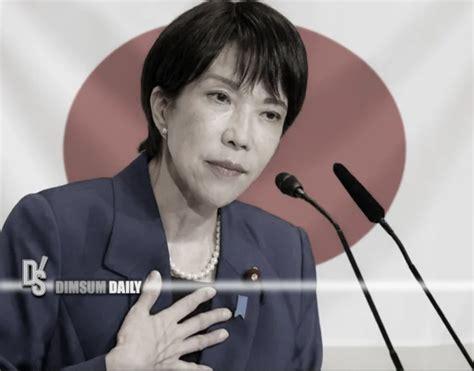
Prime Minister Sanae Takaichi’s tenure has coincided with a sharper articulation of Japan’s security concerns. Her assertion that a Chinese attack on Taiwan could constitute an existential threat to Japan marks a significant departure from earlier осторожность. By linking Taiwan’s fate to Japan’s survival, Takaichi effectively expands the scenarios in which military action, including collective defense, could be justified.
Takaichi’s writings have also questioned the practicality of prohibiting nuclear weapons on Japanese soil while relying on the U.S. nuclear umbrella. This tension highlights a structural contradiction: Japan depends on nuclear deterrence for protection but restricts the means by which that deterrence is operationalized. For some policymakers, resolving this contradiction may require revisiting long-held taboos.
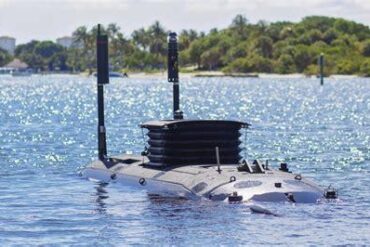
Her openness to discussing nuclear-powered submarines further fuels speculation. While nuclear propulsion is distinct from nuclear armament, the technologies overlap in ways that alarm critics. Submarines powered by nuclear reactors would enhance Japan’s endurance and stealth at sea, strengthening deterrence but also symbolically edging closer to the nuclear domain.
The U.S. Umbrella and Japan’s Strategic Calculus
For more than six decades, the U.S.-Japan alliance has underwritten Japan’s security. The American nuclear umbrella allowed Tokyo to focus on economic growth while avoiding the costs and controversies of an independent deterrent. Yet reliance on an external guarantor carries inherent uncertainties, especially amid shifting U.S. domestic politics and global priorities.
Statements by Japanese officials suggesting that “one’s own country is defended by oneself” reflect a growing unease. The debate is not solely about acquiring nuclear weapons but about ensuring credible deterrence in worst-case scenarios. Extended deterrence works only if adversaries believe the guarantor will act; doubts about that belief can destabilize alliances.
China’s report exploits these doubts, portraying Japan’s debate as evidence of a clandestine weapons ambition. In reality, the discourse reflects a broader struggle to adapt old principles to new threats without triggering regional escalation.
Regional Reactions and the Risk of Escalation
Accusations of Japanese nuclear ambition resonate deeply in East Asia, where historical memory remains potent. For China and South Korea, any hint of Japanese remilitarization evokes unresolved grievances from the twentieth century. By framing Japan as a latent nuclear threat, Beijing taps into these sensitivities, potentially rallying regional opposition to Tokyo’s defense initiatives.
At the same time, such narratives risk becoming self-fulfilling. If Japan is treated as a proliferator-in-waiting regardless of its actions, incentives to maintain restraint may weaken. Security dilemmas thrive on mistrust, and misperceptions can accelerate arms races even in the absence of concrete policy shifts.
Domestic Opposition and the Weight of Public Memory
Despite elite debates, Japan’s public remains deeply divided on nuclear issues. Civil society groups, survivors of atomic bombings, and opposition parties continue to defend the Three Non-Nuclear Principles as moral red lines. Proposals to revise them encounter fierce resistance, reminding policymakers that nuclear weapons are not just strategic tools but symbols of profound suffering.
This domestic constraint matters. Any move toward nuclear armament would require not only technical preparation but a seismic shift in public opinion. The political cost of such a decision could be enormous, potentially destabilizing the very society it aims to protect.
Strategic Ambiguity or Strategic Myth?
The Chinese report’s most provocative claim is that Japan may already possess one or two nuclear bombs. This assertion lacks independent verification and appears designed to shock rather than inform. Yet it underscores a broader truth: Japan’s advanced nuclear infrastructure creates persistent suspicion, regardless of official assurances.
Strategic ambiguity can deter adversaries by keeping options open, but it also invites accusations and countermeasures. For Japan, the challenge lies in balancing transparency with flexibility, reassuring neighbors while preserving credible deterrence.
A Nuclear Future or a Reinforced Taboo?
Japan stands at a crossroads where history, technology, and geopolitics converge. The pressures driving defense reform are real, and debates over deterrence are unlikely to fade. Yet crossing the nuclear threshold would fundamentally alter Japan’s identity and regional role, with consequences extending far beyond immediate security gains.
China’s claims of a covert nuclear path may exaggerate realities, but they reflect genuine anxieties about shifting power balances. Whether Japan chooses to reinforce its non-nuclear commitments or quietly preserve a breakout option, the decisions made now will shape East Asia’s strategic landscape for decades.
In the end, the question is not whether Japan can go nuclear overnight, but whether it believes doing so would make it safer in a world where nuclear weapons remain both a shield and a curse.