Saudi Arabia’s newest airline, Riyadh Air, has received regulatory approval from China to launch nonstop flights connecting Riyadh with Beijing Daxing International Airport (PKX) and Shanghai Pudong International Airport (PVG). The approval from the Civil Aviation Administration of China (CAAC) represents a major milestone for the young carrier as it builds an international network designed to compete with established Middle Eastern aviation giants.
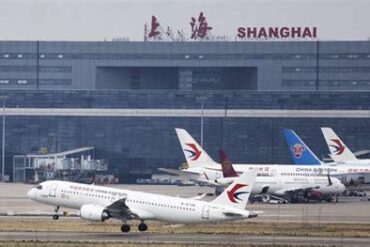
Under the approved plan, Riyadh Air will operate seven weekly flights to mainland China, including three weekly services to Beijing and four weekly services to Shanghai. The airline has not yet announced official launch dates for the routes, but the approvals provide the regulatory foundation needed to enter one of the world’s most important aviation markets.
The China expansion comes as Riyadh Air accelerates its ambition to transform Riyadh into a global aviation hub. Founded as part of Saudi Arabia’s broader economic diversification strategy, the airline aims to connect the Kingdom with major business, tourism, and trade destinations worldwide while competing directly with carriers such as Emirates, Qatar Airways, and Etihad Airways.
New Beijing and Shanghai Routes Strengthen Riyadh Air’s Global Ambitions
Riyadh Air operates from its base at Riyadh King Khalid International Airport (RUH) and is gradually expanding its international footprint. The airline has already launched services to destinations including London, Jeddah, Dubai, and Cairo, while additional routes to cities such as Madrid, Malaga, Manchester, Kuala Lumpur, Dhaka, and Mumbai are planned.
The airline is also preparing for future expansion into the United States after receiving approval from the U.S. Department of Transportation to operate flights to the country. Although Riyadh Air has not revealed its first American destinations, the move highlights the carrier’s long-term goal of becoming a major international connecting airline.
Riyadh Air has set an ambitious target of serving 100 destinations by the end of the decade. The airline is expected to play a central role in Saudi Arabia’s Vision 2030 strategy, which seeks to reduce economic dependence on oil and strengthen sectors including tourism, logistics, and aviation.
China is a particularly strategic market for this growth plan. The country represents one of the largest international travel markets in the world, with strong demand from business travelers, tourists, and passengers seeking connections between Asia and the Middle East.
Riyadh Air Enters a Competitive Saudi Arabia-China Aviation Market
The new Riyadh-Beijing and Riyadh-Shanghai services will enter a market that already includes several major airlines. Current Saudi Arabia-China operations are dominated by Saudia, which accounts for a significant share of available flights between the two countries. Other airlines serving the market include China Southern Airlines, Air China, China Eastern Airlines, and Hainan Airlines.
Existing routes demonstrate the importance of China’s major cities within Saudi Arabia’s international aviation network. Beijing, Shanghai, and Guangzhou are already established links between the two regions, connecting travelers involved in commerce, tourism, and diplomatic activities.
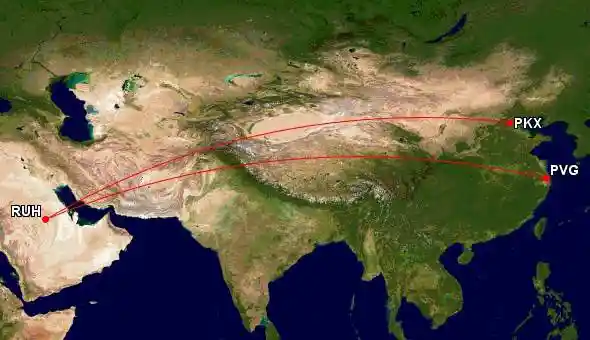
Riyadh Air’s entry adds another competitor and could reshape passenger flows by offering travelers a new option through Riyadh. The airline hopes to attract passengers traveling directly between Saudi Arabia and China while also capturing transfer traffic from other regions through its growing hub.
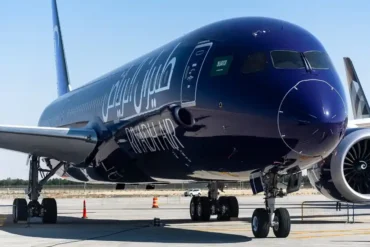
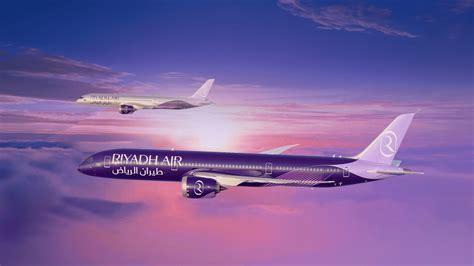
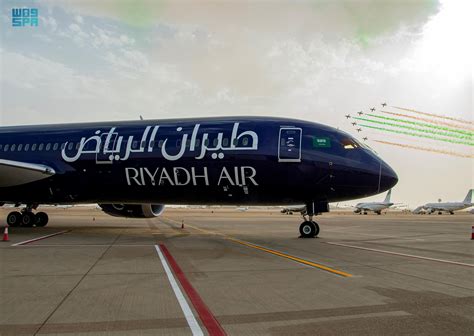
The China services will be operated using the airline’s Boeing 787-9 Dreamliner fleet, a modern widebody aircraft designed for long-haul international operations. Riyadh Air’s 787-9 configuration can accommodate up to 290 passengers across four cabin classes, including Business Elite, business class, premium economy, and economy class.
Premium Cabin Experience Designed to Challenge Gulf Airlines
Riyadh Air is positioning itself as a premium airline, with an onboard experience designed to reflect Saudi culture while incorporating modern aviation technology and luxury features. The airline’s Boeing 787 cabins feature a distinctive lavender and indigo interior design, creating a visual identity that separates it from traditional Gulf carriers.
Passengers can expect complimentary WiFi, Arabic-inspired dining options, and a wide selection of non-alcoholic beverages. As a dry airline, Riyadh Air will not serve alcohol onboard, aligning with Saudi Arabia’s cultural policies.
The airline’s premium cabins are designed around privacy and comfort. Business Elite and business-class passengers will experience a 1-2-1 seating layout featuring private suites with sliding doors. Seats convert into fully flat beds and include luxury touches such as marble-effect surfaces, mocha gold details, and Bedouin-inspired design elements.
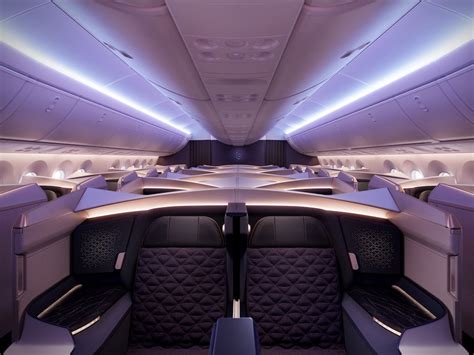
Premium passengers will also receive high-end amenity kits from Kayanee, while premium economy travelers will enjoy spacious recliner seats with a 38-inch seat pitch, adjustable calf rests, care kits, and noise-cancelling headphones.
Economy class passengers will fly in a 3-3-3 configuration, with seats offering a 31-inch pitch, 17.2-inch width, personal entertainment screens, and USB charging ports. Meals will be served using reusable hard containers as part of the airline’s modern cabin approach.
China Routes Could Become a Key Growth Engine for Riyadh Air
The approval for Beijing and Shanghai flights marks another important step in Riyadh Air’s rapid development. Although the airline is still building its network, entering China gives it access to one of the most valuable aviation markets in the world.
The success of these routes will depend on Riyadh Air’s ability to attract multiple passenger groups, including corporate travelers, tourists, and international passengers connecting through Saudi Arabia. Strong economic ties between Saudi Arabia and China could provide a solid foundation for future growth.
As Riyadh Air continues expanding its fleet, destinations, and brand presence, its China launch will serve as a significant test of its ability to compete on the global stage. The airline’s combination of new aircraft, premium cabins, and strategic hub development places it among the most closely watched newcomers in international aviation.