Fighter jets have evolved from experimental machines into some of the most sophisticated flying systems ever built. In roughly eight decades, aviation has moved from the first operational turbojet fighters of World War II to aircraft that combine stealth, sensor fusion, thrust vectoring, supercruise, networked warfare, and highly automated cockpit systems. Each generation has introduced a different answer to the same fundamental problem: how can a fighter see farther, move faster, survive longer, and defeat an opponent before that opponent can respond?
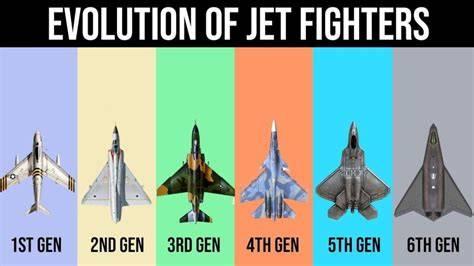
The idea of fighter-jet generations is useful because it shows how quickly military aviation has changed. First-generation fighters introduced operational jet propulsion. Second-generation aircraft pushed into sustained supersonic flight and embraced missiles and radically different aerodynamic concepts. Third-generation fighters became increasingly dependent on radar, guided weapons, and multirole capabilities, while fourth-generation designs introduced digital flight controls, composite materials, improved maneuverability, and increasingly sophisticated avionics.
The evolution did not stop there. The 4.5-generation category represents highly modernized fourth-generation platforms that incorporate advanced radar, electronic warfare, computing, and weapons integration without possessing every characteristic associated with fifth-generation stealth aircraft. Fifth-generation fighters then changed the equation again by making low observability and integrated sensors central to the design. Looking ahead, the emerging sixth generation promises an even more connected battlespace in which crewed aircraft may operate alongside autonomous systems and increasingly intelligent unmanned teammates.
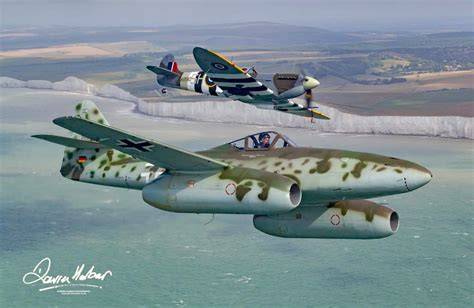
Rather than simply identifying the fastest aircraft or the fighter with the largest weapons load, innovation is better measured by how dramatically an aircraft changed the technology and tactics surrounding it. Some fighters were revolutionary because of their engines. Others transformed aerodynamics, avionics, weapons integration, or mission flexibility. A few succeeded because they brought several innovations together in one airframe.
The following 12 fighter jets represent important technological milestones across the major fighter generations, from the pioneering Messerschmitt Me 262 to the fifth-generation F-35 Lightning II. Together, they demonstrate how fighter aircraft moved from speed-focused machines into highly integrated combat systems.
First Generation: Messerschmitt Me 262
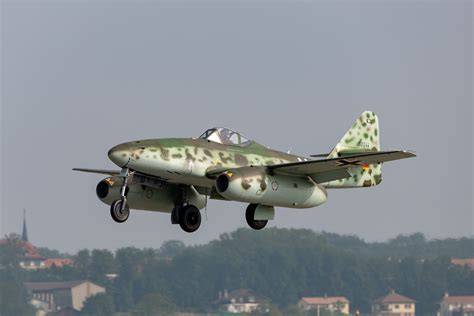
The Messerschmitt Me 262 occupies a unique position in aviation history because it was the world’s first operational jet fighter. Germany’s revolutionary aircraft entered combat during the final stage of World War II, bringing jet propulsion into aerial warfare years before piston-engine fighters were ready to disappear. On July 25, 1944, an Me 262 was used in combat during a mission over Munich, marking a fundamental transition in military aviation.
The aircraft’s greatest innovation was its propulsion system. Two Junkers Jumo 004 turbojet engines generated a combined 3,960 pounds of thrust and gave the Me 262 a maximum speed of approximately 540 mph. That represented a remarkable advantage over many contemporary piston-engine fighters. The North American P-51D Mustang, one of the aircraft that faced the Me 262, had a maximum speed of about 437 mph.
Yet technological superiority did not automatically translate into strategic success. More than 1,400 Me 262s were produced, but only around 300 reportedly saw combat. Germany’s collapsing industrial infrastructure, shortages of fuel and spare parts, and the destruction of transportation networks prevented the aircraft from being deployed at anything close to its theoretical potential. Nevertheless, the Me 262 proved that the jet age had arrived, permanently changing the trajectory of fighter design.
First Generation: Mikoyan-Gurevich MiG-15
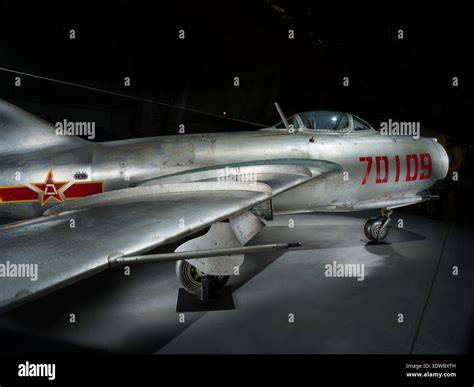
The Mikoyan-Gurevich MiG-15 demonstrated that the Soviet Union could turn the lessons of early jet aviation into a highly effective mass-produced fighter. Introduced in 1949, the MiG-15 combined a powerful engine with swept-wing aerodynamics, allowing it to operate at speeds approaching the transonic region. More than 13,000 examples were eventually produced, making it one of the most prolific jet fighters ever built.
Its Klimov VK-1 turbojet generated approximately 6,000 pounds of thrust. The aircraft could reach about 668 mph, while its swept wings substantially improved its high-speed aerodynamic performance compared with straight-wing early jets. The MiG-15’s relatively low maximum takeoff weight of around 13,500 pounds also gave it an impressive power-to-weight ratio.
The fighter became especially famous during the Korean War, where it encountered the American F-86 Sabre. The appearance of the MiG-15 demonstrated that jet combat was no longer simply about installing a turbine engine on a conventional airframe. Aerodynamics, weight, climb performance, and high-speed handling had become equally important. The MiG-15 helped establish the swept-wing fighter as a defining feature of the emerging supersonic era.
Second Generation: Lockheed F-104 Starfighter
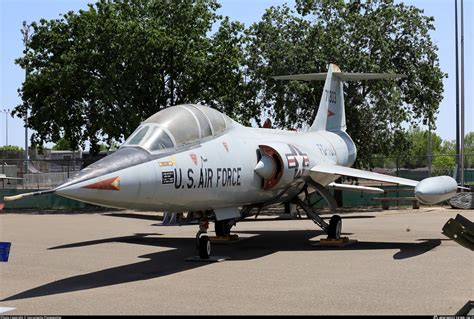
The Lockheed F-104 Starfighter represented an entirely different philosophy. Whereas many earlier fighters attempted to balance numerous characteristics, the F-104 was designed around a brutally simple objective: go extremely fast, climb rapidly, and operate at very high altitude. Its distinctive appearance, featuring exceptionally thin and short wings, reflected that priority.
Powered by a General Electric J79 turbojet, the F-104 could produce as much as 17,000 pounds of thrust with afterburner. It became the first aircraft capable of sustained flight at Mach 2, with a maximum speed of approximately 1,320 mph. Its acceleration and climb performance were equally impressive.
The Starfighter also illustrated how the second generation was beginning to rethink aerial combat. As aircraft became faster, traditional gun-based dogfighting became increasingly difficult, encouraging greater reliance on air-to-air missiles such as the AIM-9 Sidewinder. The F-104 could also perform fighter-bomber duties, reflecting the gradual transition toward multirole combat aircraft. Its extreme performance earned it the unforgettable nickname “the missile with a man in it.”
Second Generation: Mikoyan-Gurevich MiG-21
The MiG-21 became one of the defining aircraft of the supersonic era. More than 10,000 were produced, making it the most-produced supersonic jet fighter, and licensed versions were manufactured in several countries. Its influence extended across decades and continents, with some examples remaining in military service many years after the type’s introduction.
The MiG-21’s innovation came from its combination of delta-wing aerodynamics, a variable-position shock cone, compact dimensions, and powerful afterburning propulsion. Many variants eventually used the Tumansky R-25-300 engine, which could generate more than 13,000 pounds of thrust. The aircraft could reach approximately 1,300 mph.
During the Vietnam War, the MiG-21 became particularly troublesome for American aircraft. Its small size, speed, and maneuverability created a difficult opponent for larger fighters such as the F-4 Phantom II. The aircraft’s combat performance helped demonstrate that missile technology alone could not eliminate the importance of maneuverability. Air forces consequently reconsidered tactics, training, and gun armament as aerial combat evolved.
Third Generation: McDonnell Douglas F-4 Phantom II
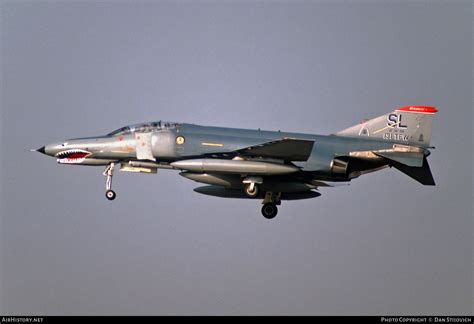
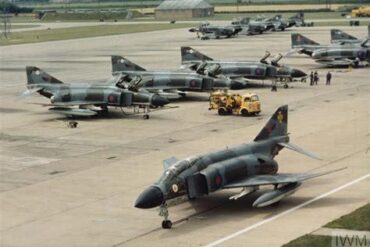
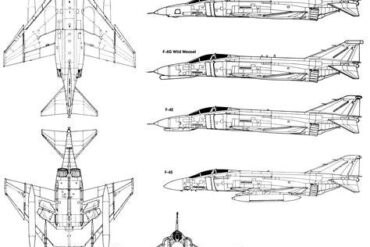
The F-4 Phantom II represented the growing importance of electronics, radar, missiles, and true multirole capability. Originally conceived as a U.S. Navy interceptor, the aircraft eventually entered service with the U.S. Marine Corps and U.S. Air Force, becoming one of the most versatile American combat aircraft of its era.
Its two J79-GE-8 engines gave the Phantom II a maximum speed ranging from approximately Mach 1.4 to Mach 2.2 depending on configuration and conditions. More importantly, the aircraft incorporated a sophisticated radar system and could employ weapons such as the AIM-7 Sparrow and AIM-9 Sidewinder.
Early Vietnam combat exposed an important weakness in the assumption that missiles had made internal guns unnecessary. The Phantom’s original configuration lacked an internal cannon, while opponents such as the MiG-21 could exploit close-range engagements. Later variants addressed the problem with the 20 mm M61 Vulcan cannon. This adaptability became one of the aircraft’s defining strengths. With 5,195 built, the Phantom became the most-produced U.S. supersonic aircraft and eventually served with numerous air forces around the world.
Third Generation: Saab 37 Viggen
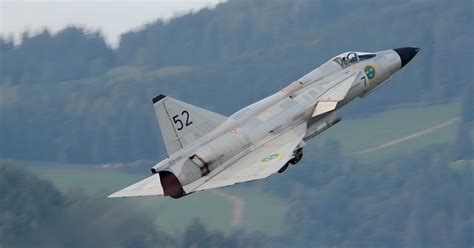
Sweden’s Saab 37 Viggen demonstrated that innovation did not always mean pursuing the largest engine or highest top speed. Instead, Saab developed an unusual aerodynamic configuration centered on a delta wing with small canards. The arrangement provided additional control and stability while supporting the aircraft’s demanding operational requirements.
The Viggen entered Swedish service in 1971 and used a single Volvo RM8 afterburning turbofan, a license-built derivative of the Pratt & Whitney JT8D. Its design was particularly well suited to Sweden’s defensive doctrine, which emphasized dispersed operations and the ability to operate from unconventional road bases.
The aircraft’s canard configuration was especially notable because the Viggen became the first production aircraft to use canards. The type also earned an unusual place in aviation history when its targeting system reportedly achieved a lock on an SR-71 Blackbird. Only about 330 Viggens were produced, but its innovative aerodynamic and operational concepts gave it an influence far beyond its production numbers.
Fourth Generation: Dassault Rafale
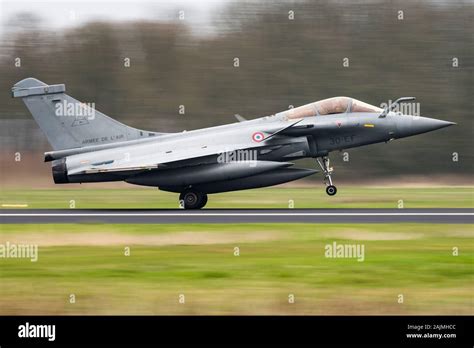
The Dassault Rafale brought together many of the defining technologies of fourth-generation combat aviation in an unusually flexible package. Its twin-engine canard-delta configuration combines high aerodynamic performance with sophisticated digital flight controls, while its multirole architecture allows a single aircraft type to perform missions that previously might have required several specialized platforms.
The Rafale’s digital fly-by-wire system is central to its performance. Instead of relying solely on direct mechanical connections between the pilot and flight-control surfaces, computerized controls continuously manage the aircraft’s response. Combined with its canards and delta wing, this architecture supports high agility while allowing the aircraft to remain controllable across demanding flight conditions.
Two Snecma M88 turbofan engines give the Rafale a maximum speed of approximately Mach 1.8. Yet raw speed is only one part of its innovation. The aircraft can perform interception, air-to-air combat, precision strike, reconnaissance, and anti-ship missions. Its ability to transition between these roles illustrates how fourth-generation design increasingly prioritized mission flexibility and digital integration.
Fourth Generation: Eurofighter Typhoon
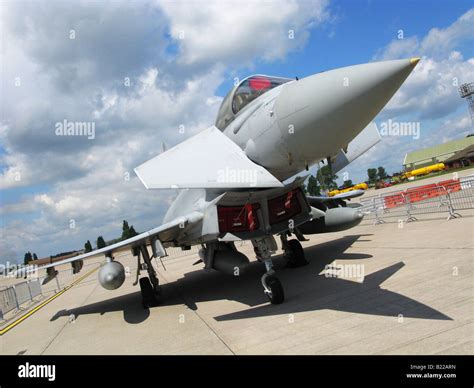
The Eurofighter Typhoon represents another major fourth-generation achievement, but its innovation begins with the international nature of its development. Multiple European nations participated in creating the aircraft, resulting in a platform designed from the beginning around advanced aerodynamics, digital flight controls, and multirole operations.
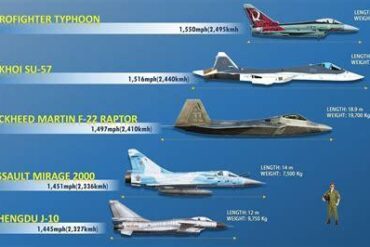
Its canard-delta configuration works with a quadruplex digital fly-by-wire system to deliver exceptional agility. Two Eurojet EJ200 engines generate approximately 40,000 pounds of combined thrust, allowing the aircraft to reach around Mach 2 at altitude.
Perhaps the most important concept behind the Typhoon is its swing-role capability. The aircraft can shift between air-to-air and air-to-ground missions rather than remaining locked into a single tactical purpose. Its 13 hardpoints allow it to carry a broad selection of weapons, including laser-guided bombs and air-to-air missiles. The result is a fighter that combines high-speed air combat performance with substantial strike capability.
4.5 Generation: Boeing F-15EX Eagle II
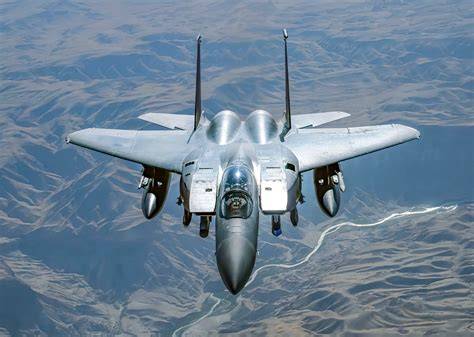
The Boeing F-15EX Eagle II demonstrates how an aircraft design from the 1970s can be transformed into a modern combat platform without abandoning its fundamental strengths. The original F-15 was already renowned for speed and air-to-air performance, but the F-15EX uses a strengthened airframe, modern avionics, an advanced radar, upgraded engines, and additional weapons stations to create a substantially more capable aircraft.
The F-15EX is often described as a “missile truck” because of its enormous weapons capacity. It can carry up to 12 AIM-120 AMRAAMs or a mixed weapons load of up to approximately 29,500 pounds. Its maximum speed is around Mach 2.5, while its maximum takeoff weight can reach approximately 81,000 pounds.
Its innovation is therefore less about stealth and more about payload, range, digital modernization, and weapons capacity. With a projected service life exceeding 20,000 hours, the aircraft demonstrates how a mature airframe can remain relevant when paired with modern sensors, propulsion, computing, and weapons.
4.5 Generation: Sukhoi Su-35S
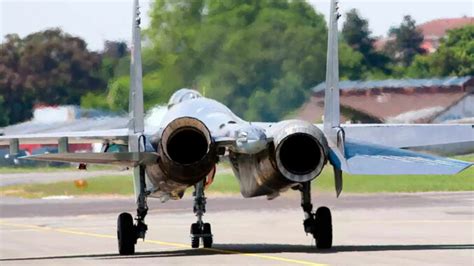
Russia’s Sukhoi Su-35S represents another path toward advanced fourth-generation capability. Derived from the Su-27 family, the aircraft incorporates substantial improvements in propulsion, avionics, maneuverability, and weapons capacity. It entered service in the modern era while retaining the basic aerodynamic philosophy of its predecessor.
Two Saturn AL-41F1S engines produce roughly 40,000 pounds of combined dry thrust and as much as 66,000 pounds with afterburners. The aircraft’s propulsion and aerodynamic design give it exceptional maneuverability, while its ability to sustain supersonic flight without continuous afterburner use places it among the fighters capable of supercruise-like performance.
The Su-35S also has considerable weapons flexibility. Twelve hardpoints allow it to carry air-to-air missiles, guided bombs, and other ordnance, with a maximum weapons load of approximately 18,000 pounds. Its maximum speed reaches roughly Mach 2.25 at altitude. Rather than relying primarily on stealth, the aircraft emphasizes kinematics, electronic systems, range, and weapons capacity.
Fifth Generation: Lockheed Martin F-22 Raptor
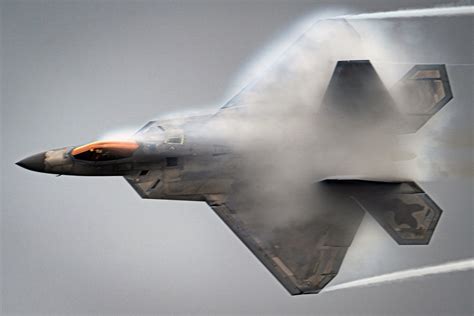
The Lockheed Martin F-22 Raptor changed the definition of what a fighter aircraft could accomplish. Introduced in 2005, it became the first operational fifth-generation fighter, combining low observability with advanced sensors, integrated avionics, supercruise, and extraordinary maneuverability.
Its two Pratt & Whitney F119-PW-100 turbofan engines produce approximately 35,000 pounds of combined thrust. Two-dimensional thrust-vectoring nozzles allow the aircraft to control its pitch with extraordinary authority, contributing to the Raptor’s reputation for high-angle-of-attack maneuverability.
Yet the F-22’s most important innovation is the way its systems work together. Stealth, sensors, computing, weapons, and flight performance are not isolated features. They form a single combat system designed to detect and engage threats while minimizing the aircraft’s own exposure.
Only about 200 production aircraft were completed, making the F-22 one of the world’s most exclusive frontline fighters. It remains operated solely by the U.S. Air Force and is expected to continue receiving modernization upgrades into the 2030s.
Fifth Generation: Lockheed Martin F-35 Lightning II
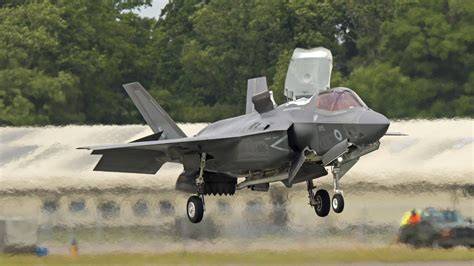
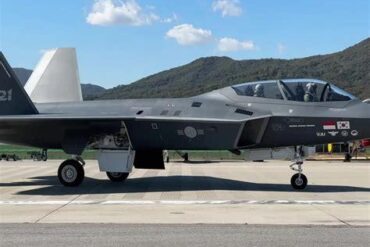
The Lockheed Martin F-35 Lightning II arguably represents the most consequential shift in fighter design from the fifth generation. Rather than concentrating primarily on traditional air-to-air maneuvering, the F-35 was designed around stealth, sensor fusion, networking, precision strike, and information dominance.
Three principal variants allow the aircraft to operate from different environments. The F-35A uses conventional takeoff and landing, the F-35B incorporates short takeoff and vertical landing capability, and the F-35C is designed for carrier operations with folding wings and equipment for catapult launches and arrested recoveries.
One of the aircraft’s most distinctive innovations is its integrated sensor architecture. Information from multiple sensors is processed and presented to the pilot through a highly computerized cockpit rather than forcing the pilot to interpret numerous independent instruments manually. The helmet-mounted display further expands this concept, allowing pilots to access information while looking around the aircraft.
The F-35’s Distributed Aperture System also gives pilots an unusual view of their surroundings by combining external camera feeds into a continuous picture. This can create the impression of looking through the aircraft itself, providing situational awareness that conventional cockpit windows cannot offer. Its technology turns the pilot into the center of a networked information system rather than simply the operator of a flying machine.
From Jet Propulsion to Networked Combat
The 12 aircraft reveal a remarkable progression in the priorities of fighter design. The Me 262 was revolutionary because it introduced operational jet propulsion to combat. The MiG-15 then showed how swept wings and improved engines could transform the performance of early jets. The F-104 and MiG-21 pushed the second generation toward Mach 2 flight, compact airframes, and increasingly sophisticated missile warfare.
The third generation made radar and multirole capability central to fighter operations. The F-4 Phantom II demonstrated the possibilities and limitations of missile-centric warfare, while the Viggen showed how unusual aerodynamics and dispersed basing could produce a highly effective national defense fighter.
Fourth-generation aircraft shifted toward digital flight controls, agility, composites, and multirole flexibility. The Rafale and Typhoon embodied that philosophy, while the F-15EX and Su-35S demonstrate how heavily modernized fourth-generation aircraft can remain formidable decades after the basic concepts behind them were introduced.
The fifth generation then changed the battlefield fundamentally. The F-22 combined stealth with supercruise and extreme maneuverability, while the F-35 placed sensor fusion and networked information at the heart of combat effectiveness.
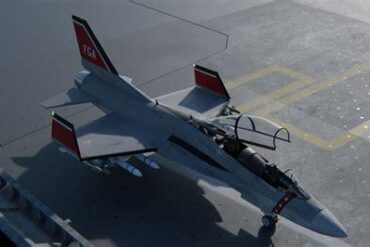
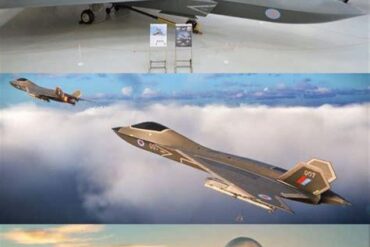
The next transition is already taking shape. The anticipated sixth generation, including the U.S. Air Force’s developing F-47, is expected to push fighter aviation toward greater automation, advanced stealth, longer-range sensing, adaptive technologies, and closer cooperation between crewed fighters and autonomous aircraft. The result may be another shift in what it means to be a fighter pilot.
From the first roar of the Me 262’s turbojets to the sensor-rich cockpit of the F-35, fighter aviation has never stopped reinventing itself. The most innovative aircraft were not necessarily those with the highest speed or largest payload. They were the machines that changed the assumptions designers, pilots, and military planners made about air combat. That is ultimately why these 12 fighters remain so important: each represents a moment when aviation moved beyond what had previously seemed possible.