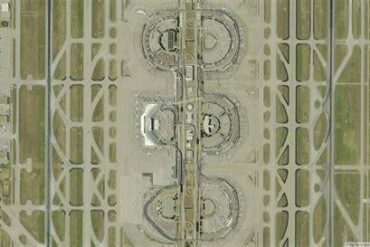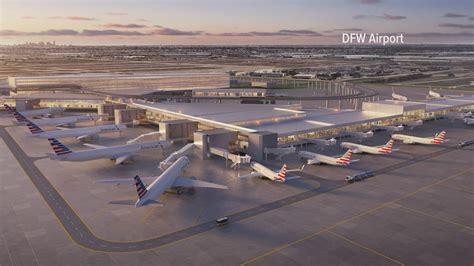
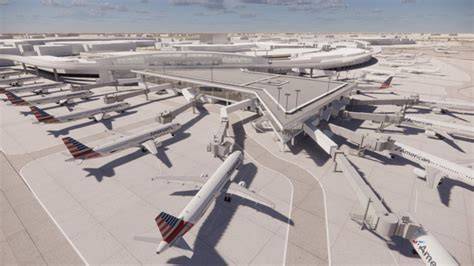
American Airlines is making one of the clearest long-term bets in its network at Dallas/Fort Worth International Airport (DFW). While the carrier is reassessing parts of its broader strategy, it is simultaneously committing itself more deeply to the Texas airport with a massive terminal expansion that could reshape the scale and efficiency of its largest hub. The centerpiece is Terminal F, a $4 billion project designed around American Airlines’ connecting operation and ultimately expected to provide 31 gates exclusively for the carrier.
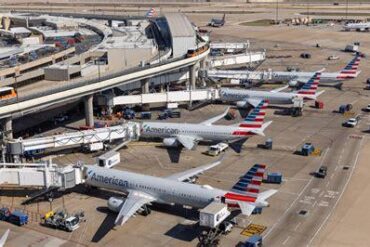
The investment is significant not simply because of its price tag, but because of what it says about American’s view of the future. The airline has historically maintained a broad network of major hubs across the United States, yet DFW has steadily evolved into something different: a true megahub capable of moving enormous numbers of passengers through carefully coordinated waves of flights. American already operates more than 900 daily departures from the airport, placing its DFW operation just behind Delta Air Lines’ enormous Atlanta hub in scale.
The project therefore goes beyond adding gates. American is effectively helping shape an airport around the way it wants to operate for decades. Terminal F is being developed as part of DFW’s “Forever Forward at DFW: A Connection Machine” strategy, with an emphasis on fast connections, automated baggage handling, modern check-in facilities, biometric processing, and improved access to the airport’s automated people-mover system. For American, this is infrastructure designed specifically to make an already enormous hub even more powerful.
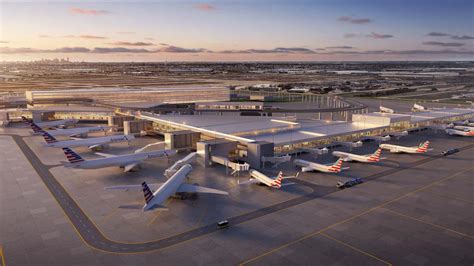
Terminal F Will Give American 31 Dedicated Gates
The scale of Terminal F is what immediately distinguishes the project. The first phase is expected to open in 2027 with 15 gates, while the completed facility is planned to reach 31 gates. American Airlines will be the exclusive tenant, giving the carrier a substantial new block of infrastructure at an airport where it already has an overwhelming presence.
That exclusivity matters. A large airport terminal can be valuable, but a terminal specifically designed around one airline’s network strategy can be even more useful. American will have greater control over how gates are allocated, how connecting passengers move through the facility, and how arrival and departure waves are coordinated. At a hub of DFW’s size, small improvements in connection efficiency can translate into enormous operational benefits when multiplied across hundreds of flights.
The terminal is also being designed with the realities of modern air travel in mind. Automated baggage technology should help reduce the friction associated with transferring bags between connecting flights, while self-service check-in and automated bag-drop facilities can reduce pressure on traditional counters. At international gates, biometric scanning is expected to accelerate passenger processing.
A new SkyLink station is another important component. DFW’s internal transportation system is fundamental to the airport’s enormous footprint, and integrating Terminal F directly into that system should make it easier for passengers to move between terminals without relying on lengthy walks or complicated ground transfers. For an airline that depends heavily on connections, every minute matters.
DFW Has Become American’s Megahub
American Airlines has ten hub airports, but they are not all equal. DFW occupies a special position within the network because of the sheer number of flights and connections concentrated there. Charlotte Douglas International Airport (CLT) is another enormous American operation, but DFW has become the airline’s defining megahub.
The distinction is important because American’s network has increasingly been built around a combination of dominant, lower-cost hubs and more competitive metropolitan markets. DFW offers something that is difficult to replicate elsewhere: enormous scale, substantial local demand, geographic usefulness, and a strong competitive position for American.
American’s presence at DFW is so large that the airport functions almost like a giant machine for connecting passengers. Flights arrive in coordinated waves, passengers transfer between aircraft, and the next wave of departures carries them toward destinations throughout the United States and beyond. The airline has developed 13 flight banks at DFW, creating a highly structured schedule designed to maximize connections.
That model allows American to serve destinations that might not independently support high-frequency service. A passenger traveling from a smaller city can connect through Dallas/Fort Worth and continue to another part of the country. At the same time, DFW’s substantial local market provides a large base of passengers who begin or end their journeys in North Texas.
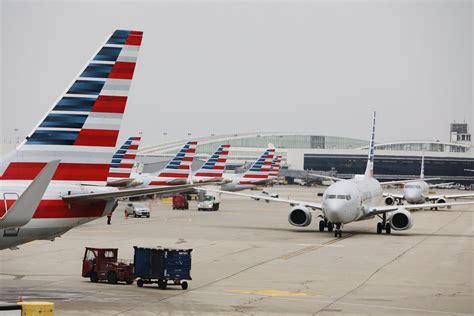
Why Dallas/Fort Worth Is So Valuable
Geography explains part of DFW’s success. The airport does not occupy the same central position in the United States as Atlanta, which is particularly well placed for connecting large population centers across the eastern half of the country. DFW is farther west, meaning it is less naturally suited to some East Coast-to-East Coast connections.
But its location is highly effective for east-west connectivity. Texas sits in a position that allows American to connect passengers traveling between the eastern and western United States without pushing every journey through a coastal airport. DFW can therefore act as a bridge between major population centers on opposite sides of the country.
The airport’s location also aligns with a much bigger economic story: the continued growth of Texas and the Sun Belt. Dallas/Fort Worth is the largest metropolitan region in Texas, and its expanding economy creates substantial local demand for domestic and international travel. American does not have to depend entirely on connecting passengers when the surrounding market itself can support an enormous operation.
This combination is central to the airline’s strategy. DFW is simultaneously a connecting hub and a major origin-and-destination market. That dual role makes the airport far more resilient than a hub that depends almost exclusively on connecting traffic.
The Sun Belt Gives American Another Advantage
American’s network is unusually well positioned around the Sun Belt. Its hubs include DFW, Phoenix Sky Harbor International Airport, Miami International Airport, and Charlotte Douglas International Airport, giving the airline significant exposure to several of the fastest-growing areas of the United States.
Delta’s principal Sun Belt hub is Atlanta, while United’s most prominent Sun Belt hub is Houston. American, however, has created a broader geographic footprint across the region. DFW is particularly important because it can connect passengers from these growing markets with destinations throughout the country.
The Sun Belt’s importance is not simply about population growth. It also involves business migration, corporate investment, leisure demand, and changes in where Americans choose to live and work. As these trends continue, airlines need networks capable of serving travelers who increasingly do not follow traditional Northeast-centric patterns.
American’s DFW operation fits this environment remarkably well. The airport can funnel passengers from smaller Texas and Sun Belt communities into a huge network, while also supporting direct travel from one of the country’s largest metropolitan regions.
That makes Terminal F more than an airport construction project. It is an infrastructure investment designed around a long-term demographic and economic thesis.
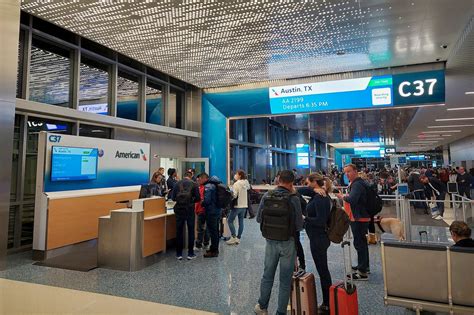
American Has a Cost Advantage at DFW
There is another reason American has continued to emphasize DFW: operating economics.
For airlines, hub size alone does not determine profitability. A carrier can operate hundreds of flights from an airport and still struggle if airport costs, labor expenses, competition, or inefficient schedules undermine the economics of the operation. DFW has historically offered American a relatively favorable environment in which to build scale.
American has similarly emphasized Charlotte as a lower-cost powerhouse. The airline operates more than 670 daily departures from CLT, while its DFW schedule exceeds 900 daily departures. These enormous schedules are possible partly because American has such a strong competitive position at both airports.
The strategy is straightforward. If an airline can operate a huge number of flights from airports where it has strong market share and favorable costs, it can create a dense network without facing the same level of structural pressure found at highly competitive business airports.
This is one reason American’s DFW strategy should not be interpreted as merely chasing passenger volume. The hub is valuable because it combines scale with efficiency.
A New Terminal for a Changing American Airlines
American’s commitment to DFW is particularly interesting because the airline itself is changing.
In recent years, American emphasized a massive domestic network, substantial Sun Belt capacity, cost control, and relatively limited long-haul expansion compared with some competitors. Its strategy often prioritized the economics of moving large numbers of passengers efficiently rather than maximizing premium-cabin capacity.
The market has increasingly rewarded a different balance. Premium travel has become more important, long-haul flying has produced attractive opportunities, and large business markets such as New York and Los Angeles remain strategically critical.
American is now attempting to adjust its network and commercial strategy, including efforts to improve profitability and strengthen its position in major metropolitan markets. That does not mean abandoning DFW.
Quite the opposite may be true.
DFW provides the operational foundation that can support American while the airline adjusts other parts of its network. Its low-cost structure, enormous local market, geographic positioning, and connection opportunities give American an unusually strong platform from which to build.
The airline’s challenge is therefore not deciding whether DFW matters. It clearly does. The larger challenge is ensuring that the enormous DFW network complements stronger positions in other strategic markets rather than becoming an excuse to underinvest elsewhere.
The “El Paso to the World” Strategy Has Limits
American has faced criticism for a network philosophy sometimes described as “El Paso to the world.” The phrase captures the idea of using massive Sun Belt hubs to connect passengers from smaller cities with destinations around the globe.
There is nothing inherently wrong with that concept. In fact, DFW demonstrates why it can work so well.
The problem arises when a carrier becomes too dependent on that strategy and allows its positions in major competitive markets to weaken. New York and Los Angeles, for example, are strategically important because of their corporate traffic, international demand, premium travelers, and sheer economic significance.
American’s future network therefore needs balance. DFW should remain an enormous connecting machine, but the airline also needs competitive strength in the markets where high-value customers originate.
That distinction helps explain why the Terminal F investment is so significant. American can pursue a broader strategic reset without dismantling the infrastructure that has made DFW one of the strongest assets in its network.
The 2043 Lease Extension Shows Long-Term Confidence
American’s commitment is reinforced by its extended agreement with DFW, which now runs through 2043. That is a powerful indication that both sides expect the airport to remain central to the airline’s strategy for decades.
Airlines do not typically make multibillion-dollar infrastructure commitments without considering the long-term economics. A terminal scheduled to continue developing through 2030, paired with a lease horizon extending well beyond that date, gives American considerable operational stability.
It also gives DFW a powerful anchor tenant. American’s growth supports the airport, while the airport’s infrastructure supports American. The relationship is mutually reinforcing.
As Terminal F comes online, the additional gates should give American more room to adjust schedules, introduce new services, accommodate larger aircraft operations, and manage its enormous connecting flows. The real benefit may not be any single new route. It could be the cumulative improvement in how the entire hub operates.
Can DFW Really Challenge Atlanta?
For decades, Hartsfield-Jackson Atlanta International Airport has occupied the top position among America’s airline hubs, powered by Delta’s extraordinary dominance. Atlanta’s geographic advantages and Delta’s enormous network make it exceptionally difficult to displace.
American is not necessarily trying to overthrow Atlanta. The more realistic goal is to build DFW into the strongest possible rival.
The numbers already demonstrate how close the two operations can be in scale. Delta operates just under 1,000 daily departures from Atlanta, while American operates slightly more than 900 from DFW. Other individual airline hubs remain substantially smaller.
That makes DFW one of the very few American airports that can reasonably be described as a superhub.
Terminal F could widen that advantage by increasing gate capacity precisely where American needs it most. More gates mean more flexibility, while faster baggage handling and passenger processing can help the airline extract greater productivity from its schedule.
Atlanta may retain the crown, but DFW does not need to surpass ATL to be strategically extraordinary.
American’s $4 Billion Bet Is Bigger Than Terminal F
The most important aspect of American’s $4 billion commitment is what it reveals about the carrier’s long-term priorities.
American is changing its commercial strategy, looking to improve profitability, strengthen premium offerings, and rebuild its position in major business markets. Yet it is simultaneously doubling down on one of the most successful elements of its existing network.
That combination makes sense.
DFW offers American something few airports can provide at this scale: low operating costs, huge local demand, an advantageous east-west position, a dominant competitive position, and an enormous connecting network. Terminal F will add the physical capacity needed to exploit those advantages for another generation.
The project also arrives at a time when the Dallas/Fort Worth region continues to represent one of the most important growth markets in the United States. American therefore has two reasons to invest: DFW is already a spectacular hub, and the market around it continues to create opportunities.
By the time Terminal F reaches its full planned scale of 31 gates, American’s DFW operation could look very different from today’s already enormous network. The airport will have more capacity, more efficient passenger flows, more sophisticated baggage systems, and a terminal built specifically around American’s hub model.
The result will not simply be a new building. It will be an even more capable connection machine at the center of American Airlines’ domestic and international network.
American may be trying to close profitability gaps with Delta and United, but it is not abandoning the infrastructure that gives it a unique competitive advantage. With a $4 billion Terminal F investment, a long-term lease extending to 2043, and a target of 31 dedicated gates, the airline is making its position unmistakable.
Dallas/Fort Worth is not just another American Airlines hub. It is the foundation on which the carrier intends to build its next chapter.