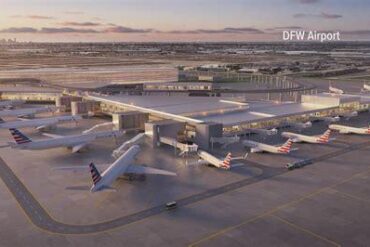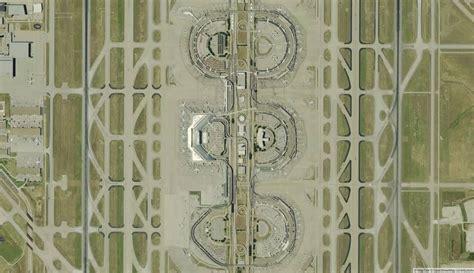
Dallas/Fort Worth International Airport has always been a place where scale matters. Geography put it in the middle of the country, ambition turned it into one of the world’s most connected hubs, and fleet choices made it a widebody powerhouse. In January 2026 alone, airlines scheduled 1,247 widebody departures from DFW, a number that quietly reveals how central this airport has become to long-haul aviation in North America. These twin-aisle aircraft are not just moving people; they are stitching together continents, alliances, and global networks through North Texas.
DFW’s widebody story is not about one-off prestige routes or seasonal experiments. It is about consistency, frequency, and the ability to sustain some of the world’s longest and most competitive air services. Domestic flying still dominates the airport’s overall movements, but the widebody layer is where DFW flexes its international muscle and demonstrates why airlines continue to invest heavily here.
The data behind this picture, sourced from Cirium’s January 2026 schedules, shows a hub that supports everything from ultra-long-haul flights to Asia and Australia to dense transatlantic and transpacific trunk routes. The result is an airport that feels less like a regional gateway and more like a global crossroads.
American Airlines and the Architecture of Dominance
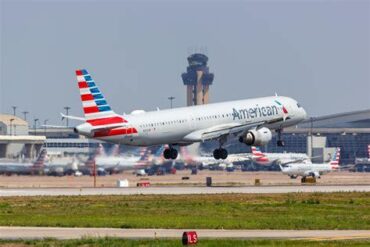
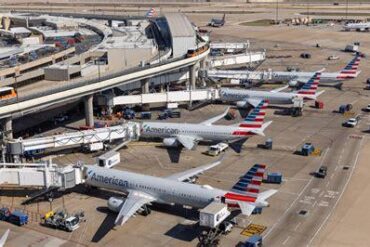
American Airlines is the gravitational center of DFW’s widebody universe. With 802 of the 1,247 scheduled widebody departures, the carrier accounts for just over 64% of all twin-aisle operations at the airport. This dominance is not accidental. DFW is one of American’s core hubs, and its widebody deployment here reflects a carefully layered strategy that blends international reach with high-capacity domestic flying.
American’s fleet mix tells its own story. The Boeing 787-9, 787-8, 777-200ER, and 777-300ER all play distinct roles, allowing the airline to fine-tune capacity and range depending on market demand. The 787 family handles thinner long-haul routes efficiently, while the 777s anchor high-volume destinations that demand both range and payload.
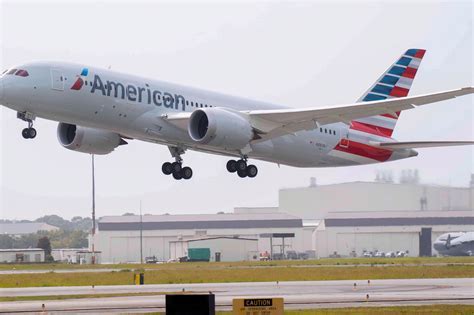
London Heathrow stands out as American’s busiest widebody destination from DFW, with nearly four daily departures on average. This route alone underscores the depth of premium and connecting demand flowing between Texas and the UK. Meanwhile, widebody flights to Honolulu and Kahului highlight how American uses long-range aircraft to reinforce key leisure markets, while Philadelphia, Miami, and São Paulo maintain strong business and network connectivity.
Operationally, American has framed these adjustments as customer-focused rather than purely capacity-driven. The airline’s leadership has emphasized schedule quality and network breadth, signaling that DFW’s widebody role is being refined rather than reduced. The result is a hub that feels deliberately engineered rather than simply busy.
Oneworld Powerhouses and Long-Haul Prestige Routes
Beyond American, DFW’s widebody scene is shaped heavily by its oneworld partners. Qatar Airways emerges as the largest foreign widebody operator at the airport, scheduling 62 departures in January 2026. Its daily services to Doha Hamad International Airport are flown using a mix of the Airbus A350-1000 and Boeing 777-200LR, aircraft optimized for ultra-long-haul performance and premium-heavy cabins.
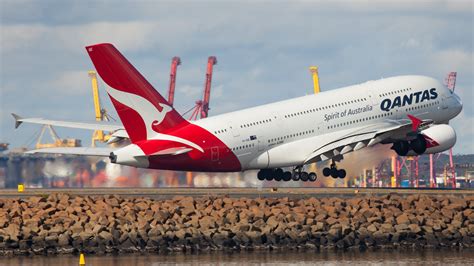
Just one flight behind Qatar is Qantas, whose presence at DFW carries both symbolic and operational weight. The Australian carrier schedules 61 widebody departures, split between Airbus A380 services to Sydney and Boeing 787-9 Dreamliner flights to Melbourne. The A380’s regular appearance at DFW reinforces the airport’s ability to handle the world’s largest passenger aircraft while sustaining the demand such capacity requires.
Turkish Airlines adds another dimension to DFW’s widebody portfolio. With 44 departures to Istanbul, the airline uses both the 787-9 and 777-300ER, offering nearly daily connectivity to one of the world’s fastest-growing global hubs. Istanbul’s geographic reach makes these flights especially valuable, opening one-stop access from Texas to Europe, Asia, and Africa.
Daily Widebody Specialists and Global Reach
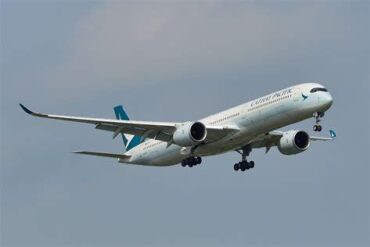
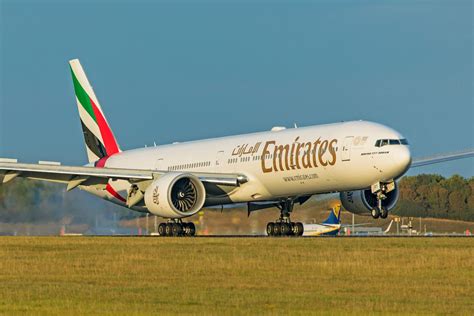
A second tier of carriers maintains exactly one widebody departure per day, a rhythm that balances consistency with disciplined capacity management. British Airways connects DFW to London using the A350-1000, while Cathay Pacific deploys the same aircraft type on its Hong Kong service. Emirates relies on the 777-300ER for its daily Dubai flight, delivering both cargo capability and premium capacity.
Asia-focused connectivity deepens with EVA Air and Korean Air, each flying the 787-9 to Taipei and Seoul respectively. These routes are not experimental; they are carefully calibrated services that rely on strong corporate traffic, alliance feed, and growing leisure demand.
The Long Tail: Europe, Japan, and the Pacific
Beyond the daily operators lies a diverse group of airlines flying widebodies less frequently but with strategic intent. Finnair leads this segment with 29 flights to Helsinki, leveraging its geographic advantage for Asia-bound connections. Iberia, Air France, and Lufthansa collectively reinforce DFW’s European connectivity through Madrid, Paris, and Frankfurt, each balancing frequency against seasonal demand patterns.
To the west, Japan Airlines combines A350 and 777 operations to Tokyo Haneda, totaling 28 departures for the month. Fiji Airways, meanwhile, adds a distinctly Pacific flavor with 14 A350 flights to Nadi, a route that highlights DFW’s expanding leisure reach beyond traditional markets.
Taken together, these services illustrate why DFW’s widebody ecosystem feels unusually complete. It is not dominated solely by one region or traffic type. Instead, it reflects a mature hub where fleet diversity, alliance strategy, and geographic logic intersect. Bigger has always been part of Texas mythology, but at Dallas/Fort Worth International Airport, it is also a carefully managed reality written in aluminum, composite, and jet fuel.