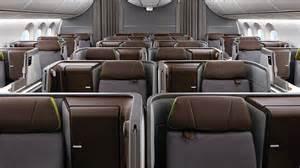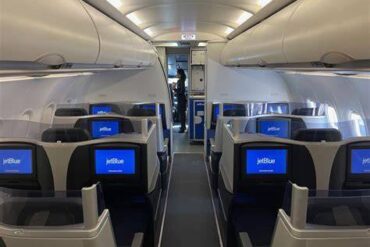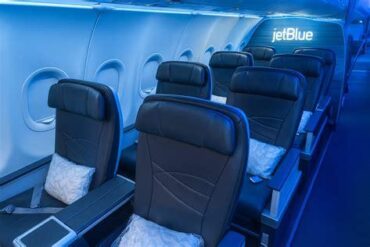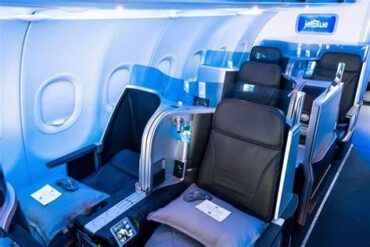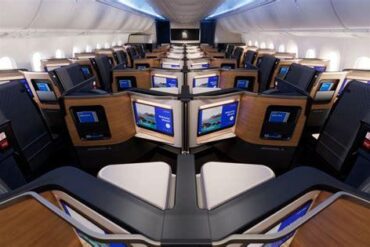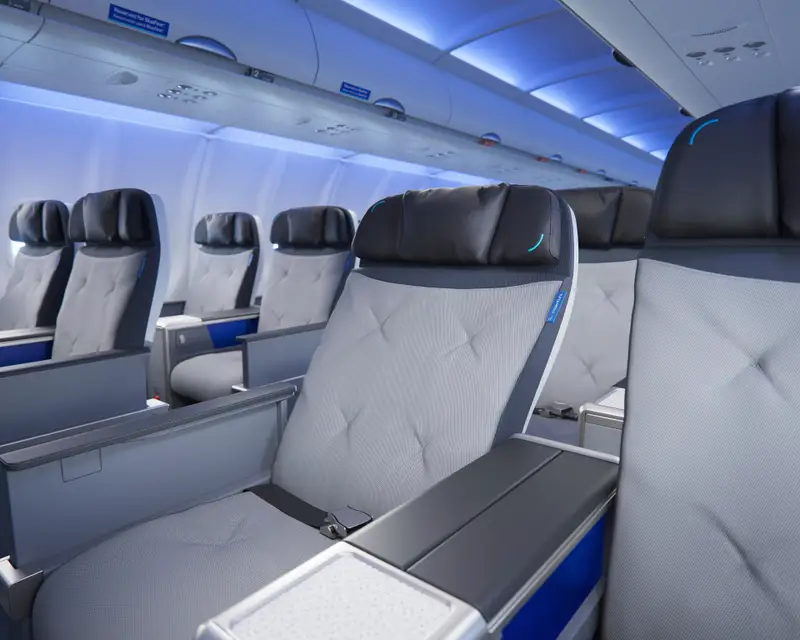
JetBlue Airways is taking a decisive step toward a more premium business model with the official unveiling of BlueFirst, a new domestic first-class product designed for aircraft and routes that do not already offer Mint. The new cabin will introduce wider recliner seats, upgraded dining, larger entertainment displays, expanded power options, and additional airport and onboard benefits. JetBlue expects BlueFirst to begin rolling out later in 2026, with tickets scheduled to go on sale in the fall.
The launch marks an important change in JetBlue’s long-standing cabin strategy. For years, the airline built much of its identity around offering generous economy-class legroom, rather than operating a conventional domestic first-class cabin. BlueFirst changes that formula by creating a dedicated premium tier while simultaneously reducing seat pitch in portions of the Main cabin. The move gives JetBlue a new way to attract higher-paying travelers, but it also raises questions about what happens to one of the product features that helped distinguish the airline from its competitors.
BlueFirst will occupy a distinct position between JetBlue’s EvenMore product and its flagship Mint experience. The new first-class seats will be arranged in a 2-2 configuration, feature five inches of recline, and provide up to seven inches more legroom than standard Main seats. Rather than attempting to replicate Mint’s lie-flat suites, JetBlue is positioning BlueFirst as a conventional domestic premium recliner product with a stronger emphasis on comfort, technology, food, and personalized service.
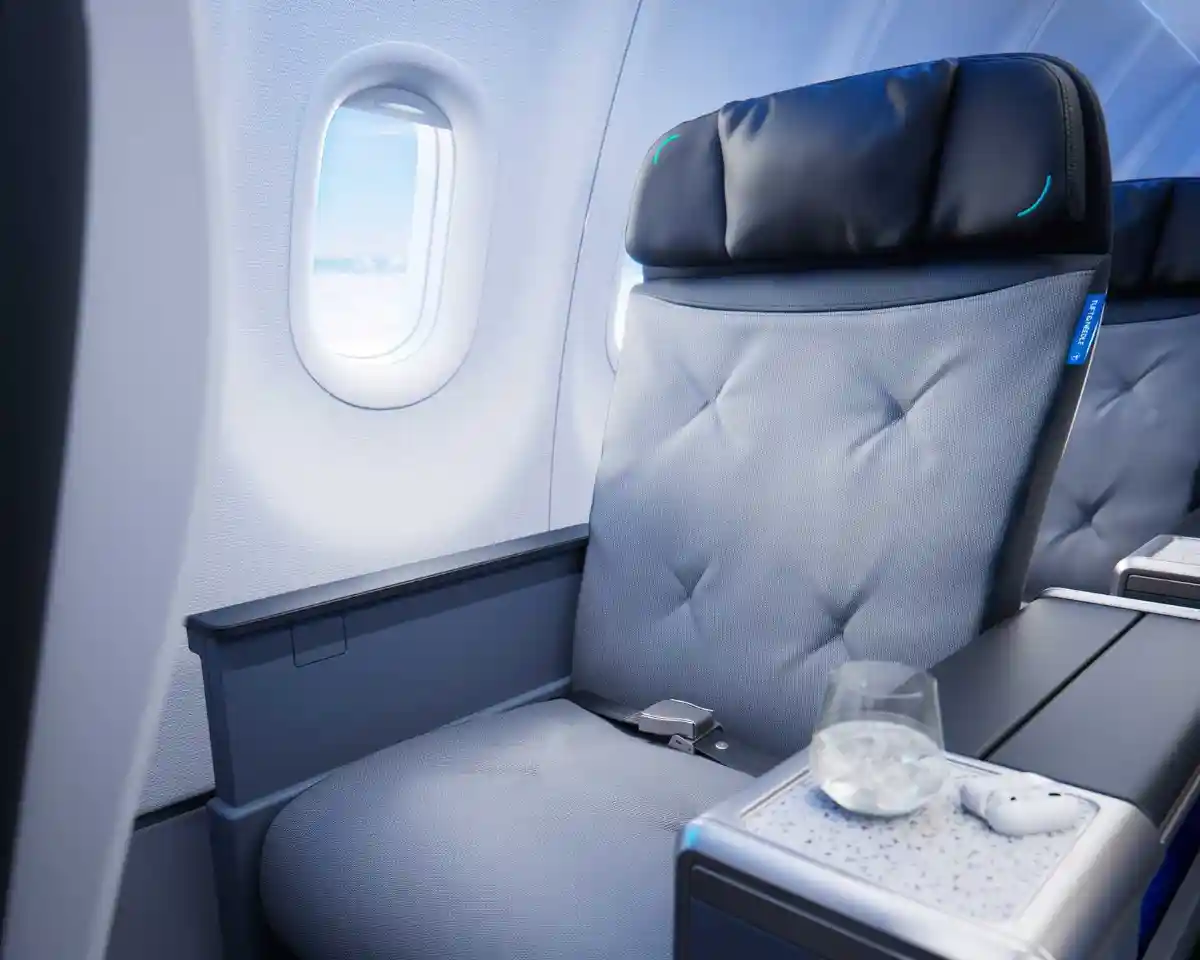
JetBlue BlueFirst Introduces a New Domestic First-Class Experience
The BlueFirst seat has been developed with comfort as a central consideration. JetBlue worked with Tuft & Needle on the seat cushions, incorporating the company’s T&N Flex foam technology to provide additional support and pressure relief. That partnership reflects the airline’s attempt to make the physical seat itself a meaningful upgrade rather than simply adding a premium label to an existing cabin.
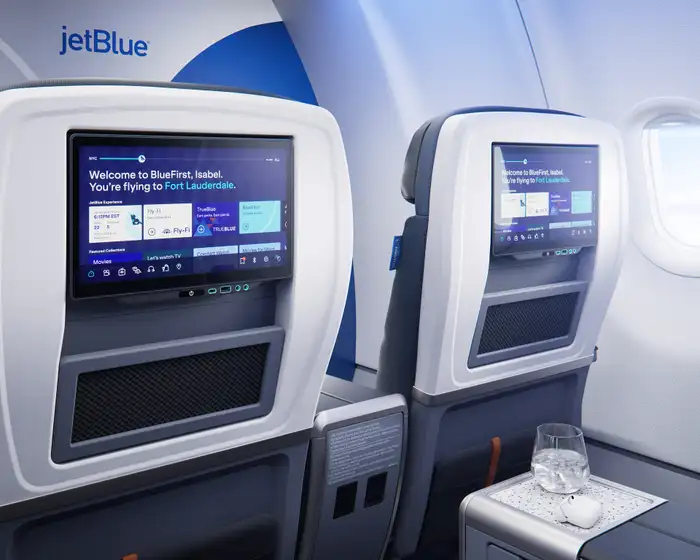
Technology will also play a major role. Each BlueFirst passenger will receive a 13.3-inch seatback entertainment screen connected to JetBlue’s latest Blueprint entertainment platform. Bluetooth connectivity will allow travelers to use their own wireless headphones, while USB-A, USB-C, and 110-volt power outlets will be available at every seat. Complimentary Fly-Fi will remain part of the experience, preserving one of JetBlue’s better-known onboard technology advantages.
The airline is also introducing more interactive service. Passengers will be able to order meals and other onboard products directly through the seatback screen, reducing the need to rely entirely on traditional cabin-service interactions. Mixologist Mode will let travelers choose a spirit, mixer, and flavor profile for a customized cocktail, with the request transmitted to the cabin crew. On overnight services, BlueFirst passengers will receive a blanket and snooze kit, adding another small but tangible distinction from the Main cabin.
Food is another major component of the new product. On flights of at least 899 miles, BlueFirst customers will receive FirstFare meals presented in a bento-inspired box. Planned choices include dishes such as crêpes and sesame noodles served with beef or tofu. JetBlue will supplement the meals with rotating premium snacks, wines selected by New York-based Parcelle, specialty coffee, and Smith Teamaker teas.
Economy Passengers Face a 2.3-Inch Legroom Reduction
The most controversial element of the announcement may not be in BlueFirst itself. It is what happens behind it.
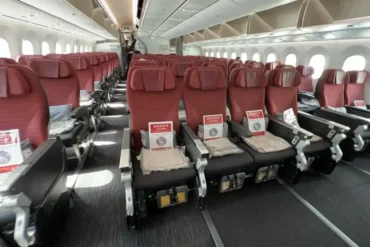
JetBlue is reportedly reducing economy seat pitch by approximately 2.3 inches, bringing the Main cabin to around 30 inches of pitch. The change is particularly significant because JetBlue spent years promoting its economy product as having among the most generous legroom in the U.S. based on fleet-wide average seat pitch.
The adjustment illustrates the physical economics of adding a premium cabin. An aircraft has a finite amount of cabin space, and creating a dedicated first-class section without substantially increasing the number of seats requires the available space to be redistributed. JetBlue can therefore dedicate more room and resources to passengers paying premium fares, but some of that additional value comes at the expense of space in the Main cabin.
The change does not mean every JetBlue passenger will suddenly lose access to additional legroom. EvenMore remains available as the airline’s extra-legroom product, offering greater space alongside benefits such as early boarding, priority security where available, dedicated overhead-bin space, and other premium features. BlueFirst effectively adds another rung to this hierarchy, creating a clearer progression from Main to EvenMore, BlueFirst, and finally Mint.
JetBlue Builds a Four-Level Premium Cabin Strategy
The new structure represents a broader transformation in how JetBlue sells its onboard experience. Rather than treating the aircraft as a largely uniform economy cabin with optional extras, the airline is increasingly presenting different onboard experiences as distinct products.
Its revised shopping process asks customers to select an experience before choosing among fare options. Main serves as the basic offering, EvenMore provides additional space and benefits, BlueFirst introduces domestic first-class service, and Mint remains the highest-end product on selected routes.
That structure gives JetBlue more flexibility to extract revenue from travelers with different willingness to pay. A passenger traveling for business may choose BlueFirst for the larger seat, upgraded meal, and airport benefits, while a leisure traveler may remain in Main or pay a smaller premium for EvenMore. The strategy allows JetBlue to monetize the same aircraft cabin footprint at several different price points.
It also represents a notable departure from the airline’s traditional competitive identity. JetBlue historically stood out because travelers could receive relatively generous economy seating without paying for a conventional premium cabin. Now, the carrier is effectively placing greater value on premium space while making its standard product somewhat less spacious.
BlueFirst Supports JetBlue’s JetForward Strategy
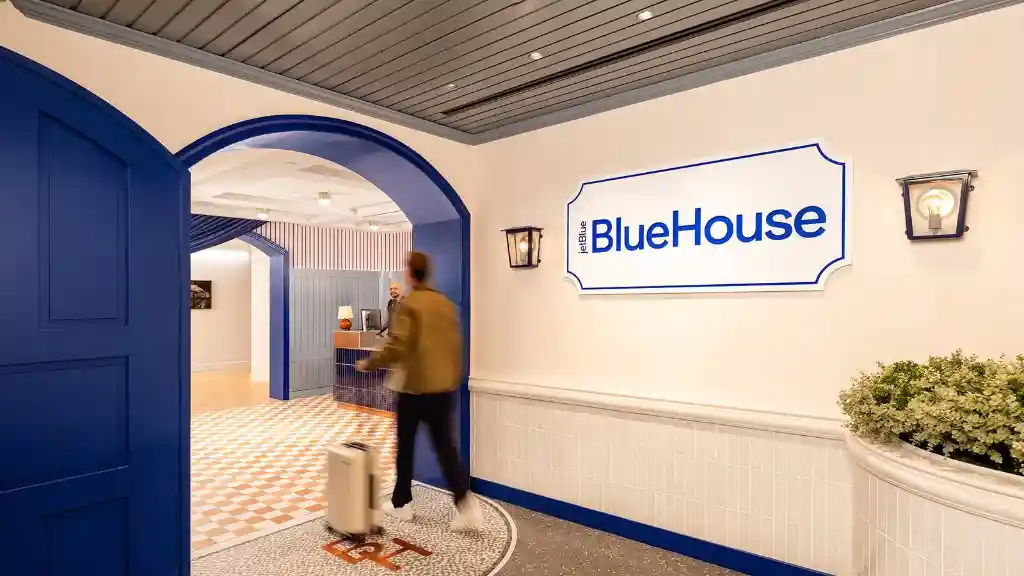
BlueFirst is closely tied to JetBlue’s broader JetForward strategy, which is designed to improve the airline’s financial performance through premium products, loyalty, and additional revenue opportunities. The airline has been expanding its premium ecosystem beyond aircraft seating, including the growth of its BlueHouse lounge concept.
JetBlue opened its second BlueHouse lounge in Boston in 2026, while Mint continues to serve as its premium flagship on selected transcontinental and international routes. BlueFirst fills an important gap between those premium offerings and the conventional economy cabin.
That gap matters because Mint cannot be deployed across the entire network. A lie-flat premium cabin makes sense on longer routes where customers are willing to pay substantially more, but it is not necessarily practical on every domestic market. BlueFirst gives JetBlue a scalable premium product for non-Mint aircraft and routes, potentially allowing the carrier to compete more directly with airlines that already have established domestic first-class cabins.
Financial Pressure Makes Premium Revenue More Important
JetBlue’s push toward premium revenue comes during a period when the airline remains under considerable financial pressure. In the second quarter of 2026, JetBlue reported $2.7 billion in operating revenue, representing a 14.5% year-over-year increase. However, operating expenses reached approximately $2.8 billion, resulting in an operating loss of $141 million.
Higher costs, including increased fuel expenses, make incremental revenue particularly valuable. Premium seating can generate significantly more revenue from a relatively small portion of an aircraft than standard economy seating, especially when it is paired with upgraded food, connectivity, loyalty benefits, and ancillary purchases.
JetBlue has described BlueFirst as its largest individual JetForward initiative, highlighting how important the new cabin is to its broader commercial strategy. The airline expects sales to begin in fall 2026, while most aircraft retrofit work is expected to be completed by the end of 2027.
The BlueFirst Gamble Could Redefine JetBlue
BlueFirst gives JetBlue an opportunity to compete in a market where domestic first class has become a major source of premium revenue. The product has several elements that could appeal to business travelers and leisure passengers willing to pay more for comfort, particularly the larger seat, upgraded meals, substantial entertainment screen, connectivity, and additional service features.
Yet the strategy comes with a clear trade-off. JetBlue is asking some economy passengers to accept less space while creating a product specifically designed to charge other passengers more for greater comfort. That could prove commercially successful, but it also changes the value proposition that helped establish the airline’s reputation.
The ultimate test will be whether the additional premium revenue generated by BlueFirst outweighs any damage caused by reducing Main-cabin legroom. If travelers continue to see JetBlue as a strong value proposition despite the tighter standard seating, the strategy could become an important pillar of the airline’s recovery. If economy passengers view the 2.3-inch reduction as a betrayal of one of JetBlue’s defining advantages, the airline may face a more complicated balancing act.
For now, BlueFirst represents one of JetBlue’s clearest moves away from an economy-led identity and toward a tiered premium airline model. The new cabin may give the carrier a stronger weapon in the domestic first-class market, but its success will ultimately depend on whether JetBlue can sell premium comfort without undermining the economy experience that made the brand distinctive in the first place.