War has a brutal way of exposing weaknesses that engineers, planners, and test pilots may not fully recognize during peacetime. An aircraft can look revolutionary on paper, perform impressively in trials, and still encounter unexpected problems when confronted by a determined enemy. Combat introduces variables that no laboratory can perfectly reproduce: unfamiliar tactics, extreme operating conditions, enemy fire, maintenance pressures, and pilots forced to make decisions in seconds.
Yet an imperfect beginning does not necessarily condemn an aircraft to failure. Some of the most famous military aircraft in history became legends precisely because their crews, engineers, and commanders learned how to overcome their limitations. Modifications, improved training, changing tactics, and better understanding of the battlefield could transform an apparently troubled design into a formidable weapon.
The stories of the P-39 Airacobra, F4F Wildcat, P-38 Lightning, B-17 Flying Fortress, F-111 Aardvark, and F-4 Phantom II demonstrate this pattern particularly well. Their experiences were very different, but each reveals an important truth about military aviation: combat effectiveness depends on far more than an aircraft’s original specifications.
P-39 Airacobra: A High-Altitude Failure That Found Its Battlefield
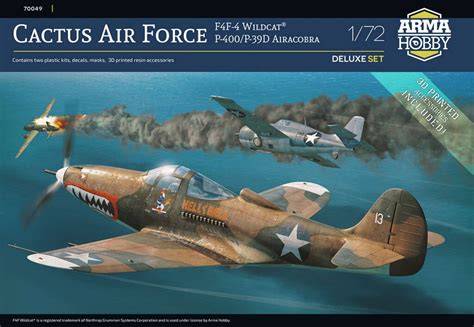
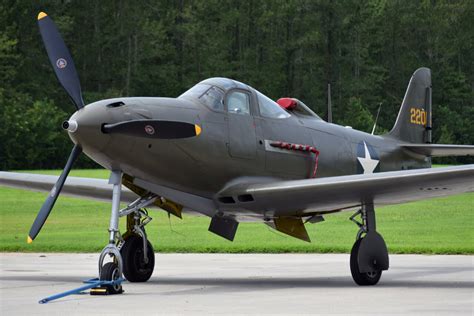
The Bell P-39 Airacobra is one of the clearest examples of an aircraft whose reputation depends heavily on where it was used. Its prototype appeared in 1939 as a remarkably ambitious fighter, featuring an unusual engine arrangement in which the Allison engine was mounted behind the pilot and drove a propeller through a long shaft. Even more promising was the prototype’s turbo-supercharger, which helped it achieve nearly 400 mph and climb to 20,000 feet in roughly five minutes.
On paper, the design appeared to have the ingredients of an excellent high-performance fighter. The problem came when the aircraft was evaluated and modified for production. At Wright Field, engineers working with the National Advisory Committee for Aeronautics made major changes to the promising prototype. The turbo-supercharger was removed, while the production aircraft received an Allison engine equipped with a less capable single-stage mechanical supercharger.
The consequences were substantial. The production P-39 lost much of the high-altitude performance that had made the prototype so impressive. Its wings were shortened, the canopy was lowered, and the fuselage was lengthened. Instead of becoming the exceptional high-altitude fighter that its prototype suggested, the Airacobra became an aircraft with a very specific set of strengths and weaknesses.
In Western Allied service, those weaknesses were difficult to overlook. The P-39 struggled at high altitude, where its engine’s reduced supercharging capability left it vulnerable against fighters operating higher in the sky. But the Eastern Front presented a radically different environment. Soviet and German aircraft frequently fought at relatively low and medium altitudes, often well below 20,000 feet.
That changed everything.
The Soviet Union received 4,773 P-39s through Lend-Lease, and Soviet pilots discovered that the aircraft’s supposedly troublesome characteristics were far less important in their theater. Its powerful nose-mounted 37 mm cannon and two .50-caliber machine guns gave it tremendous firepower. The concentrated armament was particularly useful against German aircraft and ground targets.
The Airacobra therefore developed an almost contradictory reputation. An aircraft that was disappointing in one operational environment became extremely successful in another. Soviet ace Grigoriy Rechkalov scored 48 of his 54 confirmed victories while flying the P-39, demonstrating just how effective the design could become when placed in the right tactical circumstances.
Bell eventually produced 9,584 Airacobras, and its Soviet combat record ensured that the aircraft would be remembered for much more than its troubled beginnings.
F4F Wildcat: How the Grumman Fighter Learned to Beat the Zero
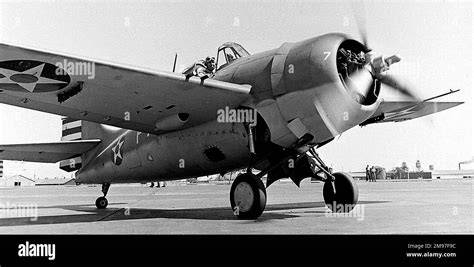
The Grumman F4F Wildcat entered World War II facing an opponent that appeared to possess nearly every advantage that mattered in a dogfight. The Japanese Mitsubishi A6M Zero was lighter, exceptionally maneuverable, and capable of turning inside many American fighters.
Early encounters were painful lessons for American aviators. The Zero could exploit its agility, particularly at lower speeds, and an inexperienced Wildcat pilot who attempted to fight it on the Zero’s terms could quickly find himself in serious trouble. The Wildcat was not designed to win a turning contest simply by being more maneuverable.
But the aircraft possessed qualities that became increasingly important as American pilots learned how to use them. The F4F had armor protection and self-sealing fuel tanks, while the Zero emphasized weight reduction and maneuverability at the expense of protection. The difference meant that a Wildcat could often absorb punishment that would destroy a Japanese fighter.
The turning point was not simply a technical modification to the aircraft. It was a transformation in American air-combat tactics. After the Battle of Midway, Navy and Marine Corps aviators increasingly developed methods designed to deny the Zero the kind of engagement it wanted.
One notable technique was the beam defense maneuver, in which two Wildcats worked together from opposite sides of an attacking Zero. Instead of allowing the Japanese fighter to concentrate on a single target, the American pilots repeatedly crossed one another’s paths, forcing the Zero to maneuver defensively and exposing it to the other Wildcat.
This was an important lesson in combat aviation. A fighter did not necessarily have to outperform its opponent in every category. It needed to exploit its own advantages while preventing the enemy from exploiting theirs.
The Wildcat’s durability, heavy armament, disciplined formations, and evolving tactics eventually helped American aviators turn the situation around. According to the National Naval Aviation Museum, Navy and Marine F4F pilots achieved an approximately 9:1 kill ratio against Japanese aircraft. By the end of the war, Wildcats had been credited with 1,006 enemy aircraft destroyed, while 58 Wildcat pilots became aces.
The stubby carrier fighter had not suddenly become a Zero. Instead, its pilots had learned that it did not need to.
P-38 Lightning: From Early Problems to the “Fork-Tailed Devil”
The Lockheed P-38 Lightning looked unlike virtually every other American fighter of its era. With two engines, twin booms, and a central nacelle containing the cockpit and armament, the Lightning was an extraordinary aircraft from the beginning.
Its early operational career, however, was not completely smooth. Initial versions experienced problems involving turbulent airflow around the tail and dangerous effects associated with high-speed dives. Compressibility could create severe control difficulties, especially as pilots pushed the aircraft toward increasingly high speeds.
The Lightning also suffered from cockpit-heating problems and other mechanical issues that reduced its effectiveness in harsh operational conditions. These deficiencies were particularly frustrating because the basic design possessed enormous potential.
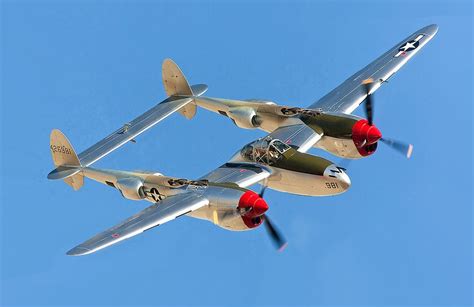
The solution came through continuous development. The arrival of the P-38J in 1943 represented an important step forward. Improvements included better cockpit heating, more effective engine cooling, additional fuel capacity, a flat bulletproof windshield, and greater maneuverability.
The aircraft’s evolution demonstrated why production variants matter so much in military aviation. The aircraft that entered combat was not necessarily the aircraft that ultimately became famous. Engineers incorporated operational experience into later versions, while pilots developed increasingly sophisticated ways to exploit the Lightning’s long range, speed, firepower, and twin-engine configuration.
The P-38 also proved far more versatile than its original role suggested. Although conceived primarily as a high-altitude interceptor, it eventually performed long-range escort, strafing, bombing, reconnaissance, and ground-attack missions.
Its performance in the Pacific was especially impressive. P-38 pilots claimed approximately 1,700 Japanese aircraft shot down, while Lightning pilots in the Mediterranean theater claimed hundreds more enemy aircraft destroyed, probably destroyed, or damaged.
By the end of World War II, Lockheed had produced 10,038 P-38s. Remarkably, the Lightning was the only American fighter produced continuously from the attack on Pearl Harbor through V-J Day.
Its early difficulties became part of a much larger story: an unusual aircraft was repeatedly refined until its unusual design became one of its greatest advantages.
B-17 Flying Fortress: When Combat Exposed the Limits of a Doctrine
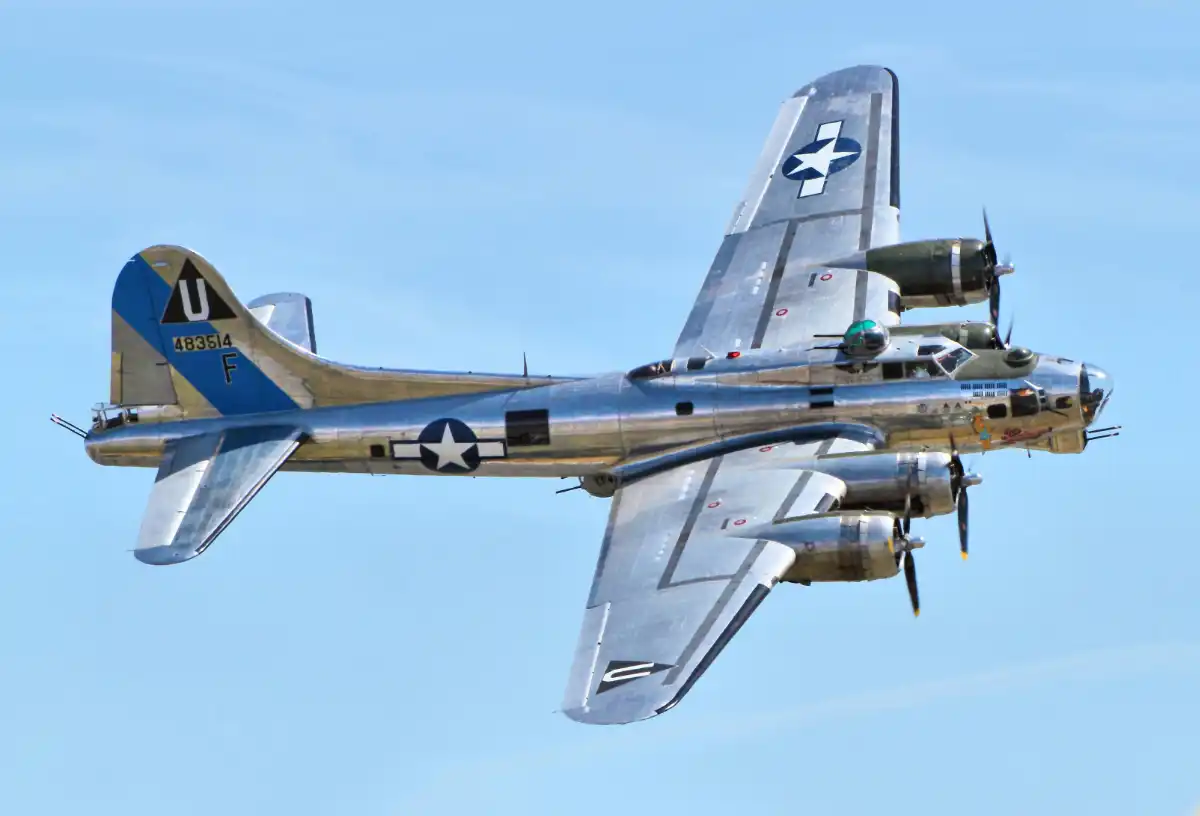
The Boeing B-17 Flying Fortress occupies a special place in aviation history because its early combat difficulties were not simply mechanical. They were also connected to the assumptions surrounding how strategic bombing should be conducted.
American air-power doctrine placed enormous faith in precision daylight bombing. The theory held that heavily armed bombers operating in formation could penetrate enemy airspace and accurately attack industrial targets without requiring fighter escorts throughout the mission.
The B-17 appeared well suited to that philosophy. It had multiple engines, substantial defensive armament, and a reputation for extraordinary structural strength. Yet the aircraft’s toughness could not eliminate the fundamental danger of sending unescorted bombers deep into heavily defended enemy territory.
That reality became brutally clear during the Second Schweinfurt Raid on October 14, 1943.
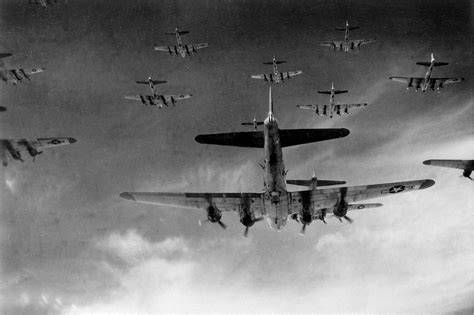
The Eighth Air Force sent hundreds of bombers toward German ball-bearing factories. German defenses responded with a powerful combination of fighters and anti-aircraft artillery. The resulting battle became known as Black Thursday, and the losses were devastating.
The Americans lost 60 bombers to German action, with additional aircraft lost around England. Hundreds of airmen were killed or captured, and the Eighth Air Force suffered losses equivalent to roughly 26 percent of its attacking force.
The lesson was impossible to ignore. The B-17 was exceptionally resilient, but resilience was not the same thing as invulnerability. A formation could withstand individual hits while still suffering unsustainable losses when enemy fighters could repeatedly attack it without interference.
The answer was not to abandon the Flying Fortress. Instead, the Americans changed the larger system in which the bomber operated. The arrival of the P-51 Mustang provided the long-range fighter escort needed to protect bomber formations deep into Germany.
The B-17 consequently became part of a much more effective combined strategy. Its legendary status was earned not because it could operate alone indefinitely, but because American forces learned how to integrate the aircraft into a broader air campaign.
That distinction remains important. Military aviation rarely depends on one machine acting alone. The most successful aircraft usually become powerful because technology, tactics, logistics, and doctrine evolve around them.
F-111 Aardvark: A Catastrophic Debut That Nearly Ended Its Combat Career
The General Dynamics F-111 Aardvark arrived during an era when military aviation was becoming increasingly dependent on sophisticated avionics, variable-sweep wings, terrain-following systems, and complex flight-control technology. Its capabilities were extraordinary, but so was its technical complexity.
The aircraft’s early combat experience in Vietnam was disastrous. During the 1968 Combat Lancer deployment, F-111As encountered serious problems involving flight-control and structural systems. Three aircraft were lost in only 55 combat sorties, killing four crew members and forcing the Air Force to terminate the combat evaluation.
For a new aircraft intended to perform demanding strike missions, this was an ominous beginning.
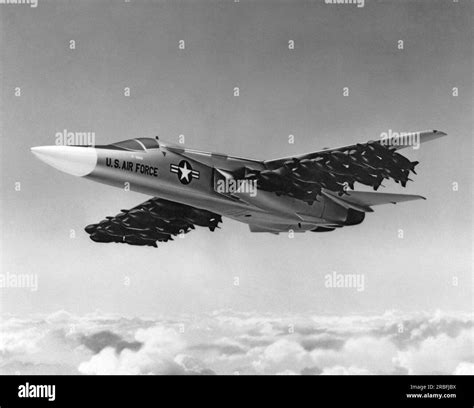
Investigators subsequently uncovered deficiencies in both the aircraft’s structure and flight-control systems. Its sophisticated equipment also introduced additional complications. The terrain-following radar, for example, was essential to the aircraft’s intended low-level mission but added another layer of technological complexity.
Yet the F-111 was not abandoned.
Engineers corrected the aircraft’s problems, and the improved F-111A returned to Southeast Asia in 1972. By then, it was a much more mature machine, and its combat performance changed dramatically.
During the Vietnam War, F-111s flew approximately 4,000 combat missions while suffering only six losses, a remarkable contrast with the aircraft’s disastrous initial evaluation.
The Aardvark’s story continued after Vietnam. During Operation Desert Storm, the F-111F used its Pave Tack targeting system to identify targets in darkness, track them, designate them with lasers, and deliver precision-guided weapons.
An aircraft that had once appeared dangerously immature ultimately became one of the most respected all-weather interdiction aircraft of the Cold War era. Its transformation illustrates perhaps the strongest argument for persistent development: sometimes the aircraft is not fundamentally wrong; it simply has not finished becoming what its designers intended.
F-4 Phantom II: The Fighter That Had to Rediscover the Dogfight
Few military aircraft illustrate the dangers of technological assumptions better than the McDonnell Douglas F-4 Phantom II.
The Phantom was conceived primarily as an all-weather fleet interceptor. Its enormous radar, powerful General Electric J79 engines, high speed, heavy payload, and long-range missiles seemed perfectly suited to an era in which designers increasingly believed that air combat would be decided before opposing fighters ever reached visual range.
That assumption shaped the aircraft itself. The Phantom initially lacked an internal cannon because designers believed missiles would make traditional close-range dogfighting largely obsolete. Training also reflected the expectation that future combat would emphasize radar-guided engagements rather than prolonged turning fights.
Vietnam challenged those assumptions.
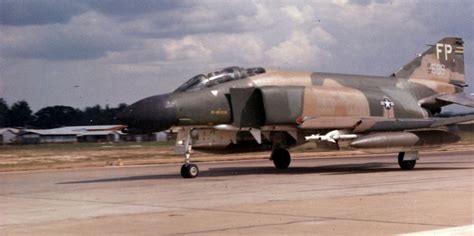
American Phantom crews frequently encountered North Vietnamese MiG-21s in circumstances where visual-range combat still mattered. The aircraft’s missiles also performed poorly compared with the confidence placed in them. During Operation Rolling Thunder, approximately 330 AIM-7 Sparrow missiles were fired for only about 27 kills, while the AIM-9B Sidewinder achieved a somewhat better but still disappointing success rate.
The situation became particularly serious between August 1967 and February 1968, when American fighters lost 18 aircraft to MiG-21s while shooting down only five enemy fighters.
The problem was not simply that the Phantom was a bad aircraft. In fact, its speed, radar, payload, range, and twin-engine power made it extraordinarily capable. The problem was that its enormous technological advantages had been paired with assumptions about how air combat would unfold.
The response was transformative.
The US Navy established the Navy Fighter Weapons School, better known as TOPGUN, in 1969. Its purpose was to improve fighter tactics, weapons employment, and operational knowledge by training selected aviators to become instructors and tactical experts.
The results were dramatic. Between 1970 and 1973, the Navy’s fighter kill ratio improved from approximately 2.4:1 to 12.5:1.
The Phantom therefore became a wartime legend not because its original philosophy was flawless, but because its crews and institutions learned from failure. The aircraft could carry the technology; pilots had to learn how to use it effectively.
Why These Six Aircraft Became Legends
The P-39, F4F, P-38, B-17, F-111, and F-4 were separated by different eras, missions, and technologies, but they shared a remarkable characteristic: none was defined permanently by its earliest shortcomings.
The P-39 found success when its low-altitude limitations were matched with the Eastern Front’s operational environment. The Wildcat overcame a maneuverability disadvantage through teamwork, durability, and better tactics. The P-38 evolved through engineering changes until its range and versatility made it one of America’s most valuable fighters.
The B-17 exposed weaknesses in the concept of unescorted deep bombing, helping drive changes in how the American strategic bombing campaign was conducted. The F-111 survived a disastrous combat debut through extensive technical corrections and eventually became an exceptionally capable strike aircraft. The F-4 demonstrated that even advanced technology could fail when doctrine and training lagged behind battlefield reality.
Together, these aircraft show that combat aviation is an evolutionary process. A specification sheet cannot predict every battlefield problem, and a poor first impression does not necessarily reveal an aircraft’s ultimate potential.
The most enduring military aircraft are often those that can adapt. Engineers modify them, pilots discover new tactics, commanders change how they are deployed, and entire organizations learn from painful experience. Sometimes the aircraft that initially struggles is precisely the one that teaches its operators how to make it exceptional.
That is why wartime legends are rarely born fully formed. They are forged through failure, adaptation, and combat experience.