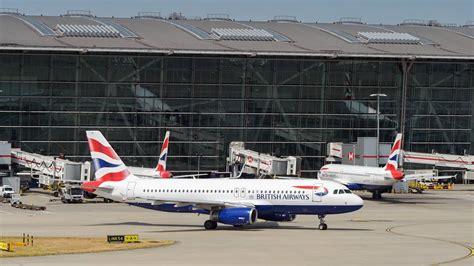
British Airways has never been a carrier that treats its London Heathrow slots casually. At an airport where takeoff and landing rights are among the most fought-over assets in global aviation, every minute of every day carries enormous strategic weight. So when the airline handed its coveted 8:20 AM New York-JFK slot to a five-week seasonal service to Orlando International Airport (MCO) during the summer of 2026, the decision raised eyebrows across the industry. This was not a marginal reshuffle of an afternoon frequency or a low-yield regional hop. This was the prime morning departure to the most commercially important transatlantic route in the world, temporarily redirected to serve British families heading to Florida’s theme parks.
The move, which ran from July 21 to August 29, 2026, saw a 272-seat Boeing 777-200ER operate nonstop flights between London Heathrow (LHR) and Orlando International Airport, completing 18 round trips across the five-week window. The outbound service departed at 8:20 AM and touched down in Florida at 12:55 PM local time, while the return leg pushed back at 6:10 PM and arrived back in London at 7:45 AM the following morning. Those timings were engineered with leisure travelers in mind, offering a full first day in Orlando and a comfortable overnight return that minimizes the loss of a holiday day. With this addition, British Airways reached a record 26 US destinations from Heathrow during the summer season, with total frequencies across that network climbing to an extraordinary 47 departures per day.
The Strategic Logic Behind Sacrificing a JFK Morning Slot
To understand why British Airways would surrender such a valuable piece of real estate, it is necessary to appreciate what the 8:20 AM JFK slot actually represents. Morning departures from Heathrow to New York capture the highest concentration of premium business traffic on the entire transatlantic network. Bankers, consultants, executives and corporate travelers overwhelmingly prefer early departures that land in Manhattan before lunch, allowing a full afternoon of meetings. These passengers pay fares that can run into thousands of pounds for a single seat, and they form the economic backbone of the airline’s most profitable route.
Yet British Airways operates nine daily flights between Heathrow and John F. Kennedy International Airport, a frequency so dense that the carrier can afford to absorb the temporary loss of one morning departure without materially damaging its competitive position. Rival carriers such as Virgin Atlantic, American Airlines, Delta Air Lines and United Airlines all compete fiercely on the same corridor, but none of them can match the sheer volume British Airways deploys from its Heathrow fortress hub. Losing three weekly rotations out of roughly sixty-three weekly JFK departures amounts to a rounding error in capacity terms, especially when the slot is redeployed to a route that would otherwise require an entirely separate aircraft rotation.
The Orlando operation, by contrast, filled a gap that British Airways had left open since the pandemic. The airline had not served Orlando from Heathrow for several years, and the five-week window aligned precisely with the British school summer holidays, when millions of families seek direct flights to Florida. Operating just three times per week, the route became British Airways’ least-served US city pair, yet it captured precisely the seasonal demand curve that the carrier wanted to exploit. The overlap with school holidays was not coincidental; it was the entire point.
How the Orlando Route Fitted Into a Record-Breaking US Summer
The Orlando flights formed part of a broader expansion that pushed British Airways to its 26th US destination from Heathrow, a record for the carrier. Alongside Orlando, British Airways introduced a seasonal service to St. Louis Lambert International Airport (STL), marking the first direct Heathrow link to that city and reviving a London connection that had been dormant for 23 years, when American Airlines operated St. Louis to London Gatwick on a route inherited from TWA. The St. Louis service covered approximately 3,650 nautical miles (6,760 km) each way and operated four times weekly on Tuesdays, Wednesdays, Fridays and Sundays, departing Heathrow at 4:25 PM and returning overnight. It joined Lufthansa as the only European long-haul carrier serving St. Louis, though Lufthansa’s Frankfurt service runs year-round rather than seasonally.

Beyond new routes, British Airways deepened frequencies on established leisure-heavy destinations. Miami became double-daily across the summer, Dallas/Fort Worth International Airport (DFW) moved to daily service, and Las Vegas Harry Reid International Airport (LAS) jumped from ten to thirteen weekly flights. Services to San Diego International Airport (SAN) and Austin-Bergstrom International Airport (AUS) each ran fourteen times per week. These adjustments reflect a deliberate strategy of maximizing Heathrow slot utilization during peak season, when leisure demand surges and premium business traffic traditionally dips. The airline’s passengers also benefit from the Atlantic Joint Business partnership with American Airlines, Iberia, Finnair, Aer Lingus and LEVEL, which enables seamless connections and competitive fares across Europe and North America.
The Aircraft That Made It Possible: British Airways and the 777-200ER
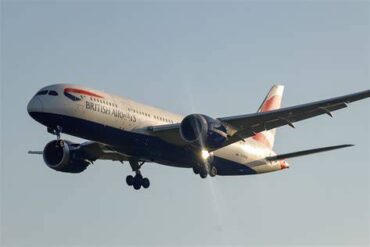
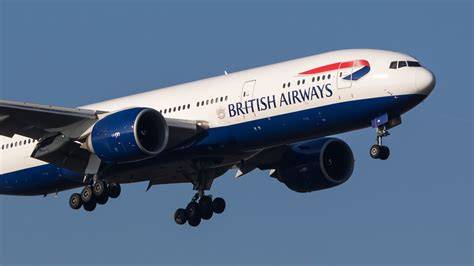
The equipment assigned to the Orlando stint deserves attention in its own right. The Boeing 777-200ER is the workhorse that has defined British Airways’ transatlantic operations for nearly three decades. The carrier received the world’s first operational 777-200ER, registered G-VIIA, in 1997, and that aircraft remains British Airways’ oldest jet at almost 30 years of age. The airline’s fleet of 43 777-200ERs carries an average age of around 26 years, making it one of the most seasoned widebody fleets in service with any major carrier. Equipment swaps are routine in aviation, and Flightradar24 data confirmed that a 256-seat 777-300ER substituted for the 200ER on the July 23 and August 8 services. Despite being a larger airframe, the -300ER carries fewer seats for British Airways because the carrier configures it with a premium-dense layout.
The 777-200ER’s historical significance extends beyond routine operations. British Airways claims that one of its 777-200ERs broke the record for the longest non-stop commercial flight in 2006, covering 9,300 nautical miles (17,200 km) from Brussels to Melbourne in 18 hours and 45 minutes. That flight was chartered for Prime Minister Tony Blair, sixty staffers and representatives of the media, a testament to the type’s extraordinary range and reliability. In July 2026, G-VIIA alone covered eight transatlantic routes from Heathrow, serving Chicago O’Hare (ORD), Washington Dulles (IAD), JFK, Boston Logan (BOS), L.F. Wade International (BDA), Lynden Pindling International (NAS), Owen Roberts International (GCM) and Grantley Adams International (BGI). The Orlando assignment was simply one more rotation in a relentless schedule for an aircraft that has become synonymous with British Airways’ long-haul identity.
The Cuts That Freed the Slots: A Decade of Heathrow Contraction
The Orlando slot did not materialize from nowhere. British Airways has spent the past decade quietly pruning its Heathrow network to create room for higher-value and seasonally targeted flying. Over the past ten years, the carrier has cut 76 routes from Heathrow, the overwhelming majority of them European. In the year ending 2021, destinations such as Alicante, Bari and Menorca disappeared. 2022 brought a larger wave including Bordeaux, Cagliari, Catania, Gran Canaria, Lanzarote, Malta, Moscow Domodedovo, Newquay, Pristina, Seville and Verona. 2023 saw Bastia and Porto removed, followed by Belgrade, Funchal, Kos, Pula and Turin in 2024, and Bilbao, Grenoble, Istanbul Sabiha Gökçen, Izmir, Kalamata and Lyon in 2025. The 2026 cuts added Innsbruck, Riga and Stuttgart. A further 21 destinations in Africa, Asia and the Middle East have been dropped over the same period, including Bangkok, Algiers, Beirut, Chengdu, Durban and Kuwait, alongside six North American and Caribbean routes such as Antigua, Calgary and Charleston.
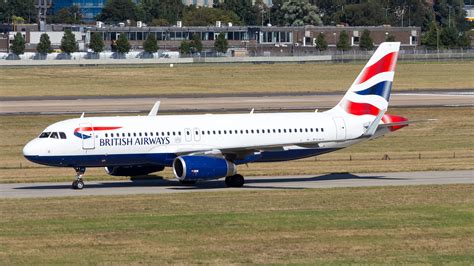
Europe still accounts for 73 percent of British Airways flights from Heathrow, but the trend is unmistakable. The carrier is consolidating ruthlessly at Heathrow while abandoning the idea that Gatwick can function as a genuine long-haul base. Of the routes dropped from the summer 2026 timetable, seven were long-haul, twelve were short-haul, and one represented a strategic pivot. Gatwick long-haul services to Queen Beatrix International Airport (AUA), Cape Town International (CPT), Las Vegas, JFK and Juan Santamaría International (SJO) were among the casualties. Around two million passengers per year will see their journeys affected, but carriers such as Virgin Atlantic, Emirates and easyJet are expected to absorb much of the displaced demand. London will not become a smaller air travel market; it will become a more concentrated one.
What the Orlando Experiment Reveals About British Airways’ Future
The five-week Orlando stint is best understood not as a radical departure from British Airways’ strategy but as a precise expression of it. The carrier holds a finite number of Heathrow slots and must allocate them where they generate the greatest return across an entire seasonal cycle. During the peak summer weeks, when business travel to New York softens and family demand for Florida peaks, shifting a single morning rotation from JFK to MCO makes commercial sense. The 8:20 AM slot retains its value precisely because British Airways can return it to New York the moment the school holidays end.
Whether the airline repeats the experiment in 2027 remains an open question. British Airways has not announced whether it will expand either Orlando or St. Louis into a recurring seasonal offering or extend them year-round. The decision will hinge on whether the five-week operation generated sufficient yield to justify reclaiming those limited Heathrow slots from other duties. What is certain is that the maneuver demonstrated the carrier’s willingness to treat its most precious assets as flexible instruments rather than fixed commitments. In an industry where slot scarcity defines competitive advantage, the ability to move a prime JFK departure to Orlando for five weeks and back again without disrupting nine daily New York frequencies is a display of operational and commercial agility that few rivals can match.