For years, aircraft fume events have remained a difficult occupational-health issue for pilots and cabin crew. Now, a new aviation engine oil designed to reduce the strong odors associated with these incidents is drawing criticism from labor representatives, who warn that making contaminated air harder to detect could create a different safety problem.
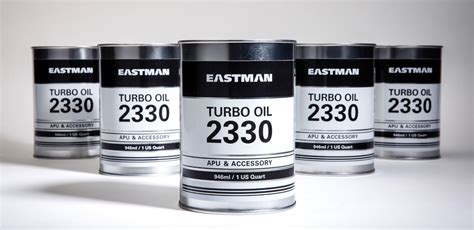
Known as Eastman Turbo Oil 2330 (ETO 2330), the lubricant is being trialed for wider use by commercial airlines. Its formulation is intended to reduce the noticeable odor produced when aviation oil becomes heated, degraded, or enters an aircraft’s air supply system. Eastman promotes the product as a way to reduce odor-related maintenance disruptions while maintaining the demanding lubrication performance required by modern turbine engines and auxiliary power units.
The controversy centers on a straightforward question: if a fume event produces fewer warning signs, will crews recognize that something is wrong? The International Transport Workers’ Federation (ITF) has called for an investigation into the safety and occupational-health implications of ETO 2330, particularly its reduced odor detectability. The union argues that eliminating an odor does not necessarily eliminate the substances that crews could otherwise recognize as a warning of contamination.
Why Aircraft Oil Fumes Can Reach the Cabin
ETO 2330 is formulated for turbine engines and aircraft APUs, or auxiliary power units. APUs provide electrical power and other functions when an aircraft is on the ground and can assist with engine starting before departure. Like other aviation lubricants, the oil must perform reliably across demanding temperature, pressure, altitude, and operating conditions.
A concern arises when oil or its degradation products enter systems supplying air to the passenger cabin and cockpit. Many commercial aircraft use outside air that passes through compressed-air systems associated with the engines. If contaminants enter that air supply, they can potentially reach occupants. The resulting events may involve an unusual smell, mist, smoke, or irritation, although not every unusual cabin odor indicates oil contamination.
These incidents can also have operational consequences. When crews report suspicious odors or fumes, aircraft may require inspections, maintenance action, or even removal from service while engineers determine the source. For airlines, repeated events can mean delays, aircraft substitutions, additional maintenance costs, and schedule disruption. ETO 2330 is therefore intended partly to address an operational problem by reducing the odor profile that can trigger such investigations.
How ETO 2330 Is Designed To Reduce Odor
The product’s formulation reportedly uses longer carbon chains and larger molecules, making the oil less readily vaporized and less detectable by human smell. Eastman has positioned this characteristic as an advantage because it can reduce unpleasant odor events and potentially lower unscheduled maintenance associated with them.
The company also describes ETO 2330 as a lubricant capable of supporting efficient long-term engine and APU operation. Its formulation is intended to reduce wear on components and perform under conditions including high-altitude operation and cold starts. The oil was also developed for specific aviation applications and was the first oil approved under the MIL-PRF-7808 Grade 3 specification, according to the supplied reference material.
For operators changing lubricants, Eastman has indicated that fleet-specific transition support can include oil sampling and technical assistance. The objective is to ensure that the new lubricant can be introduced without leaving significant residual quantities of the previous oil in the system.
Unions Fear Reduced Odor Could Remove a Warning Signal
The ITF’s concern is not primarily about whether the oil can lubricate an engine or APU effectively. Instead, it focuses on what happens when aviation oil is present where it should not be.
A strong smell can be unpleasant, but it can also function as an immediate warning mechanism. Crew members who notice an acrid or unusual odor may report it, investigate the aircraft, monitor passengers and colleagues, and take operational precautions. If a formulation substantially reduces that sensory warning while contaminants remain present, the union argues that crews could lose an important means of recognizing a potential fume event.
That distinction is central to the debate. Reducing odor is not automatically equivalent to reducing exposure. Determining whether ETO 2330 changes the health risk therefore requires more than measuring how pleasant or unpleasant the cabin air seems. It requires understanding the composition of any emissions, how they behave when heated or degraded, and what occupants could be exposed to during a contamination event.
Fume Events Remain A Persistent Aviation Issue
The scale of the wider fume-event debate helps explain why the new oil has attracted attention. According to analysis cited in the reference material, major U.S. carriers recorded approximately 108 reported fume events per million departures in 2024, while internal industry data suggested the actual figure could be substantially higher.
Recent incidents have demonstrated how disruptive these events can become. Reports of irritating odors, smoke, or suspected contaminated air have resulted in diversions, evacuations, and medical concerns involving crew members. At the same time, identifying the precise source of an onboard odor can be difficult because electrical equipment, cleaning chemicals, and other aircraft systems can produce similar symptoms or smells.
The debate over ETO 2330 therefore reaches beyond one lubricant. It raises a broader aviation-safety question about the role of human senses in detecting abnormal aircraft conditions. If an engineering change reduces a warning signal, regulators, airlines, manufacturers, and labor organizations must determine whether other detection and monitoring measures are sufficient.
As aviation continues to examine cabin-air quality and occupational exposure, ETO 2330 is likely to remain under scrutiny. The critical issue is not simply whether an aircraft smells better after the oil is introduced, but whether crews retain an effective way to recognize potentially hazardous contamination when something goes wrong.