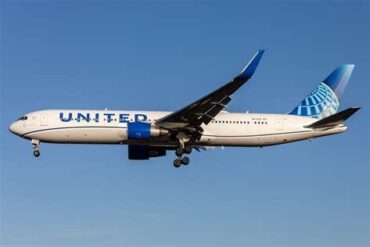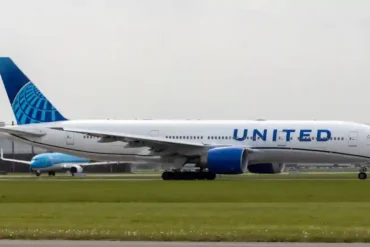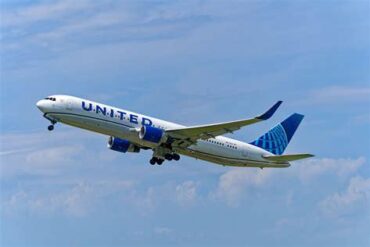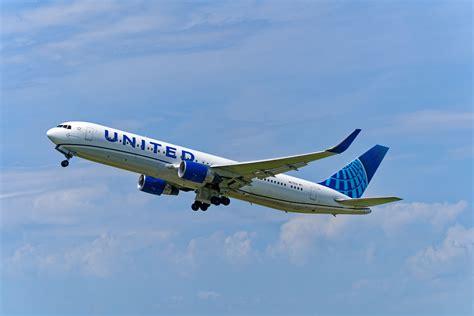
A transatlantic United Airlines service from Zurich to Chicago was disrupted on November 23 when cabin fumes were detected shortly after departure, prompting the crew to divert the Boeing 767-300ER to London Heathrow. The unscheduled landing placed one of the world’s busiest airports into sudden response mode as medical teams met the aircraft to treat passengers and crew who reported feeling unwell. What began as a routine morning departure quickly unfolded into an unusually complex day for everyone aboard UA12.
The aircraft left Zurich Airport (ZRH) at around 10:20 am, approximately 40 minutes behind schedule following minor departure delays. Although the early portion of the climb appeared normal, reports later confirmed that an odor was detected in the cabin, with symptoms among those on board developing rapidly enough for the pilots to confer with operations and initiate a diversion. Flight data showed that within two hours and 25 minutes of leaving Switzerland, the aircraft was already descending into London.
Passenger accounts described discomfort spreading quietly at first—slight dizziness, an unusual smell—then becoming widespread enough that the crew elevated the issue to the flight deck. The pilots, commanding a high-time widebody on a major intercontinental route, made the conservative call to divert, a decision that would limit risks and ensure medical personnel were available immediately upon landing.
UA12’s Swift Diversion And Heathrow Response
London Heathrow’s emergency services met the Boeing 767 on arrival, escorting it to a remote stand as medical teams boarded. The airline subsequently canceled the onward journey to Chicago O’Hare, leaving passengers unexpectedly grounded in the United Kingdom. Hotel rooms and meal vouchers were issued while the aircraft underwent an extensive inspection by United maintenance staff stationed at Heathrow.
The diverted service had originally been scheduled to reach Chicago O’Hare International Airport (ORD) at 12:45 pm local time. Instead, its passengers faced a delay stretching to roughly 26 hours. United arranged a replacement flight departing the following morning on November 24 at 11:40 am. The substitute aircraft reached Chicago early that afternoon, closing out a disrupted itinerary that reshaped a simple long-haul flight into a two-day travel event.
Inspection Of Aircraft N665UA After Landing
The 27.4-year-old Boeing 767-300ER, registered N665UA, became the focus of engineers as they worked to identify any mechanical or environmental factors that could have produced the fumes. The twin-engine widebody, powered by Pratt & Whitney PW4060 engines, has served United Airlines since 1998 and is configured with 167 seats across three cabins. After inspection at Heathrow, the jet was declared fit to return to service.
Maintenance teams cleared the aircraft in time for it to operate flight UA3908 the following morning. This swift turnaround suggested that the fumes did not originate from a severe or persistent mechanical fault, though United had yet to publicly comment at the time of reporting. The jet continued its normal rotation later that day, including a long-haul departure from Chicago back to London on UA920.
A Jet With A History Of Operational Incidents
N665UA is not new to operational challenges. Earlier in the year, the same aircraft experienced an engine failure on approach to Newark while operating a London–Newark service. That flight returned safely to Heathrow with only 70 passengers onboard, representing an unusually light load for the transatlantic sector. The current fumes-related diversion adds another entry to the jet’s already eventful history, though its long record also reflects decades of continuous frontline service.
These widebodies, approaching three decades of age, operate some of United’s most important transatlantic schedules. The carrier continues to rely heavily on its 767 fleet while newer 787 Dreamliners expand across the network. As older aircraft remain in circulation, cabin-air incidents—while statistically rare—prompt swift investigation to maintain confidence in aging long-haul fleets.
Operational And Passenger Impact Of The Diversion
Disruptions of this type ripple across multiple time zones and schedules. Hotels in London absorbed an entire widebody’s worth of displaced travelers, while United’s operations team re-routed crews, aircraft, and ground staff to accommodate the interrupted rotation. Such diversions also generate maintenance and logistics challenges, especially when international flight crews suddenly find themselves on duty hours that conflict with regulatory rest requirements.
Passengers described a mix of frustration and relief—annoyed by the substantial delay yet comforted that the crew acted with caution when onboard symptoms appeared. The airline’s decision to cancel the onward flight rather than push the aircraft onward underscores the industry’s bias toward safety-first decision-making in any situation involving fumes or potential contamination.
Awaiting Official Details As Investigation Continues
United Airlines has yet to issue a detailed explanation regarding the source of the fumes, and further insights are expected once internal reports and maintenance assessments are complete. Aviation safety organizations, including incident databases such as The Aviation Herald, will continue tracking the case as more technical information becomes available.
In the meantime, the diversion of UA12 illustrates how quickly a seemingly ordinary long-haul flight can evolve into a multi-airport logistical puzzle. The rapid response from the flight crew and Heathrow emergency services ensured that no serious injuries were reported, and the aircraft has already resumed normal operations. Widebody aviation is an ecosystem of moving parts, and events like this reveal just how much coordination and resilience keep the global system running even when unexpected issues arise.