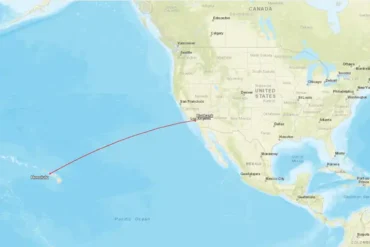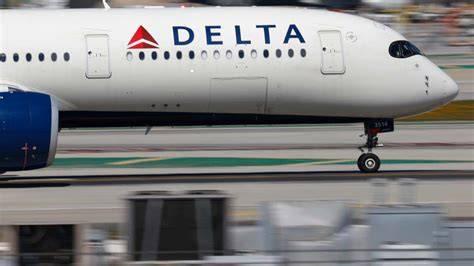
Delta Air Lines is making a striking change to one of the longest domestic air routes in the United States. The airline is cutting its Boston Logan International Airport (BOS)–Honolulu International Airport (HNL) nonstop service dramatically, reducing what had been planned as a broader seasonal operation to only 16 flights around the Christmas and New Year holiday period.
The route is unusual by almost every measure. At up to 4,427 nautical miles (8,199 kilometers), it is the longest nonstop domestic route in the United States by distance. Its scheduled westbound block time can reach 11 hours and 10 minutes, making it the country’s longest domestic nonstop flight by scheduled duration as well.
Delta’s decision is particularly notable because the airline has not simply trimmed frequencies. Its original schedule called for 84 departures between December 19, 2026, and April 25, 2027. The revised schedule contains only 16 departures, representing an 81% reduction. The first departure remains December 19, but the final flight has been pulled forward to January 3, 2027.
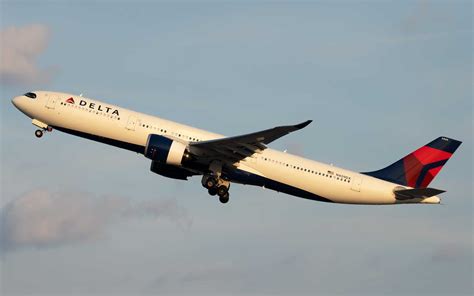
Delta Boston to Honolulu Flights Have Been Reduced by 81%
The revised schedule effectively transforms BOS-HNL from a substantial winter route into a short holiday-season experiment. Rather than operating for more than four months, Delta will serve the market for roughly two weeks.
That is a remarkable adjustment for a route requiring a widebody aircraft and more than 11 hours of flying in one direction. The decision suggests that demand outside the peak Christmas period was not strong enough to justify keeping the service in the schedule, particularly when Delta can deploy the aircraft on other routes where demand and revenue opportunities may be more attractive.
The timing also tells us something about how airlines are approaching long-haul domestic flying. Hawaii routes can generate strong leisure demand, but they also require substantial aircraft utilization, crew resources, fuel and airport capacity. A route can therefore remain attractive to passengers while still failing to produce the financial returns an airline expects.
Delta will continue to offer passengers ways to travel between Boston and Honolulu through its network. Travelers can connect through Delta hubs and other gateways rather than relying on a nonstop flight. That flexibility makes it easier for the airline to concentrate its limited nonstop capacity on the dates when customers are most willing to pay for the convenience.
Why Delta Previously Abandoned the Boston–Honolulu Market
Delta’s latest decision becomes easier to understand when we examine the route’s previous performance.
The airline previously operated BOS-HNL from November 2024 through April 2025. At the time, Hawaiian Airlines also offered nonstop service between the two cities. The two carriers therefore competed directly for passengers on one of the most demanding domestic markets in the United States.
According to US Department of Transportation data cited in the reference material, Delta carried 43,436 round-trip passengers during its previous operation. On its own, that number might appear respectable. The problem was how many seats Delta had to sell to produce those passengers.
Only 62.8% of Delta’s available seats were filled. Even January 2025, the strongest month, reached only 68.9%. Those figures indicate a considerable amount of unused capacity on a route where operating costs are inevitably substantial.
Hawaiian Airlines Also Felt the Pressure
Delta’s arrival did not happen in isolation. Hawaiian Airlines was already serving the Boston–Honolulu market and experienced the consequences of increased capacity.
During the period when Delta operated nonstop flights, Hawaiian carried 43,229 passengers and achieved a 75.9% load factor. Compared with the corresponding period a year earlier, its passenger traffic declined by about 9%, while its load factor fell from 83.5%.
That illustrates an important feature of airline competition. Adding another nonstop carrier does not necessarily create enough new demand to fill the additional seats. Instead, airlines can end up dividing the same pool of travelers between more aircraft.
For a leisure-heavy market such as Hawaii, that can become especially challenging. Customers may be sensitive to airfare, travel dates and economic conditions, while airlines must absorb the cost of operating a large widebody over thousands of miles.
Delta’s previous 62.8% load factor therefore provides one of the clearest clues behind the latest schedule reversal.
Delta Will Still Operate the A330-300
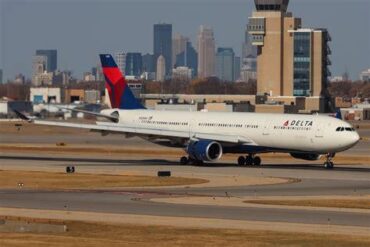
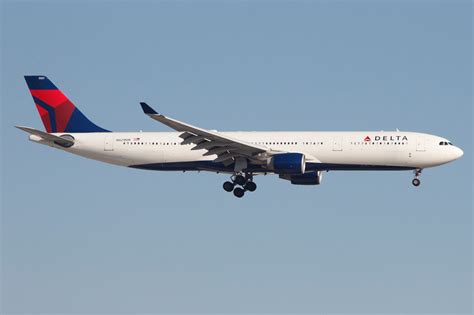
For the short period in which BOS-HNL returns, Delta plans to use its 282-seat Airbus A330-300.
The aircraft offers a four-cabin configuration, giving the route a significant premium component despite its predominantly leisure-oriented traffic. Delta One contains 34 lie-flat seats arranged 1-2-1, while Premium Select provides 21 seats in a 2-3-2 configuration.
There are also 24 Comfort+ seats and 203 seats in the Main Cabin. The economy cabin uses a 2-4-2 arrangement, meaning passengers seated at the windows have access to a pair of seats rather than being placed beside three other travelers.
For an 11-hour domestic flight, the aircraft itself is an important part of the proposition. The A330-300 provides the range and capacity necessary for the route while allowing Delta to offer multiple fare products to different segments of the market.
BOS-HNL Will Be One of Delta’s Longest A330 Routes
The temporary Boston–Honolulu service will also occupy an unusual position within Delta’s network.
Between December 19 and January 3, BOS-HNL is scheduled to become Delta’s second-longest A330-300 service by distance. The longest will be the airline’s Paris Charles de Gaulle–Las Vegas operation around the Consumer Electronics Show, which covers approximately 302 nautical miles more.
The Boston–Honolulu route is similarly close to the top in scheduled flight time. Its westbound journey can take as long as 11 hours and 10 minutes, just one minute shorter than Delta’s longest A330-300 service in this respect: Paris–Salt Lake City on the return journey.
Why the Holiday-Only Strategy Makes Sense
Delta’s revised schedule appears to acknowledge that BOS-HNL has a concentrated demand window rather than consistent year-round strength.
Christmas and New Year travel can generate significantly higher demand for Hawaii, particularly from travelers planning extended vacations. By restricting nonstop service to this period, Delta can capture the most valuable part of the market without committing an A330-300 to months of weaker demand.
This approach also gives the airline greater flexibility. Aircraft that would otherwise spend considerable time serving a low-load-factor route can be deployed elsewhere during January, February, March and April.
The decision is therefore less about whether Boston travelers want to visit Honolulu and more about whether enough travelers are willing to pay enough to make a daily, year-round or multi-month nonstop operation economically worthwhile.
Delta’s Second Attempt Is Already Being Scaled Back
Perhaps the most revealing aspect of the decision is that Delta is cutting the route before its second attempt has even begun.
The airline had originally planned to operate BOS-HNL from December 2026 well into April 2027. Instead, the route will now make a brief return for the holiday rush before disappearing again.
That makes the decision unusually decisive. Delta is not merely responding to a sudden operational problem; the schedule change suggests that the economics of the market have been reassessed before the planned service launch.
For passengers, the message is clear: the Boston–Honolulu nonstop route will exist again, but only briefly. For Delta, the experiment appears to be moving from a broad seasonal strategy toward a tightly targeted holiday operation.
The route’s extraordinary length makes it an aviation curiosity, but its poor historical load factor explains why novelty alone cannot keep it flying. An 11-hour nonstop flight needs more than impressive numbers on a map—it needs enough passengers, strong fares and reliable demand to justify every mile.