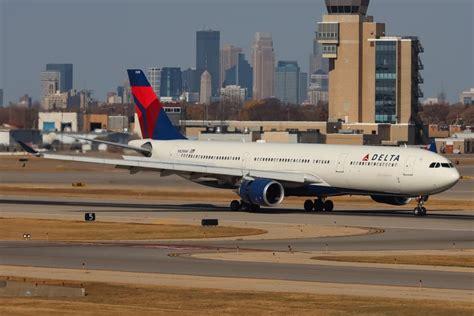
Delta Air Lines is preparing to resume nonstop service between New York and Tel Aviv next week, restoring a major long-haul connection between the United States and Israel after a suspension caused by the ongoing war. The SkyTeam carrier is scheduled to restart flights from New York John F. Kennedy International Airport (JFK) to Tel Aviv Ben Gurion International Airport (TLV) on September 6, 2026, marking an important return to one of its longest international markets.
The relaunch comes after Delta suspended its Tel Aviv operation in February 2026. The planned return therefore represents more than a routine schedule adjustment. It puts Delta back into a highly competitive transatlantic market at a time when other major airlines are also preparing to restore or expand their Israel services. United Airlines, for example, is scheduled to resume Newark–Tel Aviv flights just two days later.
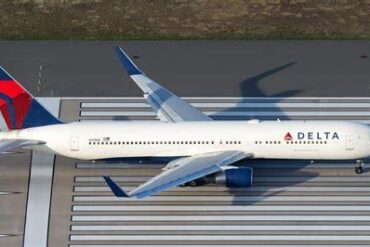
Delta’s renewed operation will cover approximately 4,933 nautical miles, or 9,136 kilometers, each way on a great-circle basis. The flight will take roughly 13 hours depending on direction, winds, routing, and operational conditions. Delta plans to operate the service daily with its 281-seat Airbus A330-900, giving passengers a premium-heavy widebody option on the New York–Tel Aviv corridor.
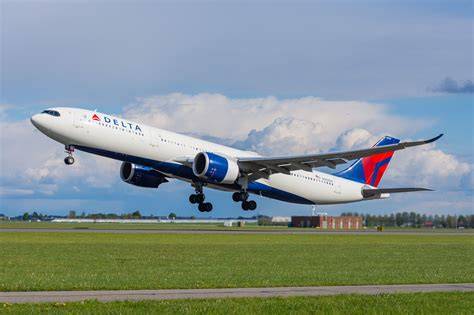
Delta Air Lines Returns to Tel Aviv With Airbus A330-900
Delta has a long history with the New York–Tel Aviv market. Its first service to Israel began in June 2001, operating from JFK. That initial chapter was short-lived because of the enormous disruption to international aviation following the September 11 attacks. Delta eventually returned to Tel Aviv in 2006 and subsequently maintained the route on a largely continuous basis until the latest suspension.
The Airbus A330-900 gives the relaunch substantial capacity and a modern onboard product. The aircraft is configured with 29 Delta One suites, arranged in a 1-2-1 layout and equipped with privacy doors. Premium Select provides another 28 seats in a 2-3-2 configuration with approximately 38 inches of pitch, while 56 Comfort+ seats offer around 34 inches of pitch. The main cabin contains 168 seats in a 2-4-2 arrangement with approximately 32 inches of pitch.
For travelers, the schedule is particularly notable because Delta frequently operates more than one daily flight on this route during periods of strong demand. The latest schedule information indicates that two daily JFK–TLV departures are planned between November 29 and January 17, 2027. That timing also covers December, traditionally one of the busiest periods for travel between New York and Israel.
New York–Tel Aviv Market Faces Major Airline Competition
The scale of the market helps explain why Delta is returning with significant capacity. In 2025, booking data indicated that approximately 1.03 million local passengers traveled between the New York area airports JFK and Newark Liberty International Airport (EWR) and Tel Aviv. That works out to roughly 2,800 passengers per day when averaged across the year, although actual demand varies considerably by season.
The figure includes passengers flying nonstop as well as travelers connecting through European hubs. Nevertheless, it demonstrates the depth of the underlying market and explains why multiple airlines are positioning themselves for a larger share of the traffic.
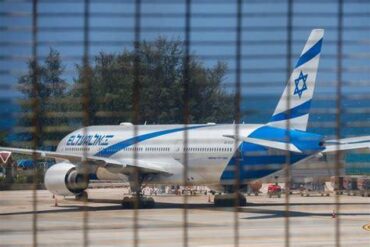
In December 2026, Delta is expected to operate alongside El Al and Arkia from JFK. Together, the three airlines are scheduled to offer an average of five daily departures during the festive period, with as many as seven on Sundays. At Newark, United Airlines and El Al will provide additional capacity, with United scheduled to increase its service to as many as three daily flights beginning November 3.
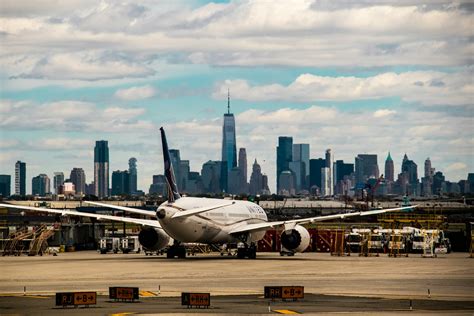
Up to 11 Daily Flights From New York to Tel Aviv
When JFK and EWR are considered together, the New York metropolitan area could have as many as 11 daily nonstop departures to Tel Aviv on selected days in December. That is an extraordinary level of connectivity for a single international city pair and illustrates how strongly airlines expect demand to recover.
A December 3 schedule provides a useful snapshot. El Al is scheduled to operate multiple departures from both JFK and EWR, while United will operate three Newark services and Delta two JFK flights. Arkia is also expected to operate a JFK departure using an aircraft leased from Hi Fly Malta. Israir may eventually add another option, although detailed schedules were not yet available.
Delta’s flights are currently listed as DL248 and DL234 from JFK. The afternoon service is scheduled to depart at 3:15 p.m. and arrive in Tel Aviv at 8:50 a.m. the following day. The late-night departure leaves JFK at 11:55 p.m. and arrives at 5:30 p.m. the next day. The corresponding return service, DL249, is scheduled to leave Tel Aviv at 11:05 a.m. and reach JFK at 4:44 p.m.
Delta Could Benefit From a Record New York–Tel Aviv Schedule
The longer-term outlook is even more striking. From April 2027 through the peak summer season, schedules currently show up to 14 daily flights between JFK and EWR and Tel Aviv on selected days. That would surpass the previous maximum of 12 daily services.
On July 19, 2027, for example, El Al is scheduled to operate eight daily departures, United three, and American Airlines, Arkia, and Delta one each. Compared with the equivalent day in 2026, that represents a planned increase of approximately 56% in departures and 62% in seats, reaching around 7,560 seats for sale on that single day.
These schedules remain subject to change, particularly given the geopolitical uncertainty surrounding Israel. Still, Delta’s September 6 return is a significant development. By restoring its 13-hour nonstop New York–Tel Aviv service, Delta is re-entering a strategically important market just as competition and capacity across the route are accelerating.