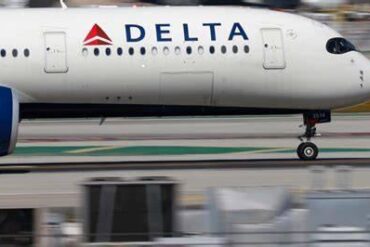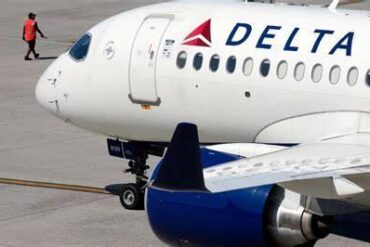
Delta Air Lines is quietly scaling back one of the most ambitious routes in its domestic network, bringing its 5,095-mile Boston–Honolulu service to an unexpectedly early end. The seasonal route between Boston Logan International Airport (BOS) and Honolulu International Airport (HNL) was originally scheduled to operate from mid-December 2026 through the end of March 2027. However, bookings now appear to end after January 3, 2027, according to schedule changes reported by Beat of Hawaii.
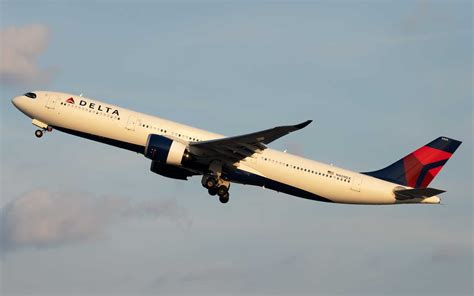
The change is significant because the Boston–Honolulu route is not an ordinary domestic flight. Covering approximately 8,200 kilometers, the journey takes close to 12 hours and crosses an enormous portion of the United States without leaving the country. Its length has made it a notable fixture among the world’s longest domestic airline routes, while its operation with an Airbus A330 gives passengers a widebody experience on a flight that remains technically domestic.
Delta’s decision is particularly striking because the airline had only recently restored the route. Rather than disappearing after a conventional seasonal schedule, the service is now expected to operate for only about two weeks of the originally planned period. That represents a reduction of almost 90%, turning what looked like a renewed commitment to Boston–Hawaii travel into a very short-lived experiment.
Why Delta Is Ending the Boston–Honolulu Route
The exact reason for the schedule change remains unclear. Delta has not formally announced that it is canceling the Boston–Honolulu route, and the adjustment was identified through changes to the airline’s booking system rather than a major public announcement. That distinction matters because airlines frequently modify schedules for a variety of commercial and operational reasons.
Demand is likely to be an important consideration. Boston is a large and affluent metropolitan market, but a nonstop flight to Honolulu requires an aircraft to spend many hours operating far from Delta’s traditional domestic network. For a route of this length, the economics depend heavily on consistently strong demand and the ability to attract passengers willing to pay enough to justify the substantial aircraft time and fuel consumption.
The history of the route reinforces that uncertainty. Hawaiian Airlines launched Boston–Honolulu service in 2019, establishing a nonstop connection between New England and Hawaii. Delta entered the market in 2024, offering another option for Boston travelers and competing directly for leisure traffic. Both carriers subsequently suspended service in 2025 before Delta decided to bring its own operation back for the winter season.
The latest schedule reduction therefore suggests that Delta’s renewed confidence in the market may not have translated into the level of demand required for a longer seasonal operation. That does not necessarily mean Boston travelers have lost all nonstop access to Hawaii, but it does make the market considerably less predictable.
New York Takes the Longest Domestic Flight Crown
With Boston–Honolulu disappearing from Delta’s schedule after January 3, the title of longest domestic route in the United States will effectively return to another Delta-operated service: New York-JFK to Honolulu.
The distinction highlights an important factor in long-haul route economics. New York has an enormous population base, extensive international connectivity and a deep pool of corporate and premium travelers. Boston also has strong business and leisure demand, but the size and breadth of the New York market give airlines more opportunities to fill a very long flight with passengers from different segments.
For Delta, that difference can be crucial. A flight covering more than 5,000 miles cannot simply rely on cheap leisure fares to remain profitable. The aircraft has to generate enough revenue across its cabins, while the airline must also consider whether the same aircraft could produce better returns on another route.
Delta continues to operate several other exceptionally long domestic services to Hawaii, including flights from Atlanta to Honolulu and Kahului, as well as Detroit–Honolulu. These routes connect major Delta hubs with Hawaii and benefit from the airline’s extensive domestic feed. Boston–Honolulu lacks the same hub advantage, making its economics more dependent on passengers originating specifically in the Boston market or connecting through the city.
Delta’s Pacific Ambitions Face a Tougher Test
The timing is also notable because Delta has been pursuing a broader strategy to strengthen its position across the Pacific. United Airlines has traditionally been the dominant U.S. carrier in the transpacific market, while Delta has built a particularly powerful position across the Atlantic.
Delta has publicly signaled ambitions to challenge United’s Pacific leadership, but doing so requires substantial investment. The airline’s planned Los Angeles–Hong Kong service is a much larger undertaking than Boston–Honolulu, requiring long-haul widebody capacity on a route of roughly 16 hours westbound.
That creates an interesting strategic calculation. Boston–Honolulu can be operated with one widebody aircraft supporting a daily round trip, while a long-distance Los Angeles–Hong Kong operation demands considerably more aircraft time and resources. If Delta believes the Pacific network offers greater long-term opportunities through major international markets, some marginal domestic long-haul services could naturally face greater scrutiny.
Fuel Prices Add Another Layer of Pressure
The airline industry is also operating in an unusually volatile environment. Long-haul flying is particularly sensitive to fuel costs because fuel represents a substantial portion of the expense associated with keeping a widebody aircraft airborne for 10 or more hours.
Recent geopolitical instability has contributed to sharp movements in oil prices, creating additional uncertainty for carriers planning long-haul schedules months in advance. Although it would be premature to claim that fuel prices directly caused Delta to shorten Boston–Honolulu, higher operating costs make marginal routes harder to justify when demand is uncertain.
That is why the Boston service should not necessarily be viewed as evidence that Delta is abandoning Hawaii. Instead, the airline appears to be prioritizing routes with stronger demand fundamentals while remaining selective about where it commits scarce widebody aircraft.
What the Cut Means for Boston Travelers
For Boston-area travelers, the biggest impact will be fewer opportunities to fly nonstop to Honolulu on Delta during the winter. The airline’s planned A330 operation would have offered passengers a particularly useful alternative for reaching Hawaii without a mainland connection.
Travelers may instead need to consider other carriers, connecting itineraries or departures from different U.S. gateways. Delta passengers connecting through hubs such as Atlanta, Detroit or New York could still reach Hawaii, but those options add another stage to an already lengthy journey.
The early termination also demonstrates how quickly airline schedules can change, particularly on seasonal long-haul routes. A flight can be announced months in advance and appear strategically important, only for bookings to disappear when the carrier reassesses expected demand.
For now, the 5,095-mile Boston–Honolulu route is effectively living on borrowed time. Unless Delta restores the later dates, January 3 will mark the end of its brief return, leaving New York–Honolulu as the airline’s longest domestic service and offering another reminder that even the most headline-grabbing routes ultimately have to make economic sense.