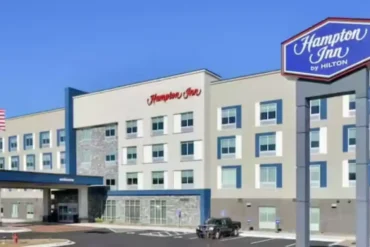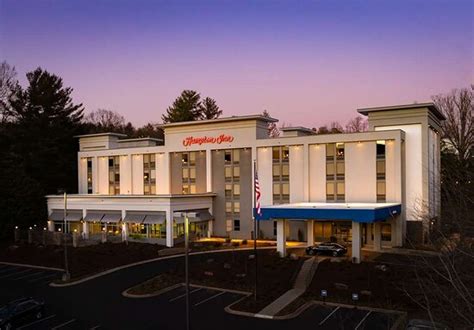
A guest’s canceled reservation at the Hampton Inn in Asheville, North Carolina, has reignited a contentious debate about hotel policies targeting locals—particularly those perceived as potentially unhoused. The incident, which unfolded after a guest attempted to use Hilton Honors points for a stay, has captured attention online due to the disturbing rationale given by the hotel: “because of our homeless population.”
The guest in question, who shared their story on the social media platform Bluesky, was stunned when the reservation was voided simply because the listed address on their Hilton Honors account was within 50 miles of the property. Even after clarifying that the address was outdated, hotel staff reportedly refused to reinstate the booking.
Hotel Policy Targets Local Residents—But at What Cost?
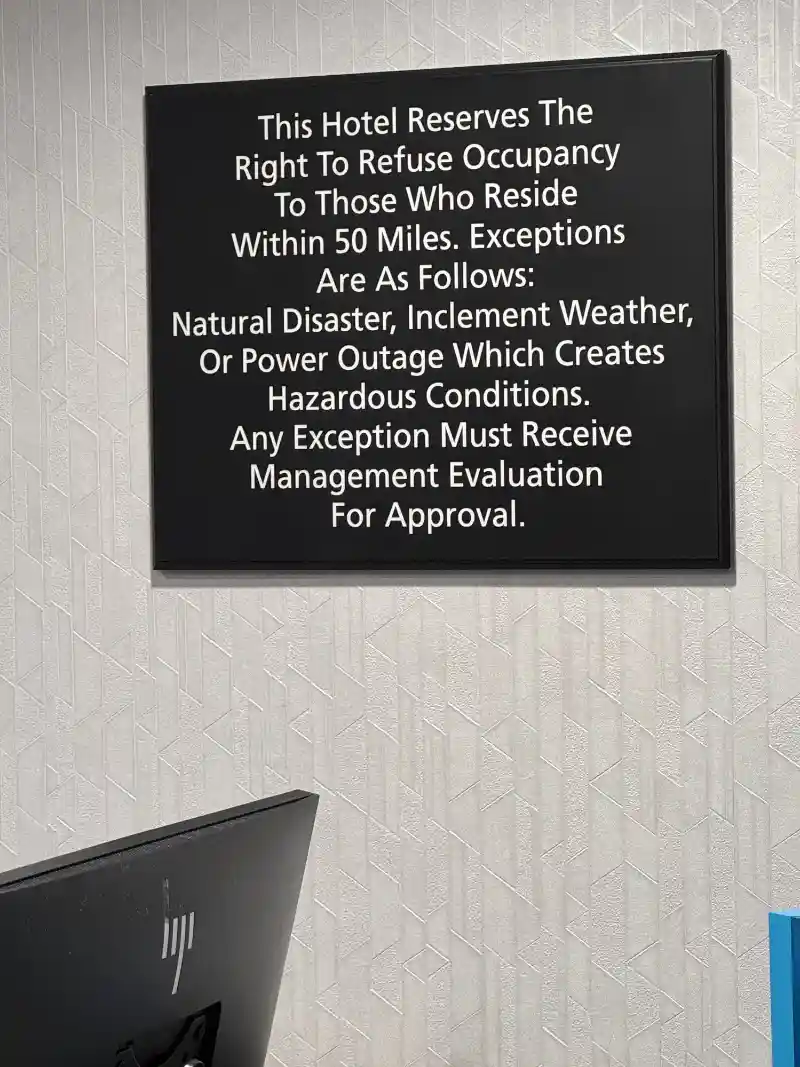
The hotel’s policy was no secret. A sign posted in the lobby clearly states:
“This hotel reserves the right to refuse occupancy to those who reside within 50 miles. Exceptions are as follows: natural disaster, inclement weather, or power outage which creates hazardous conditions. Any exceptions must receive management evaluation for approval.”
While such language might be common in smaller, suburban hospitality properties, its implications are deeply troubling. The guest, who is also the author of the book “There Is No Place for Us: Working and Homeless in America,” highlighted a core issue with haunting clarity—the policy does not merely inconvenience travelers; it effectively criminalizes housing insecurity.
The employee’s justification—tying the policy to the homeless population—struck a nerve for many. It suggests that homelessness is not only stigmatized but also weaponized as a justification for preemptive discrimination.
Systemic Prejudice in a Sign: The Quiet Exclusion of the Vulnerable
What makes this story even more troubling is the casual nature with which the reasoning was delivered. The employee’s unflinching reference to the homeless population as a threat underscores how normalized this exclusion has become in certain areas of the hospitality industry. It reflects a quiet but systemic bias against those experiencing housing insecurity, cloaked in the language of “policy.”
Far from being a one-off occurrence, this policy appears to be widely enforced across multiple properties, particularly among budget and mid-tier brands like Hampton Inn. While such establishments may argue they are protecting their assets, the actual outcome is the blanket exclusion of local residents who might be in genuine need.
The Hypocrisy of the Loyalty Program Dilemma
Adding to the irony is the fact that the reservation was made through Hilton Honors, Hilton’s loyalty program. For seasoned travelers who engage in so-called “mattress runs”—booking rooms at local hotels to earn elite status—this policy throws a wrench into a widely accepted practice.
If a guest with a loyalty membership is punished for living locally, it raises fundamental questions about how loyalty programs are structured and enforced. Are elite nights only acceptable when earned far from home? Is the assumption that someone booking locally must have ulterior motives?
The idea that proximity equals risk is illogical and, in many cases, cruel. There are countless legitimate reasons a person might need a room close to their home:
- Escaping a domestic violence situation
- Managing a temporary plumbing, electricity, or heating failure
- Dealing with family tension or mental health needs
- Hosting relatives when there is no space at home
- Transitioning between apartments or awaiting housing availability
The guest made a critical point: if someone unhoused is willing and able to pay the rate—or redeem points—then on what ethical grounds does a hotel refuse them?
Legal Gray Areas and Industry Norms
From a legal standpoint, hotels retain a significant degree of discretion in determining whom they serve. However, blanket bans based on zip codes or proximity are starting to draw increased scrutiny. While they may not directly violate anti-discrimination laws, they flirt dangerously close to violating the spirit of equitable accommodation.
In many municipalities, ordinances do not explicitly forbid hotels from excluding local guests. But the growing pressure from social media and advocacy groups is placing new attention on whether such policies ought to be reviewed under the lens of discriminatory intent.
Brand Reputation and Corporate Responsibility
Hilton has not issued a public statement in response to the backlash, but the implications for its brand reputation are significant. As hospitality chains increasingly tout their commitment to diversity, equity, and inclusion, contradictions like this risk damaging customer trust.
It’s also worth noting that this controversy is not isolated. Discussions on Reddit, TripAdvisor, and even Flyertalk reveal similar cases where guests have had reservations canceled or denied for being local—often with little explanation or recourse.
Brands like Hilton, Marriott, and Hyatt may not explicitly list these rules in booking terms, but individual franchisees frequently operate under their own policies. This disconnect between corporate messaging and local enforcement leaves room for confusion and abuse.
Invisible Suffering: When the Policy Targets the Most Vulnerable
This controversy pulls back the curtain on a much larger and uncomfortable reality: many people live on the edge of homelessness, and when crisis strikes, their last resort might be a night in a hotel. Policies like these not only strip away that option but also reinforce social narratives that equate poverty with danger.
The guest’s reflection drives this point home: families displaced due to eviction, women escaping violence, or workers living in cars are all denied access—not because of behavior or inability to pay, but because of their zip code.

Conclusion: A Dangerous Precedent in Hospitality
The Hampton Inn in Asheville may be just one property, but the incident reflects an alarming trend within the industry. Disguised as practical safeguards, these policies instead promote a culture of exclusion, where proximity becomes a liability and vulnerability is met with suspicion.
If the hospitality industry truly seeks to welcome all guests, it must reconsider rules that undermine that promise. The question isn’t just whether these policies are legal—it’s whether they are moral, compassionate, and aligned with the values many hotel brands claim to uphold.
The backlash to this cancellation isn’t just about a ruined reservation. It’s about what kind of society we become when we treat the unhoused as threats, and when needing a safe place to sleep becomes grounds for suspicion. Until these rules are revised or removed, the sign in that lobby won’t just be a policy—it will be a warning.
Public Response and Continuing Debate
Online reaction to the story has been swift and sharp. Social media users have condemned the policy, describing it as classist, discriminatory, and inhumane. Critics argue that the hotel industry must do better, especially in cities already grappling with affordable housing shortages.
There’s also been a wave of support for the guest who brought this issue to light. Readers of his book have highlighted the eerie parallels between his literary work and real-life experience, noting that the situation encapsulates the very themes he explores—systemic neglect, dehumanization, and the societal barriers faced by America’s working poor.
The larger takeaway is chilling: in a moment of need, geography can become destiny. The place you call home might just be the reason you’re left without one for the night.