The hospitality industry found itself at the center of a national political storm after Hilton severed ties with a Hampton Inn in Minnesota that refused to accommodate Immigration and Customs Enforcement (ICE) agents. What began as a local lodging dispute rapidly escalated into a high-profile controversy involving federal agencies, corporate brand standards, franchise accountability, and the limits of political expression in private business operations.
The incident unfolded near Minneapolis, where ICE agents with confirmed reservations were informed they were not welcome at a Hampton Inn property in Lakeville, Minnesota. The decision immediately triggered outrage within the Department of Homeland Security (DHS), which publicly criticized the hotel and questioned whether a major U.S. hotel brand was allowing discrimination against federal law enforcement personnel.
As the story spread across social media and conservative media circles, it became clear that this was no ordinary customer service failure. The refusal to house ICE agents struck at the intersection of immigration politics, corporate governance, and franchise responsibility, forcing Hilton to act decisively to protect its brand.
How a Local Hotel Decision Became a National Flashpoint
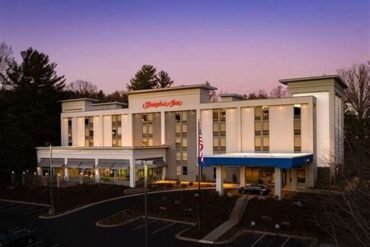
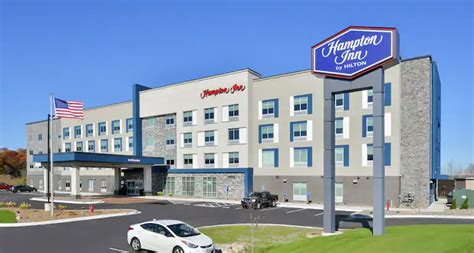
At the center of the controversy was the Hampton Inn Lakeville, a franchised property operated by Everpeak Hospitality. Like the vast majority of Hilton-branded hotels worldwide, the property was not corporately owned by Hilton but operated under a franchise agreement requiring strict adherence to Hilton’s brand standards, values, and nondiscrimination policies.
According to DHS officials, ICE agents attempting to stay at the hotel were proactively contacted and informed that their reservations were canceled and that they would not be accepted as guests. This action, perceived as a targeted exclusion of a federal agency, immediately raised alarms in Washington. DHS publicly accused the hotel of ideological discrimination, a charge that resonated deeply in a polarized political climate.
The refusal drew sharply divided reactions. Supporters of the hotel framed the decision as a moral stand against ICE, an agency often criticized for its immigration enforcement practices. Critics, however, saw the refusal as an unacceptable denial of service to lawful government employees performing their duties, arguing that hospitality businesses should not selectively exclude guests based on political or professional identity.
Everpeak Hospitality’s Apology and the Breakdown in Execution
Within hours of the backlash, Everpeak Hospitality issued a public apology stating that the incident was inconsistent with its commitment to being a welcoming place for all. The company claimed it had addressed the situation, contacted affected guests, and reaffirmed that it does not discriminate against individuals or government agencies.
On paper, the response appeared to be damage control done by the book. In practice, it quickly unraveled.
Later that same evening, a conservative social media figure with a substantial online following arrived at the Lakeville Hampton Inn and attempted to book a room while openly identifying as affiliated with ICE. The interaction was recorded on video. The front desk employee informed him that the hotel was still not accepting ICE bookings, directly contradicting Everpeak’s public statement.
The employee, reportedly new and unable to reach a manager, became an unintended symbol of organizational failure. The video spread rapidly, intensifying scrutiny and raising serious questions about whether the apology had been genuine or merely cosmetic.
Hilton’s Rapid Response and Deflagging Decision
Faced with mounting evidence that its franchisee was not complying with brand standards, Hilton Worldwide moved swiftly. In a formal statement, Hilton confirmed that the Lakeville property had been removed from its reservation system, effectively ending its affiliation with the brand.
Hilton emphasized that the franchise owner had previously assured corporate leadership that the issue was resolved. The emergence of video evidence showing continued refusal to house ICE agents, however, raised serious concerns about compliance and integrity.
The company reiterated that Hilton is — and has always been — a welcoming place for all, underscoring that discrimination against guests based on occupation or affiliation violates core brand values. Hilton also announced it was engaging with franchisees across its global portfolio to reinforce standards and prevent similar incidents.
The speed of the response was notable. Less than 24 hours after the controversy reached peak visibility, the property was effectively deflagged. In the hospitality world, such decisive action is rare and underscores the seriousness with which Hilton viewed the breach.
Franchise Independence Versus Brand Accountability
The incident exposed a tension that exists across the global hotel industry: the balance between franchise independence and brand accountability. While franchise owners manage day-to-day operations, they are bound by contractual obligations that protect the brand’s reputation.
Hilton’s decision made clear that ideological or political positions cannot override brand policies, especially when those positions result in the exclusion of lawful guests. The Lakeville case demonstrated that corporate hospitality brands will intervene when franchise actions threaten consistency, trust, and public perception.
This was not merely a political calculation. Allowing a franchise to selectively refuse service to a federal agency could have opened Hilton to legal exposure, regulatory scrutiny, and long-term reputational damage across markets with diverse political views.
The Political Undercurrents Driving the Fallout
The controversy did not exist in a vacuum. Immigration enforcement remains one of the most polarizing issues in American politics, and ICE has long been a lightning rod for criticism and activism. At the same time, corporate America has grown increasingly cautious about appearing to take sides in politically charged debates.
The situation was further complicated by the broader political climate, particularly the influence of Donald Trump, who has repeatedly demonstrated a willingness to publicly criticize or reward corporations based on perceived loyalty. In such an environment, neutrality is often the safest position for multinational brands.
By acting quickly, Hilton avoided becoming a long-term target in a broader political battle. The company’s response signaled that while individual franchise owners may hold personal beliefs, those beliefs cannot manifest in ways that conflict with contractual obligations or federal law.
Lessons for the Hospitality Industry
Beyond politics, the Lakeville incident serves as a case study in crisis management failure at the property level. Everpeak Hospitality’s inability to align internal operations with its public messaging amplified the damage and left Hilton with little choice but to act decisively.
The presence of a lone, unbriefed front desk employee during a viral moment illustrated a lack of preparedness that would concern any brand operator. In an era where smartphones can instantly broadcast local missteps to a global audience, execution matters as much as intent.
For the broader hospitality industry, the message is unmistakable: brand standards are not symbolic. They are enforceable, and violations can result in immediate and irreversible consequences.
What the Deflagging Means for the Lakeville Property
With Hilton branding removed, the Lakeville hotel now faces an uncertain future. Deflagging often results in decreased bookings, loss of loyalty program traffic, and diminished visibility on major reservation platforms. Rebranding as an independent or affiliating with a smaller chain may offer a path forward, but the reputational impact of the controversy will linger.
For Hilton, the decision reinforces its positioning as a brand committed to uniform guest treatment across regions and political divides. For franchisees, it serves as a stark reminder that adherence to corporate policy is non-negotiable.
A Defining Moment for Corporate Neutrality
The Hampton Inn Lakeville controversy underscores how quickly localized decisions can escalate into national issues when politics, social media, and corporate brands collide. Hilton’s choice to cut ties was not just a response to one hotel’s actions, but a broader affirmation of its values and operational expectations.
In an increasingly polarized society, the hospitality industry occupies a unique role as a neutral ground meant to serve all travelers. Hilton’s swift action signals that, at least for now, neutrality and consistency remain core pillars of its global identity.