
The United States government has issued a stark travel alert following sweeping legal changes in Hong Kong that now criminalize the refusal to unlock personal electronic devices. The development marks a significant escalation in border security enforcement and digital surveillance authority, placing millions of international travelers under a new layer of legal risk—particularly those transiting through one of Asia’s most critical aviation hubs.
At the center of the warning is a newly enforced national security provision that compels travelers to provide access to smartphones, laptops, and other encrypted devices upon request. Unlike similar policies elsewhere, non-compliance is no longer a gray area—it is now a prosecutable offense. The implications stretch far beyond tourism, reaching into corporate travel, journalism, and international business operations.
New Law Redefines Digital Privacy at the Border
On March 23, 2026, Hong Kong authorities implemented expanded national security laws that grant police the authority to demand access to electronic devices from anyone suspected of posing a national security threat. Crucially, this authority applies universally, including to foreign nationals and transit passengers who never formally enter the city.
Failure to comply carries severe legal consequences, including:
- Up to one year in prison
- Fines exceeding $12,500
- Additional penalties of up to three years imprisonment for providing false or misleading information
- Fines reaching $60,000 for obstruction-related offenses
These provisions represent a sharp departure from policies in countries like the United States, where travelers may refuse to disclose passwords without committing a crime. The contrast highlights a growing divergence in global digital rights standards, especially at international borders.
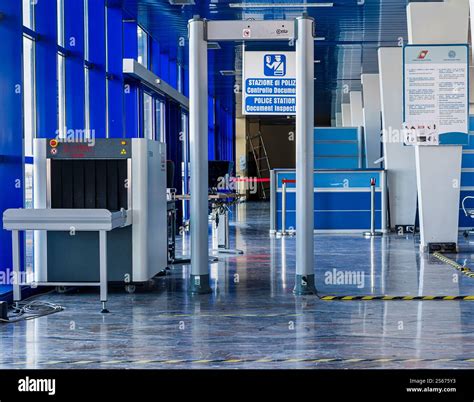
US Consulate Warning Signals Elevated Risk for Travelers
The US Consulate General in Hong Kong & Macau issued a formal advisory emphasizing that the law applies to all individuals in Hong Kong, regardless of nationality or purpose of travel. The advisory underscores that even transit passengers at Hong Kong International Airport (HKG)—a group historically exempt from many entry procedures—are now within enforcement scope.
Authorities are also empowered to confiscate electronic devices and retain them as evidence, raising serious concerns about data privacy, corporate confidentiality, and personal security. For business travelers carrying sensitive information, the stakes are particularly high, as compliance could mean exposure of proprietary or classified data.
The lack of transparency around enforcement practices adds another layer of uncertainty. While officials have not clarified how frequently device checks will occur, the legal framework allows for broad discretionary application, creating an environment where risk assessment becomes unpredictable.
Air Travel Between the US and Hong Kong Faces New Headwinds
The timing of the law coincides with a fragile recovery in transpacific aviation, particularly on routes connecting North America and Hong Kong. Airlines have been steadily rebuilding capacity, but the introduction of strict digital compliance requirements may deter both leisure and business travelers.
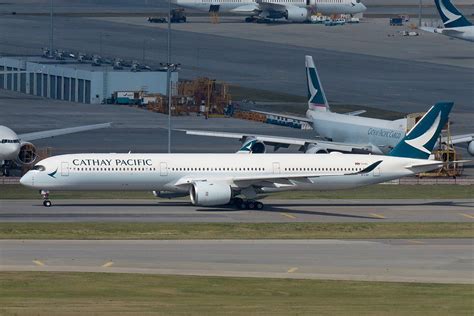
Key carriers operating nonstop routes include Cathay Pacific, United Airlines, and the returning Delta Air Lines, which is scheduled to relaunch daily service from Los Angeles in June 2026. These routes form a critical backbone of US–Hong Kong connectivity, linking major cities such as Los Angeles, San Francisco, New York, and Chicago.
Cathay Pacific, in particular, has been aggressively expanding its North American footprint, planning over 100 weekly return flights during peak summer travel. The airline’s strategy hinges on capturing high-value long-haul demand, but the new legal environment introduces uncertainty that could disrupt passenger confidence.
Hong Kong’s Role as a Global Transit Hub Under Pressure
Hong Kong International Airport has long been regarded as a premier global transit hub, strategically positioned within a five-hour flight of half the world’s population. Before the pandemic, it handled approximately 20 million transfer passengers annually, making it a vital connector between North America, Europe, Southeast Asia, and Australia.
Although traffic has not fully recovered—recording around 15 million transit passengers in 2025—the airport remains a critical node in global aviation networks. The new security laws, however, introduce a potential friction point that could redirect transit flows to competing hubs such as Singapore, Seoul, or Tokyo.
For travelers merely passing through, the realization that transit status no longer guarantees exemption from security enforcement may prove decisive. Airlines and travel planners may need to reconsider routing strategies, especially for passengers carrying sensitive digital data.
A Broader Shift in Global Travel Risk Landscape
The implications of Hong Kong’s policy extend beyond a single jurisdiction. It reflects a broader global trend toward increased state control over digital information, particularly in contexts tied to national security. For travelers, this means that devices are no longer just personal tools—they are legal liabilities at borders.
Professionals in sectors such as finance, technology, journalism, and defense must now weigh operational risks against compliance obligations. Some may adopt strategies such as traveling with minimal data devices, using temporary hardware, or avoiding certain transit points altogether.
At the same time, governments like the United States are responding with more explicit travel advisories, signaling that digital privacy concerns are becoming a central pillar of international travel guidance, alongside traditional risks like health and physical security.
What This Means for Travelers Moving Forward
The immediate takeaway is clear: traveling through Hong Kong now carries legal responsibilities that extend deep into personal digital space. Whether arriving, departing, or simply connecting, passengers must be prepared for the possibility of device inspection and mandatory decryption.
For many, the question is no longer just where to travel—but what data to carry, what to protect, and what risks are acceptable. In an era where smartphones hold entire professional and personal ecosystems, the boundary between privacy and compliance has never been more sharply defined.
As global mobility continues to rebound, policies like these will shape not only where people go, but how they prepare for the journey. Hong Kong’s new law is not just a local regulation—it is a signal of a rapidly evolving intersection between travel, technology, and state power.