Commercial passenger flights have returned to Venezuela’s main international gateway, marking a major step in the country’s recovery nearly ten weeks after a devastating earthquake sequence forced the airport to close. Simón Bolívar International Airport (CCS), the principal airport serving Caracas, resumed limited commercial operations on September 1 after extensive inspections and emergency reconstruction.
The reopening comes after two powerful earthquakes struck Venezuela on June 24, causing widespread destruction across the country’s northern region. The magnitude 7.2 and 7.5 earthquakes hit just 39 seconds apart, damaging infrastructure around La Guaira and Caracas and disrupting transportation links at a critical time.
The airport itself suffered serious damage to its runways, control tower, passenger facilities and cargo infrastructure. The disaster reportedly killed more than 6,500 people and left approximately 17,900 homeless, making the airport closure only one part of a much broader national emergency.
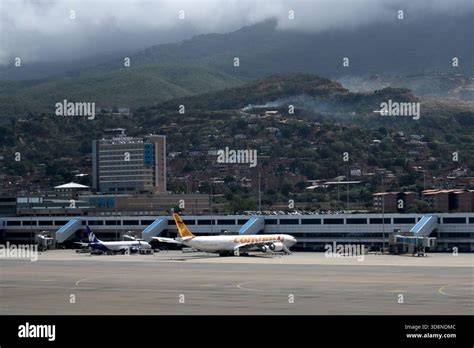
Simón Bolívar International Airport Begins a Limited Recovery
The return of commercial aviation does not mean CCS is operating normally. Instead, Venezuela has adopted a staged reopening strategy, allowing airlines to gradually restore services while permanent airport facilities continue to undergo reconstruction.
The first phase is expected to recover approximately 25% of the airport’s pre-earthquake operations. Transport Minister Francisco Garcés said authorities intend to increase capacity to roughly 40% within several months and potentially reach 60% by the end of the year or early next year.
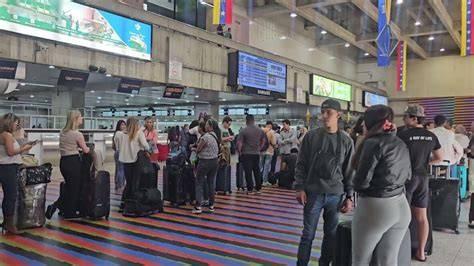
That cautious approach reflects the scale of the damage. Rather than immediately returning thousands of passengers to the main terminal complex, airport authorities have established a temporary passenger facility in the parking area.
The temporary terminal covers approximately 10,000 square meters, or about 108,000 square feet, and can process as many as 2,200 passengers per day. It provides essential services including check-in counters, air conditioning, Wi-Fi, restrooms and medical facilities.
Passengers then travel by bus between the temporary terminal and their aircraft. Although considerably different from the conventional airport experience, the arrangement allows commercial aviation to restart while construction teams continue repairing other parts of the airport.
Airlines Return to Caracas on Different Schedules
The initial reopening includes seven domestic and four international round-trip flights, giving travelers the first opportunity in weeks to reconnect with Caracas through its primary gateway.
Venezuelan carrier Conviasa operated an Airbus A340-600 service to Mexico, while international airlines including Copa Airlines and Air Europa were among the first carriers to restore operations.
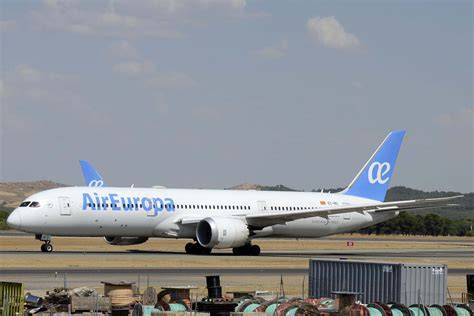
Air Europa’s return is particularly significant for Venezuela’s connection with Europe. The Spanish carrier is restoring its Madrid-Barajas to Caracas service at five flights per week using the Boeing 787-9. The route provides one of the most important direct links between Venezuela and Europe during the airport’s recovery period.
Avianca is also restarting its Caracas-Bogotá service. The Colombian airline initially returns with a daily operation to El Dorado International Airport, with the possibility of increasing back to its normal twice-daily schedule as airport capacity improves.
Other airlines are following different timelines. Iberia is scheduled to resume Madrid service on September 3, while LATAM plans to return to Caracas from Bogotá on September 4. Wingo and Avior Airlines are scheduled to restore services on September 7, while Plus Ultra is expected to restart selected Madrid and Tenerife North operations on September 8.
The staggered schedule illustrates an important point about the reopening: September 1 is the beginning of the recovery, not its conclusion.
American Airlines Prepares to Restore Venezuela Flights
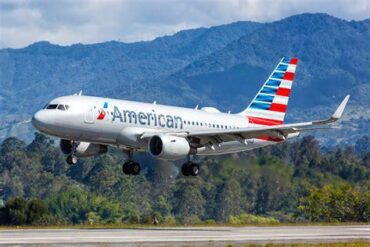
One of the most notable returns will come from American Airlines, which is scheduled to resume its Miami-Caracas service on September 7.
American had only recently returned to Venezuela after a lengthy absence. The airline restored Caracas flights in April following approximately seven years without scheduled service, initially operating a daily Embraer E175 from Miami International Airport.
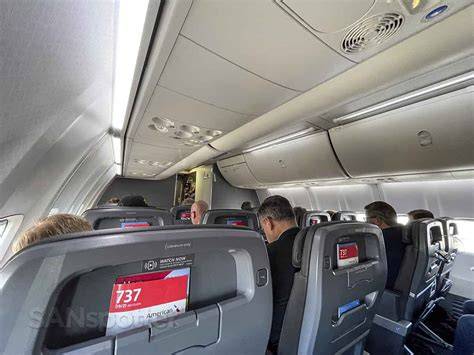
Demand prompted American to increase the route to twice daily by adding a Boeing 737-800. The earthquake interruption therefore came less than two months after the carrier had re-established a direct link between the United States and Venezuela.
The September 7 restart will restore an important connection between Caracas and one of the largest international hubs serving Venezuelan travelers. However, American’s return is still part of a limited recovery rather than a full restoration of the former international network.
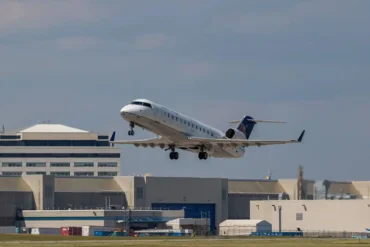
United Airlines is taking a substantially more cautious approach. Its planned Houston George Bush Intercontinental Airport-Caracas service has already been delayed twice and is now scheduled to begin on January 12, 2027.
Caracas Had Few Alternatives During the Airport Closure
The consequences of the CCS shutdown were particularly severe because Caracas does not have another nearby airport capable of easily absorbing its normal international traffic.
When Simón Bolívar International Airport closed, airlines were forced to find alternatives far from the capital. Valencia Airport became an important diversion point despite being more than 100 miles (160 kilometers) from Caracas.
Some services were diverted even farther away. Barcelona, Venezuela, located nearly 200 miles, or approximately 320 kilometers, from the capital, also handled redirected operations.
The resulting situation created significant logistical challenges for passengers and airlines. Travelers who normally would have landed close to Caracas instead faced lengthy ground journeys after arriving at alternative airports.
Airlines also had to redesign their operating schedules. Air Europa and Plus Ultra used Valencia for some operations, while LATAM routed its Caracas-related service through Barcelona.
The reopening of CCS therefore has significance beyond the restoration of a terminal. It eliminates a major transportation bottleneck and restores direct air access to Venezuela’s political and economic center.
Venezuela’s International Network Will Take Months to Rebuild
Before the earthquakes, Simón Bolívar International Airport had a scheduled network involving approximately 21 airlines serving 32 destinations, with domestic and international routes distributed broadly across the network.
Rebuilding that connectivity will take time. Several carriers are already scheduled to return during September, including GOL to São Paulo on September 15 and Caribbean Airlines to Port of Spain on September 19.
Other airlines are planning significantly later returns. TAP Air Portugal is expected to restore Lisbon and Funchal connectivity in October, although a specific date remains to be determined. Turkish Airlines is also targeting October.
Qatar Airways is scheduled to begin its new Doha-Bogotá-Caracas service on November 4, subject to the necessary approvals. If launched as planned, the operation would establish Venezuela’s first scheduled connection with a Gulf carrier.
JetBlue also continues to plan its first-ever Venezuelan service, linking Fort Lauderdale-Hollywood International Airport with Caracas later this year, although the proposed route remains subject to government approval.
Earthquake Damage Continues to Shape Aviation Recovery
The June earthquakes were among the most powerful seismic events recorded in Venezuela in more than a century. Their close succession amplified the challenge facing emergency responders and infrastructure operators across the country’s northern region.
La Guaira was particularly badly affected because of its location along Venezuela’s coastal mountain range. Damage also extended into Caracas and the states of Carabobo, Miranda, Aragua and Yaracuy.
For aviation authorities, reopening the airport required more than simply repairing visible damage. Runway conditions, air traffic control infrastructure, passenger facilities and operational safety systems all had to be assessed before commercial aircraft could return.
That explains why authorities have emphasized inspections and a gradual increase in capacity rather than attempting an immediate return to the airport’s previous schedule.
What the Caracas Airport Reopening Means for Travelers
For passengers, the most important change is simple: Caracas is once again directly connected to the international airline network through its principal airport.
Yet travelers should expect an unusual airport experience for some time. Temporary processing facilities, bus transfers to aircraft and reduced flight frequencies are likely to remain part of the journey while reconstruction continues.
The airline schedule will also remain fluid. Some carriers have restored only partial operations at CCS while maintaining services through diversion airports. Full frequencies will depend on further authorization and the airport’s ability to safely accommodate increasing traffic.
The reopening nevertheless represents a significant milestone for Venezuela. After almost ten weeks of isolation from its principal aviation gateway, the capital is beginning to reconnect with regional and international markets.
Simón Bolívar International Airport’s recovery will be measured in stages, with 25% capacity expected initially, followed by further expansion toward 40% and eventually 60%. For airlines and travelers, September 1 marks the moment Caracas begins moving from emergency aviation arrangements toward a more recognizable international flight network.
The process will not be immediate, but every returning route reduces the disruption created by the earthquakes. As airlines progressively restore their schedules and airport reconstruction advances, Caracas is once again becoming an accessible destination rather than a city reached only through distant alternatives.