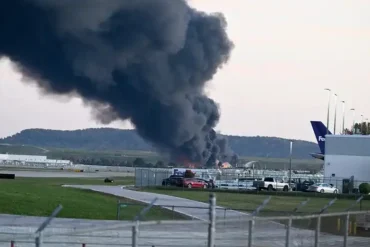
The UPS Flight 2976 tragedy has taken another life, as Alain Rodriguez Colina, a Cuban immigrant and metal buyer at Grade A Auto Parts & Recycling, succumbed to his injuries on December 25, 2025. His death brings the total fatalities of the devastating November 4 crash to 15, casting a somber cloud over the holiday season and intensifying calls for accountability and answers.
The Human Toll: Alain Rodriguez Colina’s Final Battle
Alain Rodriguez Colina had barely begun to rebuild his life in Louisville when tragedy struck. On the day of the crash, he was assisting a customer at the scrapyard, a daily routine that turned catastrophic in a matter of seconds. When the McDonnell Douglas MD-11F plunged into the site, it tore through lives and livelihoods indiscriminately. Colina’s coworker died instantly. He, however, managed to escape — but not unscathed.
With burns covering over 50% of his body, Colina was rushed to the hospital and placed in a medically induced coma. For seven agonizing weeks, his family held on to hope, watching for any sign of recovery. Despite brief improvements, Christmas morning brought a cruel twist: Colina’s condition deteriorated rapidly, and doctors were forced to declare his death. He leaves behind a grieving family in Louisville and a daughter in Cuba who will never see her father again.
The Crash: A Catastrophic Failure at Takeoff
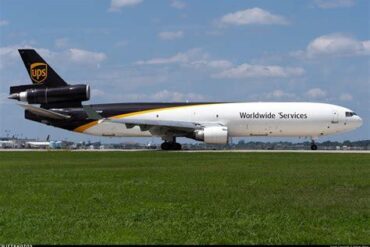
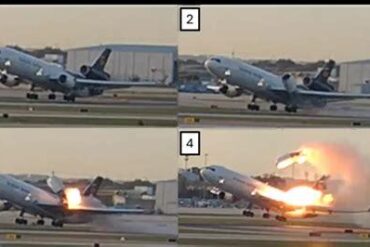
The ill-fated UPS Flight 2976, operated by a 34-year-old McDonnell Douglas MD-11F (tail number N259UP), was en route from Louisville Muhammad Ali International Airport to Honolulu’s Daniel K. Inouye International Airport when disaster struck. At approximately 5:13 PM local time, the aircraft departed Runway 17R and reached V1 — the point of no return — when the unthinkable happened.
The aircraft’s number one engine detached from the left wing, along with its pylon. The sudden disintegration ignited a fire, engulfing the wing in flames and immediately compromising the aircraft’s stability. Within seconds, the MD-11 banked sharply to the left, its trajectory eerily resembling the infamous crash of American Airlines Flight 191 in 1979.
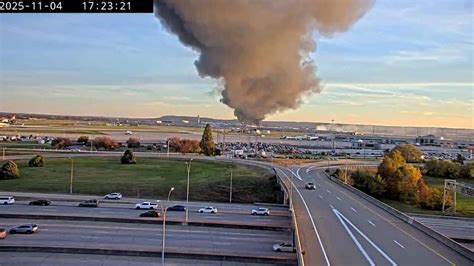
As it lost altitude, the aircraft’s left main landing gear struck a UPS warehouse. The left wing then slammed into a row of fuel tanks, triggering an enormous blaze. The MD-11 rolled past 90 degrees before colliding with the scrapyard and a semi-truck parking lot, instantly killing the three crew members aboard and 12 people on the ground.
A Mirror of History: Echoes of American Airlines Flight 191
The mechanical and aerodynamic failures seen in the crash of UPS Flight 2976 bear a chilling resemblance to the AA191 crash over four decades ago. In that incident, a DC-10 lost its number one engine and pylon during takeoff from O’Hare Airport, leading to hydraulic failures, fuel leaks, and ultimately, a fatal loss of control. That tragedy claimed 273 lives and remains the worst aviation disaster on U.S. soil.
Investigators in the AA191 case found that improper maintenance led to damage in the engine mount. McDonnell Douglas later overhauled the DC-10 design, reinforcing hydraulic and slat systems. The MD-11, a successor to the DC-10, was supposed to be more resilient. However, the events of November 4 raise questions about whether these aircraft — some of which are over 30 years old — are fit to fly in high-intensity cargo operations.
Investigations Underway: What Caused the Engine to Detach?
The National Transportation Safety Board (NTSB) has launched a comprehensive investigation, though definitive conclusions are months away. Preliminary data suggests that engine detachment may have been compounded by structural fatigue or undetected damage, possibly to multiple engine pylons. Witness reports indicate that not just the number one but possibly the number two engine also malfunctioned, which may explain why the MD-11 couldn’t gain altitude post-detachment.
UPS maintenance logs, component histories, and black box data are all under review. The Federal Aviation Administration (FAA) has also initiated a parallel audit into UPS Airlines’ MD-11 fleet and their maintenance contractors. Investigators are especially concerned about the fact that this particular MD-11 had over three decades of service, originally flying for Thai Airways before being converted into a freighter in 2006.
The MD-11 in Question: A Workhorse Facing Retirement
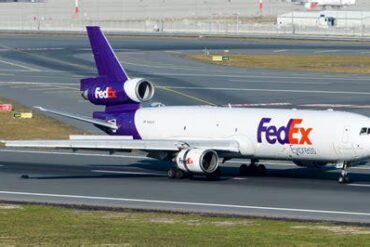
The McDonnell Douglas MD-11F has long been a cornerstone of UPS’s long-haul cargo strategy. However, the aircraft’s checkered safety history and aging airframes are beginning to draw fresh scrutiny. While FedEx recently signaled it would return MD-11s to service following safety checks, this latest incident may prompt a re-evaluation of the fleet’s viability across the industry.
Critics argue that while trijet designs like the MD-11 offer advantages in range and payload, they come with outdated control systems and unique aerodynamic challenges, especially during engine-out scenarios. The 1970s-era engineering cannot match the stability and automation of newer aircraft like the Boeing 777F or Airbus A330F.
For UPS, the decision to retain MD-11s was a cost-driven one. But cost savings are now being weighed against human lives, with 15 dead and dozens injured. The airline may face pressure from both regulators and the public to accelerate fleet retirement plans.
Community Grieving and Legal Repercussions Ahead
The crash site near the airport has turned into a makeshift memorial, adorned with photos, candles, and flowers for the victims. Community leaders are calling for a full public inquiry, not only into UPS’s role but into the FAA’s oversight of aging cargo aircraft. Class-action lawsuits are expected to follow, especially from families of the ground victims, who had no connection to the flight operations and yet paid the ultimate price.
Alain Rodriguez Colina’s family is now part of that tragic tally. Having escaped once from the wreckage, his prolonged suffering and eventual death symbolize the collateral damage that such disasters inflict. Local advocacy groups have already begun fundraising to support his daughter in Cuba and to push for workplace safety reforms near high-traffic airport zones.
Awaiting the Final NTSB Report: Questions That Must Be Answered
Until the final NTSB report is released, many critical questions remain:
- Was the engine detachment caused by a maintenance oversight or a design flaw?
- Did the aircraft suffer multiple engine failures that made recovery impossible?
- Were any crew emergency procedures attempted or captured in cockpit voice recordings?
- How did the age and stress history of this particular MD-11 factor into the failure?
The answers could not only determine civil and criminal liability, but also shape the future of cargo aviation safety standards.
For now, what remains is a trail of devastation — twisted metal, lost lives, and a grieving city still searching for closure. Alain Rodriguez Colina’s death on Christmas Day will be remembered not just as a statistic, but as a story of resilience, suffering, and heartbreak in the shadow of a preventable tragedy.