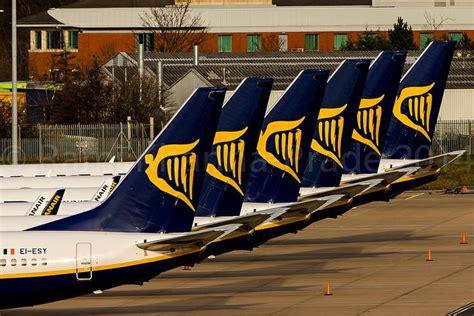
Ryanair, Europe’s largest low-cost carrier, will once again suspend all flight operations across the continent on Christmas Day, staying true to a longstanding internal policy that sets it apart from many of its competitors. Despite operating over one in every seven European flights during the busy winter season, the airline remains completely grounded on December 25, offering a rare pause in its otherwise relentless schedule.
A Strategic Christmas Shutdown Amid Soaring Winter Traffic
While most carriers dial back their operations on Christmas Day, Ryanair takes an all-or-nothing approach, halting every commercial flight. This isn’t due to strikes or operational failures, but a calculated strategic decision. The airline cites two key reasons: offering staff time off and maintaining cost-efficiency in a market where demand temporarily dips.
This policy contrasts sharply with that of other European low-cost carriers. easyJet, for example, has scheduled 558 movements for December 25, while the Wizz Air Group will operate a surprising 979 flights, only 4% fewer than on December 18. Wizz Air clearly believes there’s opportunity in Christmas Day travel, particularly among Europe’s Eastern and Southern markets.
Yet Ryanair, with its deep analytics and tight margins, has chosen to remain on the sidelines. And this isn’t new—Ryanair has never flown on Christmas Day, making this operational silence almost a hallmark of its holiday strategy.
High-Volume Pre- and Post-Christmas Operations
Though grounded on the 25th, Ryanair’s schedule before and after tells a different story. Between December 19 and 27, Ryanair is slated for 24,460 total movements, a 9% increase compared to the same period in 2024, according to Cirium Diio data.
On Christmas Eve alone, the airline scheduled 1,716 movements, accounting for a tenth of all flights touching European soil that day. This confirms Ryanair’s position as the top operator in the region, even as its competitors slightly close the gap.
Notably, operations increased 9% on December 24 and surged 17% on Boxing Day (December 26), suggesting Ryanair is using this window to capture the peak festive travel rush.
The Last Flight Before Christmas: A Short Hop Home
Ryanair’s final scheduled flight before its annual day of rest is modest yet symbolic. On December 24, the last plane departs at 6:00 PM from Kerry to Dublin, covering just 140 nautical miles—one of the airline’s shortest hops. It marks a stark contrast from the usual late-night long-hauls handled by crew based in countries like Morocco and Spain.
Earlier that same day, the first plane out is a 5:35 AM departure from Warsaw Modlin to Malta, illustrating the geographical spread and range of the airline’s pre-Christmas operations. Altogether, 746 routes across 33 countries are served on Christmas Eve, from Montenegro’s sole departure in Podgorica to Italy’s high-density network.
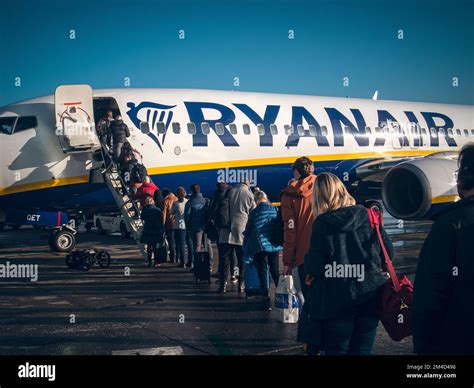
Dominating Key Hubs Despite the Holiday
Some airports were notably busy for Ryanair on December 24. The top five were:
- London Stansted – 214 movements
- Dublin – 190
- Bergamo (Milan) – 126
- Charleroi (Brussels South) – 100
- Barcelona El Prat – 88
These hubs reflect the airline’s core strengths in the UK, Ireland, Italy, Belgium, and Spain, and underscore Ryanair’s expansive and consistent footprint.
Boxing Day Bounce Back: 2,718 Movements Resume the Grind
The break is brief. December 26 sees a full-scale relaunch, with 2,718 planned movements—just 22% lower than the Friday prior. More than 1,000 routes go live that day, 865 international and 142 domestic. Domestic activity spans nations such as France, Greece, Ireland, Italy, Morocco, Poland, Portugal, Spain, and the UK, showing Ryanair’s deep pan-European network.
Of particular note: Dublin to London Gatwick—not Stansted—is the most served route that day with nine departures. This isn’t a spike post-shutdown; it’s a reflection of stable, year-round demand.
The restart kicks off at 6:00 AM sharp, with simultaneous takeoffs from airports such as Bratislava, Sofia, Stansted, Weeze, and Tenerife South. Destinations include sunny escapes like Gran Canaria and Lanzarote, offering passengers a much-needed holiday continuation—or a trip home.
A Seasonal Strategy or Missed Market?
Ryanair’s Christmas Day blackout has sparked debate among aviation watchers and analysts. While some see it as a wise, human-centered move that boosts crew morale and avoids unprofitable flights, others argue that the carrier might be leaving money on the table.
The numbers don’t lie: easyJet and Wizz Air believe there is real value in flying on December 25, and their presence may position them more favorably among last-minute travelers, expatriates, and cultural minorities who do not observe Christmas in the traditional Western sense.
Ryanair, however, seems to prioritize operational discipline and uniformity, and has shown little willingness to shift from this model. Its predictable approach simplifies planning, scheduling, and maintenance—a logistical benefit few competitors can match.
The Bigger Picture: Data-Driven Expansion Despite Seasonal Silence
Ryanair’s overall growth trajectory remains upward. The 9% year-on-year increase in movements during the December holiday window speaks volumes about market demand and operational scalability. Despite tighter competition from easyJet and Wizz Air, Ryanair has maintained its status as Europe’s flight volume leader.
This dominance is backed by sharp route management. For instance, the carrier continues to dominate in Italy, while strategically keeping niche departures in countries like Montenegro and Switzerland. It’s a careful balancing act between volume and value—an approach that likely explains why a full day without flights doesn’t derail the airline’s momentum.
Conclusion: A Quiet Christmas, But Business As Usual
Ryanair’s total cancellation of all flights on Christmas Day 2025 reflects a conscious decision, rooted in data analysis, cultural understanding, and cost control. While others attempt to squeeze profits from every corner of the calendar, Ryanair prefers a clean pause.
For the average traveler, this means planning carefully if flying with Ryanair over the holiday season. But for staff, it offers a rare and welcome break—a recognition that even in one of the world’s most aggressive aviation environments, humans still power the machines.
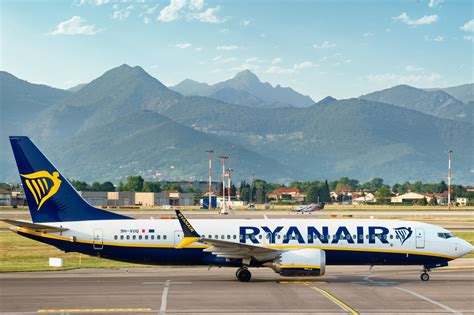
And so, come December 26, the airline will roar back to life at 6:00 AM, with sun-seeking tourists, homeward-bound families, and business travelers all once again boarding those familiar blue-and-yellow Boeing 737s.
Christmas may stop the clock at Ryanair, but only briefly. The skies await.