For most airline loyalists, the path to elite status seems straightforward: fly more, spend more, and earn more qualifying points. The more committed the passenger, the higher the status should climb. United Airlines follows that familiar model through its published Premier tiers and its invitation-only Global Services program. But beyond even those prestigious levels sits a far more mysterious designation: Chairman’s Circle.
Chairman’s Circle is not simply the next step for an exceptionally frequent United Airlines flyer. There is no published mileage target, no number of flight segments that unlocks it, and no amount of personal spending that guarantees an invitation. Instead, the status has historically been connected to something much larger than one passenger’s travel: corporate influence and the ability to direct millions of dollars in annual travel spending toward United.
That is why the often-repeated $5 million figure surrounding Chairman’s Circle can be so misleading. It does not mean a traveler can hand United $5 million and buy the status. Rather, historical descriptions of the program have associated eligibility with senior executives whose companies direct approximately $5 million or more in annual travel spending to United and its broader network. In other words, the airline is not necessarily rewarding the person who flies the most. It is rewarding the person who can influence who flies.
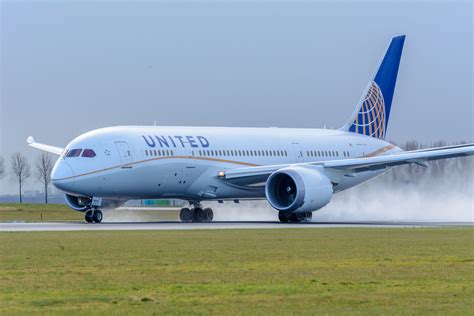
United Airlines Chairman’s Circle Sits Above Global Services
United Airlines’ publicly visible MileagePlus structure ends with Premier 1K, but experienced travelers know the loyalty hierarchy does not actually stop there. Above the published tiers is Global Services, an invitation-only level designed for customers whose value to the airline goes far beyond ordinary frequent-flyer activity.
Global Services is already exceptionally difficult to obtain. United does not publish a simple formula that tells travelers exactly how much they must spend or how many miles they must fly to receive an invitation. Instead, the airline evaluates a combination of revenue, travel patterns, loyalty, and commercial importance. Historically, some exceptionally valuable individual travelers and influential corporate customers have entered the program.
Yet Chairman’s Circle occupies an even more exclusive position. The program traces its roots to Continental Airlines and continued following Continental’s 2010 merger with United Airlines. Unlike Premier status, there is no public qualification table for Chairman’s Circle. Travelers cannot open their MileagePlus account, check a progress bar, and discover that they are 82% of the way toward becoming a member.
That secrecy is intentional. Chairman’s Circle has historically functioned less like a frequent-flyer tier and more like a strategic corporate relationship program. The distinction is crucial because it changes the question from “How much does this passenger spend?” to “How much business can this person influence?”
The $5 Million United Airlines Threshold Is Not a Personal Price Tag
The headline-grabbing $5 million figure deserves careful explanation. It is tempting to imagine an ultra-wealthy passenger purchasing $5 million of United tickets and immediately receiving Chairman’s Circle. That is not how the concept works.
Historically, the figure has been associated with annual corporate travel volume, meaning the total spending generated by a company’s employees and travelers. A chief executive, chairman, or other senior decision-maker could become important to United because that person had substantial influence over where the organization’s travel budget was directed.
Imagine a multinational company that spends $5 million every year on air travel. That spending might be divided among thousands of employee journeys, hundreds of business trips, premium-cabin tickets, domestic connections, and international itineraries. The individual executive does not personally fly all those miles. Instead, the executive may have the authority to determine which airline receives a substantial portion of the company’s travel business.
From United’s perspective, that distinction is enormous. A frequent flyer who spends $50,000 or $100,000 personally represents one valuable customer. A corporate decision-maker who can influence millions of dollars in annual bookings represents an entire ecosystem of customers.
Chairman’s Circle therefore reflects a form of economic influence rather than personal flying achievement. The airline is effectively recognizing the person behind a much larger revenue stream.
Why Flying 150 Segments Still May Not Be Enough
This is where Chairman’s Circle becomes particularly fascinating for traditional frequent flyers. Airline loyalty programs are built around the idea that activity should produce rewards. A traveler who spends half the year in airports might reasonably expect that extraordinary commitment to eventually unlock every available level.
But Chairman’s Circle does not operate according to that logic.
A traveler could potentially fly more than 100 segments in a year, purchase expensive business-class tickets, accumulate substantial MileagePlus earnings, and maintain a long relationship with United without creating a defined pathway into Chairman’s Circle. Even an extraordinary lifetime flying record does not automatically provide the missing qualification.
United has historically recognized certain four-million-mile flyers with lifetime Global Services, demonstrating just how far the ordinary loyalty structure can extend. But lifetime Global Services and Chairman’s Circle remain fundamentally different concepts.
The distinction may seem strange until corporate economics are considered. A road warrior might personally spend tens of thousands of dollars each year. Meanwhile, a chief executive who flies only a handful of times could influence whether a company sends thousands of employees on United, American Airlines, Delta Air Lines, or another carrier.
For the airline, the second customer may therefore have a much larger financial impact.
Chairman’s Circle Turns Airline Loyalty Into Corporate Strategy
At ordinary loyalty levels, the relationship between passenger and airline is relatively direct. The passenger flies, spends money, earns rewards, and receives benefits. Chairman’s Circle introduces another layer: the person receiving the benefits may represent the spending decisions of many other passengers.
That is why the program makes more sense when viewed through corporate travel strategy rather than frequent-flyer psychology.
Large companies negotiate travel arrangements with airlines because even small differences in fares, schedules, reliability, network coverage, and corporate benefits can produce enormous financial consequences. An executive responsible for travel policy can influence those decisions. Keeping that executive loyal to United can potentially protect millions of dollars in future bookings.
The status consequently becomes a business-development tool. United is not simply saying, “You flew enough, so you deserve better treatment.” It is effectively saying, “Your decisions can materially affect our business, so we want to build an exceptionally strong relationship with you.”
That also explains why Chairman’s Circle has historically been so scarce. Reports about the program have indicated that generally one senior executive from a qualifying company would receive the recognition. The objective was not to distribute elite benefits across an entire organization. It was to identify the individual with the greatest ability to influence the account.
What Chairman’s Circle Members Receive
Although Chairman’s Circle is primarily about the relationship, the benefits have historically been substantial. Members receive the core advantages associated with Global Services while gaining an additional layer of personalized attention.
That can include dedicated reservations support, highly individualized airport assistance, meet-and-greet services, and priority treatment during complicated journeys. The value becomes particularly obvious when travel does not go according to plan.
A delayed flight or missed connection is inconvenient for any traveler. For an executive whose schedule affects major business decisions, however, the consequences can be considerably more serious. Personalized assistance can help navigate irregular operations, tight connections, airport transfers, and other situations where conventional customer-service channels may be too slow.
Global Services members can also receive upgrade consideration beginning 120 hours before departure, giving them an advantage over lower Premier tiers. At major United hubs such as Newark Liberty International Airport and San Francisco International Airport, special assistance can become particularly valuable when a connection is tight and airport distances are substantial.
Historically, the benefits have also extended beyond the primary executive. The spouse of a Chairman’s Circle member has been associated with Global Services treatment, reinforcing the idea that United is cultivating a long-term relationship with the executive rather than merely rewarding individual flights.
Why Chairman’s Circle Is Different From Global Services
Global Services and Chairman’s Circle can appear almost identical from the perspective of an airport lounge or premium cabin, but their underlying purposes are different.
Global Services is fundamentally a top-tier customer recognition program. Chairman’s Circle is a corporate influence program.
There can certainly be overlap. A highly valuable corporate decision-maker might qualify for Global Services through the importance of the company’s account while also being considered for Chairman’s Circle. But the latter places greater emphasis on the person’s position and influence within the corporate relationship.
This explains the unusual hierarchy. A passenger could spend years chasing Global Services through increasingly valuable travel and still have no obvious mechanism for reaching Chairman’s Circle. The missing ingredient is not more miles. It is commercial authority.
In that sense, Chairman’s Circle represents the point where the traditional frequent-flyer ladder ends and airline sales strategy begins.
United Is Not Alone in Rewarding Powerful Decision-Makers
The idea behind Chairman’s Circle is not unique to United Airlines. Major carriers have long maintained invitation-only programs for customers whose value cannot be adequately measured by standard loyalty metrics.
American Airlines’ ConciergeKey, for example, operates above its published elite structure and is associated with exceptionally valuable customers and influential corporate accounts. Reported benefits have included personalized airport assistance and other premium services.
Qantas has its famously exclusive Chairman’s Lounge, which has become one of the aviation industry’s best-known invitation-only customer programs. Emirates has also operated its invitation-based iO program for exceptionally valuable customers.
The precise qualification standards and benefits vary from airline to airline, but the commercial philosophy is remarkably consistent. Airlines recognize that their most important customers are not always the people who fly the most.
Sometimes, the most valuable person is the one who decides where everyone else flies.
The Hidden Ceiling of Frequent-Flyer Programs
Chairman’s Circle reveals something important about modern airline loyalty programs: not all loyalty is measured in miles.
For individual travelers, miles, segments, qualifying dollars, and elite points remain highly visible indicators of progress. They create a sense of achievement because passengers can see their activity accumulating throughout the year. But airlines operate on a much larger financial scale.
A passenger might regard 100 flights as an extraordinary contribution to an airline. United may see a corporate executive who can influence $5 million in annual bookings as an entirely different category of customer.
That does not make the frequent flyer unimportant. In fact, the airline’s published elite system exists precisely because individual travelers generate enormous recurring revenue. But Chairman’s Circle demonstrates that revenue influence can matter more than personal activity at the very top of the commercial hierarchy.
The program also explains why spending $5 million personally is not the magic trick some headlines imply. There is no publicly advertised checkout page where a traveler can purchase the status. The important factor is the relationship between the executive, the company, and the airline’s broader corporate business.
Why United’s Most Powerful Status Cannot Simply Be Earned
The most intriguing part of Chairman’s Circle is therefore not its exclusivity. It is the fact that it deliberately breaks the normal rules of frequent-flyer status.
You can earn Premier status through qualifying activity. You can pursue Global Services by becoming an exceptionally valuable United customer. You can accumulate millions of lifetime miles and receive extraordinary recognition. But Chairman’s Circle is fundamentally invitation-driven.
That makes it almost impossible for an ordinary traveler to pursue strategically. There is no mileage calculator to optimize, no credit-card spending trick that guarantees an invitation, and no secret number of annual flights that opens the door.
The $5 million figure is better understood as a historical indicator of corporate account value, not a purchase price.
Ultimately, Chairman’s Circle illustrates the difference between being an airline’s best passenger and being one of its most important business partners. The first can be measured through flights, spending, and loyalty. The second can be measured by influence over an entire organization’s travel budget.
And that is the paradox at the heart of United Airlines’ most elusive status: the person who flies the most is not necessarily the person United needs to keep happiest. At the highest level, airline loyalty stops being a contest over who spends the most time in the air and becomes a calculation about who can move the most business.
For an individual frequent flyer, that may seem slightly unfair. For an airline managing billions of dollars in corporate travel, however, the logic is remarkably straightforward. Chairman’s Circle is not the reward for flying more than everyone else. It is the reward for being important enough to influence how everyone else flies.