London Heathrow Airport has spent decades trying to solve a problem that is becoming increasingly difficult to ignore: how can one of the world’s most important international hubs continue growing when its two runways are already operating close to their practical limits? The answer has repeatedly returned to the same controversial proposal—a third runway. After years of political arguments, legal challenges, competing expansion plans, and delays, the project has once again moved toward reality. The UK government backed Heathrow’s preferred expansion proposal in 2025, while the airport expects the new runway to become operational around 2035.
The timing is significant because Heathrow is no longer competing only with established European airports. Istanbul Airport, Dubai’s expanding aviation system, and Riyadh’s planned King Salman International Airport are all developing enormous amounts of additional capacity. These projects could reshape the international hub landscape during the next decade. Heathrow therefore faces a difficult question: is a third runway simply necessary to accommodate its own passenger growth, or does London genuinely need another runway to remain competitive with the Gulf’s increasingly ambitious mega-hubs?
Heathrow Is Already Operating Close to Its Two-Runway Limit
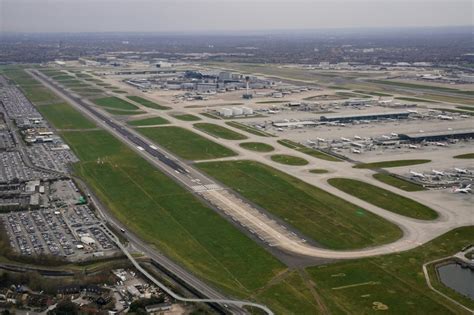
The most straightforward argument for Heathrow’s third runway is capacity. Heathrow is already one of the world’s busiest international airports, but its ability to increase the number of flights is constrained by its existing infrastructure. The airport has traditionally operated under an annual limit of roughly 480,000 flights, leaving airlines with relatively little opportunity to add services even when passenger demand exists.
That constraint becomes more significant when passenger numbers are considered. Heathrow handled more than 84 million passengers in 2025, while the airport expected to process approximately 83.6 million passengers during 2026. Around 40 million passengers passed through Heathrow during the first half of 2026 alone. Even with some demand affected by geopolitical disruption and weaker traffic on selected routes, the airport remains close to the practical limits of its current facilities.
The pressure is particularly obvious on the runways. Heathrow has frequently operated at or near 99% runway utilization, meaning that there is very little spare capacity available for airlines seeking additional departure or arrival slots. At an airport where slots are among the most valuable assets in global aviation, that shortage has strategic consequences. Airlines cannot simply decide to add another daily flight and expect Heathrow to provide the necessary runway capacity.
This is why the third runway matters even before considering competition from Dubai or Riyadh. Heathrow has a basic infrastructure problem. If demand continues to rise, the airport needs additional capacity simply to provide room for more flights, schedule recovery, new routes, and changes in airline strategy.
What Heathrow’s Third Runway Would Actually Add
The proposed northwest runway is intended to transform Heathrow’s operating capacity. The project would increase the airport’s annual flight capacity from roughly 480,000 movements to as many as 756,000, representing an increase of about 276,000 flights per year.
Passenger capacity could eventually rise to approximately 150 million passengers annually, compared with the roughly 85 million passengers that the existing infrastructure can accommodate today. That is a dramatic increase, although reaching the full passenger figure would depend on the development of terminals, aircraft utilization, airline demand, surface access, and other supporting infrastructure.
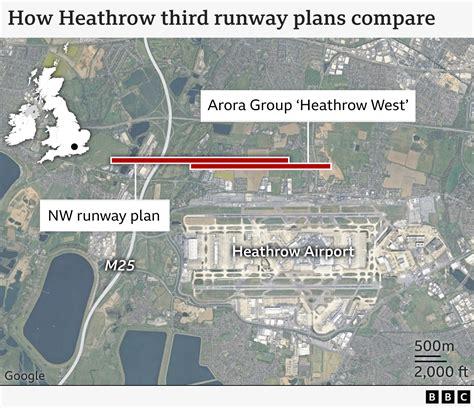
The expansion plan also includes substantial terminal investment. Heathrow has proposed facilities including the T5X complex, alongside additional cargo infrastructure and major engineering work. The preferred Heathrow Airport Holdings proposal involves an approximately 11,483-foot, or 3,500-meter, runway capable of accommodating aircraft across the airport’s fleet mix, including very large aircraft such as the Airbus A380.
The scale of the project explains why it has remained politically contentious. Heathrow’s preferred plan was estimated at approximately $66 billion (£49 billion) and includes major engineering work, including placing part of the M25 motorway into a tunnel. An alternative proposal from the Arora Group, known as Heathrow West, would have used a shorter 9,186-foot runway and a different terminal-development strategy.
The government ultimately selected Heathrow Airport Holdings’ proposal in November 2025. The airport now expects the project to be completed during the mid-2030s, placing the third runway directly in the period when competition between major global hubs could become particularly intense.
Istanbul Has Already Demonstrated How Quickly Heathrow’s Position Can Change
For decades, Heathrow’s status as Europe’s leading international gateway appeared relatively secure. That assumption has become less comfortable as Istanbul Airport has expanded.
The Turkish hub started 2026 with a brief lead over Heathrow in monthly passenger traffic. Istanbul handled approximately 6.9 million passengers in January, compared with Heathrow’s 6.5 million. Heathrow subsequently regained the lead, and by the end of June it had processed approximately 40 million passengers compared with Istanbul’s 39.84 million.
The gap, however, was extremely small. Istanbul moved ahead again a month later and took the position of Europe’s busiest airport. The result was symbolically important even though monthly rankings can change because of seasonality, scheduling, and market conditions. Heathrow itself responded by arguing that the case for expansion had become increasingly clear.
More importantly, Istanbul is not finished expanding. The airport is preparing a fourth runway, which is expected to increase its annual passenger capacity from around 90 million to approximately 120 million. Longer-term plans envisage capacity reaching as much as 200 million passengers per year.
That does not mean Heathrow must reproduce Istanbul’s exact development model. The two airports have different geographic markets, airline structures, transfer patterns, and strategic roles. But Istanbul demonstrates what can happen when a major international hub has substantial room to add infrastructure while an established competitor is constrained by its physical footprint.
Dubai’s Mega-Airport Plans Are On Another Scale
The strongest comparison comes from the Gulf. Dubai’s aviation strategy is built around expansion on a scale that Heathrow simply cannot replicate within its existing airport site.
Dubai Airports is developing Al Maktoum International Airport, also known as Dubai World Central, as the future centerpiece of the emirate’s aviation system. The first major phase is expected to open in the early 2030s and is planned to provide capacity for approximately 150 million passengers per year.
The ultimate vision is substantially larger. Al Maktoum International is planned to accommodate as many as 260 million passengers annually. Dubai intends to gradually move more operations away from Dubai International as the new airport develops, creating an enormous amount of additional capacity for international connections, long-haul services, cargo, and future airline growth.
This is an important distinction. Heathrow’s third runway is primarily an attempt to unlock growth at an airport that is already heavily constrained. Dubai’s strategy is closer to creating an entirely new aviation platform with enough capacity to support decades of expansion.
Consequently, saying Heathrow needs a third runway merely to “keep up” with Dubai can be misleading. A third runway would not give Heathrow anything approaching Dubai’s planned capacity. Instead, it would help prevent the UK hub from becoming increasingly constrained while other international gateways have substantial room to expand.
Riyadh Is Building Another Major Global Aviation Hub
Dubai is not the only Gulf city planning enormous aviation infrastructure. Saudi Arabia’s King Salman International Airport is another major project that could alter the competitive landscape.
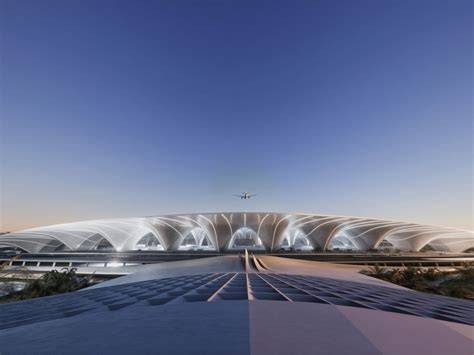
The airport is being developed by Saudi Arabia’s Public Investment Fund as part of the country’s Vision 2030 strategy. The plan calls for six runways and capacity for approximately 120 million passengers annually by 2030. By 2050, the long-term target is approximately 185 million passengers per year.
Again, this is not a direct one-for-one comparison with Heathrow. Riyadh is developing capacity to support a rapidly changing aviation market, tourism strategy, business connectivity, and the broader economic transformation associated with Vision 2030. Heathrow, by contrast, is expanding an established hub that already has a huge international passenger base and highly valuable airline slots.
Nevertheless, the numbers illustrate the scale of infrastructure investment occurring elsewhere. If Heathrow remains restricted to two runways while Istanbul, Dubai, and Riyadh continue adding capacity, the UK’s principal international airport could face increasingly difficult choices about which airlines, routes, and schedules can receive scarce runway slots.
A Third Runway Could Change Heathrow’s Airline Strategy
Additional runway capacity is not simply about increasing the number of aircraft movements. It could change the kinds of services airlines can operate from Heathrow.
Today, the scarcity of slots makes every additional movement particularly valuable. Airlines must carefully balance long-haul services, regional connectivity, frequency, aircraft size, and commercial returns. A carrier may want to launch a new route but be unable to secure an appropriate slot. Another airline may want to increase a service from one daily flight to two but face the same constraint.
A third runway would create more flexibility.
Heathrow says the expansion could support at least 30 new routes, while giving existing airlines greater scope to increase frequencies. More capacity could also improve operational resilience because an airport operating permanently close to its maximum has less room to absorb disruption.
The effect on passengers could be equally significant. More available capacity can create opportunities for additional airline competition, new destinations, and different schedules. Heathrow has also argued that expansion could contribute to lower fares by giving airlines more opportunities to compete for passengers.
However, the actual outcome would depend heavily on airline decisions. A new runway does not automatically create 276,000 additional profitable flights. Airlines would determine where aircraft are deployed based on demand, fleet availability, operating costs, slot economics, and competitive conditions.
The Economic Case Is More Complicated Than Heathrow’s Capacity Argument
Heathrow has increasingly presented the third runway as a national economic project. Analysis commissioned by the airport from Frontier Economics estimates that the expansion could add around 0.43% to UK GDP by 2050, with approximately 60% of the benefits occurring outside London and the South East.
The airport also says the expansion could support more than 108,000 jobs across the UK, combining construction, aviation, supply-chain, and wider economic effects. Heathrow is already one of the UK’s largest single-site employers, supporting around 80,000 jobs.
Yet the economic impact is not universally expected to be positive for every region. UK Department for Transport modeling has suggested that expansion at Heathrow could reduce passenger numbers at some regional airports compared with a scenario without a third runway.
Birmingham Airport provides one example. The modeling suggests it could handle approximately 7.5 million fewer passengers annually by 2050 under a Heathrow-expansion scenario than it would without the third runway. The New Economics Foundation has separately estimated that almost 10,000 jobs could potentially be displaced in the West Midlands, while around 15,200 aviation-related jobs could move from other UK regions toward London and the South East.
These projections illustrate an important point: Heathrow’s expansion can generate additional economic activity while also redistributing aviation activity within Britain. The economic case is therefore more complicated than simply counting new jobs created at Heathrow.
Does Heathrow Actually Need to Match the Gulf Mega-Hubs?
The central question is not whether Heathrow can physically match Dubai or Riyadh. It cannot, and there is little reason to suggest that it needs to.
The more relevant issue is whether Heathrow will have enough capacity to maintain its role as the UK’s primary international hub while competing in a global market where other airports have much greater opportunities to expand.
A third runway would provide that additional room. It would not transform Heathrow into a 150-million-passenger airport overnight, nor would it guarantee that every new slot would be filled. Instead, it would remove one of the most important structural limitations facing the airport.
That distinction matters because Heathrow’s competitive advantage is not based solely on runway numbers. London itself is a major global market. Heathrow benefits from a large local population, substantial corporate demand, strong tourism flows, extensive long-haul connectivity, and the presence of major airlines such as British Airways and Virgin Atlantic.
The airport therefore does not necessarily need to become the largest airport in the world. It needs sufficient capacity to serve the market it already has and to accommodate future demand without forcing airlines to take growth elsewhere.
Why 2035 Is Such an Important Deadline
By the time Heathrow’s third runway is expected to become operational, the international aviation landscape could look very different.
Istanbul will have more runway capacity. Dubai will be advancing the development of Al Maktoum International. Riyadh will be building toward a huge six-runway airport system. Other Asian, Middle Eastern, and European hubs will also continue investing in terminals, runways, aircraft connectivity, and passenger facilities.
Heathrow therefore faces a strategic choice between accepting permanent capacity constraints or investing in additional infrastructure before those constraints become an even larger competitive disadvantage.
The third runway is not necessarily about beating Gulf mega-hubs at their own game. It is about preventing Heathrow’s infrastructure from becoming the limiting factor in London’s international connectivity.
That is arguably the strongest case for the project. Heathrow already has enormous demand, valuable airline relationships, and a global network. The problem is that its two-runway system leaves very little room to grow.
Heathrow’s Third Runway Is About Capacity First, Competition Second
The evidence points to a nuanced conclusion. Heathrow does not need a third runway simply because Dubai, Riyadh, or Istanbul are building larger airports. Those hubs operate under different circumstances and have expansion strategies that are not directly interchangeable with Heathrow’s.
But Heathrow’s existing capacity constraints are increasingly difficult to separate from the global competitive environment. An airport operating near 480,000 annual movements with runway utilization close to capacity has limited room to respond when international demand grows. Meanwhile, competing hubs are adding infrastructure that gives their airlines greater flexibility.
The proposed third runway would increase Heathrow’s potential annual flight capacity to around 756,000 movements and passenger capacity toward 150 million. It could support new routes, additional frequencies, greater airline competition, and improved operational flexibility. At the same time, its economic effects could be uneven across the UK, with some regional airports potentially losing traffic as more aviation activity becomes concentrated around Heathrow.
By 2035, therefore, the question may be less about whether Heathrow can become as large as the Gulf mega-hubs and more about whether it can afford to remain constrained while they expand. The third runway would not guarantee Heathrow’s future position, but it would give the airport something its current two-runway system increasingly lacks: room to grow.