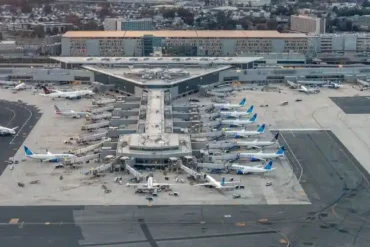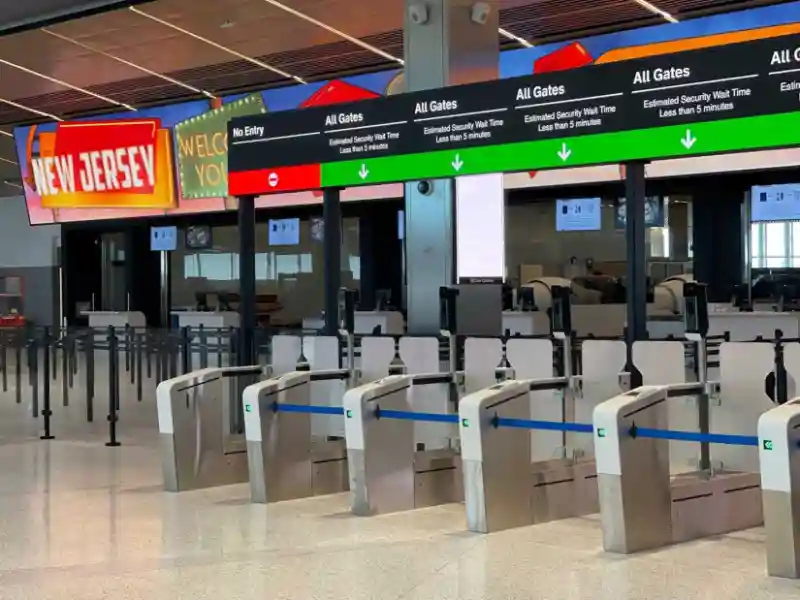
Newark Liberty International Airport (EWR) is preparing to expand its newest terminal once again, with 14 additional gates and new passenger facilities planned for Terminal A. The latest project is expected to break ground soon and open in 2029, just six years after the terminal’s most recent major construction phase was completed in the summer of 2023.
The expansion reflects the rapid growth and changing operational demands at one of the New York metropolitan area’s major airports. Terminal A currently has 33 gates following the multibillion-dollar redevelopment completed in 2023, but the Port Authority of New York and New Jersey now believes additional capacity is necessary as Newark prepares for another major transformation.
The new work will focus on both sides of Terminal A. According to details reported by Zach Griff, six new gates are planned for the north side and two additional gates for the south side, while the broader project will also introduce passenger amenities including concessions, restrooms, and potentially lounges. The expansion is part of the much larger $45 billion EWR Vision Plan, which encompasses terminals, runways, transportation infrastructure, and other airport improvements.
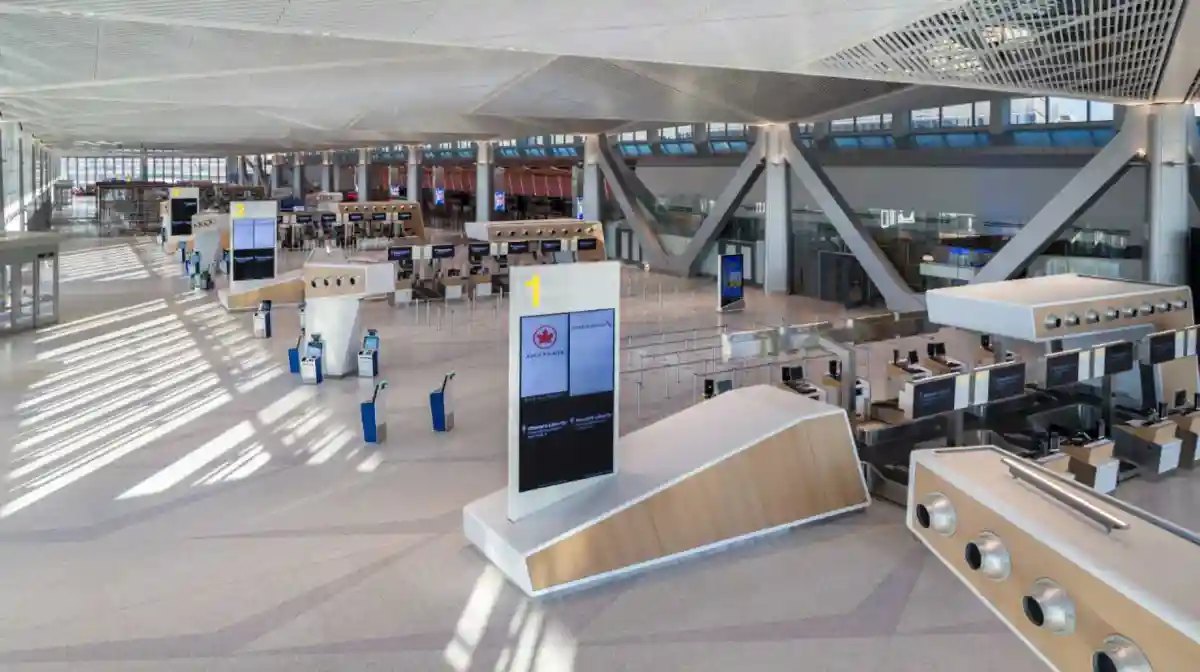
$110 Million Expansion Will Add Gates and Passenger Space
The Port Authority is investing approximately $110 million in the North and South Pier expansions, which will increase Terminal A’s footprint by about 25,000 square feet. Although the investment is considerably smaller than the $2.7 billion redevelopment that transformed Terminal A before its 2023 reopening, the new project is designed to build on that infrastructure rather than replace it.
The additional gates will provide more flexibility for aircraft operations while helping accommodate passenger growth. Inside the expanded areas, travelers can expect more dining choices and improved passenger facilities, while dynamic signage at TSA checkpoints is also planned to make airport navigation easier.
Terminal A will receive additional seating designed around different passenger needs. The plans include family-friendly seating, benches, lounges, and workstations, giving travelers more places to wait between flights. Interactive children’s play areas are also planned, adding amenities that can make long airport waits more manageable for families.
The Port Authority also intends to give the terminal a stronger local identity. Installations featuring the work of 29 local artists will be incorporated into the expanded and renovated spaces, continuing Terminal A’s effort to present a more modern passenger environment while highlighting New Jersey culture.
Newark Airport Faces a Much Larger Construction Program
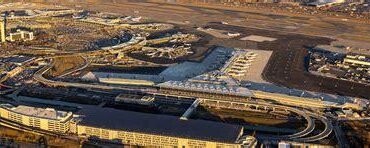
The Terminal A expansion is only one part of an enormous construction program taking place at Newark. The airport is simultaneously preparing for major changes to Terminals B and C, its runways, road system, taxiways, and public transportation network.
Terminal B is ultimately planned for demolition and reconstruction, while Terminal C is scheduled for a significant modernization. These projects will change how passengers move through the airport and how airlines operate from its terminals.
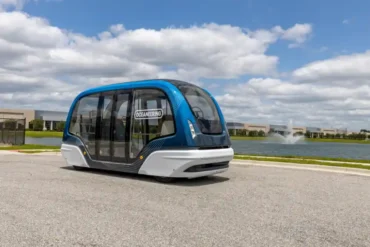
A major component of the landside transformation is a new $3.5 billion AirTrain system, which is expected to begin operations in 2030. Improved rail access should reduce pressure on roadways and give passengers another way to reach the airport without relying on private vehicles or airport curbside traffic.
Roadways are also being redesigned. Newark plans to create more independent circulation loops for ground vehicles while reorganizing airport traffic patterns. On the airside, an additional major taxiway is planned to complement improvements to Runway 4L/22R, helping reduce some of the congestion created by the airport’s complicated taxiway layout.
Limited Space Makes Newark’s Expansion More Complicated
Newark faces a challenge that many large airports do not: limited available real estate. The airport must increase capacity and improve efficiency without having unlimited space to spread terminals, taxiways, roadways, and aircraft facilities outward.
That constraint makes operational efficiency especially important. Newark’s airfield contains numerous taxiway intersections and complex aircraft movements, creating potential bottlenecks when traffic levels rise. The airport’s infrastructure program therefore goes beyond simply adding gates. It is intended to improve how aircraft, passengers, vehicles, and baggage move through the entire facility.
The additional Terminal A gates should provide more capacity at the passenger-facing level, while improvements elsewhere are intended to reduce the operational pressure surrounding them. Better security checkpoint circulation, additional jet bridges, expanded passenger areas, and improved landside connections could collectively make the airport easier to navigate.
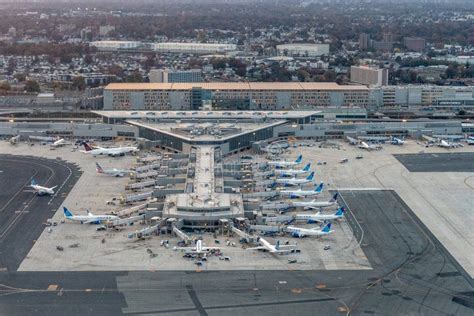
A New Terminal A Expansion Within a Six-Year Window
The fact that Newark is expanding Terminal A only a few years after its major redevelopment illustrates how quickly airport capacity requirements can change. The 2023 project delivered a completely modernized facility with 33 gates, but passenger and airline demand continues to evolve.
The new 14-gate plan is therefore less about rebuilding what was recently completed and more about adding capacity around an already modern foundation. If the project remains on schedule, the additional facilities will open in 2029, giving Newark another major increase in terminal capacity before several of its other large infrastructure projects reach completion.
Taken together, the projects represent an attempt to reshape Newark into a more efficient megahub despite its physical constraints. Terminal A’s next expansion may appear modest beside the airport’s multibillion-dollar redevelopment plans, but the additional gates, passenger amenities, transportation improvements, and airfield changes are all connected to the same objective: increasing Newark Liberty’s ability to handle future traffic while reducing the congestion that has long affected the airport.