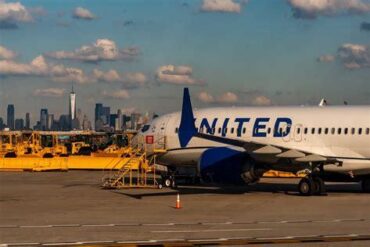
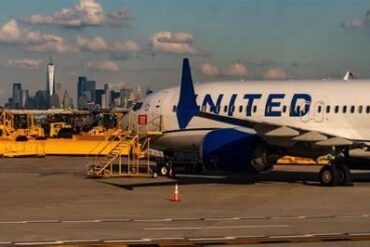
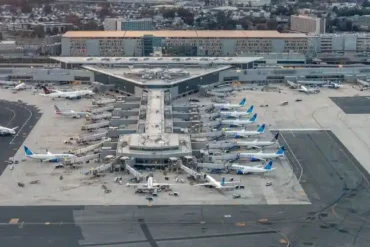
Newark Liberty International Airport (IATA: EWR, ICAO: KEWR) stands as a cornerstone of the New York metropolitan area’s air transportation network, strategically located just 4.5 miles south of downtown Newark and 9 miles from Manhattan. Jointly owned by the cities of Newark and Elizabeth, and leased to the Port Authority of New York and New Jersey, EWR plays a critical role in connecting the region to the world. As of 2024, it has solidified its status as the second-busiest airport in the region, handling 48.85 million passengers, 414,000 aircraft operations, and 711,000 short tons of cargo annually. The airport serves as a primary hub for FedEx Express and United Airlines, the latter accounting for an impressive 63% of the airport’s total traffic, alongside a robust presence of Spirit Airlines.
A Historic Trailblazer in Aviation
EWR’s origins date back to 1928, when a burgeoning need for a closer airport to New York City sparked the construction of Newark Metropolitan Airport on 68 acres of reclaimed marshland. It officially opened its doors on October 1, 1928, marking a historic milestone as the first commercial airport in the United States with a paved runway and the first major airport serving the New York area.
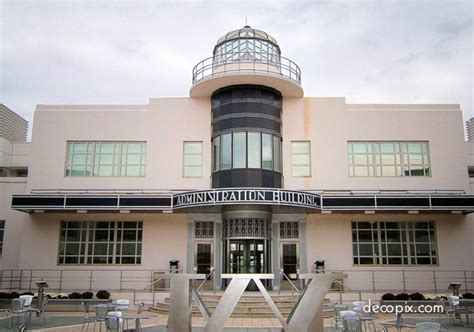
The 1930s saw a cascade of aviation milestones at EWR, starting with the establishment of the nation’s first air traffic control tower and weather station in 1930. In 1935, the Art Deco-style Administration Building—known as Building One—was inaugurated by none other than aviation icon Amelia Earhart, a testament to the airport’s rising prominence. Nighttime operations were introduced in 1952, further solidifying EWR’s role as a pioneering force in U.S. aviation.
The War Effort and Postwar Expansion
During World War II, Newark Airport was transformed into a vital logistics hub for the Army Air Corps, with the Atlantic Overseas Air Service Command headquartered on-site. This period witnessed the airport’s transformation from a commercial facility into a military stronghold, integral to the Allied war effort.
Post-war, EWR reopened in 1946, and by 1948, the Port Authority had assumed operational control. This ushered in a period of rapid development, including new runways, terminals, and a state-of-the-art cargo center. In 1973, the airport was renamed Newark International Airport, aligning its identity with its growing international reach.
The Jet Age and Infrastructure Milestones
The Jet Age brought transformative changes to Newark Liberty. Terminal A and Terminal B debuted in 1973, followed by Terminal C in 1988. The introduction of the monorail system, now known as AirTrain Newark, in 1996 revolutionized passenger connectivity within the airport. EWR continued to grow as a hub for United Airlines, particularly after its merger with Continental Airlines, and in 2018, it made headlines with the launch of a nonstop service to Singapore’s Changi Airport, the world’s longest flight at the time.
In the wake of the September 11 attacks, the airport was renamed Newark Liberty International Airport in 2002 to honor the victims and symbolize resilience. A 9/11 memorial was unveiled in 2021, offering a somber tribute to a pivotal moment in history.
Modernization and Future Vision
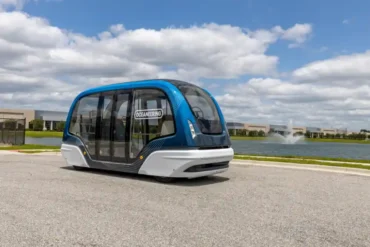
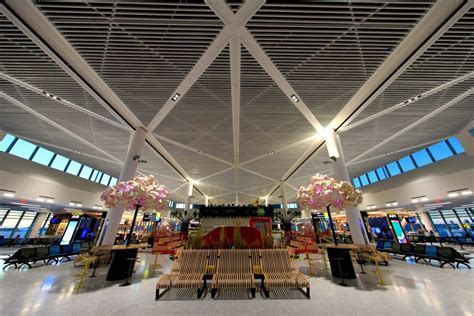
Recent years have witnessed ambitious redevelopment efforts, most notably the $2.7 billion construction of a new Terminal A, completed between 2016 and 2022. Featuring 33 gates, a solar-paneled roof, and award-winning design (Prix Versailles and 5-star Skytrax accolades), this terminal exemplifies the airport’s commitment to sustainability and passenger comfort. Looking ahead, EWR’s Vision Plan (2022–2065) outlines a comprehensive blueprint for the airport’s evolution. This includes the replacement of Terminal B with a new international terminal, significant enhancements to Terminal C, and large-scale improvements to taxiways, landside infrastructure, and multimodal access. The AirTrain replacement project, slated for 2029, is another cornerstone of this vision, aimed at modernizing intra-airport transit.
Facilities and Technical Specifications
Newark Liberty spans an impressive 2,027 acres and boasts three grooved runways:
- Runway 4L/22R: 11,000 × 150 ft
- Runway 4R/22L: 9,999 × 150 ft
- Runway 11/29: 6,725 × 150 ft
Additionally, the airport operates a helipad (H1: 54 × 54 ft). The terminal complex comprises 125 gates distributed across:
- Terminal A: 33 gates (common-use)
- Terminal B: 24 gates (Port Authority-operated, catering mainly to foreign carriers)
- Terminal C: 68 gates (United Airlines’ Global Gateway)
Cargo facilities at EWR are extensive, covering roughly 1 million square feet and 290 acres adjacent to the Port Newark–Elizabeth Marine Terminal. The airport serves as a critical logistics node with FedEx, United Airlines, and UPS facilities on-site.
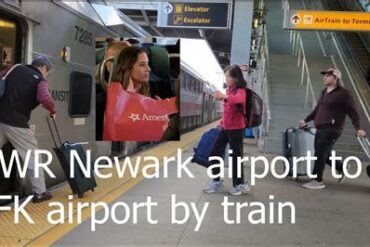
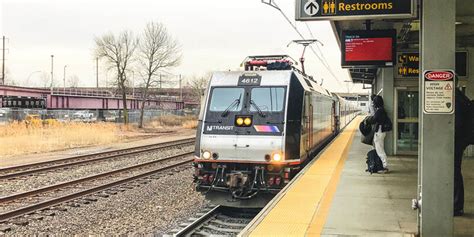
Ground transportation is seamlessly integrated via the AirTrain Newark, linking passengers to NJ Transit (Northeast Corridor and North Jersey Coast Line) and Amtrak’s Northeast Regional and Keystone services. While a proposed extension of the PATH system has been deferred, a pedestrian bridge connecting the airport to regional transit is expected to be operational by 2026.
Strategic Importance and Regional Impact
As a critical gateway to one of the world’s busiest urban centers, Newark Liberty International Airport plays an indispensable role in the global aviation landscape. Its strategic location and vast infrastructure make it a linchpin in the economic vitality of the New York metropolitan region. The airport’s robust cargo operations also complement its passenger services, positioning EWR as a dual-strength facility that supports both tourism and commerce.
With continuous improvements and a forward-thinking master plan, Newark Liberty is poised to maintain its status as a premier international airport. Its storied history, commitment to innovation, and strategic modernization ensure that it will remain a pivotal player in global air travel for decades to come.