For more than two decades, the Boeing 777-300ER has been one of the defining aircraft of long-haul commercial aviation. Its combination of enormous passenger capacity, long range, and relatively efficient twin-engine configuration made it a natural choice for airlines operating some of the world’s busiest international routes. Yet the production story of this aircraft is now effectively over. Boeing has moved on to the 777X, leaving only a handful of old-generation 777s on its order books.
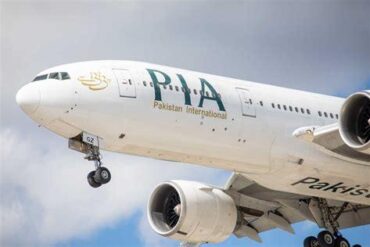
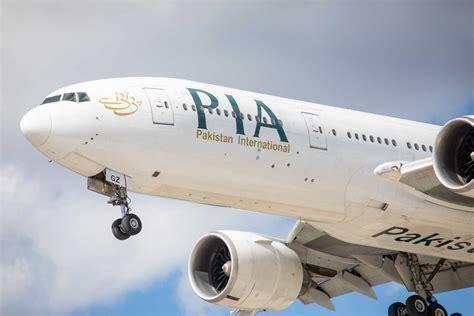
At first glance, Boeing’s records suggest that the final chapter of the passenger 777-300ER is not quite finished. The manufacturer has continued to list five unfulfilled 777-300ER orders for Pakistan International Airlines (PIA). If those aircraft were actually built and delivered, they would represent the final passenger examples of the second-generation Triple Seven. However, the age of the order, PIA’s changing circumstances, and the fact that Boeing appears to have already delivered what may have been the final aircraft of the type have created an unusual situation.
The story is particularly interesting because the last passenger 777-300ER may already have left Boeing’s production line. In 2024, Boeing recorded delivery of a single 777-300ER to Altavair LP, an aircraft leasing and asset-management company. That aircraft was not delivered directly to a conventional airline, leaving its eventual operator less obvious. The combination of that delivery and the absence of subsequent passenger 777-300ER deliveries has led industry observers to question whether PIA’s five aircraft remain genuine production commitments or are simply remnants of an old order that has yet to be formally removed.
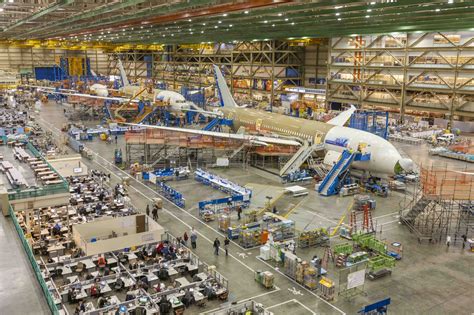
Pakistan International Airlines Has Boeing’s Final Five 777-300ER Orders
According to Boeing’s order data referenced in the supplied material, the manufacturer has 43 previous-generation Boeing 777s remaining on its books. Of these, 38 are 777 freighters, while the remaining five are passenger 777-300ERs attributed to Pakistan International Airlines.
The PIA order dates back to 2012, when reports indicated that the Pakistani flag carrier had finalized an agreement for five Boeing 777-300ERs. At the time, the order was reported to be worth approximately $1.5 billion, while PIA also secured arrangements involving another five aircraft of the same type. The plan was part of a broader effort to expand the airline’s widebody fleet and bring its total number of Boeing 777s to 14.
More than a decade later, those five aircraft have never appeared in PIA’s fleet. That makes the order unusual even by the standards of long-running commercial aircraft backlogs. Airline fleet strategies can change dramatically over such a period, and the circumstances surrounding PIA have changed considerably since the order was originally announced.
The 777-300ER itself has also moved through an extraordinary production cycle during those years. Boeing delivered 76 examples in 2015, followed by 88 in 2016 and 65 in 2017. Production then declined sharply, with 32 deliveries in 2018 and only 19 in 2019. The global aviation crisis accelerated the decline. Boeing delivered four passenger 777-300ERs in 2020, seven in 2021, three in 2022, none in 2023, and just one in 2024.
That 2024 aircraft is therefore particularly significant. If the PIA order is ultimately canceled or otherwise removed from Boeing’s backlog, the 777-300ER delivered to Altavair could stand as the final passenger 777-300ER ever produced.
Boeing’s Passenger 777-300ER Production Has Almost Completely Disappeared
The scale of the production decline illustrates how dramatically the market has changed. During the 777-300ER’s strongest years, Boeing was producing dozens of the aircraft annually for airlines around the world. Major carriers used the type to replace older four-engine aircraft while maintaining large-capacity long-haul networks.
The aircraft became especially important for airlines operating high-density international routes. Its twin-engine configuration allowed carriers to offer the capacity of a very large widebody while benefiting from advances in engine technology and long-range twin-engine operations. Airlines including Emirates, Qatar Airways, Cathay Pacific, Singapore Airlines, Air France, British Airways, and many others incorporated the 777-300ER into their long-haul fleets.
But the commercial aircraft market did not stand still. Airbus introduced the A350 family, while Boeing developed the 787 Dreamliner and eventually the 777X. These newer aircraft introduced more efficient engines, composite structures, and improved economics. For many airlines, the question was no longer whether to order another 777-300ER, but whether a newer-generation aircraft could perform the same mission with lower fuel consumption and operating costs.

By 2020, Boeing’s passenger 777-300ER deliveries had become extremely limited. From 2020 onward, only 15 passenger examples were delivered, according to the reference material. Three went to Aeroflot, three to BOC Aviation, two to United Airlines, and two to KLM, with the remaining deliveries accounting for the small number of aircraft produced during the final years of the program.
The freighter version has followed a very different path. Boeing delivered 105 777Fs during the same period, including 13 in 2024 alone. The strong demand for cargo aircraft has allowed Boeing to keep the previous-generation 777 production line relevant even as passenger production has effectively ended.
Altavair May Have Taken Delivery of the Final Passenger 777-300ER
The 2024 delivery to Altavair LP adds another layer to the mystery. Altavair is not a conventional passenger airline. It specializes in aircraft leasing and aviation asset management, acquiring new and used aircraft and arranging transactions with operators around the world.
The company has completed more than $13.5 billion in commercial aircraft lease transactions, involving more than 300 Boeing and Airbus aircraft. Its activities include direct manufacturer transactions as well as aircraft leasing, sales, and freighter-related arrangements. Altavair operates from offices in Seattle, Dublin, London, and Singapore.
That business model explains why Boeing could deliver a 777-300ER to Altavair rather than directly to an airline. The lessor can acquire the aircraft and subsequently place it with an operator under a lease agreement.
The identity of the ultimate operator of the 2024-built aircraft has therefore been less straightforward. Altavair has also been involved in transactions involving Ethiopian Airlines, including the arrangement of an ex-China Southern Airlines 777-300ER. In that case, the aircraft was acquired for Ethiopian’s use through a structure involving Altavair, Marathon as capital provider, and Ethiopian as the lessee.
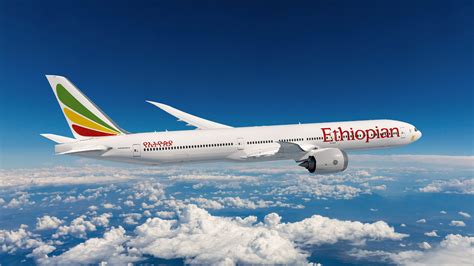
Ethiopian Airlines is particularly relevant because it continues to operate the 777-300ER and has maintained a broad Boeing widebody fleet. The African carrier operates 777 aircraft alongside Boeing 787 Dreamliners and Airbus A350s, giving it substantial experience with modern long-haul twin-engine aircraft.
However, the existence of such leasing transactions does not automatically establish that Ethiopian is the customer for Boeing’s final 777-300ER. The available information does not clearly identify the ultimate operator of the 2024 Altavair aircraft, which is why the aircraft remains an intriguing final chapter in the 777-300ER story.
PIA’s Existing Boeing 777 Fleet Is Much Smaller Than Planned
The situation becomes even more striking when PIA’s existing fleet is examined. The airline originally acquired four Boeing 777-300ERs, with the first arriving in December 2006 and the final aircraft arriving in January 2007.
Those aircraft are now approaching two decades of service. According to the reference material, PIA’s four 777-300ERs have an average age of about 18.9 years, and only one was active at the time of the cited fleet data. Two aircraft, registered AP-BHW and AP-BID, had been stored at Karachi International Airport since 2020 and 2021, respectively. Another, AP-BMS, was undergoing maintenance, while AP-BHV remained active.
PIA also operates the other major passenger versions of the 777 family. Its fleet includes two 777-200LRs and six 777-200ERs, although several of those aircraft have also been parked. The airline therefore has considerable experience with the 777 family, but its actual operating fleet has become much smaller than the ambitious expansion envisioned when the five additional 777-300ERs were ordered.
This helps explain why the long-standing order has attracted renewed attention. An order finalized in 2012 exists in a dramatically different aviation environment today. The aircraft that PIA intended to add more than a decade ago are now part of a generation that Boeing itself has largely replaced.
The 777X Is Taking Over the Role of the 777-300ER
The end of the 777-300ER passenger program is closely connected to the arrival of the Boeing 777X. Boeing designed the new aircraft family to continue the 777 concept while incorporating a new wing, updated engines, advanced systems, and improved aerodynamics.
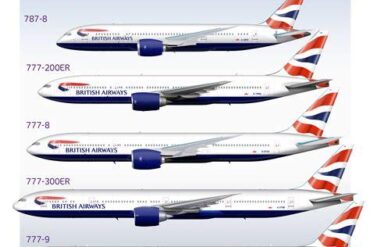
The 777X includes the 777-8 and 777-9 passenger variants as well as a freighter version. The larger 777-9 is particularly relevant to the legacy 777-300ER because it occupies a similar high-capacity segment while offering newer technology.
Boeing has reported hundreds of firm 777X orders from international airlines. Three Middle Eastern carriers account for a substantial portion of those commitments, with Emirates ordering 270 aircraft, Qatar Airways ordering 124, and Etihad ordering 10 in the figures cited in the reference material. Ethiopian Airlines has also ordered eight 777-9s, with options for another 12.

The 777-8 is designed around a typical two-class capacity of 395 passengers, while the 777-9 can accommodate approximately 426 passengers in a typical two-class configuration. The 777-8 also offers greater range, with Boeing figures cited at around 8,745 nautical miles, compared with approximately 7,285 nautical miles for the 777-9.
This makes the transition more than a simple replacement of one aircraft model with another. Boeing is effectively moving its largest passenger twin-engine aircraft into a new technological generation while retaining the 777 name and much of the family’s market identity.
Why the Final Five PIA Aircraft May Never Be Built
The biggest unanswered question is what will happen to PIA’s five remaining 777-300ER orders. Boeing can continue to list an order even when questions surround its eventual fulfillment, and the presence of an aircraft in an order book does not necessarily mean that production is imminent.
In this case, the passage of more than a decade without delivery is significant. The airline’s fleet requirements have changed, the 777-300ER has effectively left passenger production, and Boeing is now preparing to transition customers to the 777X.
There is also the simple reality of production economics. Restarting or maintaining a passenger 777-300ER production program for a handful of aircraft would make little strategic sense when Boeing’s commercial focus has shifted toward the 777X. The manufacturer can continue producing 777 freighters because cargo demand supports the business case, but that does not mean the passenger variant can be revived in the same way.
For that reason, the five PIA aircraft may ultimately disappear from Boeing’s backlog without ever receiving a factory delivery date. Until Boeing formally removes them, however, they remain the world’s final unfulfilled passenger 777-300ER order in the published figures referenced here.
The End of an Era for Boeing’s Triple Seven
The 777-300ER’s story is unusual because the aircraft is hardly obsolete in airline fleets. Hundreds remain in commercial service, and many are likely to continue flying for years. The end of production therefore does not represent the end of the aircraft’s operational life.
Instead, it marks the end of a manufacturing era. The 777-300ER helped establish the modern long-haul twin-engine widebody as the backbone of international aviation, replacing many four-engine aircraft on routes where airlines once relied on enormous capacity and long range.
Now, Boeing is preparing to move that role to the 777X. The five PIA aircraft sitting on the order book are therefore more than an old commercial agreement. They represent a final unresolved link between Boeing’s previous-generation flagship and the aircraft family that is intended to succeed it.
If those orders are eventually canceled or removed, the 2024 Altavair delivery could retrospectively become the final passenger Boeing 777-300ER ever built. The aircraft would have quietly closed one of Boeing’s most successful production chapters without the kind of ceremonial final delivery that normally accompanies the end of a major airliner program. And that may be the most fitting detail of all: after dominating long-haul aviation for years, the 777-300ER could disappear from Boeing’s production records not with a dramatic farewell, but simply with one last aircraft and five orders that were never fulfilled.