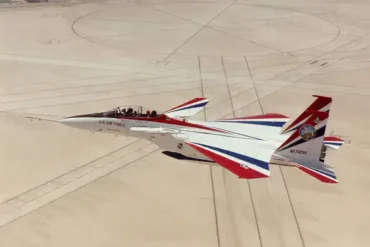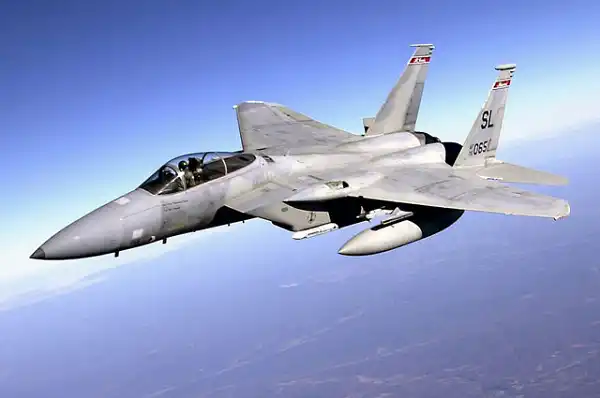
The F-15N Sea Eagle was an ambitious concept proposed by McDonnell Douglas during the early 1970s, aimed at meeting the U.S. Navy’s need for a carrier-based fighter. This aircraft, based on the legendary F-15 Eagle design, was developed to challenge the dominance of the F-14 Tomcat, the U.S. Navy’s primary carrier fighter at the time. Despite its innovative design and potential, the F-15N Sea Eagle never entered service, and its technological and operational flaws ultimately led to its rejection. This article explores the F-15N Sea Eagle in detail, focusing on its development, features, competition with the F-14, and legacy in the world of fighter aircraft.
The Birth of the F-15N Sea Eagle
In the early 1970s, McDonnell Douglas recognized the potential for the F-15 Eagle, originally developed for the U.S. Air Force as an air superiority fighter, to be adapted into a naval version capable of operating from aircraft carriers. The U.S. Navy was in need of a replacement for its F-4 Phantom II and was exploring various options, including the more recent F-14 Tomcat by Grumman.
Design Modifications for Carrier Operations
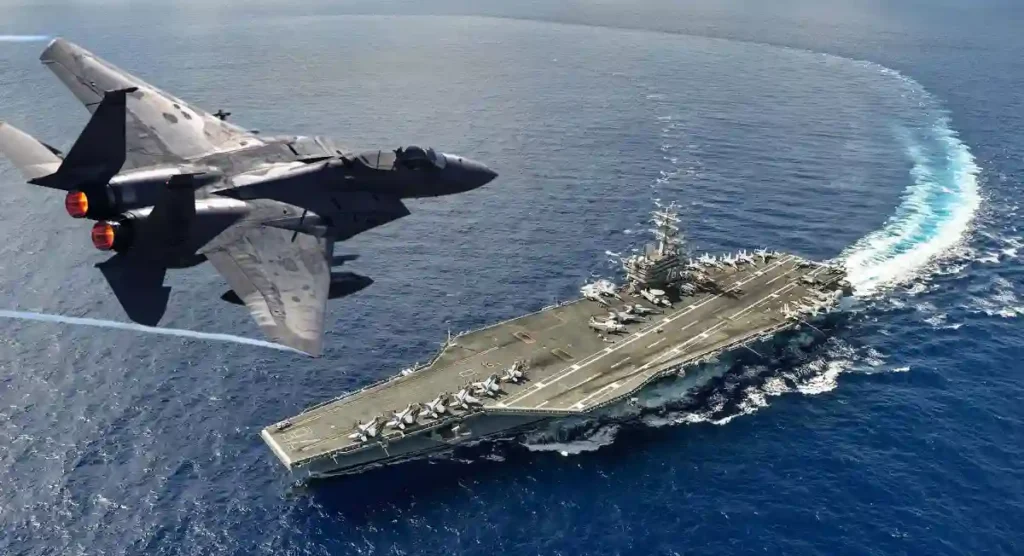
The F-15N Sea Eagle was developed with several key modifications to enable carrier-based operations. Among these modifications were:
- Foldable Wings: To accommodate the confined spaces of an aircraft carrier’s hangar deck, the wings of the F-15N were designed to fold. This significantly reduced the aircraft’s wingspan, making it easier to store on the carrier while not in flight.
- Reinforced Landing Gear: Naval aircraft must withstand the stresses of carrier landings, which involve high-impact landings on a moving platform. To cope with these forces, the F-15N featured a strengthened landing gear, capable of handling the intense shock loads associated with carrier operations.
- Tailhook for Arrested Landings: The tailhook is a critical feature for carrier-based aircraft, enabling the plane to catch a wire on the deck during landing. The F-15N was equipped with this feature, a standard for all carrier-based aircraft.
- Infrared Search and Track (IRST): In a move to improve its target acquisition and combat effectiveness, the F-15N featured a IRST system derived from the F-14. This infrared system was mounted below the nose of the aircraft and provided an additional layer of situational awareness, particularly for tracking low-flying targets in radar-limited environments.
These modifications aimed to give the F-15N the necessary capabilities for operations aboard an aircraft carrier, but they also presented a challenge: the aircraft had to maintain its combat performance while adapting to the stringent requirements of naval aviation.
The Weapon Systems Debate: A Double-Edged Sword
One of the most controversial aspects of the F-15N development was the weapons compatibility. Initially, the aircraft was designed to carry the AIM-7 Sparrow and AIM-9 Sidewinder missiles, standard armament for air-to-air combat at the time. However, the U.S. Navy’s requirements for long-range interception capability led to the integration of more advanced systems.
The AIM-54 Phoenix and AN/AWG-9 Radar
To match the F-14’s long-range strike capabilities, the Navy sought to integrate the AIM-54 Phoenix missile and its associated AN/AWG-9 radar system onto the F-15N. This was a significant modification, as the Phoenix missile was designed to engage enemy bombers and other long-range targets, a role that the F-15N had not been originally designed for.
To facilitate this, McDonnell Douglas teamed up with Hughes Aircraft Company to develop an upgraded version of the radar system, the AN/APG-63, which would support the Phoenix missile launch. However, this modification added significant weight—around 4.5 tons—making the F-15N heavier and compromising its maneuverability. The weight increase had a detrimental effect on the aircraft’s original performance characteristics, including its speed and agility.
This weight increase was one of the key reasons the F-15N failed to meet the Navy’s expectations. The aircraft’s thrust-to-weight ratio was significantly reduced, limiting its ability to outmaneuver potential adversaries. Furthermore, the integration of the AIM-54 missile and its associated systems did not offer the same operational flexibility as the F-14, which was built specifically to carry the Phoenix missile.
F-15N vs. F-14: The Battle of the Carriers
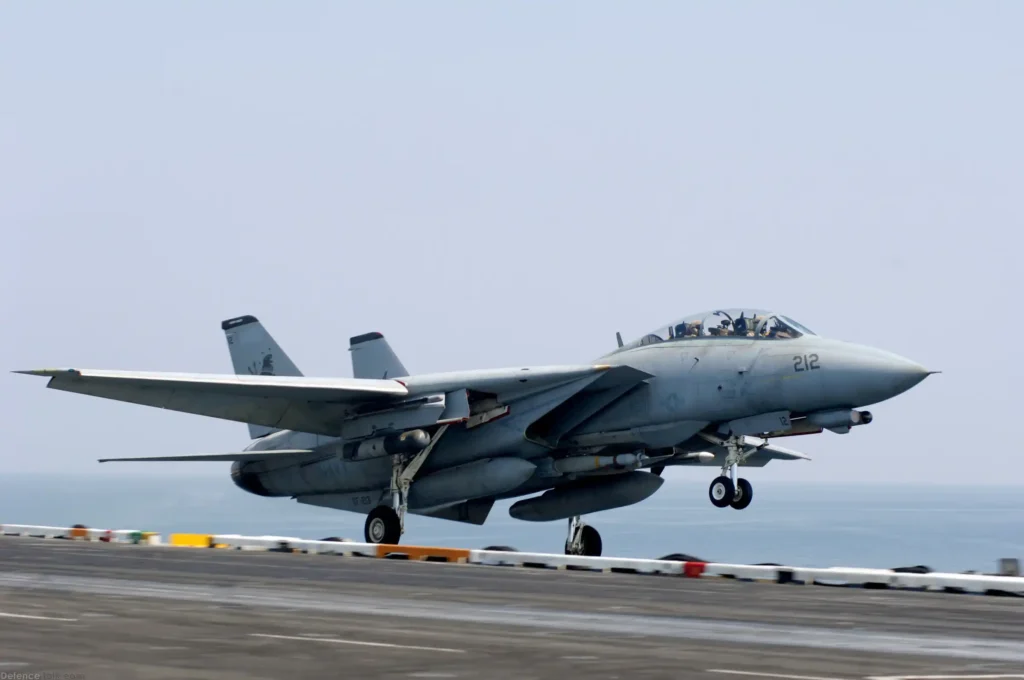
The F-15N Sea Eagle was not only competing against a different aircraft, but it was also competing against the already-proven capabilities of the F-14 Tomcat. The F-14 had been in service for years and had already demonstrated its value as a fleet defense fighter, particularly during the Cold War, where the need for long-range interception and the ability to operate from aircraft carriers was paramount.
Performance and Design Differences
The F-15N offered several performance advantages over the F-14:
- Maximum Speed: The F-15N had a higher maximum speed and better maneuverability, particularly at lower altitudes, which made it ideal for dogfighting and quick-response missions.
- Airframe and Control: The F-15’s fixed wing design offered superior control and stability at high speeds, while the F-14’s variable-sweep wing design, though adaptable, was more suited to different flight conditions, particularly for intercepting high-speed bombers.
However, the F-14 had its own set of advantages:
- Variable-Sweep Wings: The F-14’s distinctive swing-wing design allowed it to adjust its wing shape depending on the flight conditions, making it versatile for both high-speed intercepts and slow-speed carrier operations. This gave the F-14 superior takeoff and landing performance on aircraft carriers.
- Long-Range Intercept: The F-14 was designed with a primary mission to defend the carrier battle group from incoming Soviet bombers, particularly with the AIM-54 Phoenix missile. The F-15N, on the other hand, was designed primarily as an air superiority fighter and lacked the long-range intercept capabilities of the F-14.
Mission Role and Doctrine
The F-15N’s design was focused on air superiority, intended to engage enemy fighters and maintain control of the airspace over the carrier. In contrast, the F-14’s role was more geared towards fleet defense, intercepting and destroying Soviet bombers and missiles long before they could threaten the fleet.
This fundamental difference in mission requirements meant that while the F-15N excelled at certain aspects of aerial combat, it could not match the F-14’s comprehensive, multi-role capabilities, especially for fleet defense and long-range interception.
The Demise of the F-15N Sea Eagle
Despite its advanced design and performance advantages, the F-15N Sea Eagle never entered service. Several factors contributed to this decision.
Overcoming Technical Limitations
As mentioned, the primary issue with the F-15N was its weight increase, which compromised its maneuverability and overall performance. The aircraft’s design had been altered too much from the original F-15A airframe to meet naval requirements without sacrificing essential characteristics like speed, agility, and thrust-to-weight ratio.
Cost and Development Risks
By the time the F-15N Sea Eagle was being developed, the F-14 Tomcat was already well-established, with proven systems and a functioning production line. The U.S. Navy was deeply invested in the F-14 program, and the cost and risk of transitioning to the F-15N, with its unproven naval systems, was too high. Additionally, there was a reluctance to abandon the F-14 platform, which had already been tested extensively and was in production.
Inter-Service Rivalry
Another significant factor in the demise of the F-15N was the rivalry between the U.S. Air Force and the Navy. The Navy had a strong relationship with Grumman, the manufacturer of the F-14, while the F-15 was the Air Force’s premier air superiority fighter. This created an environment where the F-15N did not receive the same level of support from the Navy as the F-14 did, particularly with Air Force officials voicing opposition to the naval version of their aircraft.
Legacy of the F-15N Sea Eagle
Although the F-15N Sea Eagle never saw service, its legacy lives on in several ways:
- Technology Transfer: Some of the design elements and technologies developed for the F-15N influenced future aircraft. For example, the conformal fuel tanks and outboard wing tips were later used in the F-15SE Silent Eagle.
- Cultural Impact: Had the F-15N succeeded, it may have had an impact on popular culture, potentially influencing films like Top Gun, where the F-14 Tomcat became the iconic aircraft. In an alternate timeline, the F-15N could have been the movie’s star fighter.
- Indirect Influence on the F-14:
The competition between the F-15N and the F-14 led to several improvements in the F-14 design, including upgrades to its engines, avionics, and weapons systems.
Conclusion
The F-15N Sea Eagle represents a fascinating chapter in the history of U.S. Navy aviation, a concept that pushed the boundaries of what a carrier-based fighter could be but ultimately fell short of meeting the Navy’s requirements. Despite its high-performance potential, the aircraft could not overcome the design compromises required to make it a viable naval platform. However, its legacy continues to influence the development of future aircraft, and it stands as a reminder of the complex decisions that shape military aviation history.