The Boeing 777-300ER once defined the golden age of ultra-long-haul aviation. For nearly two decades, the aircraft dominated international routes with its combination of range, passenger capacity, and operational reliability. Airlines from Emirates to Cathay Pacific built major parts of their long-haul networks around the type, while Boeing produced hundreds of examples at a pace few widebody aircraft programs have ever matched.
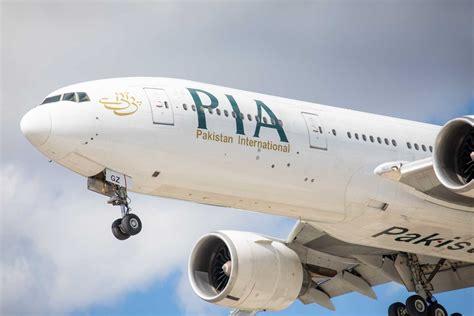
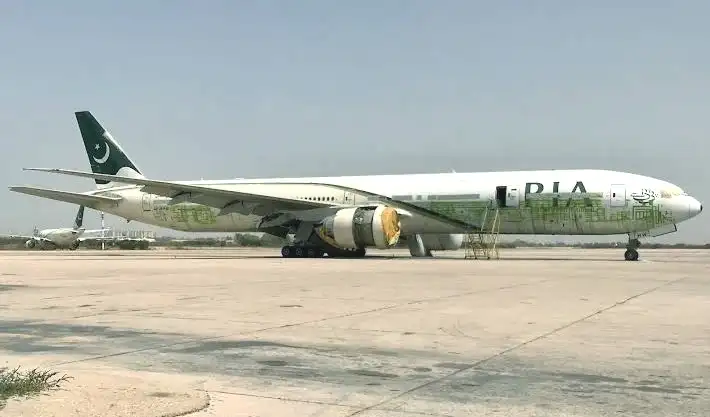
Now, the aircraft is approaching the end of its production story in a remarkably unusual way. According to Boeing’s latest order data, just five passenger Boeing 777-300ERs remain officially unfulfilled, and all five belong to Pakistan International Airlines (PIA). Yet the reality behind those aircraft is far more complicated than the order book suggests.
Industry observers increasingly believe those jets may never be delivered at all. If that happens, the very last passenger-configured Boeing 777-300ER may already have quietly left Boeing’s factory in 2024.
The story reflects more than the end of a successful aircraft program. It highlights the transition from one aviation era to another, as Boeing attempts to move from the aging but beloved 777-300ER toward the delayed 777X family.
The final unresolved order has become something of a ghost entry in Boeing’s backlog — technically alive, but surrounded by uncertainty.
After years of dominating intercontinental travel, the passenger version of the classic Triple Seven is now standing at the edge of retirement.
Boeing’s Remaining 777-300ER Backlog Has Nearly Vanished
Boeing currently lists a total of 698 Boeing 777-family aircraft on order, but the overwhelming majority are tied to the next-generation 777X program. Only 46 aircraft belong to the previous-generation 777 family, and among those, merely five are passenger aircraft.
Those five aircraft are the undelivered 777-300ERs assigned to PIA.
The rest of the backlog consists almost entirely of 777F freighters, which continue to attract strong demand from cargo operators despite turbulence in the passenger widebody market.
The production decline of the 777-300ER has been dramatic. Boeing delivered 88 examples in 2016, representing one of the program’s strongest years. But after that peak, output steadily collapsed as airlines shifted toward newer-generation widebodies such as the Airbus A350 and Boeing 787 Dreamliner.
Deliveries fell to:
- 65 aircraft in 2017
- 32 in 2018
- 19 in 2019
- 4 in 2020
- 7 in 2021
- 3 in 2022
- 0 in 2023
- 1 in 2024
That lone 2024 delivery may ultimately become historically significant because it appears to have been the final passenger Boeing 777-300ER ever completed.
The aircraft went to Altavair LP, an aviation leasing company rather than a direct airline operator. Since then, Boeing has delivered only freighter versions of the 777 family.
This has created an unusual production gap where Boeing continues manufacturing the 777 platform almost exclusively for cargo airlines while waiting for the delayed 777X passenger models to finally enter service.
Pakistan International Airlines’ Long-Delayed Boeing Order
PIA’s relationship with the Boeing 777 stretches back more than two decades. In the early 2000s, the airline became one of the few carriers to operate all three major passenger variants of the Triple Seven family.
The airline originally ordered its first 777-300ERs in 2002 and received them between late 2006 and early 2007. At the time, the aircraft represented a major modernization effort for Pakistan’s national carrier.
In 2012, reports emerged that PIA had finalized another order for five additional 777-300ERs, alongside operational arrangements for five more aircraft of the same type. Pakistani newspaper Dawn valued the deal at roughly $1.5 billion.
Thirteen years later, those aircraft remain undelivered.
The reasons are tied to PIA’s long-running financial and operational instability. The airline has faced years of debt problems, restructuring challenges, route reductions, and international scrutiny over safety oversight.
By 2020, the situation became particularly serious when the European Union Aviation Safety Agency (EASA) suspended PIA from operating into European airspace after concerns surrounding pilot licensing and regulatory oversight emerged.
The UK and US also imposed restrictions.
Although EASA lifted its ban in late 2024, the damage to PIA’s reputation and finances had already accumulated over several years. Against that backdrop, acquiring five brand-new long-haul widebody aircraft became increasingly unrealistic.
As a result, many aviation analysts now view the order as effectively dormant.
PIA’s Existing Boeing 777 Fleet Shows Its Age
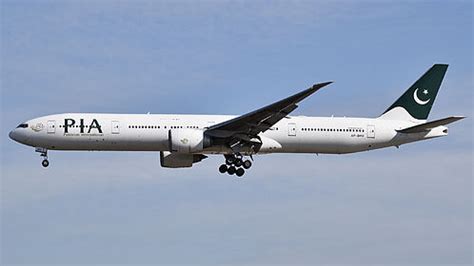
Ironically, while PIA technically still holds the final outstanding passenger 777-300ER order, its current fleet tells a story of aging assets and limited operational activity.
The airline presently operates:
- 2 Boeing 777-200LRs
- 6 Boeing 777-200ERs
- 4 Boeing 777-300ERs
However, not all of these aircraft remain active.
Several of the airline’s 777-300ERs have spent extended periods parked or in storage at Karachi International Airport. Others have cycled through maintenance programs amid operational cutbacks.
According to fleet data, the airline’s 777-300ER fleet now averages roughly 18.5 years of age. That is far from ancient by widebody standards, but it reflects how long Boeing has been producing the type and how dramatically the industry has shifted since the aircraft’s commercial peak.
At one point, the 777-300ER was viewed as the definitive long-haul flagship aircraft. Today, airlines increasingly prioritize fuel efficiency, lower maintenance costs, and newer cabin technologies offered by aircraft like the Airbus A350 and Boeing 787.
PIA’s fleet situation also highlights the broader challenge facing older widebody operators: maintaining large twin-engine jets has become significantly more expensive in an era where airlines demand maximum efficiency.
For a financially constrained airline, introducing additional factory-fresh 777-300ERs now appears highly unlikely.
The Aircraft That May Have Quietly Ended Passenger 777-300ER Production
In aviation manufacturing, final deliveries are often major ceremonial events. Airlines celebrate them publicly, aircraft manufacturers release commemorative statements, and aviation media documents the milestone extensively.
The possible final passenger Boeing 777-300ER departure from Boeing’s assembly line received almost none of that attention.
Instead, the aircraft was delivered quietly to Altavair LP in 2024.
That delivery has triggered growing speculation that Boeing’s passenger 777-300ER program may already be over in practical terms, regardless of what still appears on the official order book.
Altavair itself is a major aircraft leasing and asset management company with offices in Seattle, Dublin, London, and Singapore. Since its founding in 2003, the company has participated in more than $13.5 billion worth of aircraft transactions involving hundreds of Boeing and Airbus aircraft.
Unlike airlines, leasing firms typically act as intermediaries rather than end operators. That means the aircraft delivered to Altavair was almost certainly intended for another airline customer.
The intriguing part is that Boeing has never publicly identified who that final operating customer actually was.
That mystery has fueled intense discussion within aviation circles because it leaves open the possibility that the final passenger 777-300ER was delivered without most travelers even realizing it.
Ethiopian Airlines May Hold The Key To The Final Aircraft’s Identity
One airline repeatedly linked to recent 777-300ER transactions is Ethiopian Airlines.
In early 2025, Altavair disclosed details regarding a transaction involving an ex-China Southern Boeing 777-300ER leased to Ethiopian Airlines. The agreement involved multiple parties, including Marathon as the capital provider and Altavair as the arranger and servicer.
Although this specific aircraft was not newly built, Ethiopian’s continued interest in the 777-300ER demonstrates that demand for the type still exists in selected markets.
Ethiopian Airlines operates one of Africa’s largest and most modern long-haul fleets. The carrier serves more than 140 international destinations and has aggressively expanded its role as a connecting hub between Africa, Europe, Asia, and North America.
Its widebody fleet includes:
- Airbus A350-900
- Airbus A350-1000
- Boeing 787-8
- Boeing 787-9
- Boeing 777-200LR
- Boeing 777F
- Boeing 777-300ER
The airline already operates five 777-300ERs and continues expanding its cargo division as well.
That combination makes Ethiopian one of the few airlines still capable of finding practical value in additional used or leased 777-300ER aircraft.
There is no definitive evidence proving Ethiopian received Boeing’s final passenger-built example, but industry speculation continues because the airline remains one of the few active operators still acquiring the type.
Boeing’s Production Focus Has Shifted Almost Entirely To Freighters
While passenger 777-300ER production appears effectively finished, the broader 777 platform is far from dead.
The 777F freighter remains one of the most important cargo aircraft in the world. Boeing still has 41 unfulfilled orders for the freighter version, and deliveries continue steadily.
In 2024 alone, Boeing handed over 13 new 777F aircraft. During the first quarter of 2025, another seven joined airline fleets.
Cargo demand has become a crucial lifeline for Boeing’s Everett production line while the company waits for the 777X certification process to conclude.
This mirrors what happened with the Boeing 767 program. Passenger versions largely disappeared years ago, yet production continues because freight carriers and military customers still value the aircraft.
The 777 has now entered a similar phase.
For Boeing, maintaining production continuity matters enormously. Shutting down and restarting a widebody assembly line is exceptionally expensive and operationally disruptive. Continuing 777F manufacturing allows Boeing to preserve skilled labor, supplier relationships, and factory infrastructure until the 777X is ready.
That strategy explains why the older-generation 777 remains alive despite the near-disappearance of passenger deliveries.
The Boeing 777X Is Supposed To Replace The 777-300ER
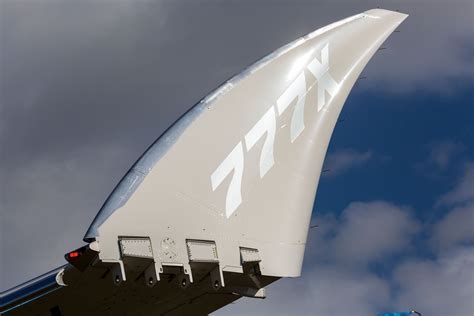
The next chapter of the Triple Seven family is the Boeing 777X, which Boeing markets as the future flagship of long-haul aviation.
The aircraft comes in three primary variants:
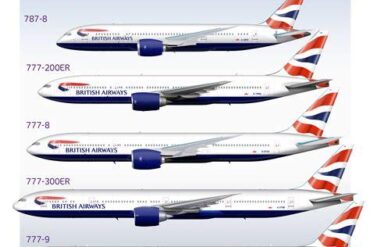
- 777-8 passenger model
- 777-9 passenger model
- 777-8F freighter model
The 777-9 will become the world’s largest twin-engine passenger aircraft, capable of carrying more than 400 passengers in a typical two-class configuration.
Boeing promises:
- 10% lower fuel consumption
- 10% lower operating costs
- improved aerodynamics
- advanced composite folding wings
- new GE9X engines
Airlines have responded with strong order numbers despite repeated delays.
The program currently holds more than 650 firm orders, with Middle Eastern carriers dominating the backlog.
Emirates alone has ordered 270 aircraft, while Qatar Airways and Etihad have also committed heavily to the type.
Yet the aircraft’s entry into service continues slipping further into the future.
Initially expected years ago, the 777X is now projected to enter commercial service around 2027, assuming Boeing successfully completes certification requirements with the US Federal Aviation Administration.
The FAA has subjected Boeing’s recent aircraft programs to far greater scrutiny following the 737 MAX crisis. Certification timelines have lengthened significantly, and Boeing has faced growing pressure regarding engineering oversight and manufacturing quality control.
As a result, the aviation industry currently sits in a strange transitional period.
The passenger 777-300ER is effectively gone.
The 777X has not yet arrived.
And Boeing’s once-dominant long-haul aircraft family exists primarily as a freighter program in the meantime.
The End Of An Aviation Legend
Few commercial aircraft have shaped modern long-haul aviation like the Boeing 777-300ER.
The aircraft became famous for its extraordinary reliability, enormous range capability, and unmatched economics during the 2000s and 2010s. It helped airlines open nonstop routes previously considered impractical and allowed global hubs like Dubai, Doha, and Istanbul to flourish.
For years, it was arguably Boeing’s most successful widebody product.
That is why the uncertainty surrounding its final delivery feels oddly fitting for the current state of the aviation industry — a sector still balancing post-pandemic recovery, supply-chain instability, regulatory pressure, and changing fleet economics.
Pakistan International Airlines technically still holds the final unfulfilled passenger order.
But whether those five aircraft ever emerge from Boeing’s factories remains deeply doubtful.
If they are eventually canceled, then the true final passenger Boeing 777-300ER may already be flying somewhere in the world under a lease agreement few travelers would ever notice.
The aircraft that once symbolized the future of long-haul travel may have quietly exited production without fanfare, ending one of the most successful chapters in Boeing’s commercial aviation history.