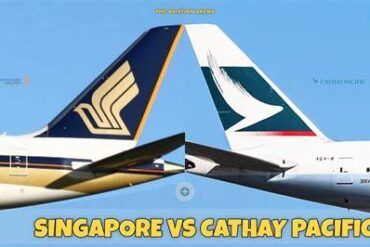
Singapore Airlines and Cathay Pacific, two of Asia’s most prestigious full-service carriers, have built their reputations on long-haul excellence, premium service, and global connectivity. Both operate sprawling intercontinental networks from their respective hubs—Singapore Changi International Airport (SIN) and Hong Kong International Airport (HKG)—and both rely heavily on the iconic Boeing 777-300ER to deliver this promise. While their fleet sizes differ, the aircraft plays an indispensable role in each airline’s long-haul strategy. This article takes a deep dive into the Boeing 777-300ER fleet of each airline, examining not just who has more of them, but why the aircraft remains a cornerstone of their global operations.
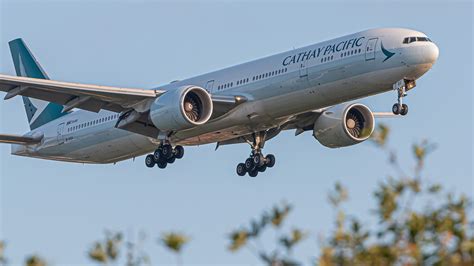
The Power of the Boeing 777-300ER: An Intercontinental Workhorse
The Boeing 777-300ER has been a game-changing aircraft since its introduction, widely adopted by carriers across the world for its impressive long-range capabilities, high passenger capacity, and reliable operational track record. Designed to operate ultra-long-haul routes with efficiency, the 777-300ER includes enhanced raked wingtips, reinforced landing gear, GE90 engines, and extended fuel tanks. These features allow it to carry heavy payloads over vast distances without sacrificing fuel economy.
As a twin-engine widebody, it offers the optimal balance between the massive four-engine aircraft like the A380 and the smaller twin-aisle jets like the 787 Dreamliner. The aircraft has become the backbone of many global fleets, especially in markets where demand requires both high-capacity and long-range performance. The 777-300ER is particularly advantageous in connecting Asia to North America and Europe, where reliability, efficiency, and premium capacity are essential.
Singapore Airlines’ 777-300ER: Precision-Focused Deployment
Singapore Airlines (SIA) currently operates 22 Boeing 777-300ERs, a figure that speaks volumes about the airline’s strategic focus on fleet discipline and operational optimization. Instead of simply amassing a large number of aircraft, SIA has focused on fleet efficiency and yield management, deploying the 777-300ER selectively on high-yield routes.
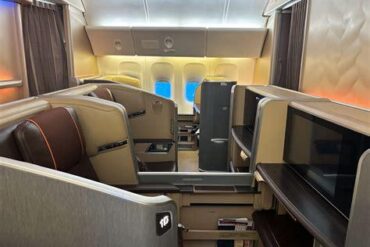
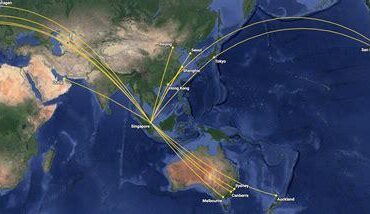
These aircraft are typically seen on routes connecting Singapore to London, Frankfurt, Johannesburg, and other major international destinations where demand is strong and premium cabin utilization remains high. The configuration on board reflects SIA’s focus on premium passengers:
- First Class Suites: 4 seats
- Business Class: 48 seats
- Premium Economy: 28 seats
- Economy: 184 seats
This configuration not only allows for luxury at the front end but also provides enough economy seats to maintain load factor efficiency. SIA complements its 777-300ER operations with the Airbus A350 and Boeing 787, optimizing each aircraft type for route length and passenger profile.
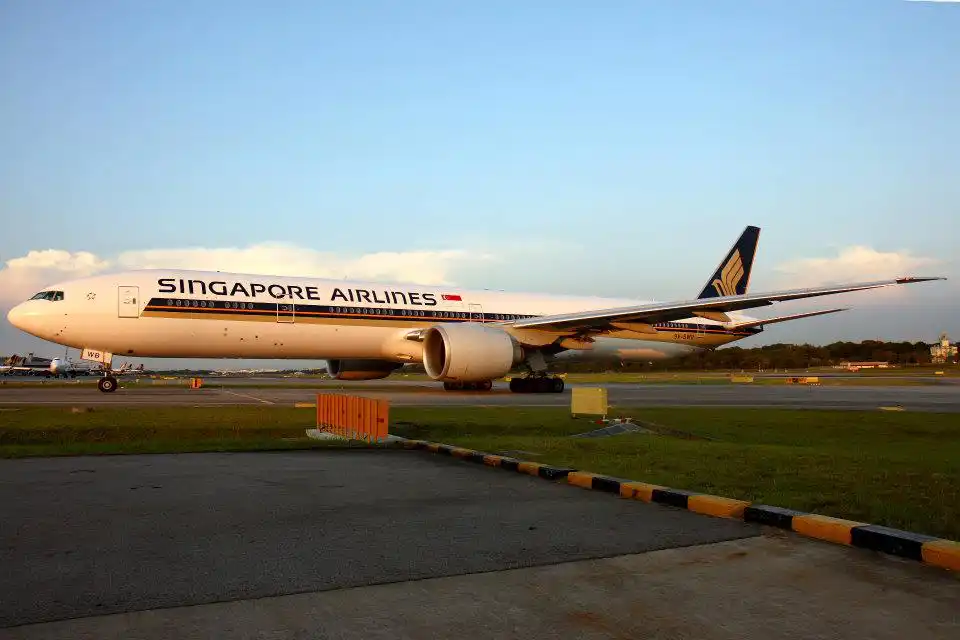
The 22-strong fleet reflects a targeted deployment strategy, enabling the airline to ensure high aircraft utilization without the burden of excessive capacity. It also allows the airline to maintain strict maintenance cycles and cabin quality standards. Despite the relatively smaller size, SIA’s 777-300ER fleet is meticulously managed to support its premium, long-haul aspirations.
Cathay Pacific’s Dominance: The Numbers Tell the Story
Cathay Pacific, on the other hand, operates 35 Boeing 777-300ERs, clearly outpacing its Singaporean rival by 13 aircraft. This gives Cathay a significant operational edge, particularly in its long-haul network that spans from Hong Kong to North America, Europe, and Australasia. The sheer size of the fleet offers flexibility, scalability, and the ability to adjust rapidly to shifts in demand.
Cathay’s business model relies heavily on connecting passengers through its hub-and-spoke model in Hong Kong, requiring a versatile long-haul fleet that can adapt to various route structures and cabin demand. The 777-300ER fits perfectly into this framework. The aircraft is used in various configurations, including those outfitted with Cathay’s latest Aria Suite in business class—signaling the airline’s continued investment in premium product evolution.
More aircraft means more schedule density, more backup flexibility during maintenance windows, and a greater ability to reallocate aircraft without affecting overall network performance. The scale also allows Cathay to handle seasonal surges and unforeseen disruptions far more smoothly than a smaller fleet would allow.
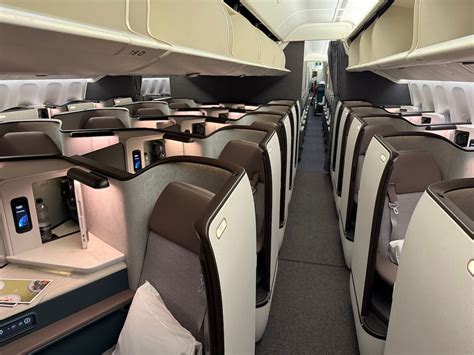
While Cathay’s aircraft may not all be identically configured, the consistency in service delivery and strategic deployment ensures that passengers experience a uniform product across the majority of routes operated by this type.
Fleet Size Comparison: Cathay Leads, But Context Matters
With 35 aircraft compared to Singapore’s 22, Cathay Pacific holds a 60% larger Boeing 777-300ER fleet. This numerical advantage allows the airline to cover more destinations, run tighter schedules, and maintain flexibility in its global operations. However, a larger fleet doesn’t automatically translate into superior efficiency or profitability.
Singapore Airlines counters this numerical shortfall with agile route planning, high aircraft utilization, and disciplined yield management. The airline ensures that each aircraft serves routes where it can maximize revenue per seat, balancing demand and capacity with precision. Additionally, a leaner fleet size can often mean lower operational costs, less fleet redundancy, and higher return per asset.
Still, when considering global reach, Cathay’s larger fleet offers an upper hand. It provides them with the ability to scale rapidly, an essential trait in today’s unpredictable travel landscape, where demand recovery and route reinstatements can shift overnight.
The Shared Strength of the Boeing 777-300ER
Despite differences in deployment and fleet size, both airlines continue to rely on the Boeing 777-300ER for a host of compelling reasons:
- Exceptional range of over 7,000 nautical miles, enabling nonstop travel across continents
- High payload capacity, allowing for both passengers and significant cargo volume
- Proven reliability, minimizing delays and maximizing dispatch efficiency
- Multi-class cabin flexibility, accommodating a wide array of customer segments
For both carriers, the 777-300ER strikes the perfect balance between capacity and cost-efficiency. As fuel prices remain volatile and demand patterns evolve, the 777-300ER remains a resilient asset, even amid newer aircraft like the A350 and 787 entering mainstream service.
Moreover, both airlines are capitalizing on the aircraft’s ability to operate in high-density premium routes without compromising fuel efficiency. This is especially crucial for routes that require nonstop flights exceeding 10 hours, where cabin service consistency and aircraft performance are both paramount.
Future Outlook: Replacement or Retention?
Neither Singapore Airlines nor Cathay Pacific is rushing to retire their Boeing 777-300ERs. While both are introducing next-generation aircraft—Singapore with the A350-900ULR and Cathay with the A350 and future 777-9 orders—the 777-300ER remains indispensable in their current networks.
Fleet replacement is an expensive, long-term endeavor. In the interim, both carriers continue to retrofit existing 777-300ERs with updated cabin products and enhanced entertainment systems, ensuring they remain competitive even against newer models.
SIA is slowly aligning its long-haul fleet strategy with ultra-long-range A350 variants, but the 777-300ER remains on key trunk routes. Cathay, while placing significant focus on the A350, still leans on the 777-300ER for North American services, where its larger capacity becomes a necessity rather than a luxury.
Final Verdict: Cathay Pacific Has the Larger Fleet, But Strategy Shapes Value
When it comes to sheer numbers, Cathay Pacific is the clear winner, operating 35 Boeing 777-300ER aircraft to Singapore Airlines’ 22. This allows for greater schedule density, network breadth, and operational flexibility. However, fleet size does not equate to fleet superiority.
Singapore Airlines utilizes its fleet with a surgical level of precision. Each aircraft is a revenue-maximizing asset, carefully deployed and meticulously maintained. The smaller number reduces surplus capacity, tightens cost control, and ensures high cabin product consistency.
For Cathay Pacific, the larger fleet enhances adaptability and resilience. It serves a broader network, absorbs operational disruptions more easily, and allows for strategic redeployment across long-haul destinations.
Ultimately, both carriers treat the Boeing 777-300ER as a cornerstone of their global operations. It remains an aircraft that combines range, capacity, reliability, and premium service capability—a perfect fit for their long-haul, full-service aspirations. As long as demand for premium, long-haul travel persists, the 777-300ER will continue to hold its value as a core widebody workhorse in the fleets of both airlines.