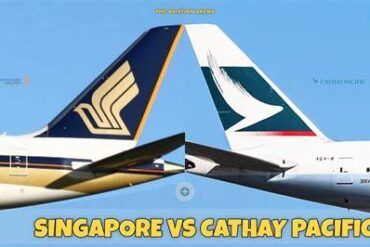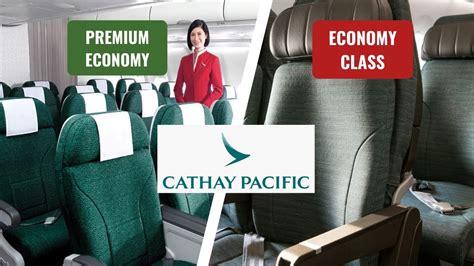
In the arena of Asian aviation, Singapore Airlines and Cathay Pacific stand as titans, renowned not only for their flagship status but also for their ability to elevate passenger experience to a near-art form. Among discerning travelers, the debate over which carrier offers superior premium economy has intensified in recent years. While both airlines provide a class that bridges the gap between standard economy and business class, nuanced differences in seating comfort, cabin design, service quality, and onboard amenities create a tangible divergence in passenger experience. This analysis delves into the specifics, helping travelers make an informed choice based on precise metrics, service offerings, and overall value.
A Detailed Overview of Singapore Airlines Premium Economy
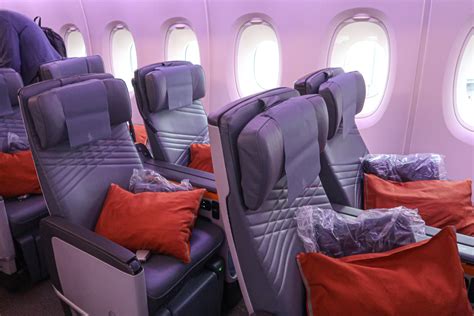
Singapore Airlines has long been synonymous with meticulous service and a luxurious in-flight experience. Its premium economy is available on the Airbus A350, the legendary A380, and Boeing 777 aircraft, delivering a consistent level of comfort across long-haul routes. The airline emphasizes passenger convenience, starting with check-in and continuing through priority boarding and baggage handling, ensuring a seamless journey from the airport to the final destination.
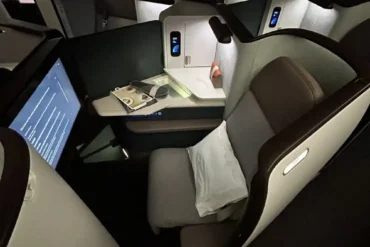
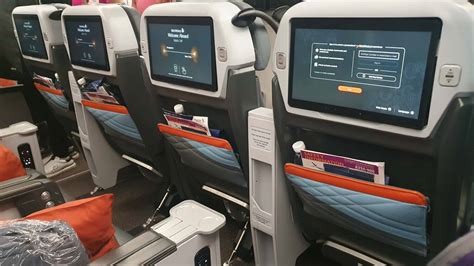
The seating itself is carefully engineered to maximize comfort. Passengers enjoy the Safran Z535 recliner seats with a row pitch of 38 inches, seat widths ranging from 19 to 19.5 inches depending on aircraft, and generous recline angles of up to eight inches. Each seat comes equipped with two USB ports, a personal adjustable reading light, and dedicated stowage compartments. The integrated touchscreen monitors, measuring 13.3 inches on 777s and 13–14 inches on A350s, allow for an immersive entertainment experience.
Meal service in Singapore Airlines’ premium economy is elevated to a culinary experience, with dining presented on contemporary porcelain serviceware, paired with a selection of Champagne and wines exclusive to this cabin class. Beyond scheduled meals, passengers can indulge in a rotating selection of snacks and beverages. For frequent flyers, the KrisFlyer loyalty program adds value by allowing miles redemption for upgrades and offering perks such as complimentary WiFi and other tailored benefits.
Checked baggage allowances further differentiate Singapore Airlines from competitors. Premium economy travelers can typically check two bags weighing up to 35kg each (154 lbs total) on flights outside the US and Canada, a substantial benefit compared with industry norms. For North American flights, the allowance adjusts to two bags of 23kg each, aligning with regional standards but still offering a practical advantage.
Cathay Pacific’s Premium Economy: Comfort Meets Classic Luxury
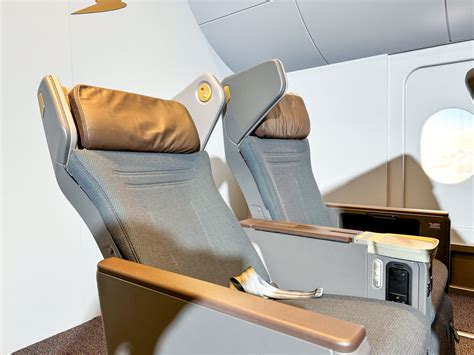
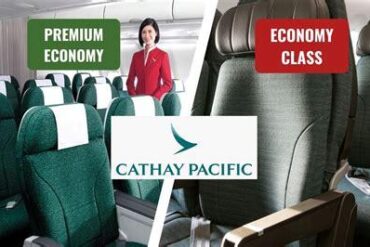
Cathay Pacific, Hong Kong’s flag carrier, presents premium economy as an elevated, yet understated, travel class. Available on select Airbus A330s, A350-900s, A350-1000s, and Boeing 777-300ERs, Cathay’s premium economy seats feature a Recaro R5 or Collins Aerospace MiQ design, depending on the aircraft type. The seats are generally wider than standard economy, with row pitches from 38.2 to 40 inches and reclines from six to nine inches, offering passengers ample legroom and comfort on long-haul flights. Touchscreen entertainment ranges from 12.1 to 15.6 inches, depending on aircraft configuration.
Service quality in Cathay Pacific premium economy is complemented by exclusive amenities including socks, eyeshades, earplugs, and a full toiletries kit. Dining stands out for its Michelin-starred offerings, especially on flights featuring collaboration with the renowned Yat Tung Heen. Priority boarding, dedicated check-in counters at select airports, and an incremental baggage allowance—two pieces at 23kg each—add to the class’s appeal, though it remains slightly less generous than Singapore Airlines in terms of luggage weight. Complimentary WiFi is being rolled out fleet-wide, ensuring passengers stay connected throughout their journey.
Aircraft and Cabin Design: A Key Factor
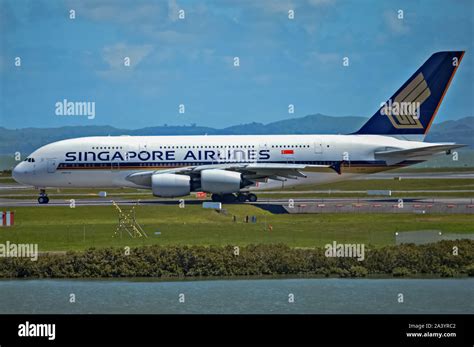
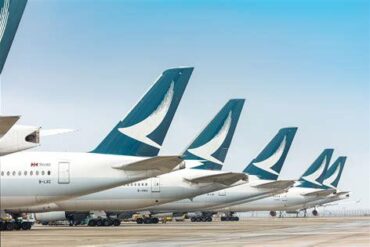
The aircraft type significantly impacts passenger experience, and here, differences between Singapore Airlines and Cathay Pacific become more evident. Singapore Airlines operates a fleet dominated by widebody aircraft, including 65 Airbus A350-900s, 12 A380s, and 22 Boeing 777-300ERs. The presence of the A380, the world’s largest passenger plane, provides an unparalleled sense of space in premium economy cabins, along with innovative design and quieter flight performance. In contrast, Cathay Pacific’s fleet, though equally modern, includes fewer A380 equivalents and emphasizes the versatility of its Airbus A330s, A350s, and Boeing 777s. Its fleet includes 30 A350-900s, 18 A350-1000s, and 52 Boeing 777s, although only the 777-300ERs and certain A350 variants offer premium economy.
Seat count per cabin varies as well, influencing personal space. On the A350-900, Cathay Pacific configures 28 premium economy seats with 40-inch pitch, while Singapore Airlines fits 24 seats at 38-inch pitch. On Boeing 777-300ERs, Singapore Airlines has 28 Safran Z535 seats compared to Cathay’s 32–34 Recaro R5 seats. While Cathay provides slightly more seats, Singapore Airlines’ approach often results in a more spacious and private environment, critical for longer flights.
Seat Comfort and Technology: Fine Margins Matter
When comparing seat width, pitch, and recline, Singapore Airlines and Cathay Pacific are strikingly similar, though subtle differences affect passenger comfort on long-haul flights. On the A350-900, Singapore Airlines’ 19-inch wide seats with an eight-inch recline allow for a balance of upright comfort and relaxation, whereas Cathay’s slightly narrower 18.5-inch seats gain an extra inch of pitch and an extra inch of recline, creating a nuanced tradeoff between legroom and seat breadth. On the 777-300ER, both carriers offer 19.5-inch seats, but Singapore Airlines provides an eight-inch recline versus Cathay’s six inches, emphasizing a deeper lean-back experience for rest and relaxation.
The onboard entertainment systems also differ, reflecting each airline’s technology philosophy. Singapore Airlines integrates 13.3-inch touchscreens with responsive interfaces and a wide library of content. Cathay Pacific counters with larger 15.6-inch displays on some 777s, allowing for a more visually engaging experience, particularly for cinematic content. USB and power ports are standard across both carriers, ensuring connectivity for work or leisure.
Culinary Experience: Dining in the Sky
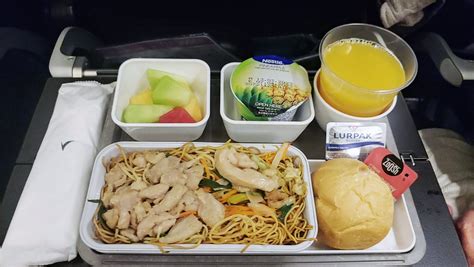
Singapore Airlines maintains a reputation for premium dining with a menu designed for the discerning palate. Meals in premium economy are served on porcelain tableware, accompanied by carefully selected wines and Champagne, and curated to enhance the long-haul experience. Seasonal menus and regional specialties ensure travelers receive a taste of Singaporean flair, even thousands of miles from home.
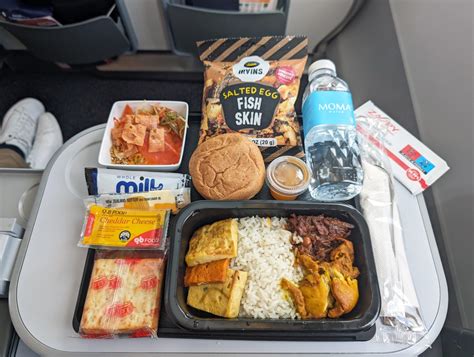
Cathay Pacific, however, takes a more gastronomically prestigious approach with select Michelin-starred dishes from Yat Tung Heen on certain flights. This presents an authentic taste of Hong Kong’s fine dining tradition mid-air. While Singapore Airlines emphasizes consistency and variety, Cathay Pacific leverages exclusivity and culinary heritage, making it appealing to travelers seeking a unique dining experience rather than a comprehensive beverage and snack spread.
Loyalty and Perks: Value Beyond the Seat
Singapore Airlines’ KrisFlyer loyalty program provides tangible benefits for premium economy passengers, including mileage redemption options, priority boarding, and complimentary WiFi. This program enhances the perceived value of the premium economy experience, particularly for frequent international travelers. Cathay Pacific’s Marco Polo Club offers similar perks, including priority boarding and lounge access under certain tiers, but generally provides fewer mileage-based upgrade opportunities compared to KrisFlyer.
Both airlines extend thoughtful amenities, yet Singapore Airlines’ inclusion of exclusive comfort kits, paired with extensive baggage allowances and WiFi privileges, can make a decisive difference for travelers planning longer journeys with heavy luggage or in-flight work requirements.
Luggage Allowances: A Practical Advantage
Baggage allowances often reveal practical differences in premium economy offerings. Singapore Airlines allows two pieces at 35kg each on international flights outside the US and Canada, exceeding Cathay Pacific’s standard of two pieces at 23kg each. This discrepancy becomes crucial for passengers traveling with family, sports equipment, or extra wardrobe needs. On US and Canadian routes, Singapore aligns with Cathay’s 23kg limit per bag, but its overall flexibility still generally favors heavier travel loads.
Fleet Modernity and Route Reach
Singapore Airlines’ investment in a modern, widebody-dominant fleet, including the iconic A380 and long-range A350-900ULRs, allows the carrier to serve destinations such as New York nonstop, exclusively using premium economy and business class configurations. These ultra-long-range aircraft offer a specialized comfort advantage that Cathay Pacific does not yet match, as its ultra-long-haul operations still rely on standard fleet types.
Cathay Pacific maintains a broad route network covering approximately 200 destinations, compared to Singapore Airlines’ 110, providing greater flexibility for global connections. However, the presence of the A380 and the ultra-long-range A350-900ULRs in Singapore Airlines’ fleet can result in a more tranquil, spacious premium economy cabin for passengers on overlapping routes, often offsetting the numerical advantage in destinations.
Evaluating Overall Comfort and Experience
Determining which airline offers superior premium economy requires weighing measurable factors such as seat pitch, width, and recline, alongside qualitative aspects like service quality, culinary excellence, and loyalty program benefits. Singapore Airlines consistently prioritizes spaciousness and premium service, providing passengers with a holistic experience that includes generous baggage allowances, personalized attention, and a high level of cabin consistency across aircraft types.
Cathay Pacific, meanwhile, leans toward exclusive touches, with Michelin-starred dining, refined amenities, and a slightly larger seat pitch on certain aircraft. While it may offer a slightly more luxurious culinary experience, the smaller baggage allowance and limited availability of premium economy on some aircraft may detract from overall convenience and comfort for longer flights.
Pricing and Value Considerations
When assessing premium economy value, ticket pricing remains a significant factor. Singapore Airlines generally positions its premium economy at a slight premium compared to regional competitors, justified by the combination of luggage allowance, amenities, and service quality. Cathay Pacific, although often competitive in fare, may appeal more to passengers prioritizing gourmet dining and slightly more legroom in select seat configurations, particularly on A350 flights.
Pricing dynamics can also be influenced by frequent flyer benefits. KrisFlyer redemptions can upgrade economy travelers into premium economy or business class, enhancing the perceived value. Cathay Pacific’s Marco Polo Club offers fewer mileage-based upgrades in comparison, which could impact long-haul passengers seeking flexibility and added perks.
Final Assessment: Singapore Airlines’ Slight Edge
When viewed comprehensively, Singapore Airlines demonstrates a slight edge over Cathay Pacific in premium economy. While both airlines provide an exceptional experience compared to global peers, Singapore Airlines’ advantages in checked baggage, seat comfort, fleet modernity, and loyalty program perks collectively enhance passenger satisfaction. Cathay Pacific excels in select elements, particularly culinary offerings and certain seat configurations, but the overall combination of factors favors Singapore Airlines for passengers prioritizing a balanced mix of comfort, service, and practical travel advantages.
However, the differences remain nuanced. Travelers with a strong preference for Michelin-starred dining, or those whose routes align with Cathay’s available premium economy aircraft, may still find the Hong Kong carrier’s offering highly competitive. The ultimate choice may hinge on individual priorities—whether the emphasis is on spacious seating, luggage capacity, in-flight connectivity, or gourmet meals.
For premium economy travelers seeking a dependable, high-comfort, and consistent experience across multiple aircraft types, Singapore Airlines presents the more comprehensive package. Its reputation for service excellence, combined with thoughtful amenities, robust loyalty benefits, and operational flexibility, reinforces why it consistently ranks higher than Cathay Pacific in global airline ratings. In essence, Singapore Airlines elevates premium economy from a functional travel class into a refined journey, seamlessly blending practicality with luxury, while Cathay Pacific caters to those who value culinary artistry and a slightly roomier seating pitch on select aircraft.