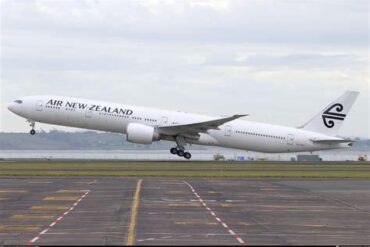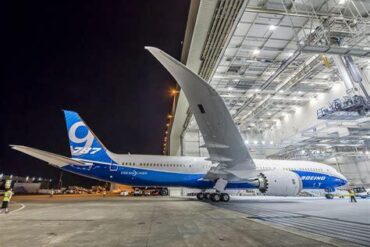
Singapore’s flagship carrier, Singapore Airlines, is making a decisive premium push on one of its most strategically important long-haul routes. By deploying the Boeing 777-300ER on its second daily Singapore–Auckland rotation, the airline is effectively doubling its first-class capacity to New Zealand’s largest city—an unmistakable signal of rising demand for high-yield travel.
This fleet upgrade replaces the current Airbus A350-900 operating flight SQ281, a midnight departure from Singapore that arrives mid-afternoon into Auckland Airport. The shift is more than a simple aircraft swap—it is a recalibration of cabin strategy, designed to capture premium travelers across both business and leisure segments during the northern winter season.
A Calculated Capacity Shift Toward Premium Demand
The introduction of a second 777-300ER service fundamentally reshapes the premium cabin mix on the Singapore–Auckland corridor. Where previously only one daily flight offered first class, both primary services will now feature the airline’s flagship front-cabin product, significantly increasing availability.
This adjustment comes as Singapore Airlines ramps up to three daily flights to Auckland, with the third frequency continuing on the A350-900. While that aircraft lacks a first-class cabin, it complements the schedule by maintaining frequency while the 777-300ER handles premium-heavy demand.
The result is a carefully balanced operation:
- Two daily flights with full first-class cabins
- One additional frequency focused on efficiency and connectivity
- A seasonal transition that maximizes yield during peak travel months
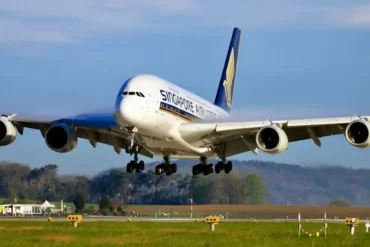
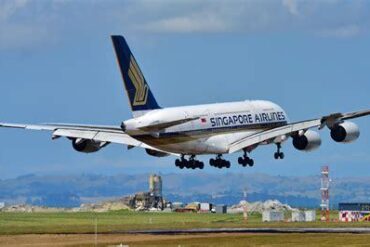
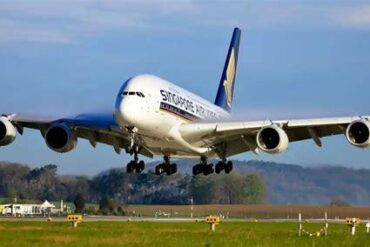
This marks a notable evolution from the previous year, when only a single daily flight briefly featured first class before being upgraded to the Airbus A380 during peak summer demand.
Inside the Boeing 777-300ER First Class Experience
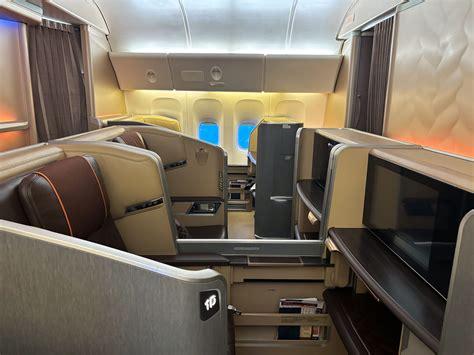
The 777-300ER deployed on this route features Singapore Airlines’ 2013-designed first-class seats, arranged in an elegant 1-2-1 configuration. While not as headline-grabbing as the suites onboard the A380, this cabin remains one of the most refined in commercial aviation.
Each seat transforms into a fully flat bed, wrapped in premium leather and accompanied by a level of privacy that appeals to both corporate travelers and long-haul leisure passengers. A distinctive design feature is the spacing between the center seats, allowing seamless crew movement and enhancing the sense of exclusivity.
The experience is defined by:
- Generous personal space and wide seating
- Dedicated aisle access for every passenger
- Highly personalized in-flight service
Although the A380’s 2017 suites—with their double-bed capability—remain the airline’s most luxurious offering, the 777-300ER still delivers a flagship-level experience that aligns with the expectations of high-value customers on ultra-long-haul routes.
Broader Cabin Impacts Beyond First Class
The aircraft upgrade does not only benefit first-class passengers. The transition from the A350-900 to the 777-300ER also introduces meaningful changes across the rest of the cabin.
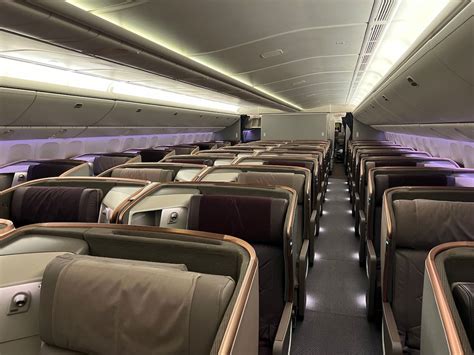
Business class capacity increases, providing more lie-flat seats for corporate travelers, while premium economy also sees a boost—an increasingly important segment as airlines tap into travelers seeking comfort without the full cost of business class. Economy class experiences a marginal reduction of just three seats, a negligible trade-off in the broader capacity equation.
This recalibration underscores a wider industry trend: prioritizing yield over sheer seat volume, particularly on long-haul routes where premium cabins drive profitability.
Auckland as a Strategic Long-Haul Market
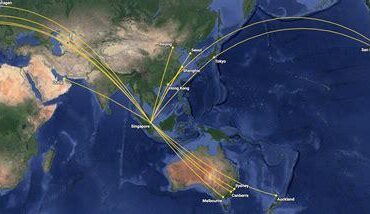
The Singapore–Auckland route spans approximately 5,224 miles (8,408 kilometers), making it one of the longest regularly scheduled services in the Asia-Pacific network. It is a route where schedule reliability, onboard comfort, and premium offerings directly influence airline competitiveness.
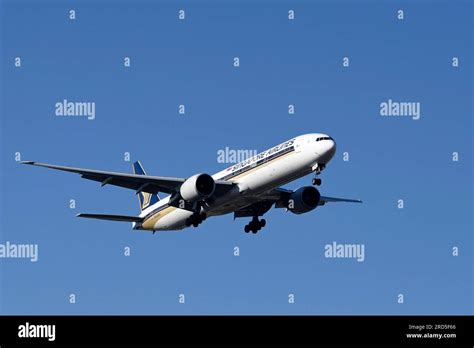
Singapore Airlines already holds a dominant position on this corridor, competing primarily with Air New Zealand, which operates Boeing 787-9 services. The partnership between the two carriers further strengthens connectivity, but it also highlights the importance of differentiation—particularly in premium cabins.
By expanding first-class availability, Singapore Airlines is reinforcing its position as the leading premium carrier between Southeast Asia and New Zealand.
Seasonal Strategy and the Return of the A380
The 777-300ER deployment is part of a broader seasonal strategy that will evolve again in January, when one of the daily services transitions to the Airbus A380. This introduces the airline’s newest-generation suites product back into the Auckland market during peak travel demand.
This phased approach allows the airline to:
- Match aircraft size and product to seasonal demand
- Maximize premium revenue during peak months
- Maintain operational flexibility across its long-haul fleet
At its peak, Singapore Airlines will operate up to 12 weekly flights across New Zealand, including additional services to Christchurch, further cementing its network strength in the region.
A Post-Pandemic Premium Surge
The decision to double first-class capacity is ultimately rooted in one clear trend: premium travel demand has rebounded faster and stronger than expected. High-net-worth leisure travelers, corporate clients, and long-haul premium flyers are returning in force, particularly on routes connecting major global hubs with leisure destinations.
Singapore Airlines’ move represents its strongest premium offering to Auckland since before the COVID-19 pandemic, signaling confidence not only in the route but in the broader recovery of long-haul aviation.
In a market where comfort, exclusivity, and service define competitive advantage, the airline’s latest upgrade is less about adding seats—and more about reasserting dominance at the very top of the cabin hierarchy.