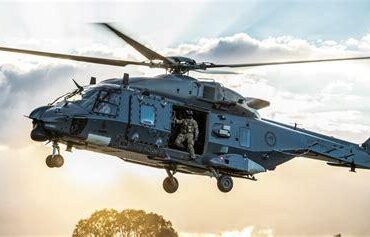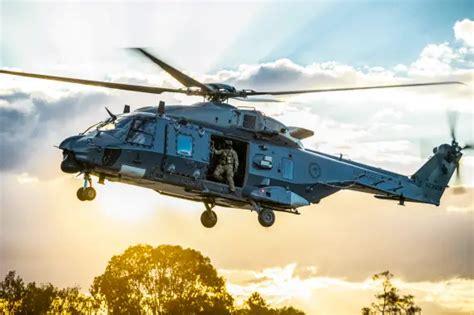
Eight Royal New Zealand Air Force NH90 helicopters have achieved something that sounds almost impossible when viewed against the troubled history of the type. On August 26, 2026, NH90 TNZA002 became the first NH90 anywhere in the world to pass 3,000 flight hours, according to Airbus. The milestone is remarkable not simply because of the number on one aircraft’s logbook, but because it comes from a fleet of only eight helicopters.
New Zealand’s No. 3 Squadron operates those eight NH90s from RNZAF Base Ohakea, using them for everything from military transport and training to disaster relief, search-and-rescue support, and increasingly ambitious Pacific operations. Across the fleet, the helicopters have accumulated more than 20,000 flight hours, giving New Zealand an unusually productive NH90 force despite having one of the smallest fleets among the type’s operators.
The achievement becomes even more striking when Australia’s experience is placed beside it. Australia purchased 46 NH90s, locally designated the MRH-90 Taipan, yet retired the entire fleet in 2024, years before its planned withdrawal date. The Australian aircraft had experienced persistent availability and maintenance problems, while New Zealand’s much smaller fleet has continued flying at a serviceability rate of roughly 75%, according to Airbus and RNZAF accounts.
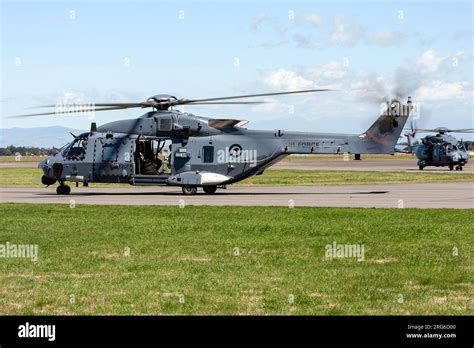
The contrast does not mean that eight New Zealand helicopters have literally generated five times the flight hours of 46 Australian aircraft. The underlying story is more complicated, involving availability, maintenance organization, operating tempo, mission requirements, logistics, and the way technical knowledge has been retained inside the New Zealand program. But it does reveal something important about military helicopter fleets: having more aircraft does not automatically mean having more aircraft available to fly.
The NH90 That Reached 3,000 Flight Hours
TNZA002 crossed the 3,000-hour threshold during what was described as a normal test flight between RNZAF Base Ohakea and the New Zealand coastline. There was no dramatic rescue or record-breaking expedition attached to the moment itself. The significance came from the number appearing on the aircraft’s accumulated flight-time record.
For an NH90, reaching 3,000 hours on a single airframe is a notable achievement. The helicopter entered service in the late 2000s, and although hundreds of NH90s have been delivered worldwide, individual operators have encountered very different levels of availability. According to Airbus, the global NH90 fleet has accumulated more than 40,000 flight hours in the period referenced for the milestone, yet TNZA002 became the first aircraft of the type to reach 3,000 hours.
That makes the New Zealand aircraft an outlier. It is one helicopter in a fleet of eight, but its flight-hour total reflects years of sustained use rather than a single burst of activity. The wider fleet has been used for alpine rescue operations, disaster response, military transport, training and Pacific deployments, giving the RNZAF a broad operational workload.
The aircraft itself also illustrates how modern military helicopters differ from older utility designs. The NH90 features a digital glass cockpit, fly-by-wire flight controls and a four-axis autopilot, systems intended to reduce crew workload while allowing the helicopter to operate effectively in demanding environments. Those capabilities become particularly valuable when crews are flying long distances, operating over water, or conducting missions in difficult weather and terrain.
Yet advanced avionics cannot explain why New Zealand’s aircraft remain available. The more revealing part of the story is what happens when the helicopters return to the ground.
Why New Zealand’s Eight NH90s Stay Available
The most important difference between New Zealand and several troubled NH90 operators may be the maintenance structure surrounding the aircraft.
Since 2015, Airbus Helicopters has maintained a permanent embedded presence at Ohakea, working directly alongside RNZAF personnel. The team initially consisted of four people and later expanded to around ten. Instead of functioning as an outside contractor that appears only when a major problem occurs, the Airbus specialists became part of the day-to-day ecosystem supporting the helicopters.
That continuity matters because military aircraft maintenance is not simply a matter of replacing components according to a manual. Over years of operation, maintainers accumulate knowledge about recurring issues, aircraft-specific behavior, supply-chain bottlenecks and the practical details that determine how quickly an airframe can return to service.
One particularly important example is the 600-flight-hour maintenance cycle. Major servicing can keep an individual NH90 out of action for roughly three months. With only eight helicopters available, every aircraft entering deep maintenance represents a meaningful reduction in the squadron’s immediately available fleet. Planning those maintenance periods therefore becomes almost as important as the technical work itself.
A small fleet can actually make this relationship more intimate. Engineers, technicians, aircrew and planners repeatedly encounter the same aircraft and the same problems. Knowledge does not have to be reconstructed every time a specialist changes position or a contractor returns to the program.
That is one reason the reported 75% serviceability rate is so significant. The figure does not mean that every one of the eight helicopters is airborne at any given moment. Rather, it indicates that a high proportion of the fleet is considered available for operations compared with the wider NH90 experience.
The Kaikoura Earthquake Put the System to the Test
The value of that maintenance system became particularly visible after the 2016 Kaikoura earthquake.
The earthquake severely disrupted road connections in the affected region, leaving communities dependent on alternative forms of transportation. RNZAF NH90s were rapidly brought into the response, helping establish an emergency air bridge and transporting supplies and people.
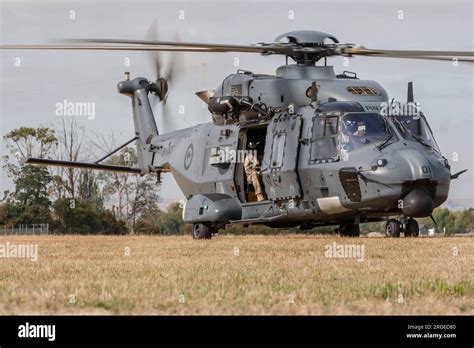
Three NH90s flew into Christchurch that evening, and the aircraft then continued operating repeated rescue and support missions. The operation placed unusual demands on both crews and maintainers because helicopters were being used repeatedly rather than simply deployed for an isolated flight.
The maintenance workload could become surprisingly physical. During the intense rescue operation, crews reportedly had to clean the helicopter windscreens after repeated flights because dirt and smudges could interfere with visibility during approaches. It was a small detail in a major disaster response, but it demonstrated the operational rhythm required when a limited number of aircraft are expected to keep flying throughout an emergency.
For New Zealand, the NH90 was therefore not simply a new military transport helicopter. It became part of the country’s national emergency-response infrastructure.
That role helped create a pattern that has continued. Instead of accumulating flight hours primarily through routine training, the aircraft have repeatedly been exposed to real-world missions with demanding utilization rates.
New Zealand Took the NH90 Across the Coral Sea
The most dramatic demonstration of what the New Zealand fleet can do came in 2025, when RNZAF NH90s began undertaking international over-water flights.
In September 2025, two No. 3 Squadron NH90s flew approximately 453 nautical miles (839 kilometers) from Cairns in Australia to Port Moresby in Papua New Guinea. It was the first time RNZAF helicopters had flown between two countries, according to the New Zealand Defence Force.
The helicopters were equipped with external auxiliary fuel tanks carrying approximately 500 kilograms of additional fuel. That additional capacity was essential for an operation that required the aircraft to spend extended periods away from conventional land-based support.
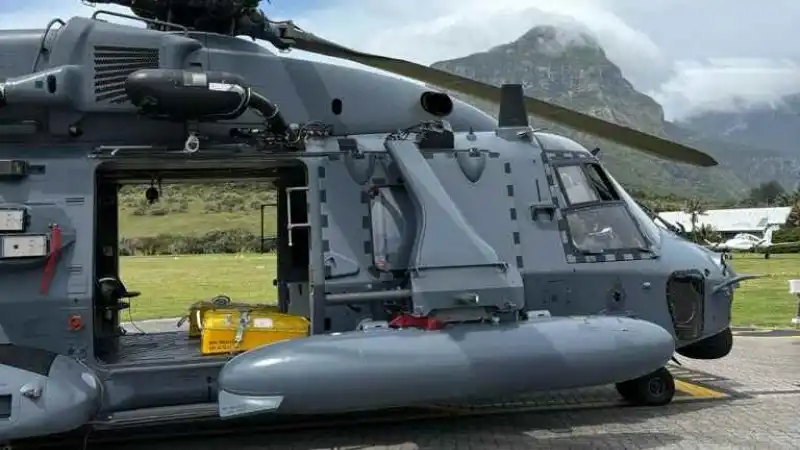
The flight was more than a publicity exercise. It formed part of a broader effort to demonstrate that New Zealand’s helicopter force could move into the Pacific when required. For a country whose defense and disaster-response responsibilities extend across a huge maritime region, the ability to deploy helicopters beyond New Zealand’s immediate surroundings is strategically important.
The following month, two more NH90s completed an even more ambitious journey. Departing RAAF Base Amberley near Brisbane, the aircraft eventually reached RNZAF Base Auckland through Norfolk Island. The entire journey covered approximately 1,765 miles (2,840 kilometers) over two days.
The longest individual leg was from Norfolk Island to Auckland, approximately 660 miles (1,062 kilometers). Airbus said the flight took roughly four and a half hours.
These missions demonstrated something that cannot be captured by a serviceability percentage alone. New Zealand was not merely keeping its NH90s technically operational. It was using them intensively enough to explore the outer limits of their practical deployment range.
Why Australia’s 46 NH90s Had a Very Different Story
Australia offers the most revealing counterpoint because its NH90s were not a fundamentally different helicopter.
In 2006, Australia ordered 46 NH90s, which received the local designation MRH-90 Taipan. The aircraft were intended to replace older helicopter fleets including the Sikorsky UH-60 Black Hawk and Westland Sea King.
New Zealand also selected the NH90 around the same period, ordering just eight aircraft to replace its aging Bell UH-1 Iroquois helicopters.
The two programs therefore started with broadly similar technology but eventually developed very different reputations.
Australia’s MRH-90 fleet encountered significant problems involving availability, configuration and spare-parts support. Aircraft were repeatedly unavailable, creating difficulties for the Australian Defence Force in generating the required number of operational helicopters.
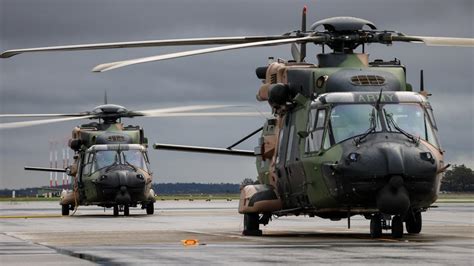
A fatal MRH-90 crash during Exercise Talisman Sabre in 2023 became part of the fleet’s troubled final chapter. Australia subsequently retired the entire fleet years earlier than originally planned and moved toward the Sikorsky UH-60M Black Hawk as its replacement.
The contrast is important, but it should not be reduced to a simple claim that one country’s NH90s were “good” while another country’s were “bad.” The fleets were operated under different structures, at different scales, with different procurement histories, maintenance arrangements and operational requirements.
What the comparison does show is that fleet size is not a reliable proxy for fleet output.
The Hidden Advantage of a Small Helicopter Fleet
There is an intriguing paradox at the center of New Zealand’s experience.
A fleet of eight aircraft has obvious disadvantages. If one helicopter enters a lengthy maintenance period, the percentage of the fleet unavailable immediately becomes substantial. If two are simultaneously undergoing major servicing, the effect becomes even more significant.
But a small fleet also makes it easier to maintain a close connection between the people responsible for flying the aircraft and those responsible for maintaining them.
At Ohakea, the embedded Airbus team has remained closely connected with the RNZAF program. Patrick Power, Airbus’s New Zealand team lead, has been associated with the NH90 since training on the type in France in 2011 and has provided continuity across much of the aircraft’s New Zealand service life.
That institutional memory can be enormously valuable. A helicopter may have thousands of individual components and an extensive maintenance program, but the accumulated experience of the people supporting it can determine whether a technical issue becomes a minor delay or a major availability problem.
New Zealand also completed a major software upgrade known as Software Release 2 locally. Completing the upgrade efficiently reduced the risk of the modernization effort becoming another extended interruption to fleet availability.
In other words, the New Zealand model appears to have treated maintenance availability as an operational capability rather than an administrative consequence of operating the helicopter.
What New Zealand’s NH90 Record Says About the Helicopter
The New Zealand experience does not prove that every NH90 operator could reproduce the same results. Eight helicopters at one base, supported by a relatively compact organization, are very different from a fleet of dozens spread across a large military structure.
It does, however, challenge the simplest explanation for the NH90’s troubled reputation.
More than 500 NH90s have been delivered to customers in multiple countries, demonstrating that the basic design is capable of sustained flight operations. Yet several operators have struggled to keep sufficient aircraft available.
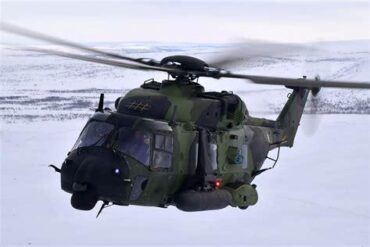
Norway provides another striking example. In 2022, the Norwegian government decided to abandon its NH90 program after receiving 13 of the 14 helicopters originally expected. The fleet had been intended to generate thousands of flight hours annually but was reportedly producing only a fraction of that target.
New Zealand’s experience cannot erase those difficulties. It does, however, show that the aircraft’s ultimate usefulness depends on more than the airframe, engines and avionics.
The maintenance ecosystem matters enormously.
So does the operator’s willingness and ability to keep investing in technical expertise. So does spare-parts availability. So does software support. And perhaps most importantly, so does the operational planning that determines how maintenance downtime is absorbed without collapsing the number of aircraft available for missions.
The Next Challenge Is Aging
TNZA002 reaching 3,000 hours is a milestone, but it also marks the beginning of another test.
The New Zealand NH90 fleet entered service in the early 2010s. The helicopters are no longer new, and every additional flight hour brings the aircraft closer to more intensive inspection and component-replacement requirements.
That creates a long-term question for the RNZAF. Can eight NH90s continue generating this level of operational output as the fleet ages?
The answer will depend partly on whether the maintenance system that has worked so well during the aircraft’s first years can scale into the more demanding period of mid-life and later-life support.
There is also a fleet-size question. Eight helicopters have been sufficient to support training, disaster response, military operations and increasingly demanding Pacific missions, but that does not necessarily mean eight will remain sufficient indefinitely.
In fact, the fleet’s success could make the argument for additional capacity more visible. If the helicopters are being used heavily and consistently, the RNZAF may eventually face a choice between accepting greater utilization of the existing fleet, acquiring additional aircraft, or beginning preparations for a successor.
Eight NH90s Have Become a Remarkable Aviation Case Study
The most interesting part of New Zealand’s NH90 3,000-hour milestone is therefore not the record itself.
It is what the record says about military aviation.
A modern helicopter can have sophisticated avionics, powerful engines and advanced flight controls, but none of those advantages matter if the aircraft spends too much time waiting for parts, undergoing corrective maintenance or sitting unavailable because technical knowledge has been lost.
New Zealand’s eight NH90s have followed a different path. They have been maintained through a long-running partnership between Airbus and the RNZAF, operated by a relatively compact squadron, and repeatedly exposed to missions ranging from earthquake relief to long-distance Pacific flights.
The result is an unusually productive fleet in which one NH90 has now exceeded 3,000 flight hours, while the eight aircraft together have surpassed 20,000 hours.
Australia’s experience demonstrates the other side of the equation. Forty-six aircraft did not guarantee forty-six usable helicopters, just as eight aircraft did not prevent New Zealand from building a highly active operational fleet.
That is the real lesson from Ohakea. The performance of a military helicopter fleet is ultimately measured not by how many aircraft appear on a procurement contract, but by how many can actually be maintained, crewed and flown when a mission arrives.
New Zealand’s NH90s have spent 15 years proving that principle in practice. Now the next challenge is harder: keeping that momentum as the helicopters accumulate more hours, the maintenance becomes more demanding, and the small fleet enters the later stages of its service life.
If the Ohakea system continues to deliver, TNZA002’s 3,000-hour achievement may eventually look less like an isolated world record and more like the first major marker in a much longer story about how a tiny fleet made the NH90 helicopter work at a level that much larger operators struggled to achieve.