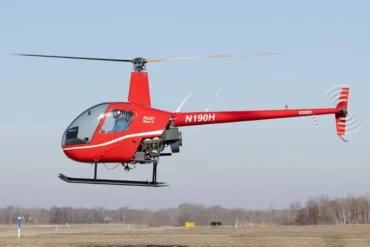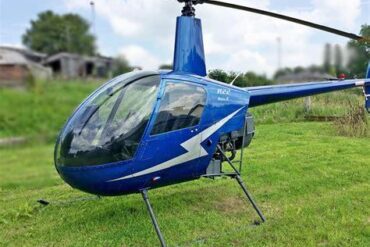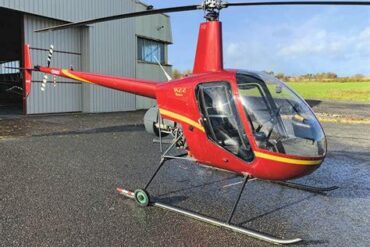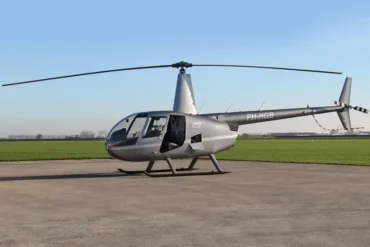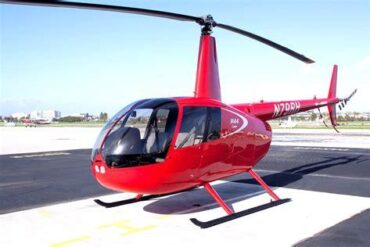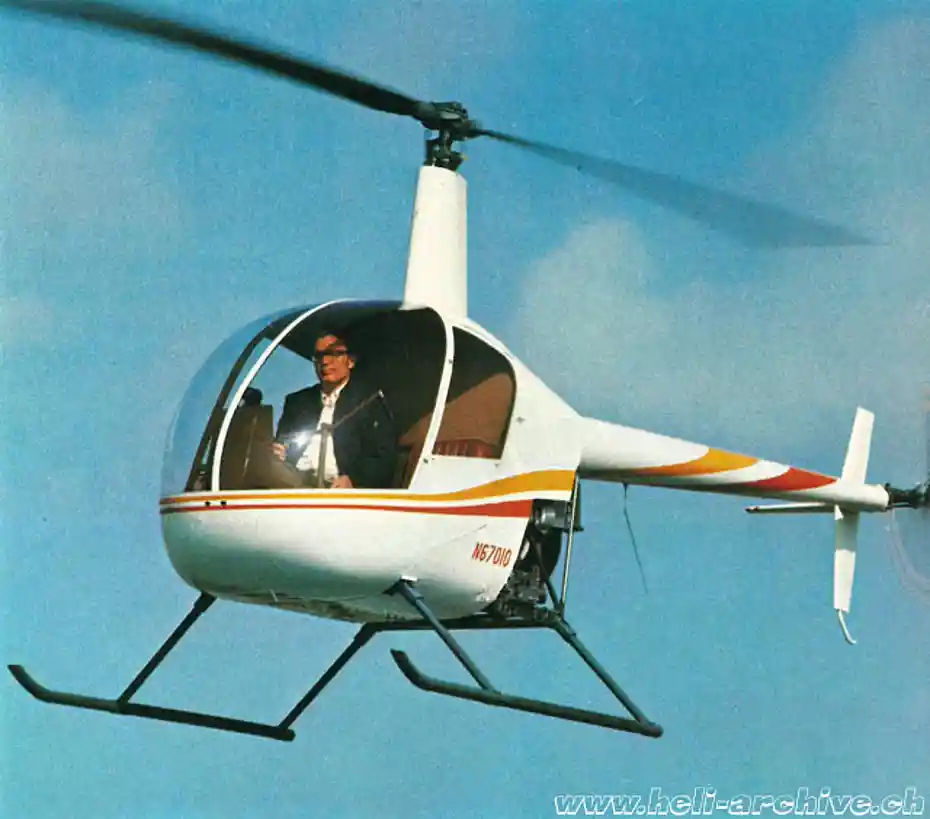
The Robinson R22 may appear modest at first glance, but behind its compact frame lies a flying experience so technically demanding that even seasoned aviators describe it as one of the most challenging helicopters to master. Built for lightweight commuting rather than instructional use, the R22’s flight characteristics have made it both infamous and essential in the rotary-wing community. Its difficulty lies not just in its design philosophy, but in how it responds to pilot inputs, the physiological fit of the cockpit, and the unforgiving margin for error in emergencies.
The Core Problem: Low-Inertia Rotor System
One of the central factors contributing to the Robinson R22’s unforgiving flight profile is its low-inertia rotor system. Unlike larger helicopters with heavier rotor blades that retain more rotational energy, the R22’s two-blade rotor system slows down very quickly in the event of an engine failure. This gives the pilot mere seconds to react and initiate autorotation — a critical maneuver where the helicopter must enter a controlled descent using the remaining energy in the spinning rotors.
If the pilot fails to enter autorotation in time, the rotor RPM can fall below the safe threshold, rendering it unrecoverable. This rapid decay in rotor speed is not theoretical — it has been the cause of multiple accidents, especially in the helicopter’s earlier years when pilot training programs had not yet caught up with its quirks.
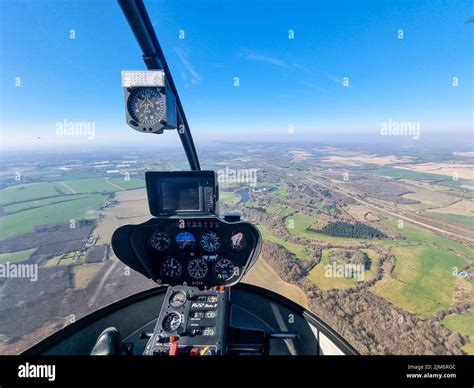
To mitigate the problem, Robinson added tip weights to the rotor blades to slightly increase inertia. While this adjustment provided a small cushion of time in emergencies, it did not fundamentally change the critical nature of how fast the R22 requires pilot reaction.
Designed for Commuting, Not Training
Another reason the R22 proves so difficult to fly is that it was never originally meant to be a training aircraft. When Frank Robinson designed the R22 in the mid-1970s, his vision was to create a cost-effective personal helicopter for commuting. However, its affordability made it an attractive choice for flight schools, which began using it extensively for primary training.
This mismatch between design intent and real-world use case created complications. Students learning to fly helicopters for the first time were introduced to a machine that offered very little forgiveness for errors. As a result, flight schools and aviation authorities began noticing a pattern — the R22 required not only skill but also precise coordination and timing, two things student pilots typically lack at the start of training.
Tight Cabin Space and Awkward Ergonomics
Flying a helicopter demands not just technical skill but also comfort and control within the cockpit. The Robinson R22’s interior is compact to a fault. For pilots who are tall, broad-shouldered, or simply larger than average, the cockpit can feel uncomfortably cramped, making it difficult to maintain fine control of the cyclic and pedals.
Moreover, the R22 uses a shared T-bar cyclic control that connects both pilot seats. This T-bar differs from the traditional center stick seen in most helicopters and can feel unnatural, especially for pilots transitioning from other models. The awkward ergonomics mean that even experienced pilots must undergo a period of adaptation to feel at home with the R22’s controls.
Heavier pilots also face a balancing act. Due to strict weight and balance limits, they may need to reduce fuel loads or fly without an instructor onboard to remain within safe operating parameters. This adds a layer of pre-flight calculation and restriction uncommon in larger aircraft.
Training Programs and Safety Courses: A Necessary Evolution
By the early 1980s, it became evident that something needed to be done to address the accident rates associated with the R22. In 1982, Robinson Helicopter Company introduced a specialized safety course aimed at flight instructors. This course eventually evolved into the Robinson Helicopter Pilot Safety Course, which now includes the R22, R44, and R66 models.
More than 21,000 pilots have completed the course in the United States alone, and thousands more worldwide have undergone similar training. The curriculum focuses on emergency procedures, rotor management, aerodynamic theory, and specific flight characteristics unique to Robinson helicopters.
These courses helped standardize safety practices and gave pilots the tools to better handle the helicopter’s eccentricities. While they didn’t make the R22 easier to fly, they drastically improved pilot preparedness.

Technological Updates: From RPM Governor to Beta II
Recognizing the need for greater control and safety, Robinson began incorporating technological improvements to the R22. One of the most notable upgrades came in the early 1990s with the addition of a rotor RPM governor. This component automated rotor speed adjustments, a task that previously required constant manual input. It gave the R22 a feel more akin to turbine-powered helicopters and reduced pilot workload.
By 1995, the Federal Aviation Administration (FAA) took the step of mandating specialized training for all R22 and R44 pilots. In tandem, Robinson made the RPM governor standard on all new models and retrofitted existing helicopters. These changes, though small in appearance, had a significant impact on operational safety.
The final major update came in 1996 with the introduction of the R22 Beta II, which remains the primary production variant today. It features a derated Lycoming O-360 engine, capable of producing 180 horsepower. By limiting the power output, the engine operates at a lower stress level, improving performance in hot and high-altitude conditions while enhancing reliability.
The Psychological Pressure of Flying the R22
Beyond its mechanics, what truly makes the R22 one of the hardest helicopters to fly is the psychological pressure it places on the pilot. Knowing that there’s virtually no margin for error in the event of engine trouble forces pilots into a state of constant vigilance. Every movement must be precise. Every second matters.
Student pilots flying the R22 report a heightened sense of awareness, almost bordering on anxiety, as they try to keep the helicopter stable and responsive. Unlike more forgiving rotorcraft that absorb minor mistakes, the R22 reacts instantly — sometimes violently — to overcorrection or poor coordination.
This makes it both a brutal teacher and an exceptional trainer. Pilots who can fly the R22 confidently often find that transitioning to more advanced helicopters is easier by comparison. The discipline learned in the R22 cockpit forms a robust foundation for future flying.
Why It Still Holds Value Despite the Risks
Despite its notorious difficulty, the Robinson R22 remains a staple in flight training programs around the world. Its low operating costs, simple mechanical layout, and direct feedback make it an ideal trainer for building muscle memory and learning the fundamentals of helicopter aerodynamics.
In fact, many flight schools argue that learning on the R22 weeds out uncommitted students and produces more capable pilots. Because it demands so much attention and precision, the R22 cultivates habits of preparation, focus, and airmanship that other helicopters might not.

Conclusion: A Helicopter That Commands Respect
The Robinson R22 doesn’t just fly — it demands to be flown correctly. Every quirk, from its low-inertia rotor system to its cramped cockpit, reinforces the idea that aviation is a discipline of precision and respect. For all its flaws, the R22 serves as a kind of rite of passage in the world of helicopter piloting.
It’s not forgiving. It’s not comfortable. But it is honest. It shows a pilot exactly where their skills stand, with no room to fake it. That raw, unfiltered feedback is part of what has kept the R22 in rotation for decades. And it’s why, for better or worse, it remains one of the hardest — and most rewarding — helicopters to fly.