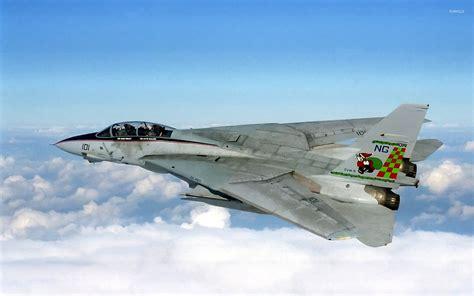
The F-14 Tomcat once represented the cutting edge of U.S. Navy carrier aviation. Famous for its twin engines, two-seat cockpit, and variable-sweep wings, the fourth-generation fighter became one of the most recognizable military aircraft ever built. Decades after retirement, one historic Tomcat has completed an extraordinary 2,700-mile road journey from Florida to Colorado.
The aircraft began its journey at the National Naval Aviation Museum in Pensacola, Florida, where two F-14s were displayed. Its destination was the Pueblo Weisbrod Aircraft Museum in Pueblo, Colorado, which needed a complete Tomcat for its growing collection. Although the two cities are normally separated by roughly 1,300 miles by road, transporting a full-size fighter created a far more complicated route.
Why the F-14 Tomcat Had to Travel by Road
The Tomcat could not simply fly to its new home. Like many preserved military aircraft, this particular F-14 was no longer an operational aircraft, making specialized ground transportation the only practical solution. Worldwide Aircraft Recovery, which specializes in recovering and transporting aircraft, took responsibility for the massive move.
The aircraft’s dimensions presented an immediate challenge. Even without its wings, the F-14 measures approximately 22 feet wide, substantially wider than a typical American traffic lane. Moving such a large load through multiple states required careful planning, permits, escorts, and coordination with local authorities.
A Circuitous Route Through the American Heartland
The journey ultimately passed through Alabama, Mississippi, Tennessee, Kentucky, Indiana, Illinois, Iowa, Missouri, Nebraska, and Kansas before reaching Colorado. Several states did not approve the originally requested road arrangements, forcing the transport team to create a much longer route across the American heartland.

The trip lasted about two weeks, with nighttime driving limited to Florida, Alabama, and Nebraska. Most of the journey took place during daylight hours, and some states required police escorts while the enormous aircraft load moved along public roads.
Under normal circumstances, a roughly 1,335-mile drive from Florida toward Colorado could pass through states including Louisiana, Texas, and New Mexico. The Tomcat’s route instead curved northward through the Midwest, turning what would normally be a long drive into a remarkable 2,700-mile transportation operation.
A Rare F-14 Finds a New Museum Home
The arrival is particularly significant because relatively few complete F-14s remain in the United States. After the Navy retired the Tomcat in 2006, most surviving aircraft were destroyed or otherwise disposed of, partly because the United States wanted to prevent spare parts from reaching Iran, which had operated F-14s before the Iranian Revolution.
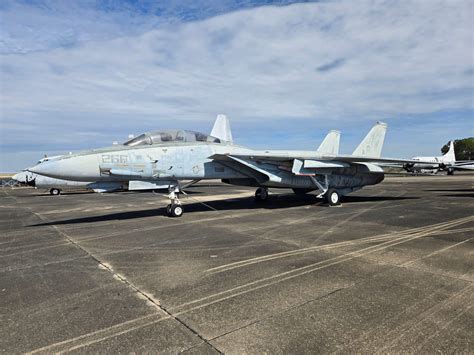
At Pueblo Weisbrod, museum personnel began the difficult process of reassembling the fighter. Once restoration and assembly are complete, the aircraft will become a permanent exhibit, allowing visitors to see one of America’s most famous naval fighters up close.
For an aircraft that once launched from aircraft carriers at sea, crossing the country on a specialized truck is an unusual final chapter. Yet the 2,700-mile F-14 Tomcat journey ensures that this historic fighter will continue telling its story to a new generation.