The United States remains one of Turkish Airlines’ most important international markets, and the carrier is preparing to strengthen that position with additional service to three major American cities in summer 2027. Atlanta, Dallas/Fort Worth, and Boston will all receive more flights from Istanbul Airport, giving Turkish Airlines a larger presence in markets that already depend heavily on connecting traffic through its Istanbul hub.
The expansion is notable because Turkish Airlines has built its US strategy around more than simply serving American origin-and-destination passengers. Istanbul Airport (IST) functions as the central connecting point for passengers traveling between the United States and destinations across Europe, the Middle East, Africa, and Asia. That network model helps explain why US routes can remain strategically important even when a large proportion of passengers are connecting onward rather than ending their journeys in Istanbul.
Turkish Airlines first entered the US market in 1988, initially operating to New York JFK through Brussels. The airline’s first nonstop transatlantic operation followed in 1994. Nearly four decades later, its US network has developed into a major component of the carrier’s global long-haul operation, and the planned 2027 schedule shows that expansion is continuing.
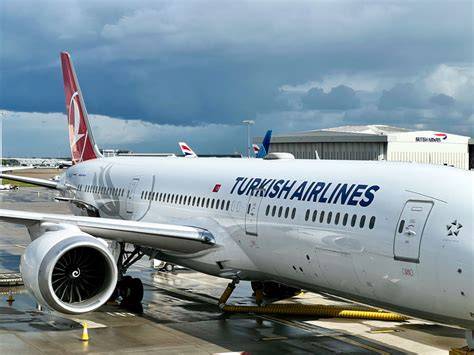
Turkish Airlines Adds Record Atlanta Flights
Hartsfield-Jackson Atlanta International Airport (ATL) has been part of the Turkish Airlines network since 2016. Although Atlanta is famous as the world’s busiest airport by passenger traffic, Turkish Airlines has historically maintained a relatively limited schedule compared with some of its other major US gateways.
Until recently, the airline had not operated more than 10 passenger flights per week on the Istanbul-Atlanta route. That level was introduced during summer 2024 and returned in 2025 and 2026, although the 2026 period was shorter than usual.
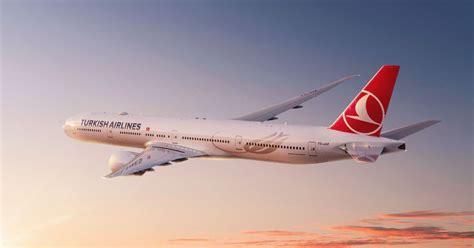
For summer 2027, however, Turkish Airlines is scheduled to increase the route to 12 weekly departures, creating a new frequency record for the market. The August 2027 schedule shows a combination of morning and afternoon departures from Istanbul, with the airline planning to use Boeing 787-9 and Boeing 777-300ER aircraft.
The additional capacity comes as Turkish Airlines continues to rely heavily on connecting traffic. US Department of Transportation data for the 12 months through June 2026 shows that the airline carried 215,954 passengers to and from Atlanta, with a 79.4% load factor. Around three-quarters of passengers continued beyond Istanbul on another flight.
The largest connecting markets included Athens, Cairo, Mumbai, Dhaka, Rome, Adana, Dubai, Delhi, Lahore, and Ankara. That mix demonstrates how the Atlanta route functions not simply as a Turkey-US link but as part of Turkish Airlines’ broader global network.

Dallas-Fort Worth Reaches a New Frequency Record
Dallas/Fort Worth International Airport (DFW) is a newer addition to the Turkish Airlines US network. The carrier launched the route in 2021, during the COVID-19 pandemic, initially operating four times per week. Service increased to daily in 2022, while temporary increases brought the route to as many as 10 weekly flights during portions of 2024, 2025, and 2026.
That growth is set to continue in 2027. Turkish Airlines plans to operate 12 weekly flights between Istanbul and Dallas/Fort Worth, exceeding the route’s previous maximum and establishing another frequency record.
The planned schedule includes five weekly morning departures from Istanbul operated by the 787-9, while a second daily pattern on selected days brings the total to 12 weekly services. The afternoon Istanbul departure is scheduled to take approximately 12 hours and 50 minutes, depending on the aircraft assigned.
The route also demonstrates the importance of connecting passengers to Turkish Airlines. DOT figures show that 226,927 passengers traveled between Dallas/Fort Worth and Istanbul during the relevant 12-month period, while the route achieved an 81.7% load factor. Nearly 80% of passengers connected through Istanbul.
Mumbai represented the largest connecting market, followed by Delhi, Cairo, Karachi, Athens, Amman, Medina, Jeddah, Lahore, and Beirut. This broad geographic distribution gives Turkish Airlines considerable opportunity to use DFW as a gateway into its worldwide network.
Boston Returns to a Higher-Frequency Schedule
Boston Logan International Airport (BOS) has a considerably longer history with Turkish Airlines, with service beginning in 2014. The route initially operated no more than daily through 2021, before reaching 10 weekly flights for 19 weeks in 2022.
Since then, Boston has generally returned to a maximum of daily service, with seasonal reductions during the colder months. The planned summer 2027 schedule represents another step upward, with Turkish Airlines increasing the route to nine flights per week.
Although nine weekly flights will not establish an all-time record for Boston, the increase is significant because it restores additional capacity to one of the airline’s established US markets. The route is also the shortest Turkish Airlines service between Istanbul and the United States.
During the 12 months through June 2026, Turkish Airlines carried 164,529 passengers between Boston and Istanbul, making Boston its second-smallest US market by passenger volume among the routes discussed. The route recorded an 83.4% load factor, while slightly more than seven in ten passengers transferred onward at Istanbul.
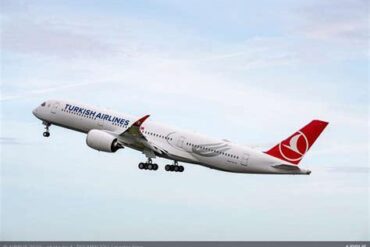
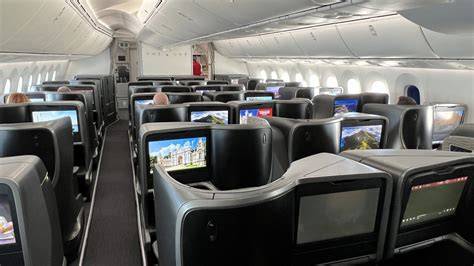
The leading connecting markets included Athens, Beirut, Bangkok, Cairo, Ankara, Sofia, Tirana, Adana, Moscow Vnukovo, and Thessaloniki. For the summer 2027 schedule, the airline plans to operate Airbus A350-900 aircraft, with two daily services on certain days creating nine weekly flights overall.
What the 2027 US Expansion Reveals
The combined schedule gives Turkish Airlines additional capacity in three major US markets, but the significance extends beyond the number of flights. Atlanta and Dallas/Fort Worth will each reach 12 weekly services, while Boston will rise to nine. Together, these increases strengthen Istanbul’s role as a transfer point between the United States and destinations that may not have direct service.
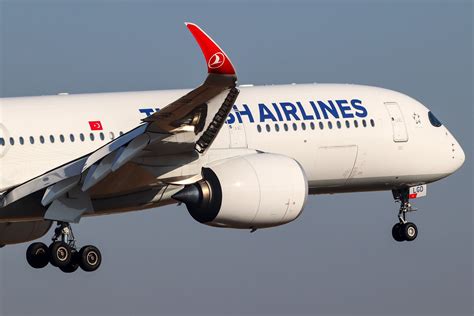
The aircraft mix is also important. Turkish Airlines will use its 787-9, 777-300ER, and A350-900 on these routes, allowing it to match capacity and aircraft availability with individual markets. With long-haul demand remaining highly dependent on both local traffic and connecting passengers, the additional frequencies provide the airline with more opportunities to distribute travelers across its extensive international network.
For passengers, the 2027 changes mean more departure choices and greater flexibility when traveling between these US cities and Istanbul. More importantly, they expand the number of connections available beyond Istanbul, reinforcing Turkish Airlines’ strategy of using its geographically positioned hub to connect North America with a remarkably broad range of destinations.
The full 2027 expansion therefore consists of 12 weekly Atlanta flights, 12 weekly Dallas/Fort Worth flights, and nine weekly Boston flights. Rather than representing a wholesale reshaping of the US network, the changes show Turkish Airlines adding capacity where established routes already generate substantial passenger volumes and significant connecting demand.