
Delta Air Lines is significantly expanding its transatlantic footprint from Boston Logan International Airport this summer, adding new European destinations and increasing frequencies across several major routes. The airline’s latest schedule reflects a strategic push to strengthen Boston as a key East Coast gateway for international travel, challenging the traditional dominance of New York airports in the transatlantic market.
According to aviation scheduling data from Cirium, Delta will operate 1,104 Europe-bound departures from Boston during the third quarter of 2026, representing a 20% increase compared to the same period last year. The expansion adds 184 additional departures between July and September, driven primarily by two newly launched European routes and enhanced service on existing corridors.
The move arrives at a time when airlines are aggressively competing for premium leisure travelers and high-yield international passengers. Boston, with its strong business sector, affluent population base, and growing tourism demand, has become an increasingly important battleground for US carriers seeking to expand beyond New York City.
Delta’s latest expansion demonstrates that Boston is no longer merely a secondary gateway for European flights. Instead, it is rapidly evolving into one of the airline’s most strategically important transatlantic hubs.

Delta Launches New Nonstop Flights to Madrid and Nice
The centerpiece of Delta’s summer expansion is the introduction of nonstop service from Boston to Madrid and Nice, two destinations that strengthen the airline’s Mediterranean network during the peak travel season.
Delta’s new Boston-Madrid route will operate daily throughout the summer, contributing 92 additional flights during the third quarter alone. The Spanish capital has experienced surging demand from American travelers in recent years, fueled by a combination of cultural tourism, culinary travel, and expanding business links between the United States and Spain.
Madrid also gives Delta a stronger competitive position against rival carriers already operating extensive Spain networks from the East Coast. By offering nonstop access from Boston, Delta is targeting travelers seeking alternatives to crowded New York-area airports.
Meanwhile, Delta’s newly introduced route to Nice-Côte d’Azur Airport marks the first time the airline has connected Boston directly with the French Riviera. Service began on May 16 and will operate three times weekly during the summer season.
The Nice route adds 39 flights during the third quarter and opens direct access to one of Europe’s most sought-after leisure destinations. The French Riviera remains exceptionally popular among affluent American travelers, particularly during the summer months when tourism across southern France reaches its annual peak.
Paul Baldoni, Delta’s Senior Vice President of Network Planning, emphasized the airline’s focus on expanding premium international connectivity from Boston.
“By adding nonstop service to Madrid and Nice, we’re enhancing our European network and continuing our commitment to providing an exceptional travel experience from start to finish,” Baldoni stated.
Boston Emerges as a Powerful Transatlantic Gateway
While New York continues to dominate East Coast-Europe aviation traffic, Delta’s rapid growth in Boston highlights a broader shift in airline network strategy. Rather than concentrating all transatlantic operations at mega-hubs, carriers are increasingly building international connectivity in high-demand regional markets.
Boston has become particularly attractive due to its mix of corporate travel demand, academic institutions, biotechnology industries, and wealthy leisure travelers. Logan International Airport also offers operational advantages compared to the congestion challenges frequently seen at JFK and Newark.
Delta’s Boston-Europe network now spans a diverse collection of destinations across Western and Southern Europe. Most routes will operate daily throughout the third quarter, including Athens, Barcelona, Dublin, Edinburgh, Lisbon, London Heathrow, Paris, and Rome.
Barcelona, in particular, is seeing increased attention this year, with Delta upgrading service from four weekly flights last summer to daily operations in 2026. The enhancement reflects sustained demand for Spain-bound travel from New England passengers.

Amsterdam remains Delta’s busiest European destination from Boston. The airline plans to operate 184 flights between Boston and Amsterdam Schiphol Airport during the third quarter, effectively maintaining twice-daily service throughout the season.
Interestingly, while the Amsterdam frequency remains unchanged, available seat capacity has been slightly reduced compared to last year. This suggests Delta may be optimizing aircraft deployment and passenger loads rather than simply maximizing seat volume.
Milan is one of the few European destinations in Delta’s Boston network not receiving daily service. Flights to Milan Malpensa Airport will operate four times weekly during the third quarter, totaling 53 departures, a modest increase from 52 flights last year.
Airbus A330-900neo Becomes the Backbone of Delta’s Boston Expansion
A major element of Delta’s expanded European operation is the growing dominance of the Airbus A330-900neo within its long-haul fleet strategy.
The modern widebody aircraft will operate 644 of Delta’s 1,104 Europe-bound departures from Boston during the third quarter, accounting for more than 58% of all transatlantic flights from the airport.
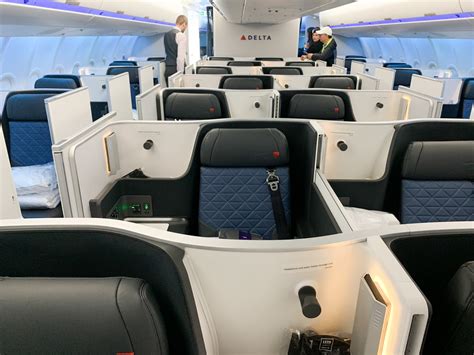
The A330-900neo has become central to Delta’s international growth plans due to its improved fuel efficiency, extended range capabilities, and upgraded passenger experience. The aircraft features Delta One Suites, premium economy seating, enhanced cabin lighting, and quieter interiors designed for long-haul comfort.
The older Airbus A330-300 remains the airline’s second most-utilized aircraft on Boston-Europe routes, handling 276 departures during the quarter. That figure represents a dramatic 200% increase compared to the same period in 2025, signaling Delta’s willingness to deploy additional widebody capacity as demand continues rising.
The Boeing 767-300ER, once a cornerstone of Delta’s transatlantic network, now accounts for only 184 departures from Boston this summer. Although still operationally important, the aging aircraft is increasingly overshadowed by newer Airbus models offering greater efficiency and enhanced passenger amenities.
Delta Intensifies Competition Across the Atlantic
Delta’s aggressive Boston expansion comes amid intensifying competition among North American and European airlines for lucrative transatlantic travelers. Carriers are racing to add premium leisure destinations, improve onboard products, and secure market share before future aircraft delivery constraints limit growth opportunities.
By strengthening Boston as a transatlantic hub, Delta is positioning itself to capture both local New England demand and connecting traffic from across the northeastern United States. The airline’s expanded European network also reinforces its broader strategy of balancing business-heavy markets with fast-growing leisure destinations.
With new routes to Madrid and Nice, expanded frequencies across Southern Europe, and heavy reliance on modern Airbus widebodies, Delta is clearly betting that Boston’s transatlantic boom is only beginning.