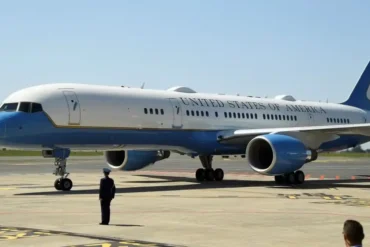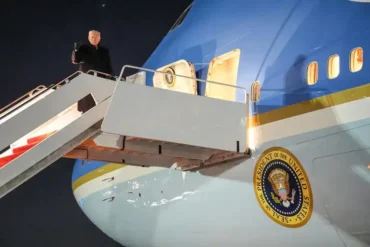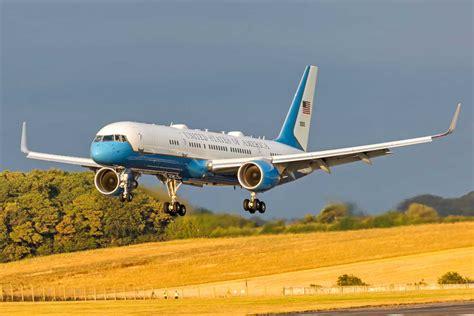
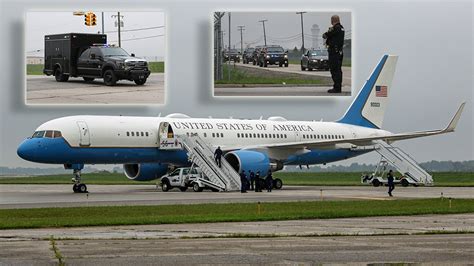
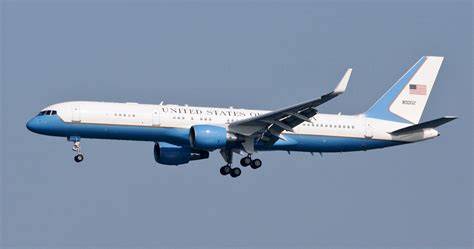
The aircraft most closely associated with the Vice President of the United States is not a Boeing 747, Boeing 777, or another large widebody. Instead, the aircraft most commonly seen carrying the nation’s second-highest elected official is the Boeing C-32A, a heavily modified military version of the Boeing 757-200. When the Vice President is aboard, the aircraft normally uses the “Air Force Two” call sign, making the familiar 757 an important part of America’s executive airlift system.
At first glance, the choice seems surprising. The Vice President regularly travels internationally, attends major diplomatic meetings, represents the United States at foreign summits, and may need to respond rapidly to domestic or international developments. A large widebody aircraft would appear to offer obvious advantages, particularly in terms of cabin space, range, and onboard capacity. Yet the C-32 has remained remarkably well suited to the job because the Vice President’s travel requirements are fundamentally different from those of the President.
The difference comes down to mission profile rather than prestige or aircraft size. Presidential travel can involve enormous logistical operations, extensive staff, communications equipment, security personnel, support aircraft, and large delegations. Vice presidential travel can be substantial, but it generally requires a smaller and more flexible traveling organization. The C-32A was effectively designed around that middle ground, providing executive-level capability while retaining many of the operational advantages of the 757.
The Boeing C-32A Is More Than a Boeing 757
Although its basic design comes from the Boeing 757-200, the C-32A should not be thought of as an ordinary commercial airliner wearing military markings. Its interior and systems were adapted specifically for government transportation, giving the aircraft a combination of executive accommodation, working space, communications capability, and passenger capacity that a standard airline 757 does not provide.
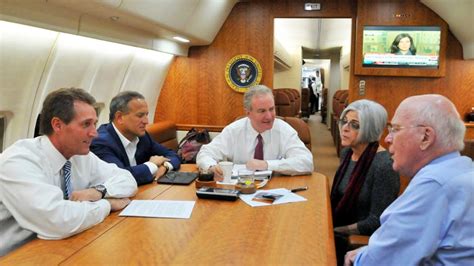
The aircraft includes a private stateroom, conference facilities, secure communications systems, dedicated staff areas, and seating for personnel such as government officials and members of the press. This arrangement reflects an important characteristic of modern vice presidential travel: the aircraft is not simply a means of getting from one city to another. It can function as a mobile government workspace.
That becomes particularly important during international missions. A Vice President may need to review briefing materials, communicate with Washington, coordinate with staff, prepare for meetings, and respond to developments while airborne. The C-32 provides an environment that supports these activities without requiring the enormous physical footprint of a presidential widebody aircraft.
The aircraft’s configuration also makes sense for diplomatic delegations that are often deliberately smaller. A visit to a foreign capital might involve senior advisers, security personnel, diplomatic staff, communications specialists, and members of the media, but it does not necessarily require the scale associated with a presidential entourage. The C-32’s capacity is therefore closely aligned with the practical size of many vice presidential missions.
Why the 757’s Range Is Enough for Air Force Two
Range is one of the first characteristics that might appear to favor a widebody aircraft. Modern widebody jets can cross oceans with substantial fuel reserves while carrying large passenger loads. The C-32A, however, has an approximate range of 5,500 nautical miles, or about 10,186 kilometers, which covers a surprisingly large portion of the Vice President’s normal international travel requirements.
Major routes between Washington and European capitals are comfortably within the aircraft’s capabilities. Missions farther into the Middle East or Asia can require more careful planning and, depending on the destination and conditions, a refueling stop. But a stop does not necessarily undermine the effectiveness of the mission.
Diplomatic travel frequently involves complicated itineraries rather than a simple nonstop flight between two distant cities. Aircraft may stop for operational reasons, crew requirements, logistics, or even because the itinerary itself involves multiple destinations. Consequently, the ability of a widebody to fly substantially farther nonstop does not automatically translate into a decisive operational advantage for the Vice President.
The C-32 also benefits from the basic performance characteristics of the 757-200. It has a maximum takeoff weight of approximately 255,000 pounds, a cruise speed of about 537 mph, a service ceiling of 42,000 feet, and a wingspan of approximately 124 feet 8 inches. Those specifications give the aircraft considerably more capability than its narrowbody appearance might suggest.
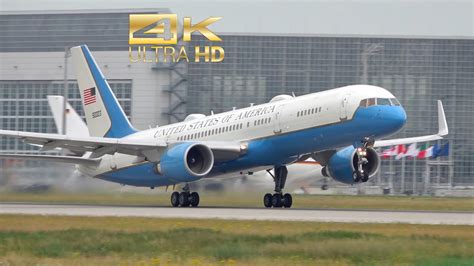
The 757 was originally developed as a commercial aircraft capable of combining relatively efficient operations with strong short- and medium-haul performance. That combination proved useful for government transportation as well. The C-32 can perform domestic missions, transcontinental journeys, and many international flights without requiring the United States to deploy a much larger aircraft simply because the destination is overseas.
Airport Access Is a Major Advantage
One of the strongest arguments for the Boeing 757-based C-32 is not found inside the aircraft at all. It is found on the ground.
Large widebody aircraft require airports with suitable runways, gates, parking areas, ground equipment, and other infrastructure. Major international airports naturally provide these facilities, but diplomatic travel does not always revolve around the world’s largest aviation hubs. A Vice President may need to visit a regional capital, secondary city, military installation, or another location where operating a large widebody would be inconvenient or impractical.
The 757’s relatively compact dimensions and strong performance characteristics provide greater flexibility. The C-32 can use airports that may not be attractive options for a much larger aircraft, allowing the traveling delegation to get closer to its actual destination.
That can have significant consequences for security and scheduling. Every additional ground movement creates another layer of coordination. If an official delegation has to land at a distant major airport and then travel by road to another city, the ground journey can consume hours and require extensive security planning. Landing closer to the destination can reduce those complications.
Airport access also provides greater flexibility when schedules change. Diplomatic visits can be adjusted because of weather, political developments, local events, airport congestion, or other operational considerations. Having an aircraft capable of using a broader selection of airports gives planners more options.
Air Force Two Is a Call Sign, Not an Aircraft Type
Another common misconception is that Air Force Two refers specifically to the C-32A. In reality, the term is a call sign associated with the Vice President when traveling aboard an appropriate US military aircraft. The aircraft itself can vary according to mission requirements.
The C-32A is simply the platform most closely associated with routine Vice Presidential transportation. This distinction is important because it demonstrates that the US government does not treat the 757 as a mandatory aircraft for every possible mission. Instead, aircraft are selected according to operational requirements.
The broader executive airlift fleet contains multiple aircraft types with different capabilities. Large presidential transports are designed for missions where extensive support, communications, equipment, personnel, and endurance are required. Smaller aircraft can be used when the mission demands greater access or a smaller logistical footprint.
There is also a distinction between the C-32A and C-32B. The C-32A is the aircraft variant associated with senior executive transportation, including Vice Presidential travel. C-32B aircraft operate under different circumstances and have a more specialized mission profile. Their appearance and operational roles are less directly connected with the highly visible Air Force Two missions that attract public attention.
The C-32 Fits a High-Tempo Travel Schedule
The Vice President can have a travel schedule that is considerably more varied than the public may realize. A single period can involve domestic events, visits to multiple states, international diplomacy, political functions, and rapid changes in itinerary. The aircraft therefore needs to support a high operational tempo rather than simply maximize long-distance range.
This is where the 757’s balance becomes particularly useful. A smaller aircraft generally requires less infrastructure and support than a large widebody. It can be handled more easily at many airports and does not require the same scale of ground operation associated with the largest executive transports.
Fuel consumption is another consideration. Carrying a massive aircraft with substantially greater capacity when that capacity is not required would add unnecessary operating requirements. The C-32 allows the United States to match aircraft size more closely with the actual traveling party.
That does not mean the aircraft is treated as a budget alternative. Executive transportation has requirements that ordinary commercial aviation does not. Security, communications, reliability, specialized maintenance, and operational readiness remain fundamental. The point is that efficiency in executive airlift means matching capability to the mission, rather than simply selecting the biggest available aircraft.
Why a Widebody Is Not Automatically Better
The assumption that a larger aircraft must be better often comes from commercial airline travel, where passengers naturally associate widebodies with longer routes, greater capacity, and more extensive onboard facilities. Government transportation operates according to a different set of priorities.
A widebody aircraft could provide more cabin space and greater long-range capability, but those advantages come with additional size, infrastructure requirements, weight, fuel consumption, and logistical complexity. If a mission does not require hundreds of seats or extremely long nonstop range, those characteristics can become operational constraints rather than benefits.
The Vice President’s aircraft must be able to move efficiently between different types of destinations. A narrowbody platform derived from the 757 can provide enough cabin space for the required delegation while retaining the airport flexibility that is particularly valuable during diplomatic travel.
This is why the C-32 should not be described simply as a smaller substitute for a presidential aircraft. It occupies a distinct role within the executive airlift system. Its purpose is to provide a sophisticated, secure, and adaptable transportation platform without imposing the scale of a much larger aircraft on every mission.
The Boeing 757 Offers an Unusual Combination
The 757 itself is an unusual aircraft in commercial aviation history because it combines characteristics that normally exist in different aircraft categories. It has the cabin dimensions of a narrowbody but possesses substantial range and strong runway performance. That combination made the type useful on routes that were too demanding for many smaller narrowbody aircraft while not requiring the capacity of a widebody.
Those characteristics translate particularly well into executive transportation.
For the Vice President, the aircraft needs to cover long distances but also reach airports beyond the largest international hubs. It needs sufficient cabin space for staff and equipment but does not need to transport a huge delegation. It needs to support international diplomacy but also remain practical for frequent domestic travel.
The C-32A essentially exploits this middle ground. Its 757 foundation provides the physical performance, while its military configuration transforms the platform into an executive transport suited to government missions.
A Complementary Aircraft Within the US Executive Fleet
The C-32’s role becomes even clearer when viewed as part of the wider American executive airlift system. The United States does not rely on one aircraft type for every senior government transportation requirement. Different aircraft exist because different missions impose different demands.
Large aircraft can provide greater endurance, capacity, and onboard capability when the mission requires them. The C-32A, meanwhile, offers flexibility for missions where those additional capabilities are unnecessary. In some circumstances, even the President can use a C-32 when airport access or other operational considerations make it appropriate.
This demonstrates that aircraft size is not a simple measure of importance. A smaller aircraft can be the more practical tool for a particular mission precisely because it can operate where a larger aircraft cannot or because its logistical requirements better match the assignment.
The Vice President’s transportation system therefore reflects a broader principle of military and government aviation: the right aircraft is the one that satisfies the mission’s requirements, not necessarily the one with the largest cabin or longest range.
Why Air Force Two Remains a Boeing 757-Based Aircraft
The continued use of the C-32A makes sense when all these factors are considered together. The aircraft provides enough range for a large portion of Vice Presidential international travel, enough cabin space for a working delegation, specialized communications and executive facilities, and access to a broader selection of airports than many large widebody platforms.
Its 757 heritage also gives it the performance needed for frequent domestic operations. That versatility is crucial because the Vice President does not spend all of the time flying between Washington and foreign capitals. Domestic travel remains an important part of the mission, and the aircraft must be useful across the entire spectrum.
Ultimately, the Boeing C-32A is not selected because the Vice President requires less capable transportation than the President. It is selected because the mission is different. A widebody would offer more capacity and greater nonstop range, but those capabilities are not always the most important factors in executive travel.
The C-32 instead delivers a carefully balanced package of range, airport access, executive facilities, secure communications, operational flexibility, and efficiency. Its Boeing 757 foundation allows it to move between major international destinations and smaller airports while supporting a delegation that needs to work throughout the journey.
That is the real reason America’s Vice President flies on a Boeing 757 rather than routinely traveling aboard a widebody. The aircraft’s narrowbody appearance hides a remarkably capable platform, and its value comes from doing exactly what the Vice Presidential mission requires without carrying the additional scale of an aircraft designed for a fundamentally different role.