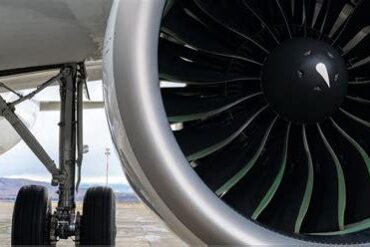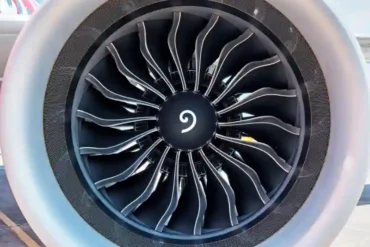
Pratt & Whitney is beginning to see measurable results from one of the most important repair initiatives launched during its prolonged geared turbofan maintenance crisis. After years in which some PW1000G engines spent many months awaiting inspection, repair and return to service, the manufacturer says turnaround time has now fallen 23% year over year. At the same time, Maintenance, Repair, and Overhaul (MRO) output has increased 40%, showing that the recovery is not simply the result of fewer engines entering workshops.
The improvement matters because engine downtime has become one of the biggest operational problems surrounding the PW1000G family. Hundreds of aircraft have been affected by inspections and repairs associated with microscopic defects in powder-metal components. What was once expected to be a relatively manageable maintenance cycle expanded into an industry-wide bottleneck, with some engine turnaround times stretching from roughly 60–90 days to 250–300 days.
Pratt & Whitney’s answer is not based on a single change. The manufacturer has combined new repair technology, additional MRO investment, expanded shop capacity, automation and improvements to the engine itself. One of the most interesting pieces of that strategy is a Directed Energy Deposition (DED) process developed at Pratt & Whitney’s North American Technology Accelerator in Jupiter, Florida. By using additive manufacturing to restore components, the company can eliminate several manual repair steps and reduce the number of machine changeovers and heat-treatment cycles required.
Pratt & Whitney’s 23% Turnaround Improvement
The latest numbers suggest that the turnaround campaign is moving from an engineering project into a meaningful industrial recovery. Pratt & Whitney has reported a 23% reduction in engine turnaround time, while overall MRO output has risen 40% compared with the previous year. The company has set an ambitious target of consistently returning engines to customers within 90 days or less, a benchmark that would represent a dramatic improvement over the worst periods of the GTF maintenance crisis.
The PW1100G has been particularly important to this effort because it powers the Airbus A320neo family, one of the world’s largest fleets of next-generation narrowbody aircraft. MRO output for the PW1100G has increased by 43%, even though the work scope for the engine increased by 14% during the previous year. In other words, Pratt & Whitney has had to process substantially more work while simultaneously trying to make each repair cycle faster.
That distinction is important. Reducing turnaround time by sending fewer engines through a shop would not represent a genuine solution. The more meaningful improvement is the combination of higher throughput and shorter repair cycles. Pratt & Whitney’s latest figures indicate that both are moving in the desired direction.
RTX, Pratt & Whitney’s parent company, has also committed more than $100 million to MRO infrastructure. Facilities in Texas, Florida and Arkansas are among those receiving investment as the company expands the capacity needed to handle the unusually large maintenance backlog.
How 3D Printing Is Changing GTF Engine Repairs
The most distinctive part of the repair strategy is the additive manufacturing system developed through Pratt & Whitney’s North American Technology Accelerator. The technology uses Directed Energy Deposition, a form of metal 3D printing in which material is deposited onto a component in a controlled manner to restore its geometry.
For conventional engine repairs, a component can move through several processes involving machining, tooling changes, heat treatment and manual work. Every additional stage creates another opportunity for scheduling delays, equipment constraints or handling requirements. The additive approach is intended to simplify that chain.
Pratt & Whitney announced the new additive geared turbofan repair solution in April 2025 after developing it with the Connecticut Center for Advanced Technology and the RTX Research Center. The company estimated that the technology could reduce process time by 60% for the applicable repair process. That does not mean the entire engine shop visit becomes 60% shorter, but removing a major portion of the time associated with particular component repairs can have an important effect when the process is industrialized across a large network.
The technology also has a broader purpose. Pratt & Whitney expects additive repair to reduce tooling costs, simplify setup requirements and reduce dependence on constrained material supplies. The manufacturer has estimated that the approach could help recover approximately $100 million in parts over five years, while potentially creating additional applications for restoring worn components.
Why the PW1100G Created Such a Huge Maintenance Problem
The urgency behind the program comes from defects discovered in powder-metal components used in certain PW1000G engines. Microscopic cracks associated with the affected materials can develop under operating conditions, requiring extensive inspections and, where necessary, removal and repair of affected engines.
The resulting maintenance demand was far larger than the normal MRO system had been designed to absorb. Aircraft that otherwise could have continued flying were forced into extended periods of downtime while their engines were inspected or repaired. By October 2025, data cited from Cirium indicated that 835 geared-turbofan-powered aircraft were grounded, compared with 748 around the middle of that year.
The problem was therefore not simply an engine reliability issue. It became a capacity problem involving airlines, lessors, repair shops, spare engines, replacement parts and aircraft scheduling. When engines remained in workshops for months, airlines needed alternatives to keep aircraft flying. Some operators and lessors responded by removing serviceable engines from otherwise inactive aircraft, effectively cannibalizing available assets to keep active fleets operating.
Spare PW1000G engines consequently became unusually valuable. At the height of the disruption, monthly lease rates for usable engines reportedly reached around $200,000, illustrating just how far the shortage had pushed the market.
Pratt & Whitney’s 90-Day MRO Target
The ultimate goal is not simply to improve the average turnaround figure. Pratt & Whitney wants each major shop in its network to reach a consistent standard. The company has expanded its PW1100G MRO footprint, with 15 shops expected to achieve the 90-day target.
That consistency could be more important than an isolated improvement at one facility. A single fast shop cannot solve a global maintenance bottleneck if engines continue waiting in other locations. Parts availability, repair capacity and logistics all have to work together. RTX chief executive Christopher Calio has emphasized the need for all 15 locations to meet the target so the aftermarket network can operate as an integrated system.
This explains why Pratt & Whitney’s strategy combines technology with infrastructure investment. Faster repair equipment has limited value if the surrounding supply chain cannot provide components or if another process becomes the new bottleneck. The objective is to improve the entire flow of an engine through the MRO network.
Technology Accelerators Are Central to the Recovery
Pratt & Whitney’s technology strategy extends beyond Florida. The North American Technology Accelerator, launched in April 2024, focuses heavily on additive repair for geared turbofan components while combining data science, automation and engineering expertise.
A second facility, the Singapore Technology Accelerator, was launched in September 2022 and became fully operational in early 2024. Its work includes robotics, advanced inspection and other technologies designed to make engine repairs faster and more efficient. Pratt & Whitney estimates that the combined annual savings generated by these technology accelerator activities could reach approximately $24 million.
The importance of these facilities is that they provide a pathway for turning experimental manufacturing methods into repeatable industrial processes. Aviation maintenance cannot rely on a repair technique simply because it works once. The process has to be certified, repeatable, inspectable and scalable before it can become part of a global engine MRO network.
The PW1100G’s Design Still Offers Major Advantages
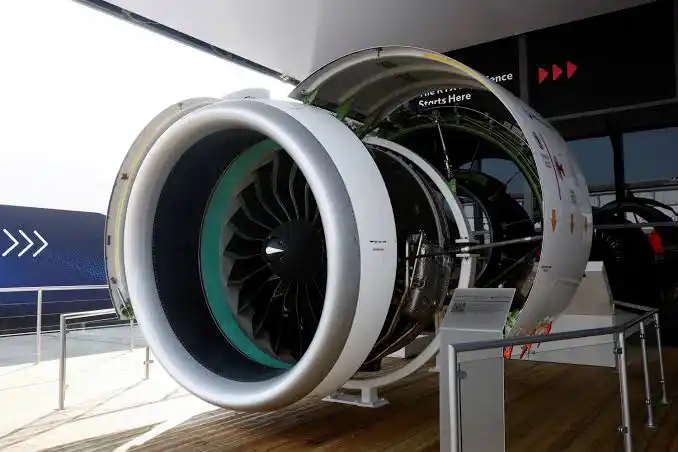
The maintenance crisis should not obscure why geared turbofan technology was adopted in the first place. The PW1100G uses a gearbox between its large front fan and the low-pressure compressor and turbine. This allows those components to rotate at different speeds rather than forcing the entire low-pressure system to operate at a common rotational speed.
That architecture helps the engine achieve a high bypass ratio of 12.5:1, while the PW1100G produces approximately 24,000–35,000 pounds of static thrust depending on the variant. Its fan diameter is 81 inches, and the engine is designed for the Airbus A320neo family.
The gearbox adds complexity and weight, but it also allows different sections of the engine to operate closer to their respective optimum speeds. That can contribute to lower fuel consumption and reduced noise compared with older-generation turbofan designs.
The lesson from the current crisis is therefore more complicated than simply declaring the technology unsuccessful. The GTF introduced a sophisticated architecture with substantial efficiency benefits, while the manufacturing and material problems created an unexpectedly difficult maintenance challenge. Pratt & Whitney’s current work is aimed at addressing that challenge without abandoning the underlying architecture.
The GTF Advantage Package Looks Beyond Today’s Repairs
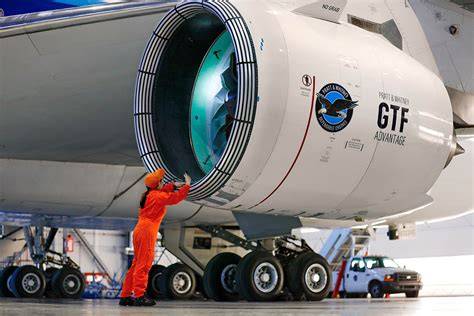
Pratt & Whitney is also working on ways to reduce the probability of similar maintenance problems in the future. Its GTF Advantage Package for the PW1100G incorporates changes to the engine’s core architecture, allowing it to handle higher airflow and operating temperatures.
New hot-section components, airfoil designs and cooling systems are part of the package. Pratt & Whitney has also developed the HS+ upgrade, which incorporates many of the improvements without requiring a complete engine replacement. Software changes can further optimize engine operation by reducing climb thrust ratings and lowering temperatures in the hottest parts of the engine during demanding phases of flight.
The reported target is not merely better fuel efficiency. Pratt & Whitney says these changes can provide a 4% increase in sea-level thrust, approximately 1% lower fuel burn, and an increase in engine life of up to 20% for the applicable improvements. Similar technology is expected to influence other geared turbofan variants serving aircraft such as the Airbus A220 and Embraer E-Jet E2 family.
What the 23% Reduction Means for Airlines
For airlines operating GTF-powered aircraft, a 23% reduction in turnaround time is significant because every day an engine remains in an MRO facility can create additional costs elsewhere in the operation. Aircraft may need to remain grounded, spare engines may have to be leased, schedules may need to be adjusted, and maintenance teams must coordinate increasingly complicated fleet planning.
The improvement also arrives alongside a broader financial recovery for Pratt & Whitney. Commercial aftermarket sales increased 25%, while compensation associated with the powder-metal issue fell to $150 million in the second quarter. Those figures remain small compared with the enormous financial impact generated by the crisis over several years, but they indicate that the repair network is moving toward a more sustainable operating model.
The real test will be whether the current progress can continue as the manufacturer works through remaining demand. A 23% annual improvement is encouraging as a measure of direction, but the industry’s ultimate objective remains much more concrete: reliably returning GTF engines to service within 90 days.
If Pratt & Whitney can combine additive manufacturing, automation, expanded shop capacity, better component availability and longer-lasting engine upgrades at scale, the GTF maintenance crisis could gradually shift from an emergency response problem into a more predictable industrial process. The most important development may therefore not be the 3D printer itself. It is the attempt to redesign the entire repair system around faster, more repeatable and less resource-intensive maintenance.
For an engine family powering hundreds of narrowbody aircraft, that distinction matters. Airlines do not simply need a clever repair method; they need an MRO network capable of delivering that method consistently. The latest 23% reduction in turnaround time suggests Pratt & Whitney is finally making measurable progress toward that goal.